Author: Alan Thompson

  • Hello Sailor…

    Hello Sailor…

    Muddying the waters on the good ship Napoleon
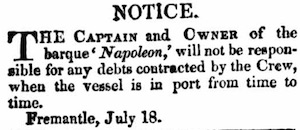
    The Perth Gazette and Western Australian Journal (WA : 1833 – 1847) Sat 7 Aug 1841 Page 1

    I should be clear from the start, I am committed to the belief that James Dyson, the future merchant, land owner and Perth city Councillor was once a convicted felon who was sent from the land of his birth to serve out a seven year sentence in Van Diemen’s Land. Only then did he transport himself to the Free Colony of Western Australia to start a new life, some time in the year 1841. Having made this commitment clear, I have to acknowledge that my article of faith is based on a steady accumulation of circumstantial evidence and that there is a present no one piece of direct evidence linking Convict Number 931 with the son of Joseph Dyson, mill owner of Lancashire. There is however, a node in Dyson’s personal story, where the possibilities of “was he” or “wasn’t he” converge. The question then arises, was James Dyson then a sailor?
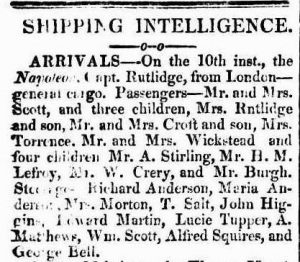
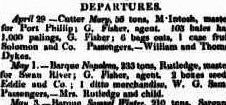
    The Perth Gazette and Western Australian Journal (WA : 1833 – 1847) Saturday 16 January 1841 p2

    On one subject all the sources agree,— James Dyson arrived in Western Australia on the colonial barque Napoleon, sometime in 1841. If he arrived in January, he came straight from England and was not a convict. If he arrived in July from Launceston, he most probably was. The difficulty with the January arrival is that a passenger list exists for this voyage, and James Dyson is resolutely not recorded among their number, not as a passenger at any rate; there is no listing of the crew

    Launceston Advertiser (Tas. : 1829 – 1846) Thursday 6 May 1841 p 4

    For the March departure of this vessel from Launceston to Fremantle, the manifest is not nearly so comprehensive. No mention of steerage passengers at all, although this is not unusual. So in summary, while Dyson may have been an unlisted passenger on the second voyage, there is also an undocumented space in the record for him to have been a crew member on either voyage of the Napoleon. Unlikely as I believe this to be…

    Your Choice:

    A correspondent, writing of the late Mr. James Dyson, who had resided in Western Australia for nearly fifty years, and whose death we recorded last Tuesday, says: — James Dyson was born in Lancashire, in October, 1810, and arrived in this colony in the early part of 1841, in the barque “Napoleon.” […]

    The Daily News (Perth, WA : 1882 – 1950) Saturday 23 June 1888 p 3

    or

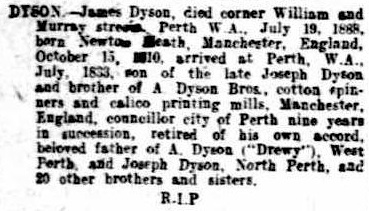
    DYSON.— James Dyson, died corner William and Murray streets, Perth W.A., July 19, 1888, born Newton Heath, Manchester, England, October 15, 1810, arrived at Perth, W.A. July 1833, son of the late Joseph Dyson and brother of A. Dyson Bros., cotton spinners and calico printing mills, Manchester, England, councillor city of Perth nine years in succession, retired of his own accord, beloved father of A. Dyson (“Drewy”), West Perth and Joseph Dyson, North Perth, and 20 other brothers and sisters.
    R.I.P.

    The West Australian (Perth, WA : 1879-1954) Tuesday 19 July 1910 page 1

    or something else entirely?
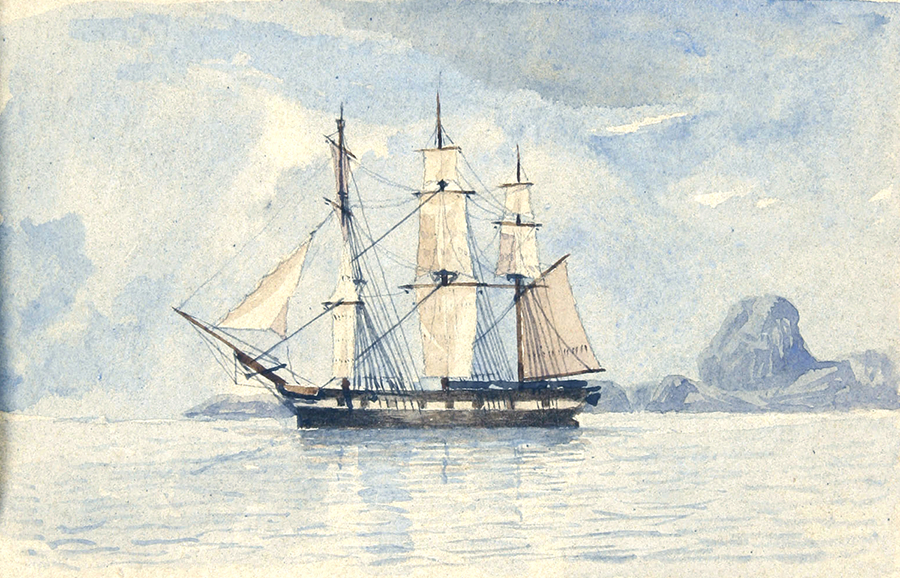
    An anonymous whaling barque of the 19th century. Watercolour from the collection of the Australian National Maritime Museum [ANMM Collection 0000445]

    Captain Daniel Scott was owner of the Colonial Barque Napoleon, and sailed with it on its journey from London to Fremantle. As part-time Fremantle harbour master and full time colonial entrepreneur and merchant, Scott definitely deserves an article all of his own. But unlike the man himself, this time he is going to have to share. While he was the co-owner with a Lancashire consortium of businessmen (Ooh, is this a link?) he was not the vessel’s master. That honour belonged to a Captain Rutledge, who like Scott, also brought his family with him out to Australia on the Napoleon.

    Western Australia had been in the perpetual economic doldrums virtually since it’s establishment as an independent colony in 1829, and that was certainly the case in the early 1840s. For a number of years the great hope was whaling—The lucrative (and equally unsustainable) oil extraction business of the 19th Century.

    When the Penal Settlements of New South Wales and Van Diemen’s Land were founded in succession by the British Government, in order to thin the Jails of England, which teemed with Criminals; the Colonies suffered much privation for many years, although supported by a large Crown expenditure. It was not till the leading Merchants &c. directed their attention to the Whale Fisheries that the Colonies began to erect their heads and breast the waters manfully ; THEN, the first dawn of prosperity beamed upon them with its golden hue[…]

    Swan River Guardian (WA : 1836 – 1838) Thursday 4 May 1837 p110

    The editor of the Swan River Guardian was actually one of Scott’s mortal enemies, so the ongoing purple prose, while mentioning the two on-shore whaling concerns that had recently been established, conspicuously failed to mention Scott was an investor in one of them. Neither of these companies were particularly successful. The Fremantle Whaling Company’s principal legacy is the tunnel carved under the Roundhouse on Arthur’s Head in Fremantle. This was the company Scott had invested in. The other outfit, the Northern Fishery Company was based on Carnac Island just off the coast. It also has a slight connection to James Dyson’s story. On 4 July 1837, six men were lost when their whaling boat was caught in a storm; a grievous loss for a settlement with so few population to spare. Two brothers died in this disaster; John and William Hyde were elder brothers to Stephen, who would later be James Dyson’s next door neighbour in Perth, and witness at his marriage.

    Even as this loss was being processed, plans were underway to take the nascent industry to its next level:

    A MEETING will be held at Hodges’s Hotel, Perth, on Monday next, to form another whaling company, on a more extensive scale than either of the two companies already established. It is proposed, we believe, to raise £3,000, in shares of £25 each, and to send this sum home for the purchase of a ship. It is much to be regretted that the amount cannot be as advantageously had out in building a vessel from our colonial resources.

    The Perth Gazette and Western Australian Journal, Saturday 8 July 1837, p 932
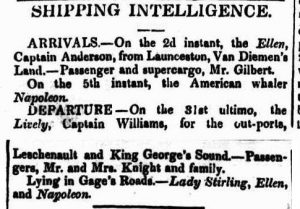
    Perth Gazette and Western Australian Journal (WA : 1833 – 1847), Saturday 6 April 1839, page 54

    Whaling ships already plied the West Australian coastline, and had done since before the colony was even established. The problem was, these were American ships from the US of A. Not a fraction of the take was returned to the colonial coffers and even the exorbitant harbour charges (collected by Mr Scott for a commission) merely induced them to found their own resupply depôts about the south west coast. To muddy the waters even further, one of these whalers who made frequent visits to Western Australian waters was also called the Napoleon. (WTF?)
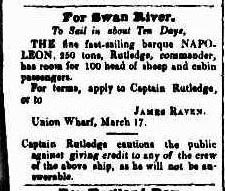
    The Cornwall Chronicle (Launceston, Tas. : 1835 – 1880) Saturday 3 April 1841 p3

    Daniel Scott’s intentions for investing in the British vessel of the same name are not straightforward. In 1841 the barque Napoleon was eight years old, had been built in Jersey, and had plied the English Channel between that island and London. The ship had a re-fit in England before it sailed to Australia. She was capable of carrying 250 tons of cargo, the purpose of her arrival in Launceston in March 1841 was represented as collecting supplies for the new Western Australian settlement at Australind. During the Napoleon’s unexpectedly long lay-up in Launceston she was still being advertised as cargo and passenger transport, even while she was being re-fitted for whaling purposes.

    The site of the Union Wharf where the Napoleon was re-fitted in Launceston, Tasmania. Photographs 2017

    During this period of over two months, it becomes evident that being part of Captain Rutledge’s crew was not an occupation one could walk away from lightly. James Bannister was the ship’s cooper’s assistant. He was convicted of absenting himself from his vessel without leave and served ten days hard labour on the tread mill in the House of Correction for his pains. Would James Dyson have joined such a crew?

    July in Western Australia, when the Napoleon finally returned, was out of season for whaling. The unproductive time may have weighed heavy on the crew, for in October another sailor from the Napoleon was convicted of stealing a pair of boots and other articles belonging to the ships’ owner Daniel Scott. He was sentenced to three months hard labour.

    Rutledge got in one cruise up the north western coast of Western Australia, but returns were disappointing and on his return to Fremantle  he was summarily sacked by Scott. Rutledge sued Scott. On 16 March 1842, officers and crew were required in court to be examined by the Commissioner. The Civil Court trial was held on 20 April 1842. Rutledge lost and immediately left the colony. The editor of the Perth Gazette was irritatingly coy about the matter, but he was a crony of Scott, as was the justice who heard the case:

    “…We refrain from giving the partial evidence adduced in this case, but cannot avoid expressing our regret that the case should be brought before the public. “

    The Perth Gazette and Western Australian Journal (WA : 1833 – 1847) Sat 19 Mar 1842 Page 3

    The old Swan River Guardian and it’s editor had long since been run out of town. They would have covered the matter in meticulous detail, and then we would have known: Had James Dyson been one of the crew members who gave evidence?

    Nicholas Groves, the First Mate, was now promoted to master of the Napoleon by Scott on 3 March 1842, the new log book started this day survives and states the rest of the crew were not very happy about the change of command. Two days later a new contract was signed between Scott and those willing to remain with the ship. James Dyson’s name was not recorded among those who did so, nor is he mentioned in any part of the log transcription held by the Battye Library, Perth.

    The Napoleon as a whaler was mercifully unsuccessful over her brief career. She sailed from Australia in 1845 and out of the records.

    James Dyson on the other hand, appeared in the official records of Western Australia for the first time on 25 October 1842 —on the occasion of his marriage.

    His nautical service, like his convict service, not conclusively proven.
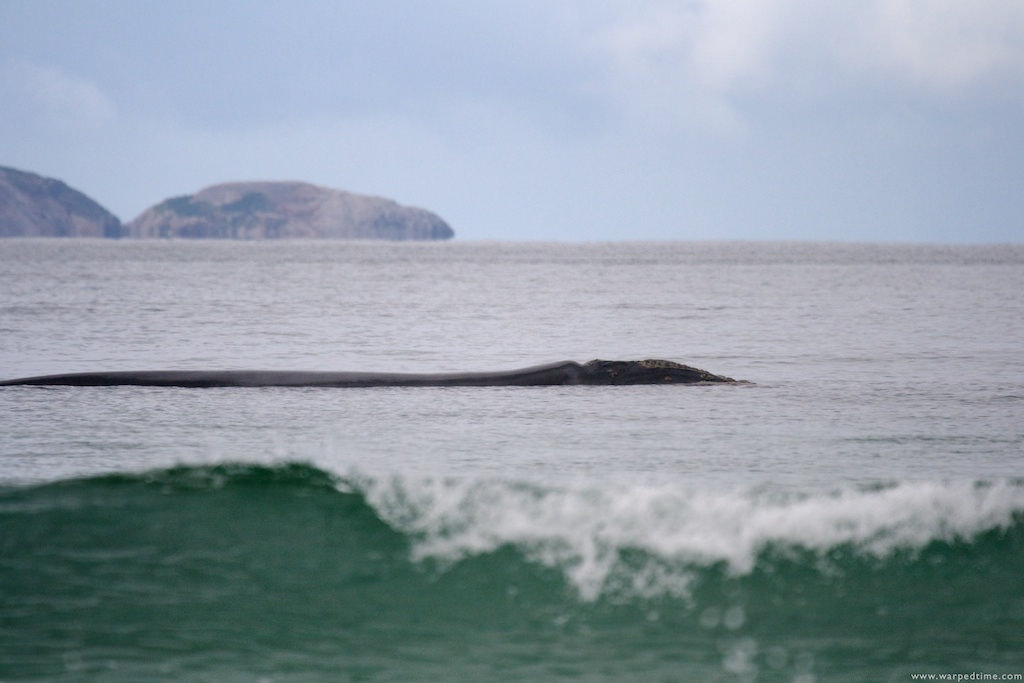
    And amen to that!
  • The Poste Restante

    The Poste Restante

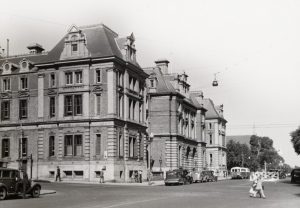
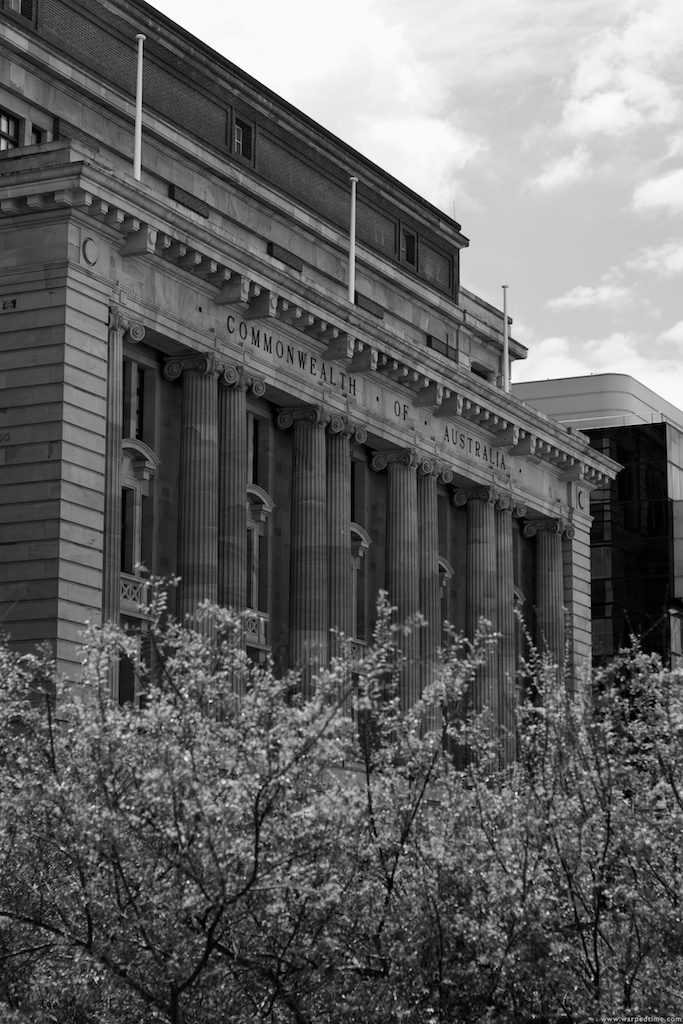
    “Poste Restante” is a French term that can be roughly translated as “remainder post“. It refers to when a letter is retained by a post office for collection in that building. Joseph Dyson, junior, ran the Poste Restante department within the central GPO building in Western Australia. Prior to the Federation of the Australian Colonies in 1901, each Colony had its own independent Postal service. These were all rolled together to form what is now known as Australia Post in 1903. The Western Australian service had a fairly grand headquarters on the corner of St Georges Terrace and Barrack street, on the exact site of what had once been the original soldier’s barracks for Perth. The Perth GPO then moved to an even grander structure completed in 1923 and the old building became home to the State Government Treasury Department. What is quite amazing is that both these structures, the Treasury (as it is now known) AND the Commonwealth GPO both still exist in 2017, and both have been sympathetically restored.

    By 1937 the old Perth GPO building was occupied by the Treasury Department. This was also the year Joseph Dyson junior died.

    Back in 1901, the building had then only recently been completed, but with a decade, it would be deemed too small.  In five years Joseph Dyson had risen through the ranks from letter carrier to head of the department. The workings of the Poste Restante were fully described in a rare article by a journalist who had conducted a full tour of the establishment. The complete article, archived on Trove, is reproduced below:

    THE GENERAL POST OFFICE

    HOW IT IS WORKED.

    The recent alterations to the Post-office, together with the new arrangement for receiving letters at that institution, have been fully described in “The Morning Herald,” and a brief reference made to the working of the various branches of this great and important department. In order to gain an idea of the working of the sub-branches, a representative of ‘The Morning Herald’ called at the Post-office yesterday, and, accompanied by an officer of the department, went through the poste restante and the letter carriers’ divisions.

    THE POSTE RESTANTE.

    The GPO sometime in the 1910’s. SLWA collection

    Nobody could form an idea of the amount of work which this branch of the General Post-office carries out daily. Something like 21,200 letters, besides newspaper packets and registered documents, are dealt with weekly by the staff. The offices occupied by the staff are situated on the eastern side of the Post-office hall, where letters addressed to the General Post-office are delivered as called for. The sorting of letters for private boxes and for the various Government departments to be called for entails much labor, and calls for alacrity on the part of the officials. There are 250 private boxes in use, from which the department obtains an annual rental of from one to three guineas each, according to the size of the box, which must be regulated according to the extent of the correspondence for the various firms. The advantages gained by business people through the introduction of private boxes cannot be over-estimated. The letters are placed in the private boxes, and may be extracted by the addressees perhaps hours before they would be delivered to them per the medium of the letter carriers. Besides this, there is an other distinct advantage to the box holders, as they are able to obtain letters at any time between 7 o’clock in the morning and 10 o’clock at night. The letters are immediately sorted into the boxes on the arrival of all mails, and it is therefore surprising to find that out of the 378 boxes in position only 250 are in use. The delivery windows, which are open from 9 a.m.. to 6 p.m., provide, plenty of work for a large number of the staff. In the boom time, before people from the other States had established homes in and around Perth, the number of letters delivered daily was so large that six men were constantly engaged sorting and handing out letters from the delivery windows. The number of letters passing through the Post-office has largely increased since that time, but now that the people are settled, and have fixed residences, the majority of the letters, packets, and newspapers are delivered by the carriers. But even, now the work of delivering letters addressed to the G.P.O., Perth is no sinecure.

    There are three delivery offices, the first being for letters from A to G, the second from H to M, and the third from N to Z, besides an additional box for taxed letters, and communications addressed to foreigners. At each of the first three boxes the principal work is that of sorting the epistles alphabetically into 108 pigeon-holes, so that they can be delivered when called for without the delay that would be experienced if all the communications addressed to people whose surnames commenced with, say, B were placed in one pigeon-hole. As it is now, persons can be informed in a few seconds whether there are any letters addressed to them, and if there are registered parcels they are given a ticket and sent to the registered letters’ office. Then there are many additional duties to be performed. One that occupies considerable time is that of re-addressing letters sent care of G.P.O. to private residences, in accordance with instructions sent in by the addressees. After being redirected these letters are despatched to the letter-carriers’ room, where they are sent out with the greatest possible speed. When an eastern mail arrives, the officers are often kept busy until 10 or 11 o’clock in the night— for which no allowance beyond the usual departmental leave of absence on full pay is made— the rule being that all mails must be sorted straight away, so that lessees of private boxes shall receive their correspondence without any delay whatever. For the work performed the staff is not a large one, although it has been increased numerically during the past few weeks by an innovation which has been resented, to a certain extent, by many officers of the service.

    Hitherto the work of delivering the letters at the G.P.O. was carried out by male officers ; now women carry out the duties. The alteration was brought about in this way. The increased business throughout the General Post-office necessitated the engagement of further hands, and with a view to economy women were engaged to deliver letters at the boxes, their predecessors being removed to other branches of the department. The women are not overworked— and certainly not overpaid — for their time does not average more than five hours per day. The work is tedious, but with five hour “shifts” the strain imposed on them is not great, and they appear to be contented with their yearly salary. The work was previously carried out by half the number of male officers, but as each of the women employed receives a salary of only 60 guineas per annum, the department is gaining a slight saving by the new arrangement.

    The branch is under the control of Mr. Joseph Dyson, and is in every respect up-to-date. In addition to the staff of women, two private-box sorters and two assistants are constantly employed. The introduction of female officers was not at first regarded favorably by the male employes, but it is believed that the system is now working satisfactorily.

    The Inquirer & Commercial News (Perth, WA : 1855 – 1901) Friday 28 June 1901 p 12

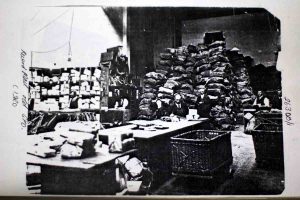
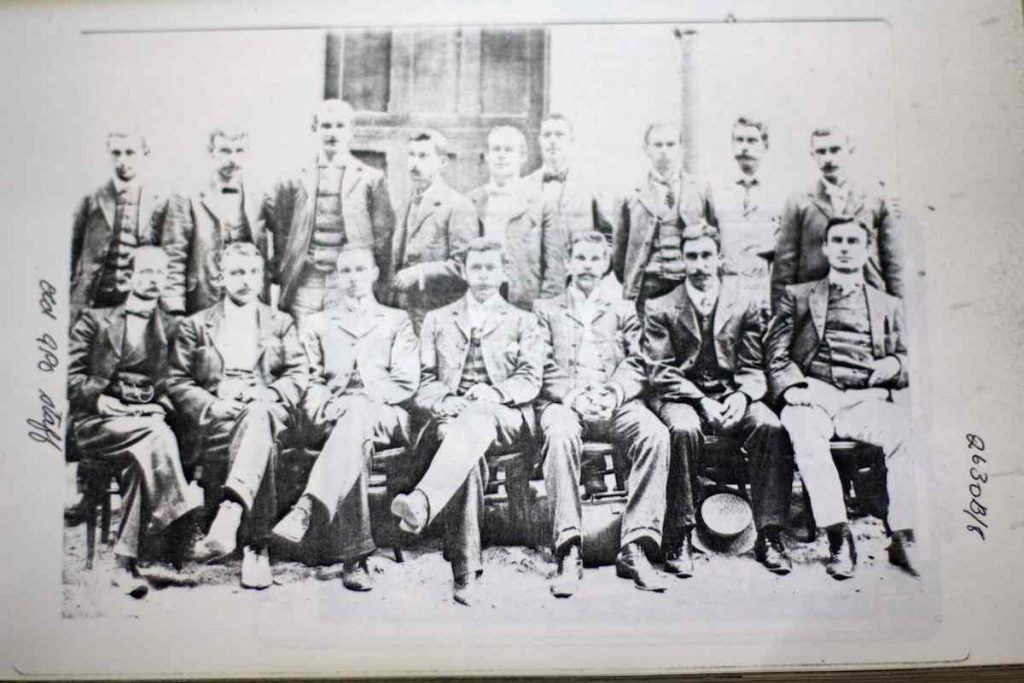
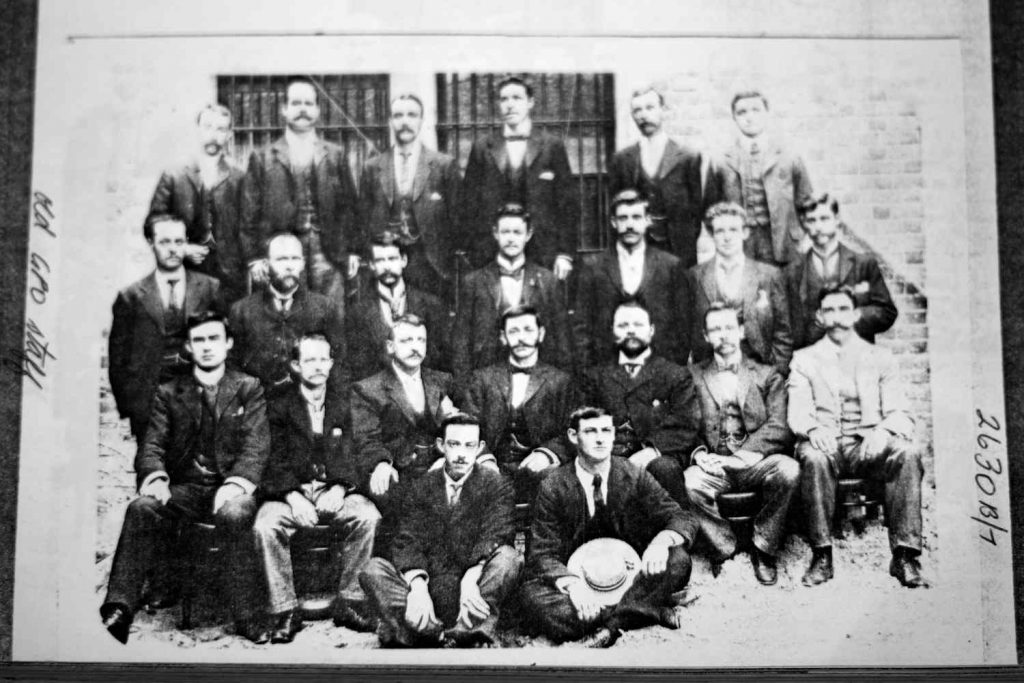
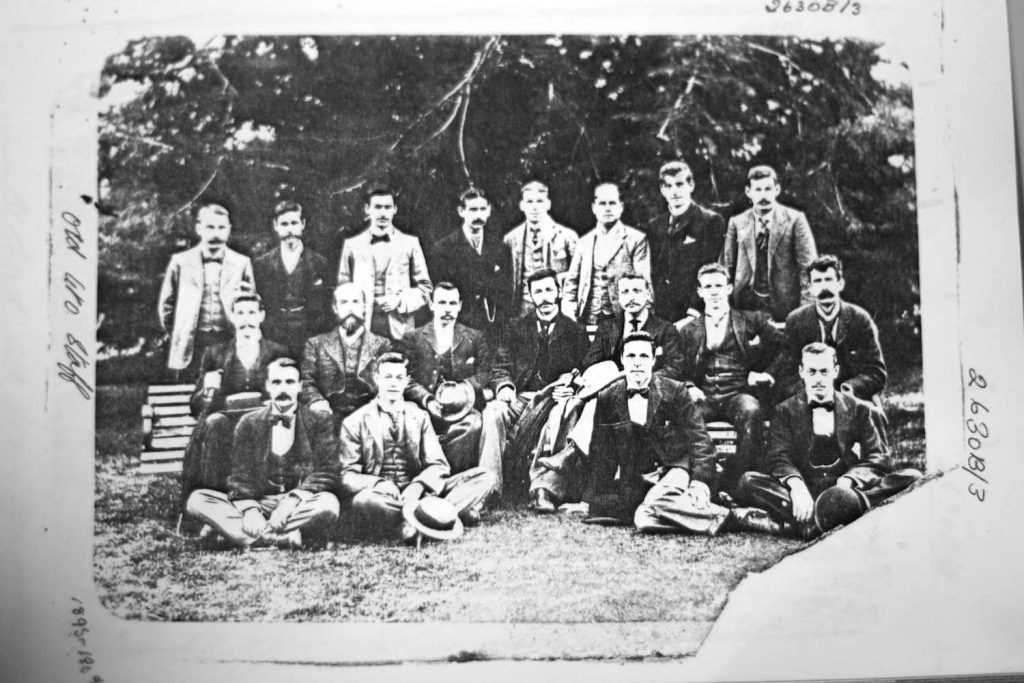
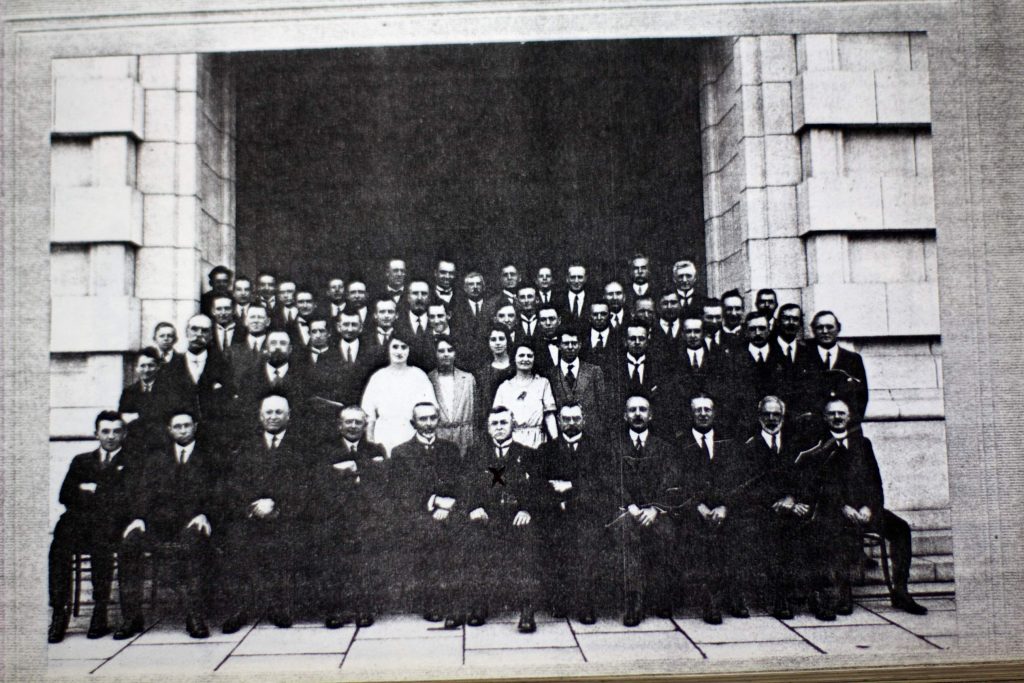
    During the Second World War the basement of the Commonwealth GPO building in Perth was converted into an air raid shelter, and the vast majority of the old Colonial Postal records that were stored there went into whatever the 1940’s version of the skip was. Within the records of the State Library of WA however, are a handful of group photographs of the staff of the during the early days.

    It may be that Joseph Dyson is in these photographs and I just don’t know it. This final image was taken on the steps of the new Federal GPO in Wellington Street. It must date from the 1920’s. Note the presence of ladies…:

    In 2012:

  • Going Postal: The great family rift.

    Going Postal: The great family rift.

    …About half-past nine last Friday night, my attention was attracted by a number of persons standing in front of prisoner’s brothers’ residence, in Murray-street; I was in plain clothes at the time, and Dyson’s sister — a little girl — came up to me and said that her brother Andrew was killing her Father;

    The evidence of P.C. Grant.

    The Daily News (Perth, WA : 1882 – 1950) Tuesday 13 January 1885 p 3

    The location of Joseph Dyson’s Bakery, also known as “Dyson’s Corner”. If you would like to see a larger, clearer version of this picture so would I.

    When Joseph Dyson, junior, was just thirteen years of age he would have been present when his uncle Andrew entered his father’s home on the corner of William and Murray Streets and proceeded to beat up his grandfather.  Old James Dyson had lived with them for a few years now.  A man named Barker separated Andrew “Drewy” Dyson from his father. Drewy then went out into the street to hurl, instead, abuse of the verbal kind at the gathering crowd. Finally, he returned inside the house and vented his frustrations on a small dog, before the police arrived to haul him away.

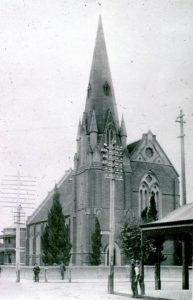
    The Wesley Church in the centre of Perth.

    Joseph’s step-grandmother Jane was no longer living with them. She was residing several streets away from them by then, in the old Perth Gaol — seven months into a five year sentence for theft. Meanwhile Matthew Dyson had been sentenced (in absentia) for disorderly conduct, and was now serving a spell down in Fremantle Prison. Joseph’s other uncle’s crime was to have thrown a rotten egg at a religious procession entering Wesleyan Church. That also happened to be the same church Joseph’s father, Joseph (the Elder), was a Sunday School teacher for, and lay just on the other side road from the Dyson’s home.

    All things considered, its not that strange that Joseph Dyson, hunior, might now have a jaundiced view of certain sections of his family…

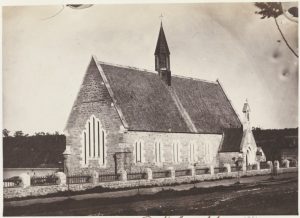
    Perth Boys School in 1861 photographed by Alfred Hawes Stone (SLWA)

    Scholastically he resembled his father. They both went to the same Perth Boy’s School, and were awarded similar prizes for their academic achievements. Back when they were all much younger, he and several of his aunts and uncles (many younger than he) had all marched together as school children for a parade celebrating the Queen’s Silver Jubilee (1879).

    By 1888, the year his grandfather died, Joseph (then 16) played Australian Rules football for a Perth team. In 1890 he was a member of a team called the “Pearlers”. Their captain was a lad only a year younger than he, by the name of Strutt. Arthur Ernest Strutt came from Melbourne, Victoria, to the west in 1885 with his widowed mother and several other siblings. He had a young sister, then aged twelve, called Jessie.

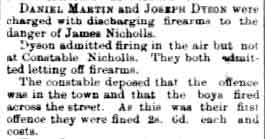
    The Inquirer & Commercial News (Perth, WA : 1855 – 1901) Friday 15 May 1891 p3

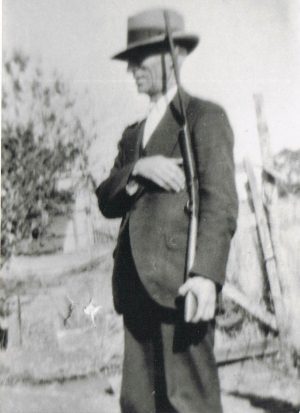
    Joseph junior, was just as capable of being an idiot as any other member of his family. On 11 May 1891 Uncle Drewy fronted the magistrate yet again, for another matter (this time for nearly running down a clergyman in his cart). The same day Joseph and a young friend appeared before the same magistrate for allegedly firing a gun in the street near a policeman. Fortunately for Joseph, this would his first and last appearance on the wrong side of a court room. Soon, he would have a very strong motivation for keeping his nose clean.

    This is the only photo this side of the family has of Joseph Dyson the younger. What was it with him and guns?

    Sometime in the year 1892, Joseph Dyson joined the Western Australian Postal and Telegraph Service as as a letter-carrier. Although there is nothing to suggest that influence was applied either way, Dyson had an relative in this sphere of the public service. Mr Richard Tremlett Hardman (1848-1927) was married to his Aunt on his late mother’s (Elsegood) side. Hardman was a mail contractor during the 1860’s, postmaster at York for a couple of decades, then appointed an Inspector in July 1893. Later he would be the Chief Inspector, rounding out his career as Deputy Postmaster General.

    Dyson’s career in the postal service was extremely respectable. By 1895 he was a mail assistant in the Perth General Post Office. By the time of Federation in 1901 he was head of the “Poste Restante” department within the GPO, a very responsible position. When the Western Australian Postal department was absorbed into the new Commonwealth Postal  service in June 1904, Dyson transferred to the new organisation, and retained his same pay grade: £180 per annum.

    He could afford to marry and start a family. He did so— to a now grown-up Jessie Christensen Strutt — in the Wesleyan Church on 7 February 1900. Their first house together on William street in the city, they named “Hawthorn“. Their first child, a son, was born there on the 5 November 1900, a very respectable nine months later. His mother-in-law, Mrs Annie Strutt died in this same house on 19 January 1901. She was a Scottish immigrant who ran a respectable boarding house in Perth during her long widowhood. The family next moved to a new house in the fresh Perth suburb of Subiaco. Respectability mattered to this family. Yes, brother-in-law Arthur Ernest Strutt would abandon his wife and two children never to be heard of again, but the Strutts were respectable. Why, back in Tasmania, (where that side of the family had come from) they were senior bureaucrats, politicians and brigadier generals during the 20th century.

    But those terrible Dysons, they were nothing but trouble…

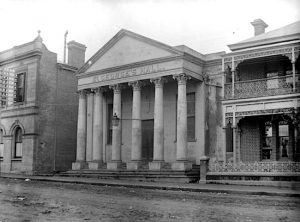
    St George’s Hall. The pillars remain, nowt else.

    Previously in 1893, when the junior Joseph was still attempting to establish himself as a public servant, another incident involving his outrageous uncle Drewy ensnared Joseph’s own father this time. The venue was the then newly opened St George Hall in Hay street; The performance was a play called “The Silver King”; The encore spilled out into the street and into the Police Court five days later.

    Andrew “Drewy” Dyson, if he had never quite redeemed himself after the death of his father, was now — gloriously and scandalously — who he would always be.  He owned a cart-manufacturing works located on a site directly across the road from the family home on the corner of William Street and Murray Street. The disagreement he had that evening may have had something to do with a dissatisfied customer (One of the milder obscenities he seemed to have uttered was something to do with it being “a b—— good cart”. It was obscene language — one word in particular — that had landed him before the court this time (but no, it is has not been recorded in the press).

    His the elder Joseph turned up at court to give testimony on behalf of his younger brother. He had been upstairs in the hall during the commotion, so he had heard nothing — and that was his evidence. Another witness called was a young lady named Emily Bates. Her evidence was likewise. However Miss Bates also happened to be Drewy’s mistress, further more, she was heavily pregnant with their child.  Only a month later she was packed off to the family’s property in Wanneroo for the birth. The boy — Andrew Samuel Dyson — was subsequently raised by Drewy’s long suffering wife as her own. Charlotte Dyson, but with certain pre-conditions.—

    The West Australian (Perth, WA : 1879 – 1954) Friday 22 September 1893 p5

    Drewy Dyson was the very antithesis of respectability, a well known racing identity in every sense of the term, then and now. Yet despite everything, he always remained close to his half-brother Joseph. Why, I’ve no idea. In 1910, on the centennial of their late father’s birth, they jointly placed a memorial in the local paper. They were proud of their father.

    The West Australian (Perth, WA : 1879-1954) Tuesday 19 July 1910 page 1

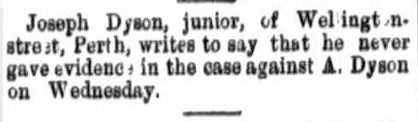
    But Joseph, junior, was not so enamoured of his heritage. Back in 1893 he was attempting to cast off the inky shadow of his father’s family’s name, a task all the more difficult because they shared the same name. The week after the reports of the court case were published, (Drewy was fined — yet again) a classified advertisement appeared in the same paper:—

    The Daily News (Perth, WA : 1882 – 1950) Friday 19 May 1893 p2
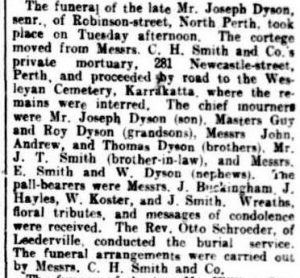
    The West Australian (Perth, WA : 1879 – 1954) Monday 27 May 1912 page 8

    Old Joseph Dyson finally passed away in 1912 aged 66 years, at his house in Robinson Street, North Perth. His son performed the required conventional pieties, and had him buried in Karrakatta Cemetery in the same plot as his late mother-in-law. No headstone was purchased. The grave is unmarked.

    But it was the day after the funeral that the final rupture between Drewy and his nephew most likely took place. Drewy didn’t even bother to turn up to the resultant court case; he sent along his wife to plead guilty on his behalf. The magistrates were without sympathy (it was rare that they were) and the fine of £10 for obscene language (yet again) was a very steep one. The words were uttered outside a house in Robinson street, the house is not specified, nor the two witnesses who gave evidence against Drewy, but a good guess can be made.

    As far as I can tell, from 22 May 1912, no member of the family of Joseph Dyson had anything to do with any other strands of the Dyson clan for the next one hundred years.

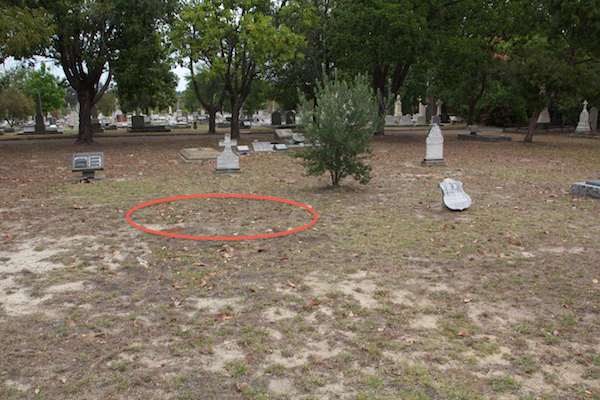
    The last resting place of Mrs Annie Strutt and Mr Joseph Dyson, parents-in-law, in Karakatta Cemetery, Perth.
  • All the girls love a soldier

    All the girls love a soldier

    During 1869, the last two companies of the British army were at last withdrawn from Western Australia. With the departure of the 14th Regiment of Foot, horrified colonists faced the terrifying prospect that they might now have to ‘foot’ the bill for their own security. There were still pensioner guards in the colony, of course. These were retired or invalided-out former members of the British Army sent out as settlers together with the convicts they were expected to guard.

    But by 1870, these 4000 odd pensioners and their families, including veterans of the Crimean War fought nearly twenty years before, were now scattered throughout the colony, and while there were a few of the Enrolled Pensioner Guard who still looked good on parade in Perth, their increasing decrepitude was cause for concern.

    The pensioner guard in front of their barracks in Perth

    Since 1862 there had also been a volunteer force of riflemen in the city. Various volunteer civilian militias had winked in and out of existence throughout the colony over the years, as the latest bogeyman of the British Empire crawled out from under the bed.

    Prussian soldiers of 1870. Look at their hats—no wonder they won— While the French were incapacitated by laughter, that’s when they shot ’em.

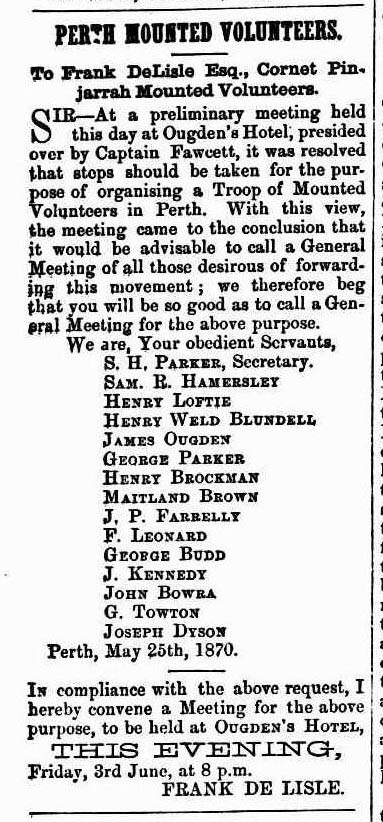
    It would been nice to have been able to link the call to form a cavalry troop in the city of Perth with the worsening international situation abroad, but as the Franco-Prussian War still lay a month into the future, I cannot ascribe the desire for a new military unit out of admiration for the funky Prussian headgear. On 25 May 1870, various Perth worthies signed a petition to Frank DeLisle, ranking officer of the Pinjarrah Mounted Volunteers and perhaps more pertinently, aide-de-camp to newly-arrived Governor Weld (as well as being his brother-in-law). Weld also brought with him the beginnings of representative government to the Colony, and one of those new representatives had his signature on that petition.

    Maitland Brown was a murdering bastard, and one of the most highly respected squatters in the colony because (not despite) of that. Also on the petition (the final name, in fact), was a young man of 25. He was Joseph Dyson, son of the timber dealer and respectable Perth town councillor, James.

    The Perth Gazette and West Australian Times (WA : 1864 – 1874) Friday 3 June 1870 p2

    Any calvary unit, is by definition, something of an elite or prestige unit, as historically, only those of some means would have owned the requisite horseflesh to seat their self-evidently superior rumps upon.

    Inquirer and Commercial News (Perth, WA : 1855 – 1901), Wednesday 9 March 1870, page 3

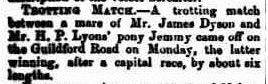
    Joseph’s dad was by now, a horse owner of some note, regularly loosing track of them, or loosing races with them. All his sons must have been able to ride with various levels of proficiency.— Andrew, Septimus and Octavius built careers around either horse riding or horse ownership. George Towton, whose name was also on the petition, would become a race-horse trainer of some repute. Aged 17 in 1870, he was the Dyson’s family’s next door neighbour on Murray Street in Perth.

    A Cornet?

    Nowadays we know it only as a musical instrument, but back in the day it was the military title of the lowest-ranking commissioned officer. DeLisle was Cornet of the Pinjarrah Mounted Volunteers so he was forthwith gazetted Lieutenant of the newly formed Union Troop of Western Australian Mounted Volunteers. “From Captains to Colonels” by James Ritchie Grant (1991) notes:

    …despite some initial doubts to its viability it was approved on the 19th July 1870

    (p51)
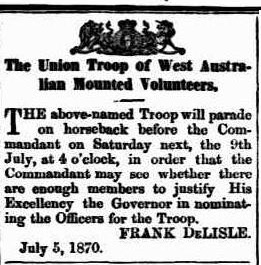
    The Inquirer and Commercial News (Perth, WA : 1855 – 1901) Wed 6 Jul 1870 Page 2

    This might be a little bit of an understatement. One of the delays in promulgating the new regiment was quite literally rain on their parade.  A new Cornet was appointed to the Troop, the gloriously named Cornelius C. Fauntleroy. It might have been there were too many chiefs and not enough Indians, for there were never more than fifty members of the troop and numbers fell as low as thirty at times:—

    THIS UNION TROOP OF MOUNTED VOLUNTEERS.—We trust that this Corps which gave so much promise of success on its first establishment, will not be allowed to collapse for want of attention on the part of the officers ; drill is neglected, one worst signs[sic], and unless the officers shew more zeal in the company, it will certainly come to an untimely end. To the officers we say, persevere and you will succeed.

    The Perth Gazette and West Australian Times (WA : 1864 – 1874) Fri 25 Nov 1870 Page 3

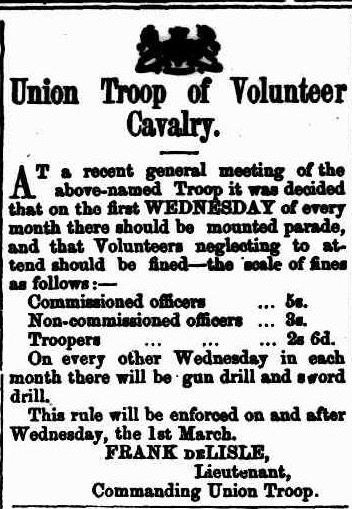
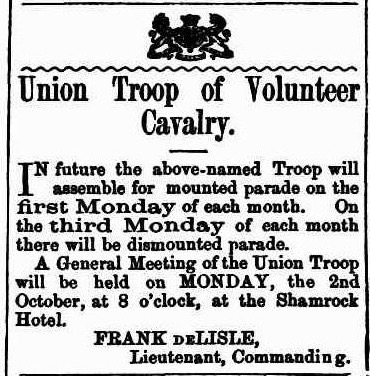
    The members of the Troop finally gathered at the pub to elect some NCOs (Non-commissioned officers), and not a moment too soon, for one of its first official duties was imminent, to be a guard of honour of their leader’s brother-in-law (the Governor) during the opening of the first session of (semi)representational government:—

    At ½ past 1 p.m, a guard of honour, consisting of the Enrolled Force, under the command of Capt Finnerty, and the Union Troop, under that of Lieut. DeLisle, assembled in front of the Council Chamber, to receive His Excellency the Governor and suite.
    On His Excellency leaving Government House a salute of 17 guns was fired, and on the arrival of His Excellency at the Council Chamber, the military presented arms, and the band played the National Anthem.

    The Inquirer and Commercial News (Perth, WA : 1855 – 1901) Wed 7 Dec 1870 Page 3

    Shooting things off at ceremonial occasions would be the raison d’être of this Regiment.

    The Perth Gazette and West Australian Times (WA : 1864 – 1874) Fri 24 Feb 1871 Page 2

    In February of 1871, the decision was made to wield a big stick and institute fines for non-appearance on parade. As far as carrots went— Their fellow volunteers in the Rifles received an annuity for good service of about 16 shillings, a nominal amount, but better than a poke in the eye with a burnt stick (as my grandfather used to say). I have yet to find evidence that their mounted brothers ever received— or were even offered —the same compensation. However, there was always the side perk that the girls apparently love a man in uniform… as was illustrated in a display the Troop put on for the inhabitants of Guildford, a few miles up the Swan River, in May 1871:

    GUILDFORD.
    From our own Correspondent.
    This town was enlivened on last Wednesday afternoon by the Union Troop and Guildford Volunteers, who numbered in force, and went through their various evolutions in a creditable manner. It is seldom the Guildfordites have the opportunity of witnessing such an array of horsemen in military uniform, and a considerable amount of eagerness to have a glimpse prevailed ; especially (may I be permitted to say?) amongst the fair sex, to whom the attractions of a soldier are ever predominant. I hear that it is the intention of the above Troop to have alternate meetings once a month in Perth and Guildford ; which should have the effect of producing more energy, and augmenting the numbers of each.

    The Inquirer and Commercial News (Perth, WA : 1855 – 1901) Wed 10 May 1871 Page 2
    The Perth Gazette and West Australian Times (WA : 1864 – 1874) Fri 29 Sep 1871 Page 2

    Nudge, nudge, wink, wink, say no more, say no more…  Later that month, nearly on the first anniversary of the meeting that started it all, they paraded for the Queen’s birthday public holiday (This being H.M. Queen Victoria, of course). There was another special meeting of the troop held in a pub in September, where it was decided to change the days they assembled together and paraded.

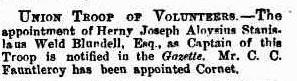
    And that was nearly the end of the story of the then Union Troop of Volunteer Cavalry.  In June 1872 DeLisle was replaced by a Captain Blundell, a man with an appropriately absurd string of first names. C. C. Fauntleroy’s name was already silly enough, so he was retained as Cornet.

    The Herald (Fremantle, WA : 1867 – 1886) Sat 29 Jun 1872 Page 3

    Blundell was an British army officer with Artillery experience, so less than a month after his appointment, the Cavalry troop were no more, replaced in name, but not in purpose, by the Western Australian Troop of Horse Artillery. Making martial sounds at celebrations was their primary reason for being.— budgets being such, that shots in anger were limited to one discharge a year. Nevertheless, mocking aside, this volunteer force did survive in various iterations to eventually be rolled into the new army of the Australian Commonwealth in 1903 as the No1 WA Battery Australian Field Artillery.

    1872 was a year of economic problems in the west. To balance the books, the government abolished the tiny stipend paid to the Perth Volunteer Rifles, and presumably other units as well. Their Captain resigned in disgust and the whole regiment was disbanded for ‘insubordination’. This may be significant for the Dyson story for the following reason—when it came time for the volunteer’s rifles to be collected, only one could not be accounted for. An Enfield rifle issued to Private William Elsegood was not returned, and if the matter was ever resolved, record of it is not surviving in the official correspondence. It was still missing by November… [pdf]

    This W. Elsegood could be one of two people: William James Elsegood was 27 in 1872, a carpenter and builder who would go on to construct part of the overland telegraph line to South Australia; or his father, William Hunt Elsegood,  52 years of age,  a carter in town, but before that a Lance Corporal in the 96th Regiment of Foot. Elsegood was posted to the colony back in 1847 but stayed on as a civilian to raise a very large family. He had a daughter called Mary Ann, who was born in Perth, and by 1872 was aged 19.

    On 2 September 1872 she abruptly married 27 year old Joseph Dyson. Almost one year later, their only child and old James’s first grandchild was born in Perth. The child they named Joseph Dyson junior.

    Now, there are a lot of gaps in the record. We know Joseph Dyson had something to do with the setting up of the Union Troop of Cavalry, but there is no evidence as yet, for (or against) him actually being a member of the troop, and if he was a member, how long did he serve? But I would like to think that a gallantly attired cavalryman in quite a spiffy hat might have caught the eye of the teenaged daughter of a grizzled old soldier…

    …then later on that father (or the brother) used the display of a bit rogue ordinance that just happened to be in their possession to ensure the young buck did the right thing. Nearly a literal shotgun wedding? The romantic in me likes to think so.

    …continued.

    Update 29 April 2025:

    The earlier version of this tale was funnier, but what is actually recorded on the original birth record of a certain individual has to take precedence over a faulty transcription.

  • In Old Hobart Town

    In Old Hobart Town

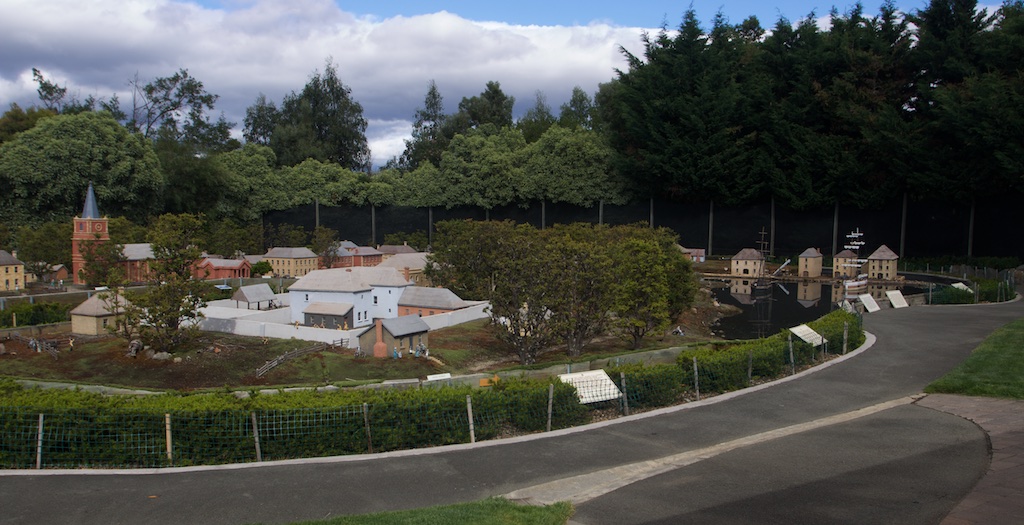
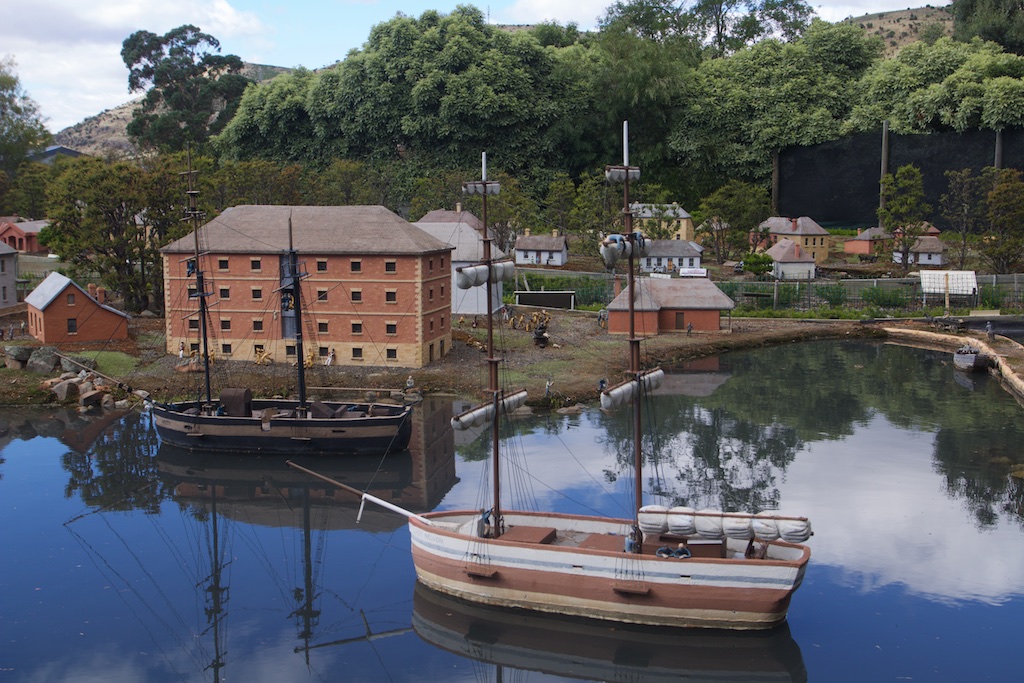
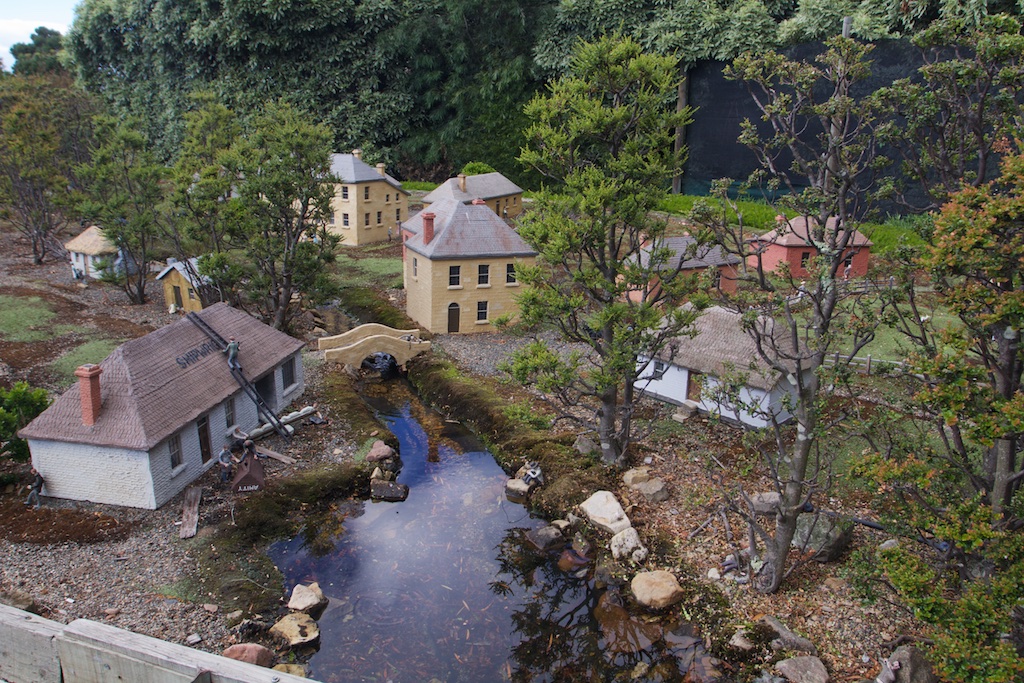
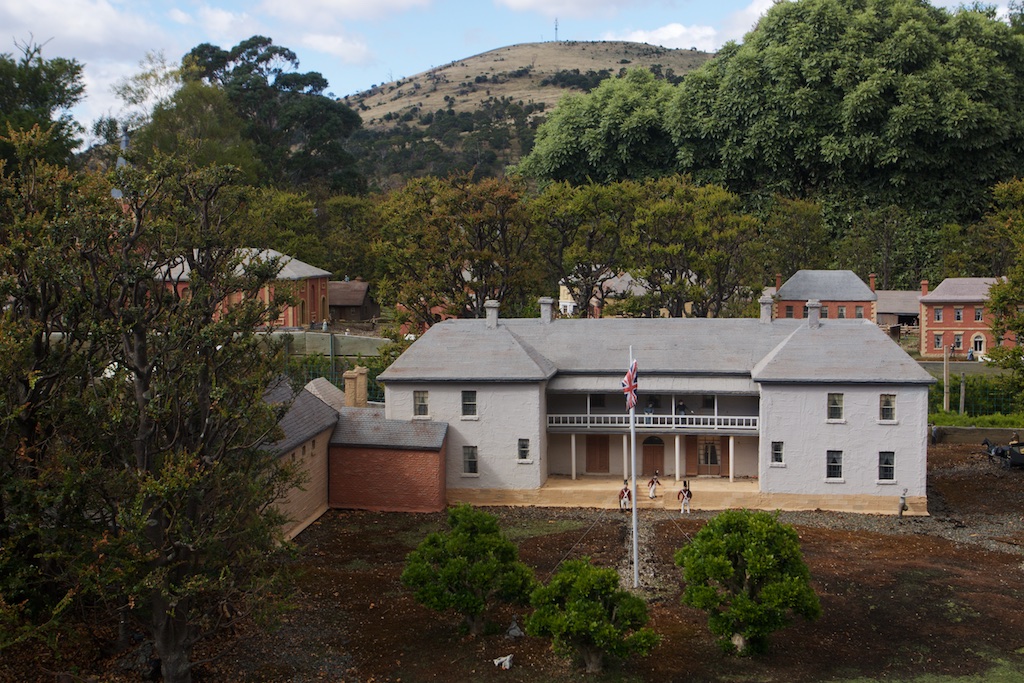
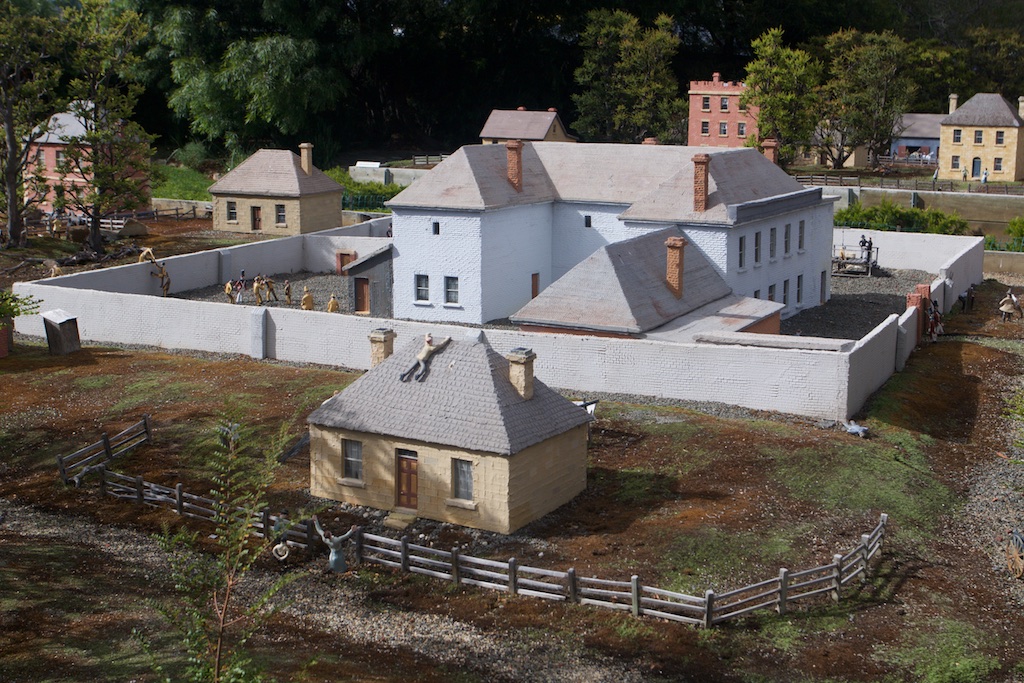
    If you want to get an idea of what the Hobart Town of 1834, the year that the convict James Dyson arrived there – was like, you are better off  travelling roughly north about 25km from the modern city to the settlement of Richmond, once a convict depôt and staging post on the road to the north. Many of the buildings there date back to the 1820’s – before Dyson’s time – but still a place he might yet recognise were he was alive today. But it is a far more modern addition to the town that is the greatest aid to re-visualising the past: The entire CBD of the early colonial town of Hobart has been recreated in a large scale diorama as a tourist attraction.

    As Perth (Western Australia) has been (although not quite to the same ruthless extent), Hobart was greatly redeveloped in the twentieth century and most of her early buildings are gone. Both settlements experienced massive foreshore reclamation projects which have utterly changed the landscape around their earliest hubs of settlement.

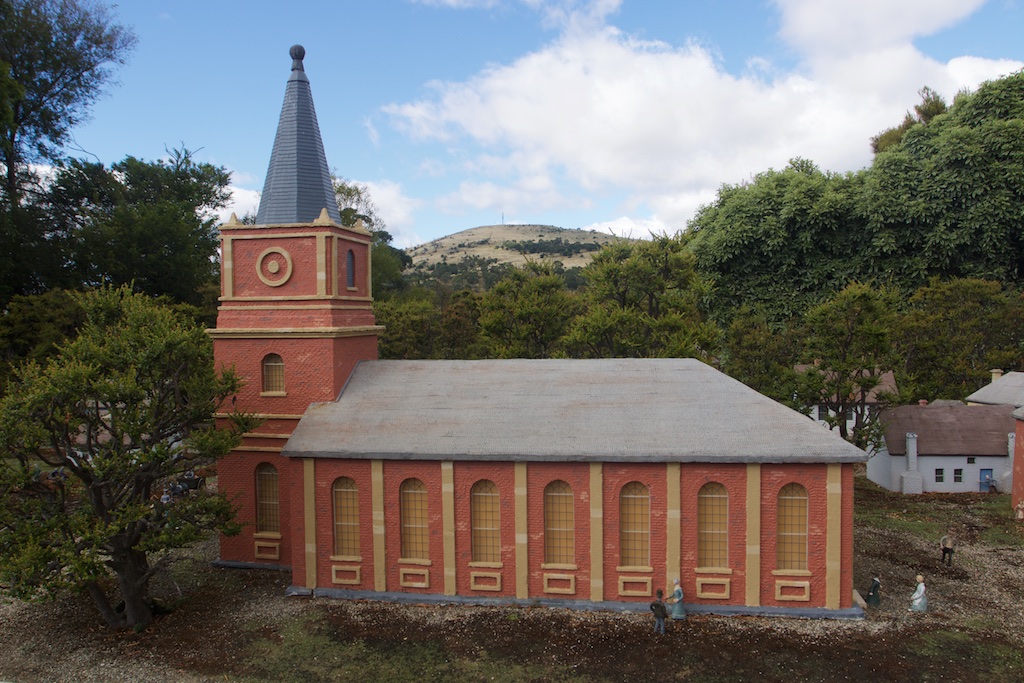
    The Old Hobart Town Model Village, although it is also a recreation of the 1820s period, reconstructs some of the key buildings Dyson must certainly have stepped inside, if he did not also shuffle past them in chains during his time on the road gangs. Needless to say, the Hobart Gaol is one such long vanished structure.

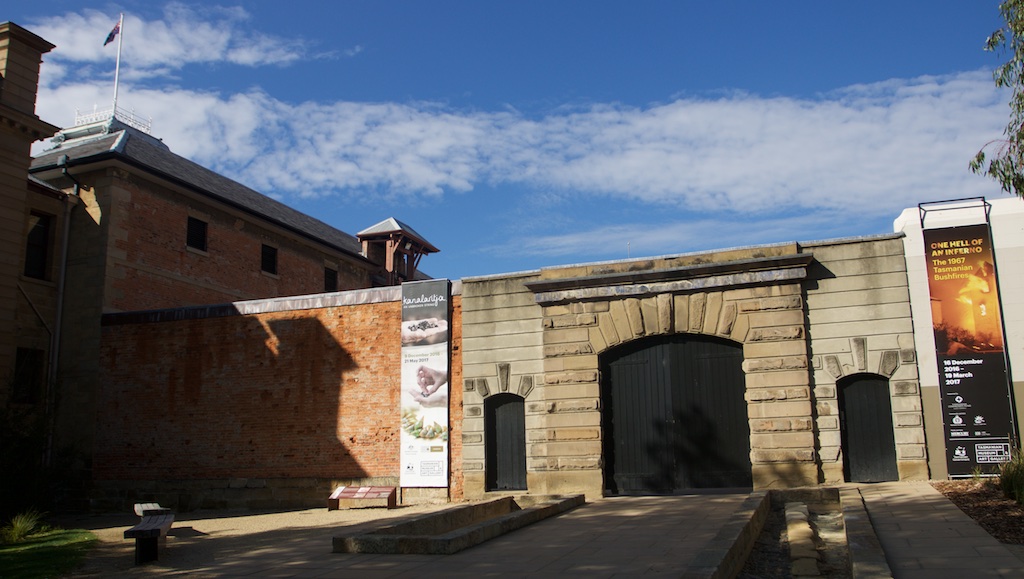
    The Commissariat complex, now part of the Tasmanian Museum and Art Gallery site, 2017.

    Back in Hobart, the State Museum and Art Gallery is housed in one of the few surviving complexes that Dyson might have seen with his own eyes. It was once the Government Commissariat stores, a Custom house and Bond warehouse. It would have been one of the first places Dyson would have seen when he was marched off his convict ship on 9 May 1834.

    Since the formation of the Colony, no vessel has ever brought out so many persons as the Moffatt. The number of convicts on board, comprising the prisoners, crew, passengers, guard, &c., is not less than 490, vis:—Convicts, 393 ; crew, 55 ; Military, 35 ; passengers, 7, not including children. She is 821 tons burthen.

    The Colonist and Van Diemen’s Land Commercial and Agricultural Advertiser (Hobart Town, Tas. : 1832 – 1834) Tuesday 13 May 1834 p3

    But he would not be seeing Hobart Town at it’s best, only a few days before a violent gale had hit the town, stripping the lead from the tower gutters of St David’s Church. This original church has long since gone, except in model form.

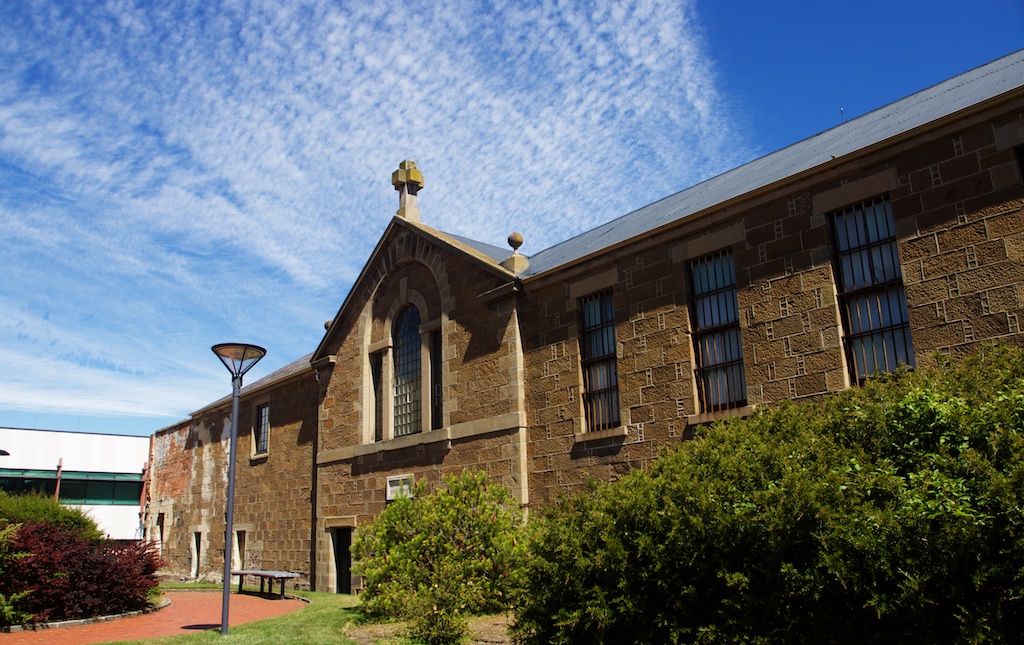
    The other significant surviving convict structure in Hobart that Dyson would have been all too familiar with would be the “Tench” or the Van Diemen’s Land Prisoners’ Barracks Penitentiary.

    Outside the “Tench” in 2017

    The surviving structure consisting of a chapel built in 1831 to service the spiritual needs of convicts housed in the adjacent gaol and barracks. These barracks must have replaced the earlier gaol as was represented in The Model Village.

    Since 1826, in whichever buildings those functions were carried out, the superintendent of the prisoner’s barracks and later, the gaol in Hobart was the one-armed Lt. William Gunn. He had lost that arm in the fight against the gang of the most notorious bushranger and runaway convict Matthew Brady, who was hanged that same year. For some unknown reason in August 1836, James Dyson did not return to the convict barracks for an entire night. Gunn ordered him to three weeks hard labour in view of the Town Surveyor’s Gang.

    I would have loved to have visited the “Tench” in Hobart during my first and only visit there in January 2017, but the museum was closed that day.

    “Such is life” …as another Australian convict once said before they hanged him.

    James Dyson’s convict record in Van Diemen’s Land

  • Dorothy Dyson Dances

    Dorothy Dyson was the youngest daughter of Joseph Dyson junior and Jessie Christisen nee Strutt. Jessie was born in Melbourne, the youngest child of James Strutt, a draper and largely unsuccessful businessman who died in 1883 when she was only 5. Her mother, Annie Brown Brough was a young Scots immigrant from Perthshire who maintained links with her relatives in Scotland as well as her husband’s English family who settled in Tasmania.
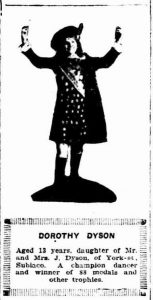
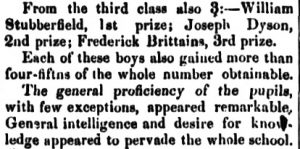
    Annie relocated herself and her family to Western Australia sometime in the 1890s. She may have run a boarding house. One of the earliest references to the family in the west is of one of Jessie’s teenage brothers captaining a football game. Also in the Perth City side was a slightly older lad called Joseph Dyson.

    But first to be married in Western Australia was Jessie’s older sister Mabel to a man named Couch in 1895. A daughter soon followed. Of her, more later.

    In February 1900, Jessie married Joseph Dyson, junior, the only child of Joseph Dyson the elder, who in turn, was the eldest surviving son of James Dyson—who at his respectable peak, had been a long standing Perth City Councillor. Young Joseph had risen through the ranks of the colonial postal service in Western Australia to be, at the time of federation, in charge of the Perth GPO postal sorting division. His mother-in-law Annie Strutt died latter that same year. Despite contact being maintained with the Tasmanian Strutts, the identity of the family was solidly that of Annie’s Scottish heritage, to the point where, 100 years on, researchers of this side of the family came to their studies believing that the Dysons had always been Scottish. Any association with Joseph’s rather colourful family came to an end with the death of his father Joseph the Elder in 1912.

    The family were finally established in a house in York street, Subiaco, which they titled “Mandalay”. There’s no point looking for that house today, its been redeveloped. Dorothy Dyson was born towards the end of 1911, the only daughter of three surviving children.

    Mrs Jessie Strutt was an active member in the Caledonian Society, a Scottish cultural organisation in Australia which seems to have exploded into prominence  in WA during the gold rush of the late nineteenth century,  peaked in the first world war period and remained popular into the 1920s. Scottish dancing and music were organised and displays and competitions keenly contested.

    Miss Ethel Philp seems to have risen up through this system of dancing competititions and exhibitions. Born in 1899, in West Perth, she was about the same age as the Dyson’s eldest son Leslie Guy, born late 1900. Her parents were Victorians of Scottish ancestry, a very similar background to that of Mrs Jessie Dyson. Their families definitely mixed together for in 1916, Jessie’s niece (that daughter of Mrs Mabel Couch now grown up) married Ethel Philp’s older brother. By this time Miss Ethel had long been famous in Western Australia, as a prize-winning Scottish country dancer, and at the time of the outbreak of the first world war, famous for her dance school for young children. The papers of the time have numerous advertisements for such schools and it was expected that these schools or troupes would take part in parades, exhibitions or concerts, held in such prominent locations as the local town halls.

    Miss Ethel Philp’s break out year seems to have been 1916. She was only 17 herself, but she had a knockout child prodigy dancing star in her class. Aged 5, Baby Dyson, aka Miss Dorothy Dyson had arrived. Also, with the first world war at it’s peak, these colourful displays were used for fund raising and morale purposes. Mrs Jessie Dyson becomes more and more involved in the organisation of these spectacles, she was also a designer, and possibly a seamstress for many if not all the costumes.

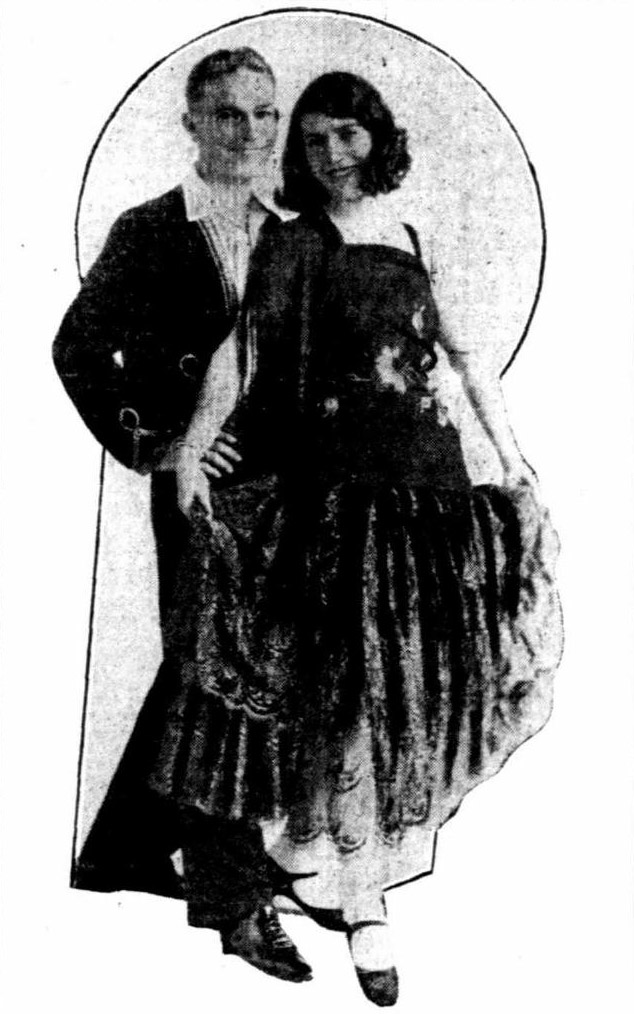
    Sunday Times (Perth, WA : 1902 – 1954) Sunday 23 November 1924 p30

    During and after the war, a routine was established. The dance school opened for students in March, and at the end of the year increasingly extravagant exhibitions were held in places such as King’s Hall in Subiaco or the Perth town hall. Occasionally the troupes went on tour to far-flung and exotic locations such as Albany. As Dorothy Dyson grows up the “baby” moniker is dropped and she wins more and more competitions in her own right. The sheer quantity of medals acquired in such a short time must be evidence of the number of events and competitions that were held in this state. I don’t have any evidence that she travelled out of it till much later.

    Not long after her 21st birthday (for which Dorothy danced for) Miss Ethel Philp married (Dorothy, aged 10, also dances at this event) but she continued her dance school under her maiden name. In 1924 Mrs Ethel Sheehan made a visit to the eastern states during the off months of January to March to learn the latest dance moves which presumably she teaches to the greatly impressed hicks back west…
    Meanwhile Dorothy performed at many functions for the Caledonian Society including a very popular gig on New Years Eve. She was also an early performer on radio in Western Australia, broadcasting from the Perth Town Hall.

    By age 14 Dorothy Dyson was teaching her very own class of child pupils. She would seem to be in direct competition with her old teacher, but it is more probable Ethel handed over her business to Dorothy as she retreated from it into marriage. Dorothy was a favourite with the press. Pretty much every year a paper would publish her picture about the time of her annual extravaganza in November or December. She never got a bad review. Almost immediately after that, she would depart on a ship, or later a train, with her mother, for the eastern states on a three month holiday, where they would visit relatives in Tasmania and Dance schools in Sydney and Melbourne. The social pages of the press would announce their departure and return.
    This situation continued up to Dorothy’s marriage to Mr Selby Norton in 1937. He was a dance partner of hers from at least 1933.
    Her father, Joseph, died a little over six months after her marriage.

    Mrs Selby Norton performed for a Red Cross fund raiser in 1939, but this is as far as my researches have reached.. So far.

    But I do know that the performance and dance tradition was maintained by her grand-children if they realise it or not…

  • Joseph Dyson the Elder: The Respectable one

    Joseph Dyson the Elder: The Respectable one

    Could the situation have got any more tragic for the Dyson family in the November of 1859? This is the family of James Dyson, the timber merchant of Perth, Western Australia we are talking about here, so yes it had been (and would be again).

    Since the death of Dyson’s first wife, the family had actually been doing fairly well. Convicts had arrived in the Colony during 1850 and cut labourer’s wages by 60%, It was hard at first, but Dyson was now an employer himself, and by utilising both free and ticket-of-leave workers, he was soon to be counted among the largest employers of labour in the colony.

    He was on the cusp of eligibility (through his growing real-estate holdings) to be selected as a juror, and hence, eligible to stand for public office. Having £150 in assets was the measure of tangible respectability for a man who was was yet to marry his future second wife, although they already had seven children together (including two from her previous marriage and three from his). They were counting down the days until her first husband could be declared legally dead. Dyson clashed in court with the Perth Town Trust over the right to collect timber on the Trust’s land, but soon he would be eligible not only to vote for councillors to that body, but be a councillor himself.

    Awards day: Inquirer (Perth, WA : 1840 – 1855) Wednesday 28 December 1853 page 3

    He had three sons on the cusp of manhood. William, the youngest surviving child by his first marriage was then twelve, and might have been a bit of a concern. He did not seem to have the academic nous of the next, Joseph, then fourteen, who was one of the first students to attend the state-run Perth Boy’s school in St George’s Terrace (when it was opened in 1854).

    Perth Boys School in 1861 photographed by Alfred Hawes Stone (SLWA) Joseph Dyson would have been among the first students to use this building. Other buildings including the courthouse were used before this.

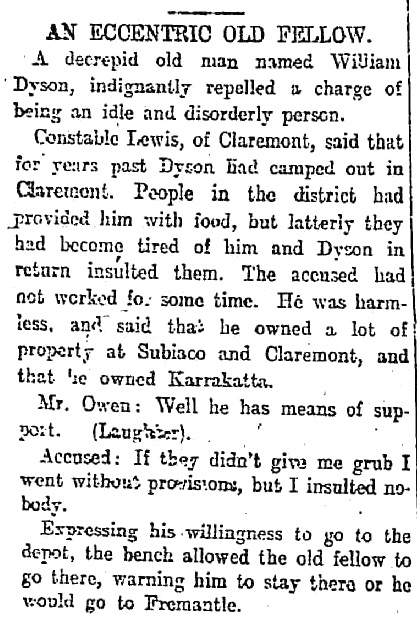
    This is speculation based on the abject lack of any future positive mark William has left to posterity. There is a mention in 1887 that he may not have been able to hold his liquor (thus marking him out as a true Dyson), then there are a number of traffic offences (involving horses). One of these includes a fine for mistreating a horse, which leaves me unable to summon any affection for him whatsoever. William’s ending was sad. He did not seem able to function outside the family umbrella, so by the beginning of the 20th Century when the family of James Dyson had well and truly disintegrated, he was reduced to the situation of being a mad old bastard ranting about the extent of his family’s fortune back in the good old days.

    The Daily News (Perth, WA : 1882 – 1950) Saturday 19 March 1904 p8

    The “Fremantle” they threatened him with was, of course, the insane asylum. The Old Men’s Depôt had not long been moved from it’s uncomfortably public location at the foot of Mt Eliza to a less confronting locale conveniently situated in Claremont. William was only 54 years old at the time. He lived the rest of his life in the Claremont Retreat, later known as Sunset Hospital, where he died, totally forgotten, in June 1915. He was buried in an unmarked grave in the cemetery at Karrakatta. He had outlived all his immediate family.

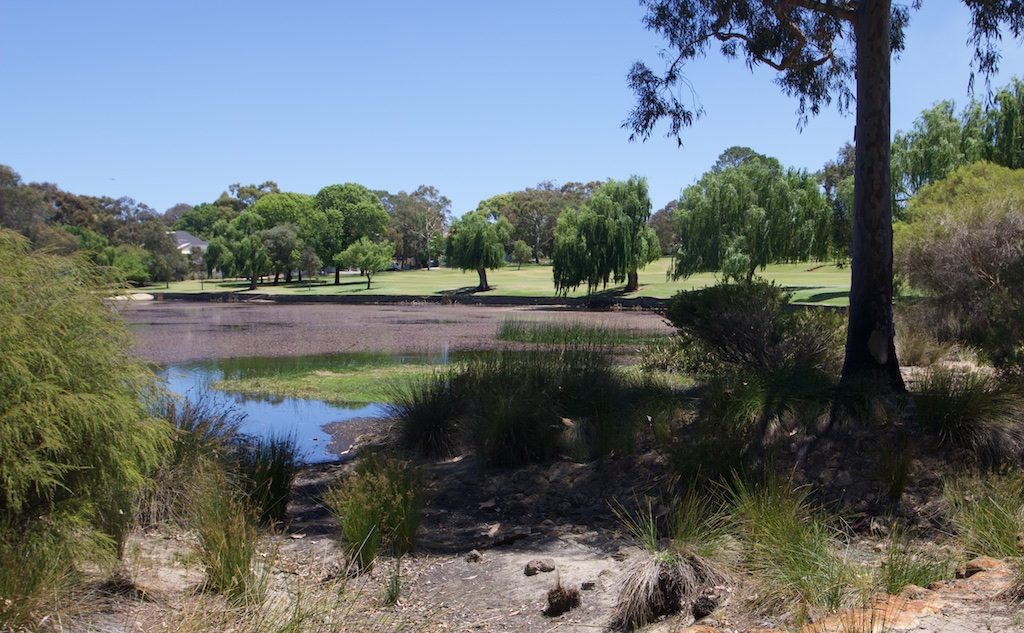
    The Dysons had famously owned property in the Subiaco-Claremont area. In 1858 James purchased a wetland lake from George Shenton, senior. Apart from being one of the most influential merchants and financiers in the Colony, Shenton was also the chairman of the Perth Town Trust, yet despite that, seemed to hold Dyson in some high regard. Many years later, Dyson was compelled to sell the lake back to Shenton’s son, George, junior. The area around the lake was a significant camping ground for the Noongar inhabitants near Perth. Their name for the wetland area was Julabup, but from the time of Dyson’s possession of a British title deed, it became known as Dyson’s Swamp.

    There are no records of Dyson’s interactions with the aboriginal custodians of his property, so I remain cautiously hopeful relations were good. Julabup is now formally returned to its original label as Lake Julabup after a long stretch when it was known as Shenton Lake. But it will always be Dyson’s Swamp to me.

    Lake Julubup in 2016

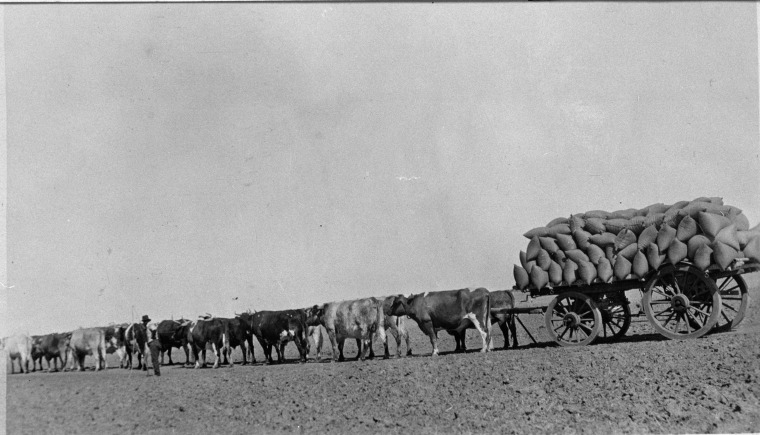
    Dyson had been expanding from his original business as a timber cutter, to being a building contractor, market gardener, baker, butcher, brick-maker and general dealer. Not that he personally did any of these things—that was what convicts and family members were for. Dyson’s swamp was a key asset. The Perth city herd of cattle was marshalled just outside the north of the city. In theory the abbatoirs were supposed to be on the eastern edge of town, by the Claise Brook—In practice, butchers plied their trade wherever they had their premises. Dyson’s Perth city dwelling and butchery was on the corner of William and King Streets. This was the first Dyson’s Corner. Dyson’s swamp was a convenient watering area for the herd near the town, as such, it was quite a lucrative piece of real estate. No doubt it was also a useful source of timber that he could legally exploit. His eldest son might well have been carting timber on the bullock cart when James Dyson’s world fell apart.

    George Dyson might not have had the formal education of his younger brother, but he was described as sharp, active and industrious when aged nearly sixteen. It is not hard to imagine that he was his father’s pride and joy. Two months after his death, his desolate father was drinking himself into insensibility. It was a uniquely nineteenth century traffic accident. The bullocks pulling the cart had swerved suddenly and crushed the young lad between the wheels of the cart and a tree. He died a short time later. The accident certainly took place on the path to Dyson’s Swamp.

    An example of a bullock team from about three quarters of a century later in the south west of Western Australia. [SLWA]

    The grave site of George Dyson is lost. If George had lived, the fortunes of the Dyson clan might have been very different. But George was gone. His place as James’s heir was inherited, somewhat awkwardly, by James Dyson’s second son. This is where Joseph Dyson the Elder’s story really begins.

    …continued.

  • Are you my Mummy?

    Are you my Mummy?

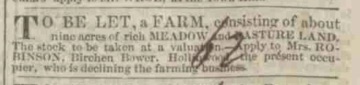
    Birchen Bower in Hollinwood, Lancashire.

    I could not believe my eyes when I first read about Hannah Beswick of Birchen Bower.

    It was not that I could not believe in a ghost story — although that part of the legend I still find challenging — but that I could find a tale with so much in it: haunted houses, buried treasure, invading armies, a real-to-death mummy in the attic, AND find out I had an actual family connection to it all. That was the good news. More disappointing was attempting to investigate further and finding so few primary sources to draw upon.

    The least suprising aspect of this tale was that there was a Dyson component to it. If any family was going to have a haunted house associated with them, it was going to be these Dysons of Lancashire, the siblings of the same James Dyson who was contemporaneously creating a new life for himself in Western Australia during the middle of the nineteenth century.

    A DISMAL autumn evening. The mist hangs heavy on the silent landscape, and wreaths in ghostly folds above the stream. Along the highway rides carefully a man of sober garb and mien, who, passing the ancient Bower House, continues his way to a smaller residence by the river side of Birchen, Lancashire. “So she has left it,” he mutters as he glances back at the ancient residence, now but faintly outlined in the mist. “A goodly property ; and she fears the grave. Ha! who will inherit it, I wonder? And her money ? If rumour speaks truly, she has buried it.”

    “Haunted Ancestral Homes” Illustrated Sydney News, Sat 1 Oct 1892 Page 12 (Trove)

     If an army of hairy Scotsmen were descending towards you in the November of 1745, you would have buried your gold too (and maybe yourself as well, to save time) — you had only to look to history of how the Jacobites treated their own countrymen that last time, to know that no mercy would be shown to a rich Sassenach couple. But spinster Hannah Beswick and her bachelor brother John did survive Bonnie Prince Charlie’s invasion of Manchester with their property unravaged. John had— apparently— almost been buried alive; but his eyelids flickered just as they were about to close the coffin lid. He still predeceased his sister though, leaving her the manor house and farm of Birchen Bower in Hollinwood.

    When she died, so the legend goes, she specified she was not to be interred. So her medical attendant (who did quite well out of her will, thank you very much), embalmed her instead. Dr Charles White was not one to let a good thing go to waste, so he put the old lady on display at his house in a clock case (to be seen for a fee, no doubt). Later on she ended up an exhibit in the Manchester museum. Late Victorian squeamishness eventually saw the poor old mummy buried in an unmarked grave in 1868. She had been above ground for 110 years.

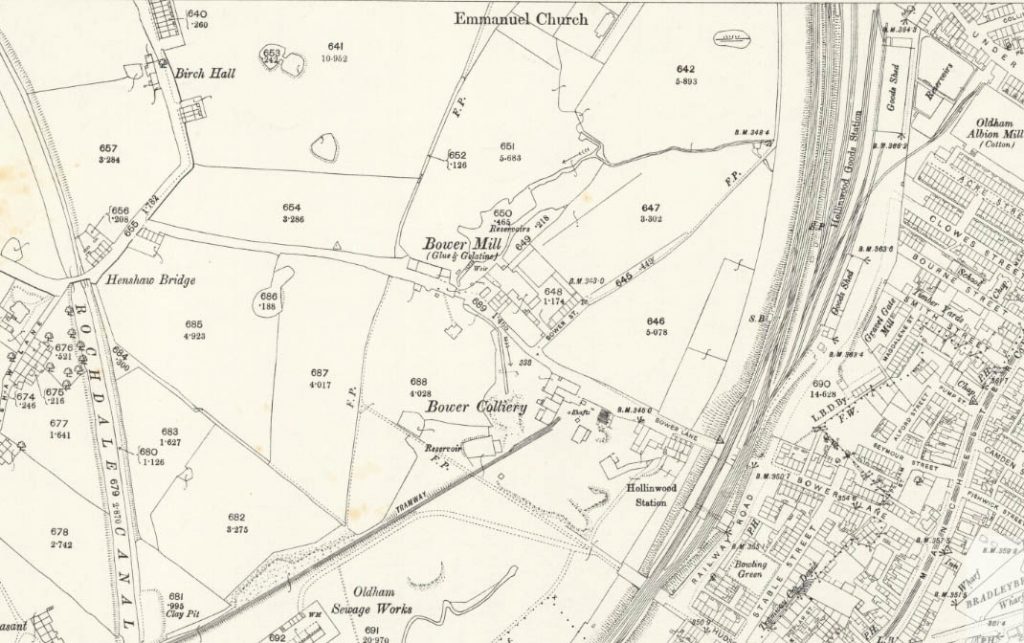
    Section of an Ordnance Survey map of Hollinwood from 1890

    These Beswicks died during the eighteenth century. The Hollinwood manor (but not the farm) passed out of the family’s descendant’s hands during the following century in November of 1834. The next owner (or maybe a tenant) of the manor building was Mr Samuel Wolstenholme, but he was declared bankrupt in March 1836.

    A wing of the house was demolished, and the remainder was subdivided into tenements for cotton-spinning workers. When you consider all the old Lancashire cotton mill buildings now being transformed into supermarkets or luxury apartments during this twenty-first century, you will realise there is nothing new about this form of recycling.

    Almost as soon as the old lady had been embalmed, reports of her ghost had began to be recorded around the old manor house and the adjacent farm. It was part and parcel of the legend of course, that her gold was never officially recovered. Unofficially, some items were recovered by various tenants over time, but none of them seemed to have got rich… or did they?

    Manchester Courier and Lancashire General Advertiser 12 October 1839 p1

    Enter the Dysons. James Dyson is out of this story. By the time Mrs Robinson, a descendent of Hannah Beswick on her mother’s side, sold sold the last of the property — James was on a convict ship to Van Diemen’s Land.

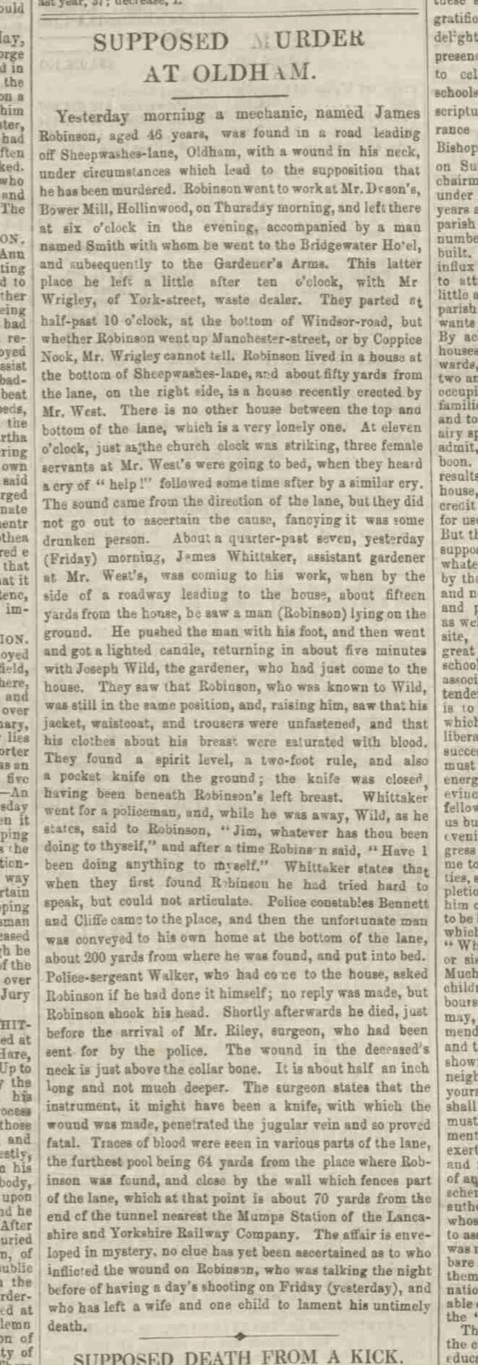
    Then during 1839, the same year James’s father Joseph died, there were worrisome reports that Chartists were drilling in the fields outside Birchen Bower. It seemed revolution was in the air.

    Manchester Courier and Lancashire General Advertiser 15 January 1859 p7
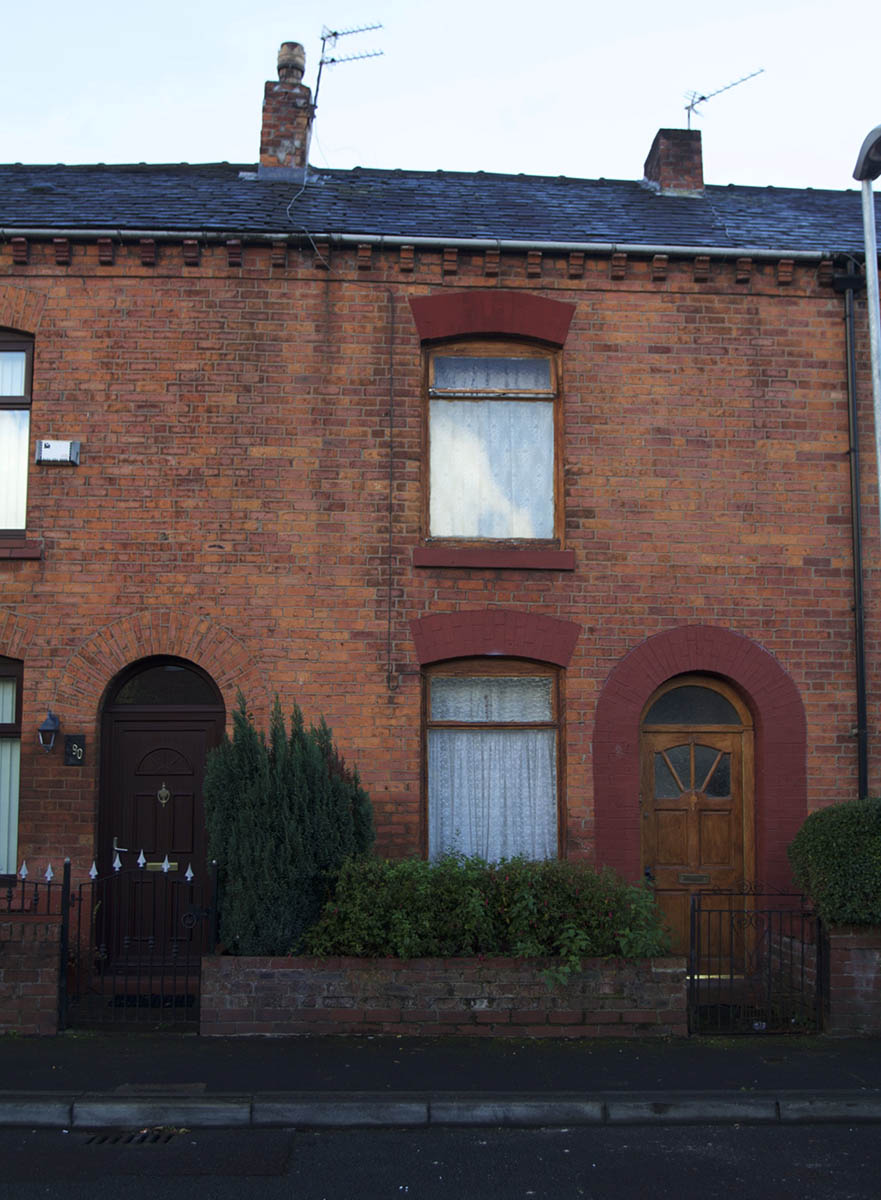
    Archetypal worker’s dwellings from the early 1800’s. Any ones actually connected with the Dysons have been flattened. 2015

    Fast forward a decade, and it is pretty much obvious that the world did not end in 1839 and at some point between the years 1843 and 1851 Andrew and Joseph Dyson, older and younger brothers of James Dyson respectively moved into the district and operated a cotton spinning establishment named Bower Mill. Andrew, his unmarried sister Mary and her two illegitimate children John and Edwin had taken up residence of Birchen Bower. The codicil to Andrew Dyson’s will made just before his death in 1880 gives a strong indication that he owned the whole place and the Mill as well. Although they had dissolved their partnership a decade earlier, Andrew left the property to Joseph. After that the trail has not been pursued…

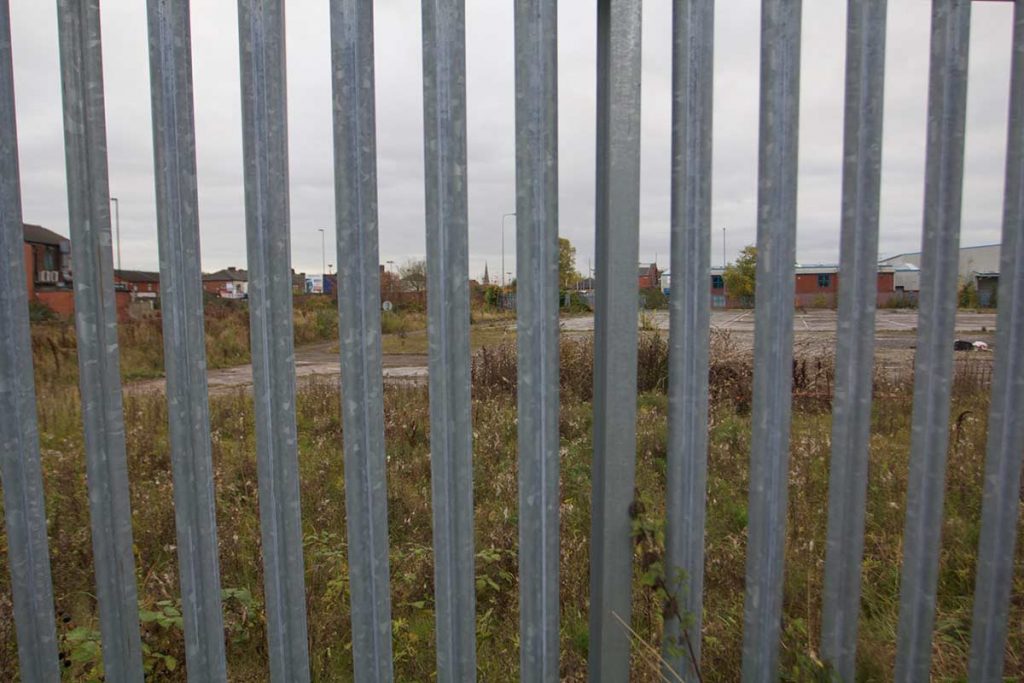
    The site of Bower Mill in 2015. Inspiring, isn’t it?

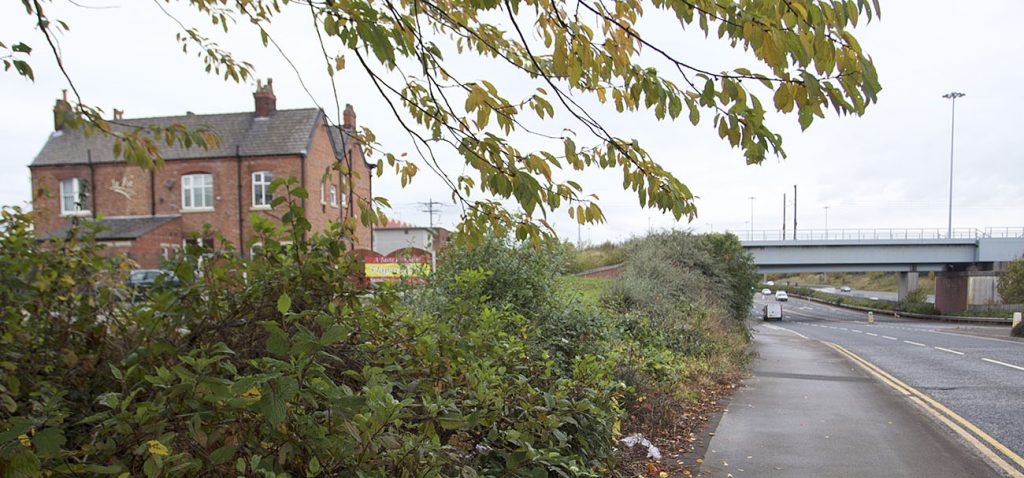
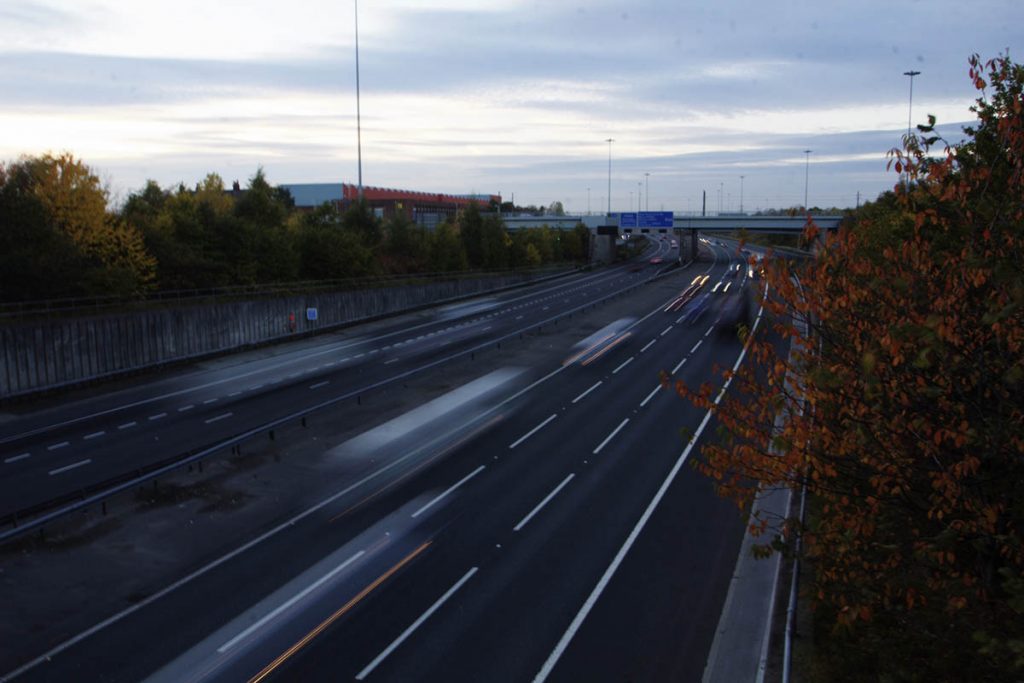
    So did the Dysons mine gold as well as spin cotton? Probably not. But it is fun to speculate. In the late nineteenth century Birchen Bower was demolished to make way for the Ferranti factory (now also demolished.) Bower Lane and Bower Mill were likewise flattened at a later date and a major free way dug across the site.

    Birchen Bower was about here.

    It is frustrating that I have been unable to locate an image of Birchen Bower in any form, or of Hannah Beswick herself (stuffed or unstuffed). It was ancient and had a whitewashed exterior according to an article dating to 1953 (the house, not the mummy). It is curious that while there were ghost sightings of Hannah during the Ferranti factory days, there don’t seem to have been any on the motorway. How odd.

    Birchen Bower as it is now (2015) No ghosts.

    There has been at least one book published on the mummy of Birchen Bower.

  • Stuffed

    Stuffed

    …Ultimately, Yagan was shot by a young farmer named Feast on the Upper Swan, near Belvoir, now the property of Mr. W. T. Loton; Midgoroo being dispatched in a similar manner by a military guard in front of the Perth Gaol, now used as our Public Art Gallery. Yagan’s head is now on view in the British Museum, it having been preserved by Francis Fraser Armstrong, our first official interpreter of the native language, and our first embalmer of animals, birds and reptiles.”

    Western Mail (Perth, WA : 1885 – 1954) Friday 15 November 1918 p 41
    No he wasn’t.
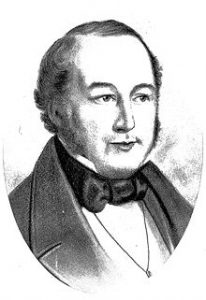
    Francis Fraser Armstrong.

    If your stomach is strong enough, you can read the rest of this foul screed on the trove site by following the link. The article was triggered by the death of the widow of one of the first European botanists to study in Western Australia. His name was John Nicol Drummond, and you would do well to note that I refer to him as one of the first, and as a European botanist in Western Australia. I’m pretty sure Charles Frazer, the Colonial Botanist who accompanied future Governor Lt. James Stirling on the 1828 survey of the Swan River region prior to the foundation of the colony would pre-date him, even if he did completely misrepresent the fertility of the region to prospective settlers. Also the Aboriginal peoples of Western Australia around the South West region, known as the Noongyar, carried detailed botanical knowledge for generations prior to the arrival of the British. Some of their knowledge, particularly that relating to birds and animals, was eagerly sought by the young man Francis Fraser Armstrong, who, while he was the first to hold the formal title of interpreter as employed by the Colonial government, he was by no means the first European to attempt to communicate in the Noongyar language.
    However this article is about taxidermy, which I choose to define as the preservation of birds, reptiles and mammals, often by the means of drying and stuffing, and it should come as no suprise to you by now that the claim to being the first embalmer in Western Australia made for Francis Armstrong in the above article can also be proved to be conclusively false. The motivation of the pseudonymous author of the above article is one of the subjects I explored in my thesis on Armstrong, available to read here, so I will not dwell on it further, other than to observe the author has deliberately conflated the story of Armstrong with one who has a far better claim to be the colony’s first carcase-preserver.

    Inquirer (Perth, WA : 1840 – 1855) Wednesday 25 March 1846 p1 (Trove)

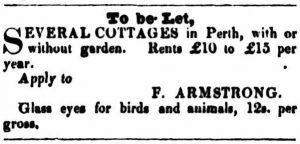
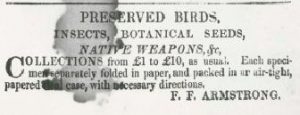
    Armstrong was an amateur taxidermist, as were a number in the colony during its early days of existence. This newspaper advertisement placed by Armstrong himself was for the sale of taxidermy supplies. That there were other stuffers in the public at large must be self-evident as who else could he be selling glass eyes to?

    Western Australian Almanack 1842 (SLWA)

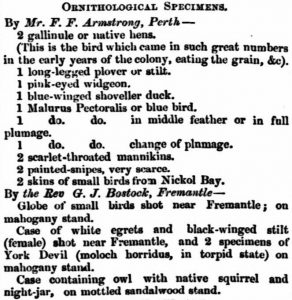
    That he was a skilled embalmer of dead things, particularly of birds, might be demonstrated by his business of selling sets of specimens of the colony’s fauna, advertised as early as 1842, and culminating in a noteworthy exhibition of his work in a colonial exhibition held in Melbourne, Victoria, during 1866.

    Francis Armstrong’s contribution to the Melbourne Exhibition of 1862
    The Inquirer and Commercial News, Wednesday 13 June 1866 p3

    To be fair, Francis Armstrong never claimed any primacy for himself, unscrupulous others did that. Armstrong was only a teenager in when he arrived in Western Australia in 1829, and his first few years in in the colony are well documented as a time of struggle for survival for both he and his family. Among those who have a better claim to be the first documented taxidermist in Western Australia, George Fletcher Moore probably has the best case to make.

    Oh what a jolly fellow is this George Fletcher Moore!

    Moore (1798-1886) was a mediocre Irish lawyer who realised that immigrating in the first wave of settlers to the Swan River Colony opened up the chance of becoming a very big fish in a very small and shallow pool. He arrived in late 1830. So it was that he swiftly acquired some prime real estate in the Swan Valley and a highly lucrative position as one of the Colony’s top law officers. His inflated reputation as a historical figure today rests on the survival of his extensive and candid diaries of the first decade or so of the Swan River Colony’s existence. These were published in edited form both in the contemporary newspapers and as a book Diary of Ten Years Eventful Life of an Early Settler in Western Australia (London 1884). However, I would recommend the reconstructed and unexpurgated version of his writings: The Millendon Memoirs: George Fletcher Moore’s Western Australian Diaries and Letters, 1830-1841 edited by J. M. R. Cameron (Hesperian Press, 2006). It is this version I quote from here:

    …There are many of the same sorts of birds here as at home but differing either in colour or voice – crows rooks magpies cuckoos redbreasts wrens of a beautiful blue, and many others. I thought of making a case of curios, tho but as yet I assure you the necessity of attending to more important concerns supersedes that feeling. I killed a snake and stuffed it – a nameless sort of grey large headed bird, and a beautiful copper coloured heron but for want of time, I see the ants are destroying the skins.”

    Tuesday 28 December 1830. (The Millendon Memoirs, p9)

    So while it is perfectly feasible for another settler or possibly a scientifically minded naval officer to have stuffed something before this, Moore’s diary is the earliest documented example I know of. Moore was not particularly fortunate in his hobby. Many of the specimens he sent back home to Ireland never arrived, and he found himself in close proximity to one particular “specimen” he was unable to add to his collection. Moore’s property was adjacent to that where the Aboriginal warrior Yagan was murdered on 11 July 1833, and Moore made haste to observe the body and admire the handiwork of the embalmer.

    I forgot to mention on Sunday I saw at Mr Bull’s the head of Yagan, which one of the men had cut off for the purpose of preserving. Possibly it may yet figure in some museum at home. I should have been been glad to get it myself.

    Monday 15 July 1833 (The Millendon Memoirs, p258)

    Moore later offered the man who preserved the head and the skin flayed from Yagan’s back (because it had an interesting tattoo on it) a job on his own property as a shepherd. William “Doctor” Dodd must also be another candidate to be Western Australia’s earliest taxidermist.

    I was inspired to write this article after a visit to the State Library of Western Australia where I had the opportunity to have an interesting conversation with a staff member from the Western Australian Museum about what might be the earliest taxidermy specimen in the Museum’s collection and whether any of those specimens were the handiwork of Francis Armstrong. At the same time, I looked at two specimens on display there: A mountain devil (Moloch horridus, the same sort as mentioned above) and a Tawny Frogmouth (Podargus strigoides). Both were beautifully preserved and displayed. Time was taken to explain that both specimens came from creatures that died of natural causes and that no foul play was involved in their procurement.

    A very much alive Moloch horridus as photographed by the author in 2016. The Tawny Frogmouth in the header is one of mine as well.

    Which lead me to think again about the earliest history of taxidermy in Western Australia. George Fletcher Moore regarded the carcase of a man he had enjoyed a conversation with some weeks before (admittedly Yagan had thrown a spear at him)  as merely an interesting subject for his collection, no different to a bird or reptile. I find his callousness and racism abhorrent. While we are in truth all animals, I doubt Moore categorised himself as fauna. Then there was Armstrong. He and his friends in the Noongyar community killed beautiful and rare animals in large numbers so he could stuff them and sell them to collectors. I find this disturbing for among other reasons: the disconnect between his admiring and supposedly respecting nature, then slaughtering it to fill a display case.

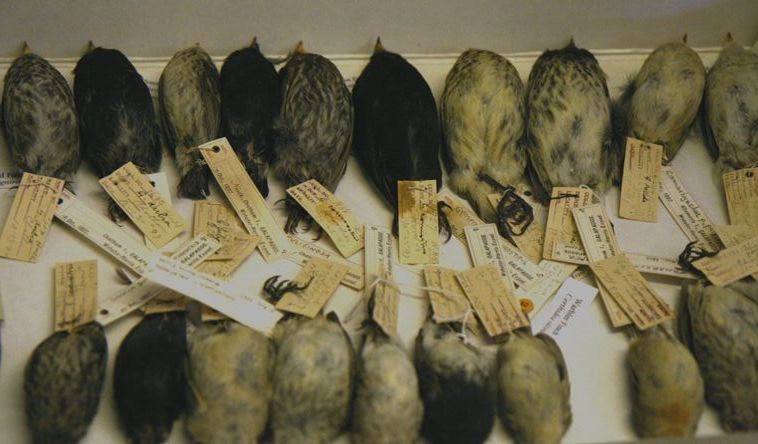
    Yet these preserved animals dispersed to collectors and the occasional reputable naturalist and museum all over the world has spread the knowledge of the beauty and diversity of the natural world, all over the world. I myself was inspired by visits to the museum as a child, with their display cases and tableaux of animals in the wild. One avid collector and preserver of dead animals was a young natural historian called Charles Darwin. The skins of birds he collected from the Galapagos were many years after the fact an inspiration to him in his attempts to prove his theory of natural selection. (An irrelevant but interesting fact: Many years after Darwin’s sojourn, the ship he sailed on, the HMS Beagle, was employed to survey the north west coast of Western Australia)

    Finches collected by Charles Darwin from the Galapagos Islands in 1835 are still available to researchers today.

    So when I see a stuffed animal, I may admire the workmanship, I may admire the beauty of the animal itself, I must acknowledge its value as an artefact, but I must also feel disquiet, some discomfort. I think a measure of discomfort is not a bad thing to possess, sometimes.

  • Stones in Cumberland

    Stones in Cumberland

    Family history research led me to hunt for the Sharp family, who were then just one name among many. The count of direct ancestors you possess increases exponentially each generation the further back you go. By the time of your third great-grand parents (GGG grandmother or father), that could be up to thirty-two different family names. Double that number each subsequent generation.

    The Argus (Melbourne, Vic. : 1848 – 1956) Tuesday 19 July 1904 p1

    John Sharpe died at his home, “Barvin”,  Leviathan Reef, on the outskirts of the town of Maryborough in Victoria, on 17th July 1904 at the age of seventy nine. His body travelled by train to the cemetery in the east of Melbourne where it was buried. He had arrived in Port Philip Bay, Australia, on a ship called the Hibernia, 11 October 1852. Sometime after he arrived in Australia, he added an “e” to the end of his name, presumably just to frustrate future family history researchers. His story in the Australian colonies is still to be properly told. However his daughter, Tamar, left one of the few tangible traces of the Sharp(e) family’s existence for me in the form of her signature on a nineteenth century petition in Victoria calling for women’s suffrage. As she is a direct ancestor, this is an object of very great pride to me.

    Towards the Scottish border in England as it looked in 1998.

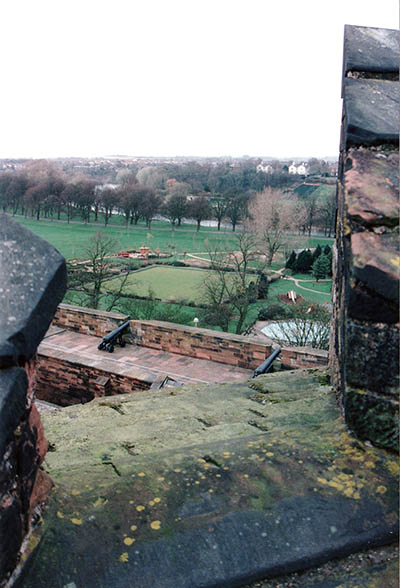
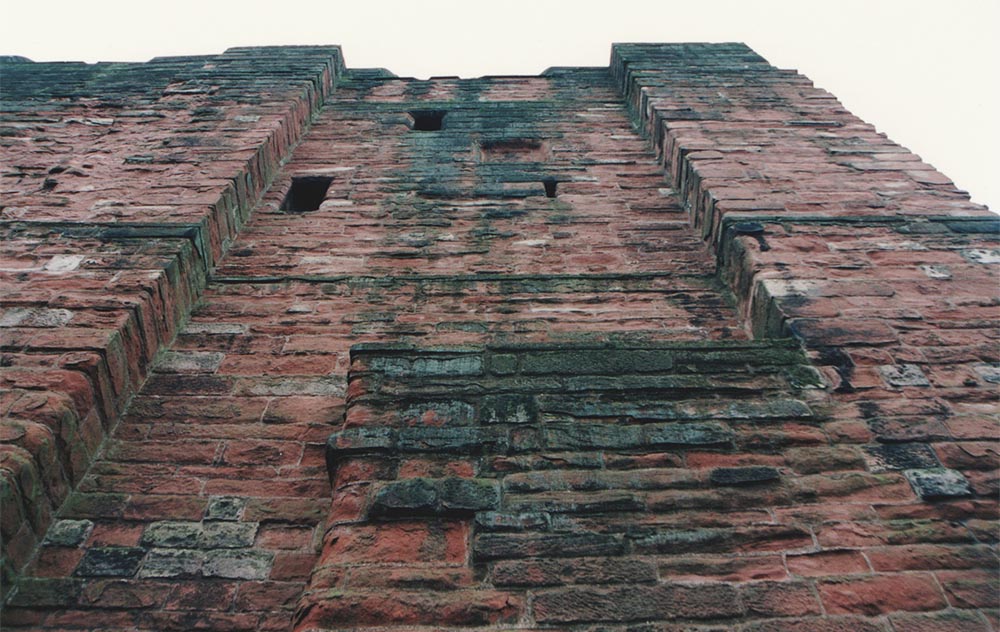
    But it was the location of the family’s origins that attracted my attention. They came from England (as a disproportionate number of my ancestors do), but the Sharps was the first I had discovered who came from Cumberland, an English county on the north eastern border with Scotland. I had visited the region many years ago during my first visit to Britain in 1998. I visited Carlisle, the principal city of the region, and I remembered standing on the walls of the castle, a bleak edifice of red brick, looking across equally bleak country rolling away to the north.

    This was both a working castle and a fortress city. Mary Queen of Scots was imprisoned here, and the bloody conclusion of the Jacobite rebellion after unification of the two nations, resolved itself here in a pile of gory entrails. I was staring across the land from where the invading Scots army, not once but many times would have emerged. It was still a dozen years before I learnt that it would be perfectly feasible that I might have ancestors both doing the running and screaming with faces blue from woad paint (or the extreme cold), AND also standing on the battlements, voiding their loins in pure abject terror.

    The walls of Carlisle Castle. This was not a romantic place.

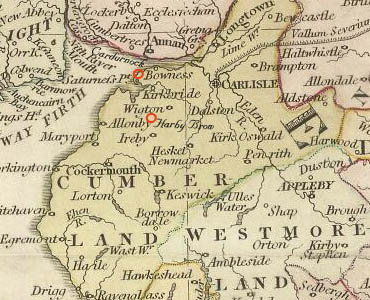
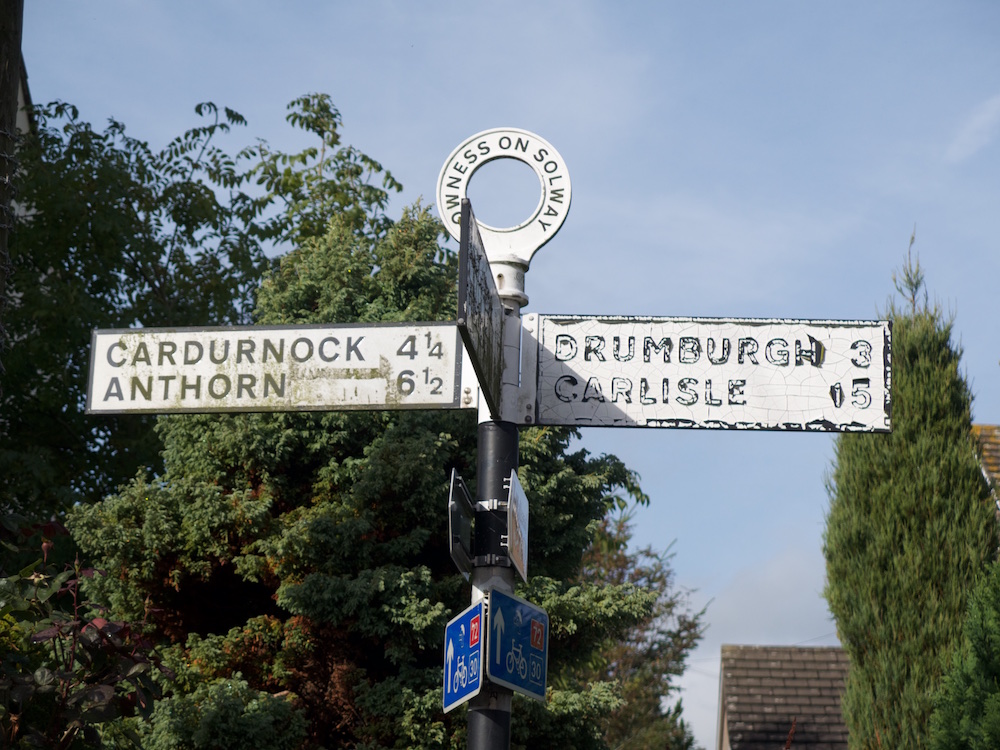
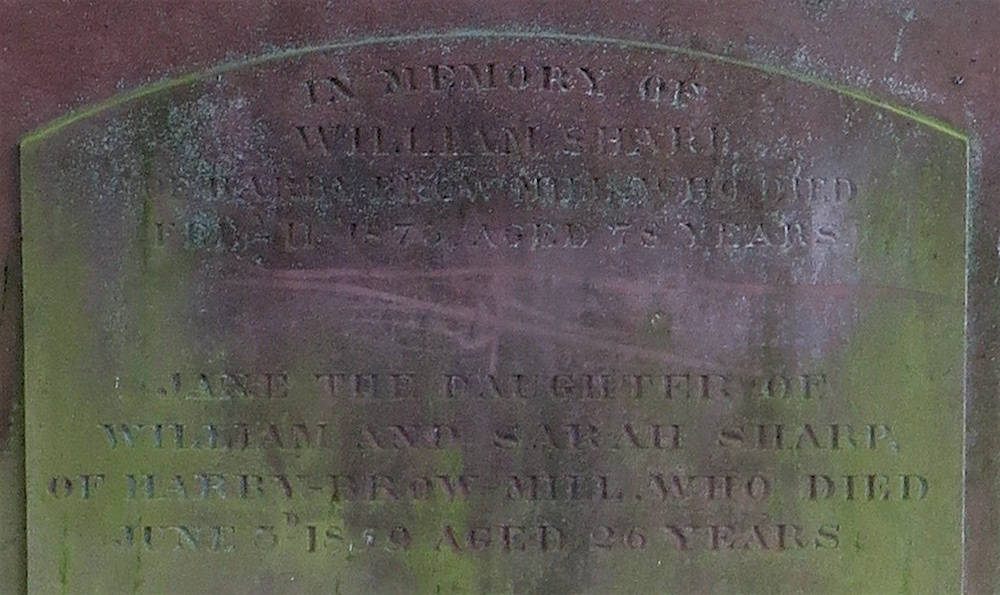
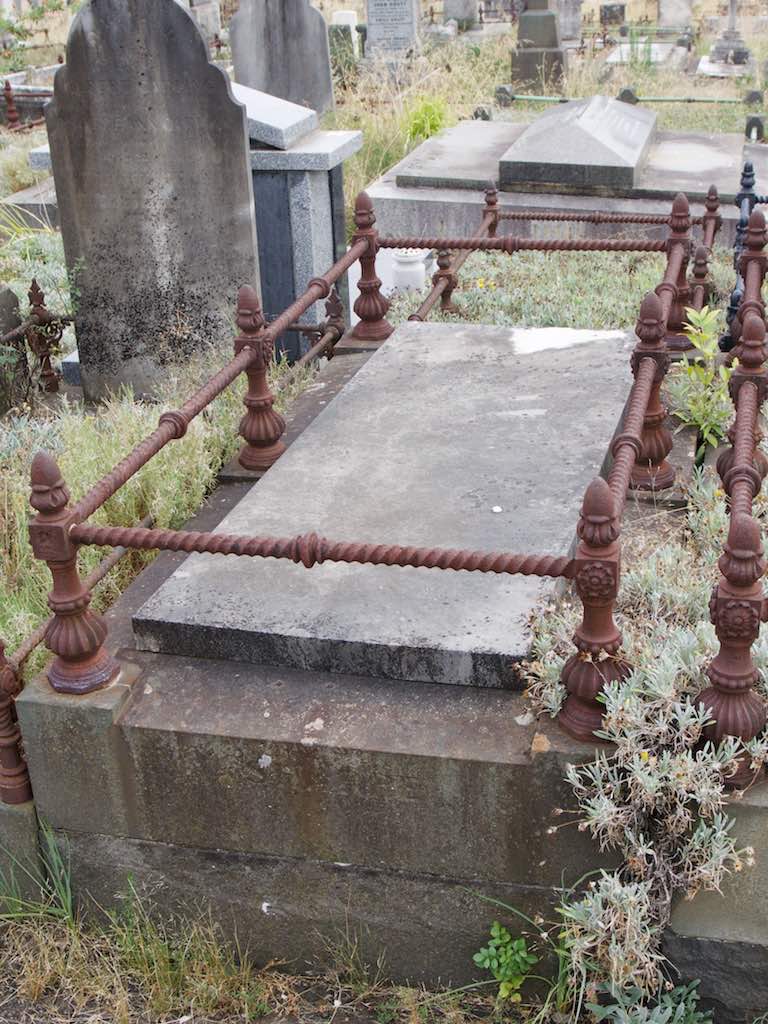
    When I finally found out something about my ancestry I discovered that once again, I has passed very near a location without understanding any of it’s personal significance to me. John Sharp was born at a place called Cardurnock, a few miles west of Carlisle on the shores of the Solway firth, some time before 15 April 1827, which was the date of his baptism. Why one thing interests me and not another is something I don’t entirely understand within myself yet, but it was learning that John’s father, a farmer named William Sharp, had, after his eldest son had departed for Australia, taken out the lease of a water-powered flour mill in a nearby parish called Allhallows and ended his days at a place called Harby Brow. The more I learned from the English Census records, the more I wanted to see this place.

    In October 2015 I finally got the chance. Also to visit the Lakes District, located just south of where the Sharp family had lived. My timing was unusually good. Two months later much of Cumbria, as the historic counties of Cumberland and Westmoreland are now known, were under water from catastrophic winter floods.

    From both church and census records, the Sharps seemed to have been farmers or farm labourers in this region since at least the early eighteenth century. I am not surprised I am not able to trace the records any further back, for that was the time when the last lot of invading armies swept through the vicinity and the written records would have made very good kindling. Long part of England’s north western frontier, Cumbria was once with the kingdom of Scotland, and before there was even a concept of England or a Scotland, an independent Celtic kingdom. During the Roman occupation period this was border country — a transition zone between the Mediterranean influenced south and the tribal Picts to the north. Hadrian’s Wall began here, and crawled east, dividing the British island in to two.

    Bowness: Where the Wall began.

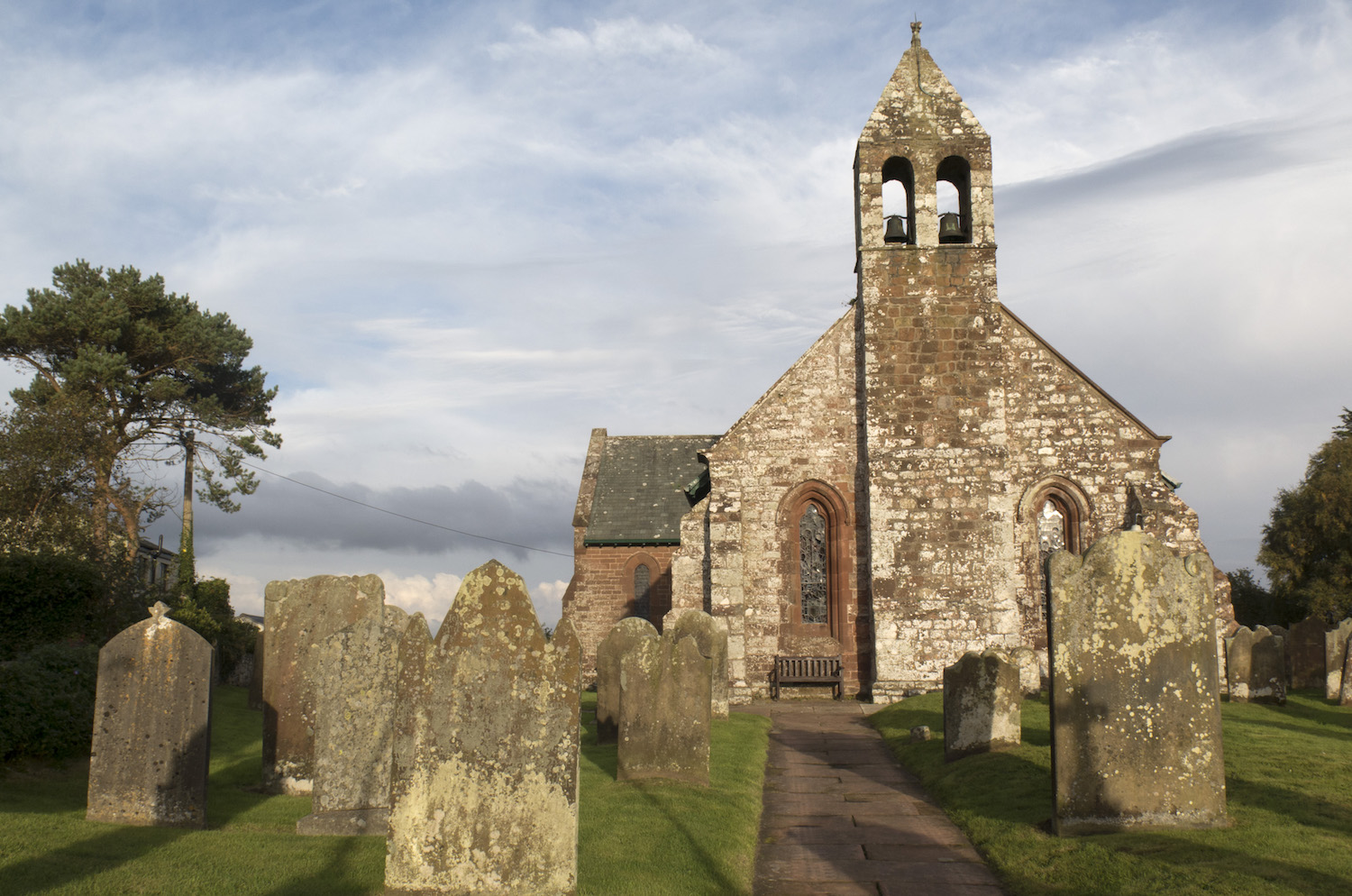
    The first fort on Wall’s west-most flank was started in a military settlement in what is now the village of Bowness-On-Solway.  I caught a bus there from Carlisle. On this flat marshy coast on south side of the Solway firth, a wide flat body of water beyond which which is Scotland,  it is not hard to guess where the stones of Hadrian’s Wall ended up. The parish church of St Michael was reputed to be located on the Roman Fort’s granary.

    St Michael’s Church in Bowness-on-Solway. You are looking at stones used to construct Hadrian’s Wall

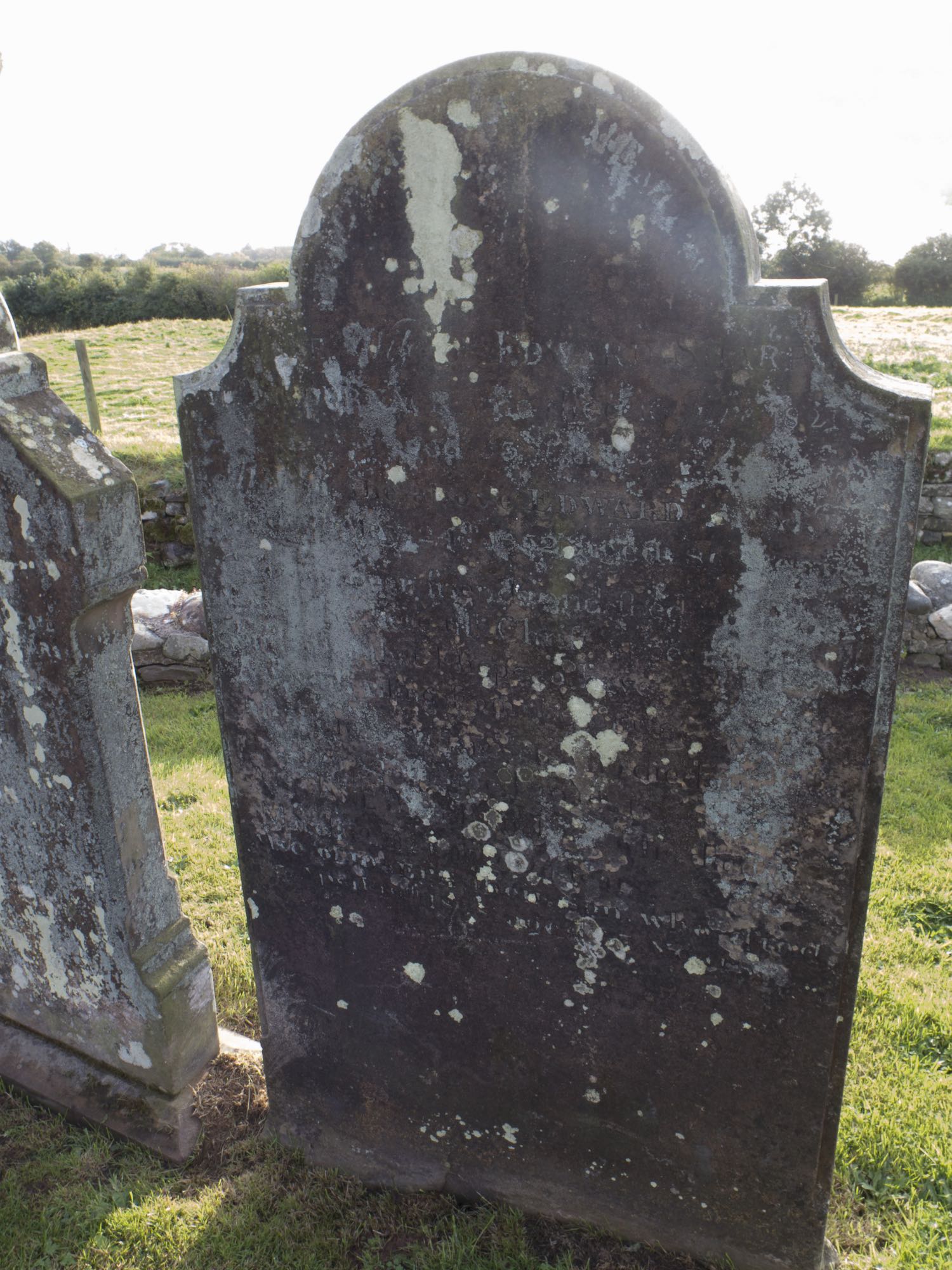
    This eight-hundred plus year old building, constructed out of the remains of a eighteen-hundred year old structure, also housed a stone of a more recent date, a mere one-hundred-and-sixty odd years old. The sun was in the wrong direction,

    The stone in St Michael’s bone yard. You will have to take my word for it that the name on it is Sharp.

    and I could scarcely make out the inscription on the old worn grave stones. It was only when I got back to Australia and was able to enhance the photographs I took that late afternoon, that I found I had been standing before a memorial to Edward and Jane Sharp, parents to William, grandparents to John. They were still alive when he departed for Australia. How close had he been to them? What had it meant to them that now he was gone never to return?

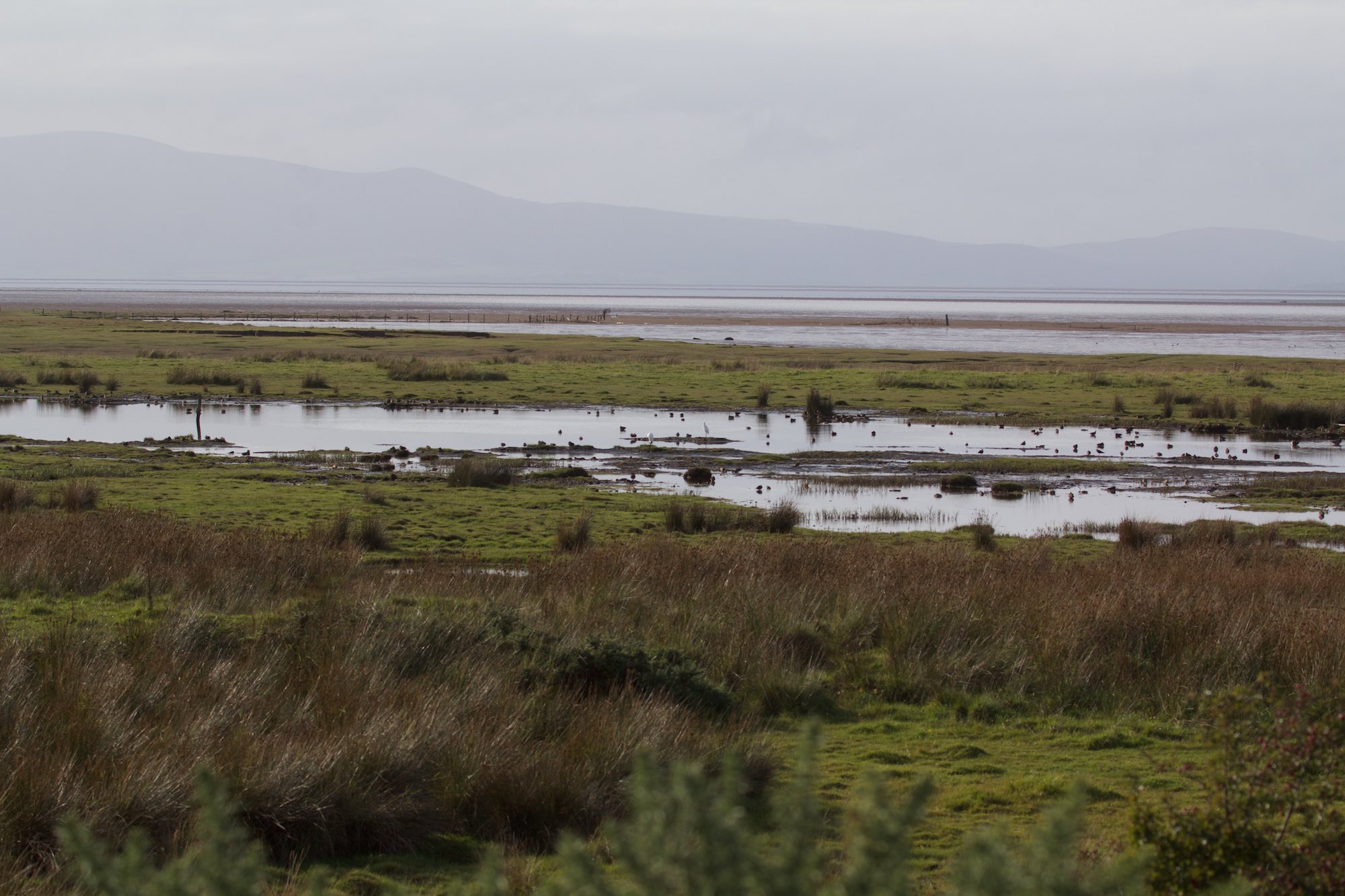
    They also farmed at Cardurnock, to the west of Bowness-on-Solway. I tried to walk to there but the hour of the last bus back to my accommodation in Carlisle defeated me. I did, however, get to experience what the surrounding land felt like.

    Across the Solway firth is Scotland

    It was stark flat, beautiful country, still farmed today for dairy cattle, also a wildlife reserve, and a place of natural beauty. I believe the British government want to erect a Nuclear Power plant on the site. In Scotland across the water, I could see the decommissioned bulk of an older nuclear plant amid a sea of wind turbines.

    Harby Brow is south west of Carlisle, half way to Keswick in the famous Lakes District. It is roughly due south of Bowness-on-Solway. William Sharp and his family did not take possession of the mill until some years after his eldest son John departed for Australia. I wish I knew on what terms they parted. William was born in Cardurnock, but farmed and raised his family in a nearby hamlet called Blitterlees. I did not visit Blitterlees as I have no record of which property they may have occupied in the region. Passing nearby in the bus, it all seemed very similar to the flat country around Cardurnock. Allhallows, the parish where Harby Brow mill was located, was in somewhat different country. It was hilly, but not mountainous. There were dense thickets of trees amid the ploughed fields and tall and thick undergrowth straddled the public right of way along which I walked from the village of Mealsgate to where I hoped my destination would lie.

    This way to the right of way
    The long abandoned old parish church of Allhalows in Cumbria.

    On my way along, I passed a tiny and ancient stone church, all but strangled by the vegetation, the odd gravestone extending from the foliage like the grin of a gap-toothed hag. I paused, took a photo, and moved on. I passed modern farmsteads on the hilltops, contemporary operations on an ancient template. Avenues of trees lead me to the head of a freshly ploughed meadow across from which I finally saw my destination. This was the manor of Harby Brow, and I knew nearby, had to be the mill.

    The manor farm was mostly a nineteenth century collection of buildings that the heritage report rather sniffily states are of no interest.“ (Sorry, but I beg to differ.) The whole reason that this site has a heritage report at all is due to the pele tower that is attached to one corner of the complex. A pele tower is sort of a mini-castle you have when you don’t have a full-on castle such as they have back in Carlisle. In the millennia after Hadrian’s Wall, such a structure was essential as a place of safety against the constant low-level warfare that jagged to and fro across the uncomfortably nearby border. Soon I would learn that the field I was about to tramp across, legend said, was the site of the very last border raid from Scotland into England, and a battle had taken place on this spot. I would very much like to find some corroborating evidence for this. Also, back in the ancient period, a Roman military camp was sited near here, to guard the river crossing that which Harby Brow would centuries later control, and provided the power for the Mill, now just a short distance away.

    Across an ancient battlefield, to the right is Harby Brow Manor and to the left is the mill, slightly obscured behind the ridge of a hill.

    Crossing the battle field (as I have christened it) I encountered the farmer whose land it was, and after apologizing for trespassing (for I had veered off the path of the right-of-way) and explaining what I was looking for he pointed me in the right direction.

    “Pele” or “peel” tower? Take your pick.

    I stood outside the Harby Brow manor with it’s splendid tower, then walked down the short laneway to the Mill. I knocked on the door but there was nobody home. When I had searched on the internet a few years ago I had learnt that the mill had been renovated as holiday accommodation, but that web site has since vanished so I can only assume it is once again a private family home. It has long since ceased to be a mill. I took a quick look around the side to see where the water wheel was once fixed and departed, not feeling comfortable being a trespasser.

    Harby Brow Mill
    Where once was a mill wheel.

    When I returned to the top of the lane between the Mill and the Manor, I met with that farmer again, who not unreasonably, was checking to see this stranger was not getting up to no good. We talked for a while, and perhaps after I had convinced him of my genuineness, he opened up and started to tell me the area’s history — that is how I learned of the last battle and of the Roman fort. It was obvious he loved his home and its heritage and he told me how they had restored as much as they could of the ancient church of Allhalows, the one I had passed earlier. Then he dropped a bombshell. When I mentioned my family name from this area, he told me he remembered seeing that name on a headstone in the overgrown church yard.

    I retraced my steps. I walked though the arch into the church yard. Weeds towered over the creeper-strangled stones. The ruins that surrounded it mocked the stout locked wooden door of the restored portion of church. I was resigned to the fact that the knowledge that my forebears had been here and were still remembered would be the extent of the memory I would take away from this place. Then I found it.

    Moss green, and dappled in the filtered light of the overhanging branches of a great tree, it stood in splendid isolation and near perfect condition. It stood where it had been since 1876, the tomb stone of my great-great-great-great grandfather William Sharp, the Miller, marking a plot he shared with his daughter Sarah, who died aged only twenty six, who waited in the earth to be reunited with her father for nearly twenty years more.

    Here a small corner of England will always carry my DNA.

    I stood before them both and contemplated the tangled web of luck, coincidence and unlooked for kindness that had brought me from nearly the other side of the planet, to here, where one tiny sliver of my identity was formed.

    Postscript

    In February 2017 I visited eastern Australia and was finally able to visit the grave of John Sharpe himself in Melbourne. On visiting the town of Maryborough, some tantalising clues as to his life in Australia presented themselves and I hope to some day write an account of his story as well.

    The final resting place of John Sharpe and his wife Martha in Boondara Cemetery, Kew, Victoria. The faded carving of his name can just be made out on the front of the otherwise unmarked grave.