A short and fatuous history of telecommunication infrastructure in Australia.
Somewhere in Western Australian Suburbia… 2018
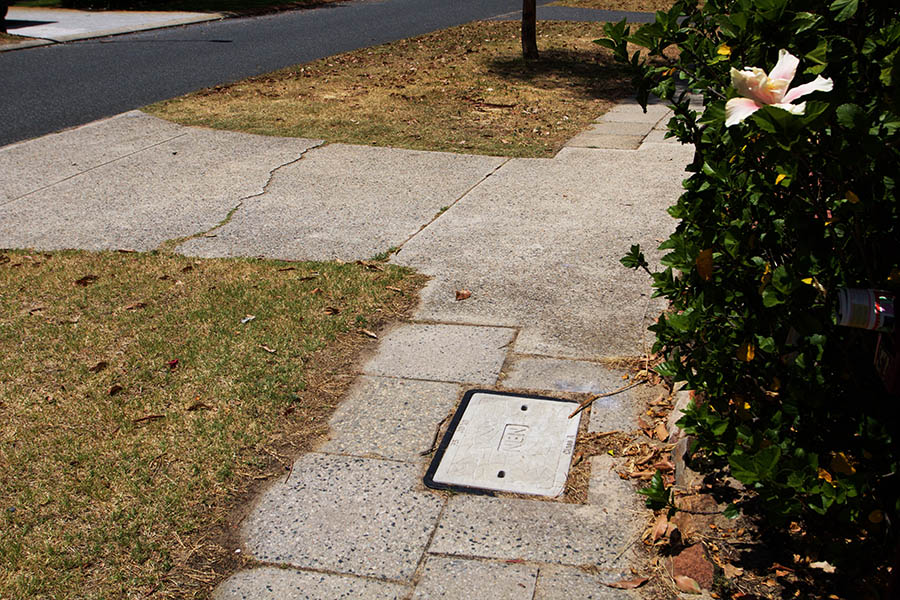
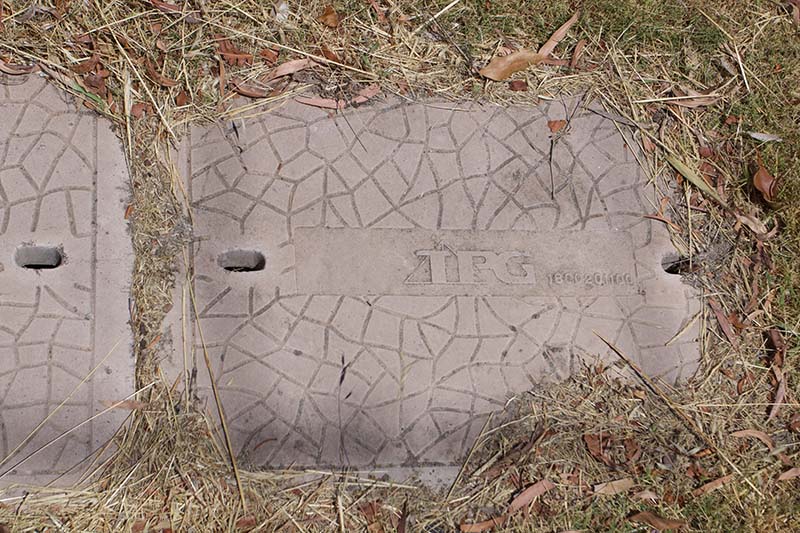
On the pavements of around where I live in a southern suburb of Perth in Western Australia, are many concrete slabs of various shapes, sizes, and marked with various esoteric designs. Show me anything with two or more variations on a basic pattern of anything and I’m going to want to understand why, or more probably make a collection of it…
By no means do I live in one of the oldest suburbs. I believe these subdivisions around Manning Road were laid out in the late 1940’s or early 1950’s… But this is old enough to re-tell most of the early history of telecommunications in Western Australia via the medium of telephone manhole covers…
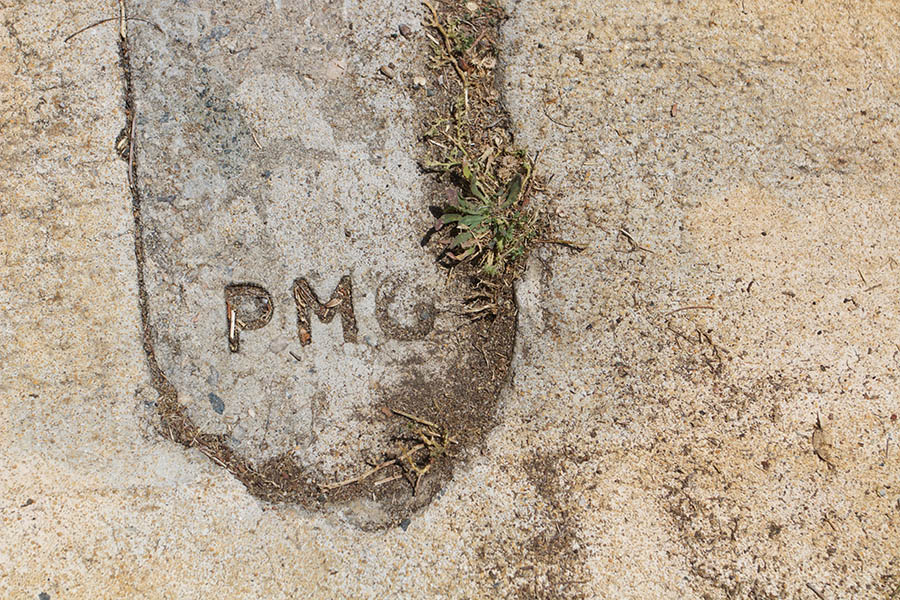
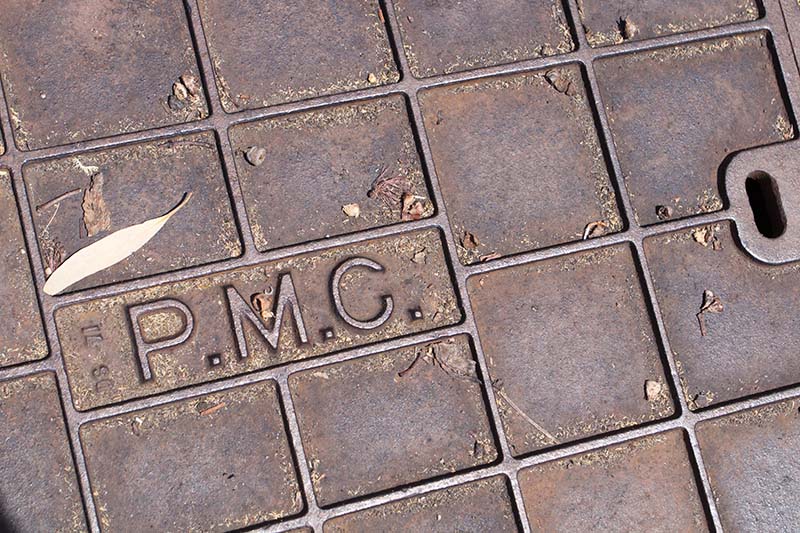
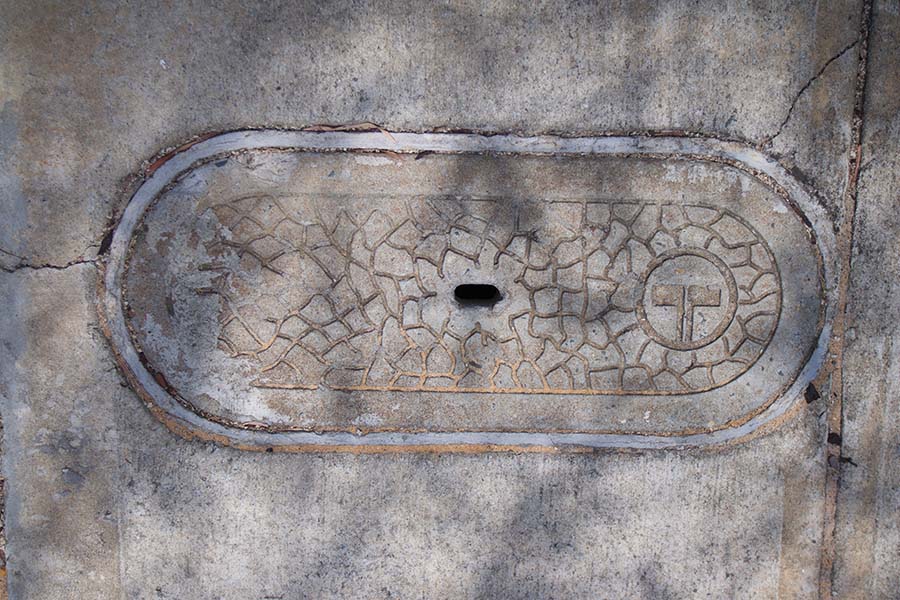
Western Australia had its own postal, telephone and telegraph system until the early years of the twentieth century. When federation of the Australian Colonies was finally achieved in 1901 the new Federal Government was supposed to assume control of all the communication infrastructure of the former Colonies. In practice, the new states in the Commonwealth were still printing their own stamps until nearly the outbreak of the first world war. The Federal Government department that ran the Post office and all the telephone exchanges was called the office of the Post Master General. Concrete slabs marked with the intials PMG still mark the pits that provide access to the copper telephone lines that linked every home that could afford a telephone (or the telephone box for those who could not).
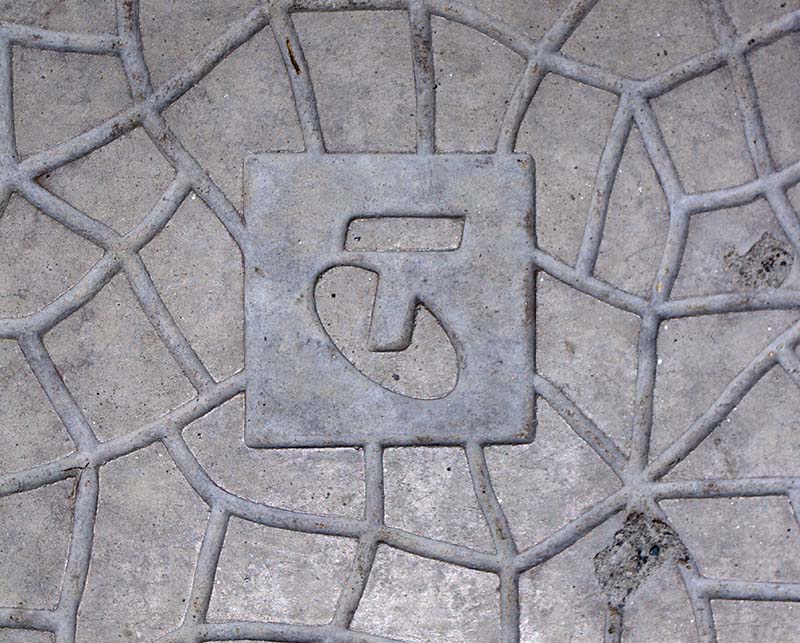
A pre-1975 telephone slab.A PMG service cover in steel. That’s a “G” seriously?
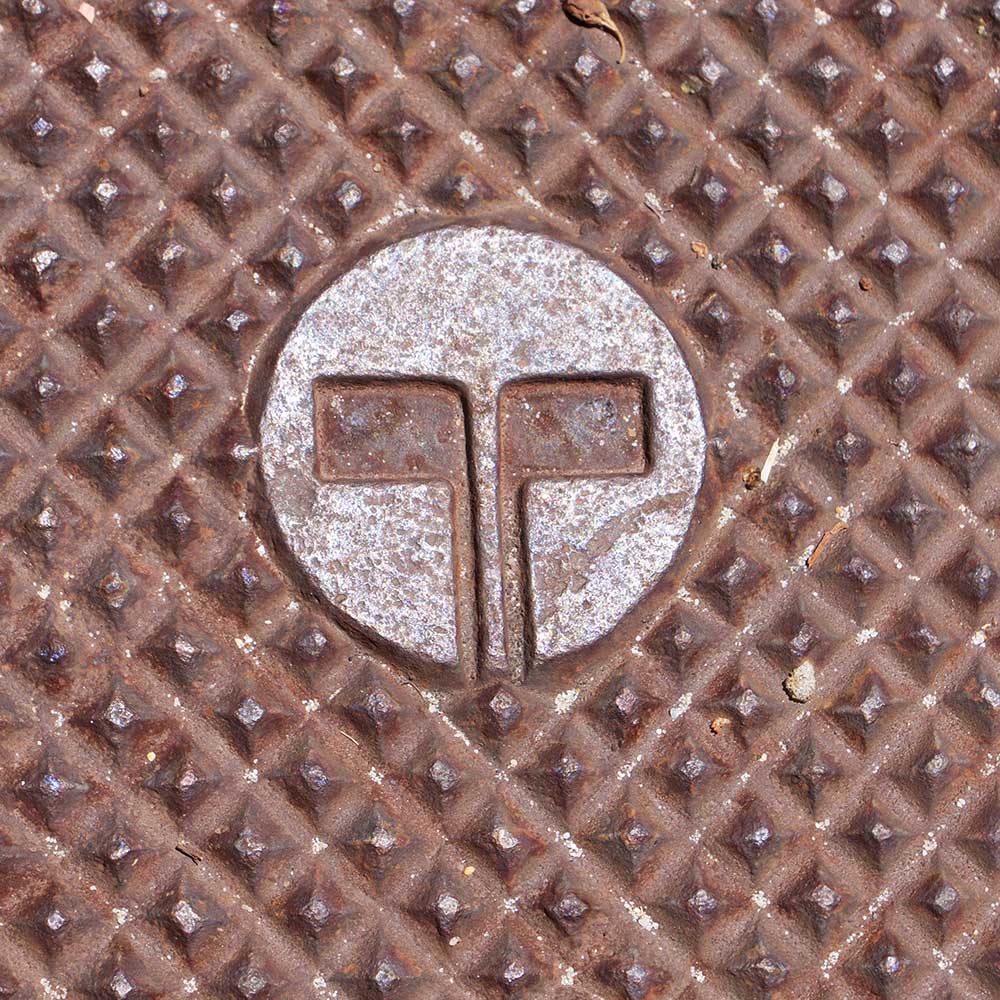
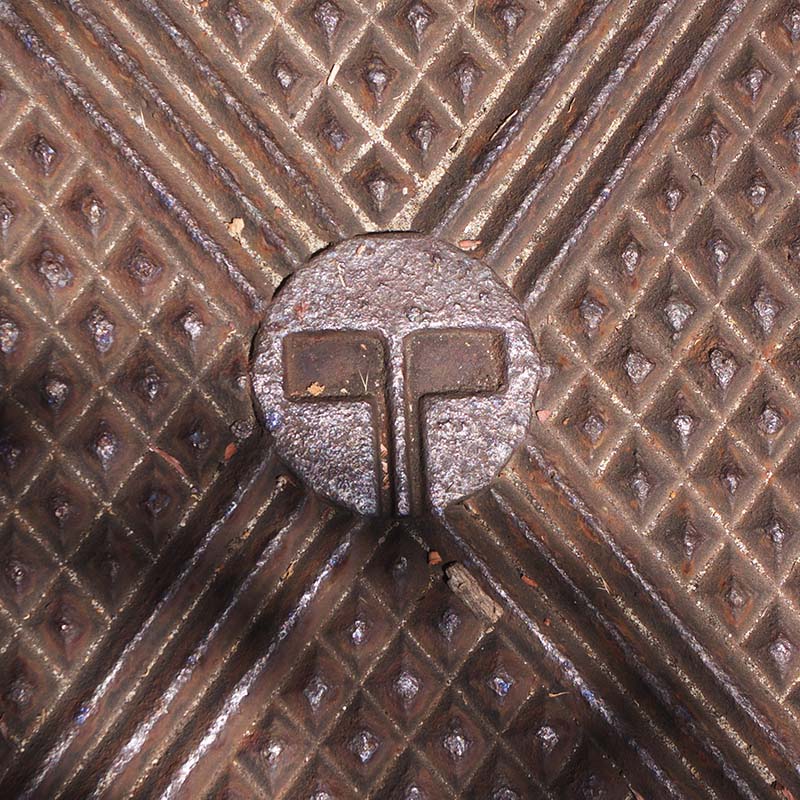
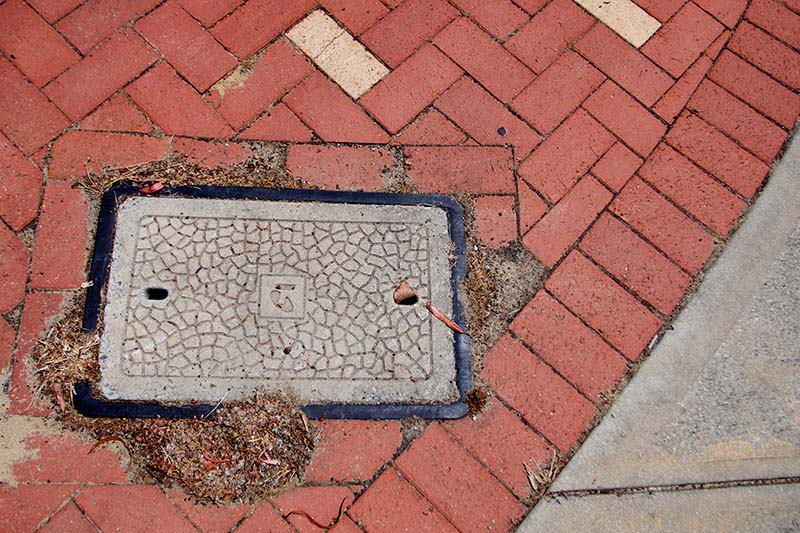
Then in 1975 the old Post Master General’s Department was broken up. Australia Post and Telecom Australia were born, but both were still government departments and shared a common corporate identity that I was always rather fond of but one of my design teachers used to despise. As of 2018 Australia Post still retains its mid seventies corporate look but Telecom Australia’s logo, like the entity it was, is now history:
Two steel service covers for Telecom
Telecom was a monopoly that employed tens of thousands of people and paid a dividend to all the people of Australia via their elected government. By the end of the twentieth century this was considered to be highly ideologically offensive so from 1998 Telecom Australia was sold off in stages. Thousands of people who actually did the work — like maintaining the copper phone lines — were sacked. When customers complained about unreliable service, those that remained in customer service were also sacked and their jobs sent over seas to people who barely spoke the same language as their clients. Telecom Australia became Telstra.
The beginning of the twenty first century also saw the explosive growth of the internet in Australia. Initially Australian homes were connected to the World Wide Web via those same copper cables that carried the telephone signals, but soon it became obvious to everyone, except certain politicians, that newer, faster, and more reliable technology was needed.
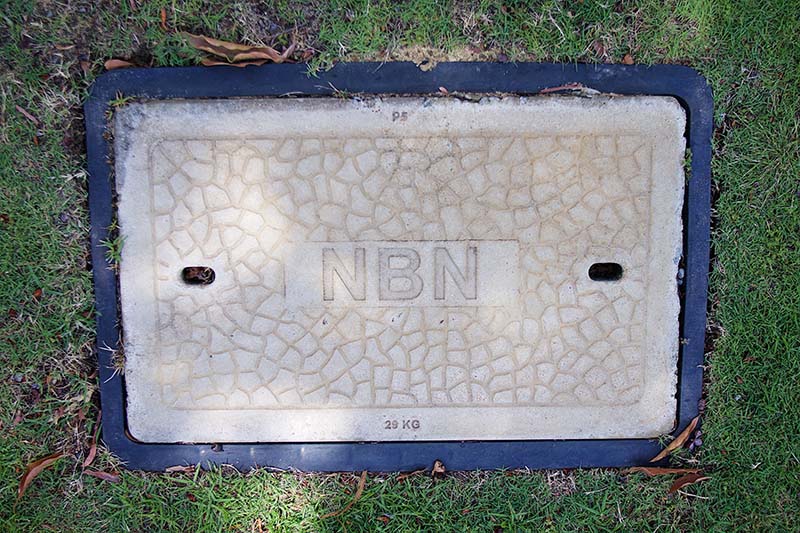
The problem was that Telstra (or Hel$tra as it was now affectionately known), refused to upgrade their ancient copper network, or allow anyone else to use the conduits to do so themselves, and now they were a private entity, there was not a damn thing the government of the day could do about it. So the NBN was born:
The National Broadband Network was supposed to connect the entity of Australia with fast fibre-optic cabling or where that was not feasible, with wireless satellite coverage. My suburb was one of the few to get a NBN connection before the Australian Government changed again.
For base political reasons the NBN was shackled to Telstra’s old copper network. At the same time the old analogue telephone system was shut down entirely for an internet based one that fails every time the network falls over — which is quite often now. Private telecommunication companies now lease access to the NBN, but to save money, they often scrimp on the amount of bandwidth they are prepared to pay for. As a result NBN access is frequently slower than the ADSL technology it has replaced.
As a result, private companies are still wasting resources to augment what should have been done right by the government the first time…
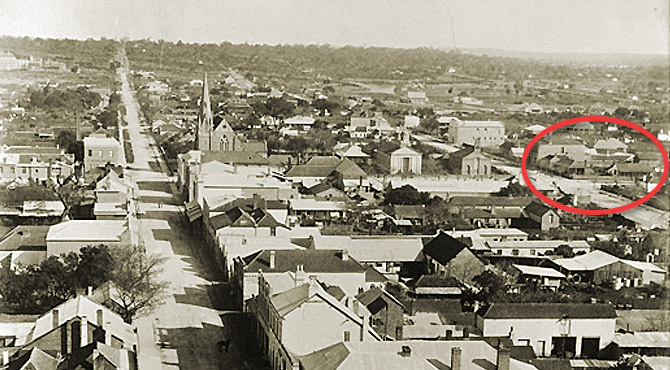
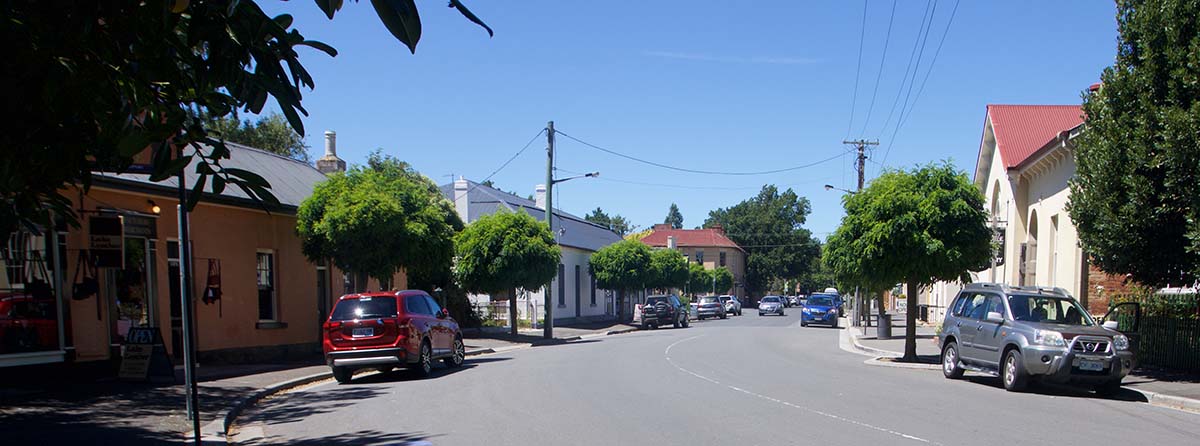
James Dyson served the last few years of his sentence as a convict in Van Diemen’s Land in the district around Launceston. One location that is named in his record is now a suburb of that city called King’s Meadows. It would not be accurate to say we did not know what Dyson was doing while he was stationed there — We do — He was on a chain-gang, performing hard labour on the roads around that town.
The clear as mud portion of James Dyson’s convict record about his time at Kings Meadows
What ever the crime was that got him an [obscured] number of months on the chain gang, we know it involved violence, and that he was sentenced to work on the roads from King’s Meadows by Robert Wales, police magistrate for the Morven district — better known today as Evandale — 18km south of Launceston.
Dyson was assigned to northern Van Diemen’s Land in July 1837. He was assigned to Morven on the 4 December, then was sent (back?) to King’s Meadows barely a week later. This suggests he probably wasn’t involved in digging the irrigation tunnel tunnel that had been started in Evandale but was abandoned around this time, but he might have been put to work constructing what is now the highway between Launceston and Hobart.
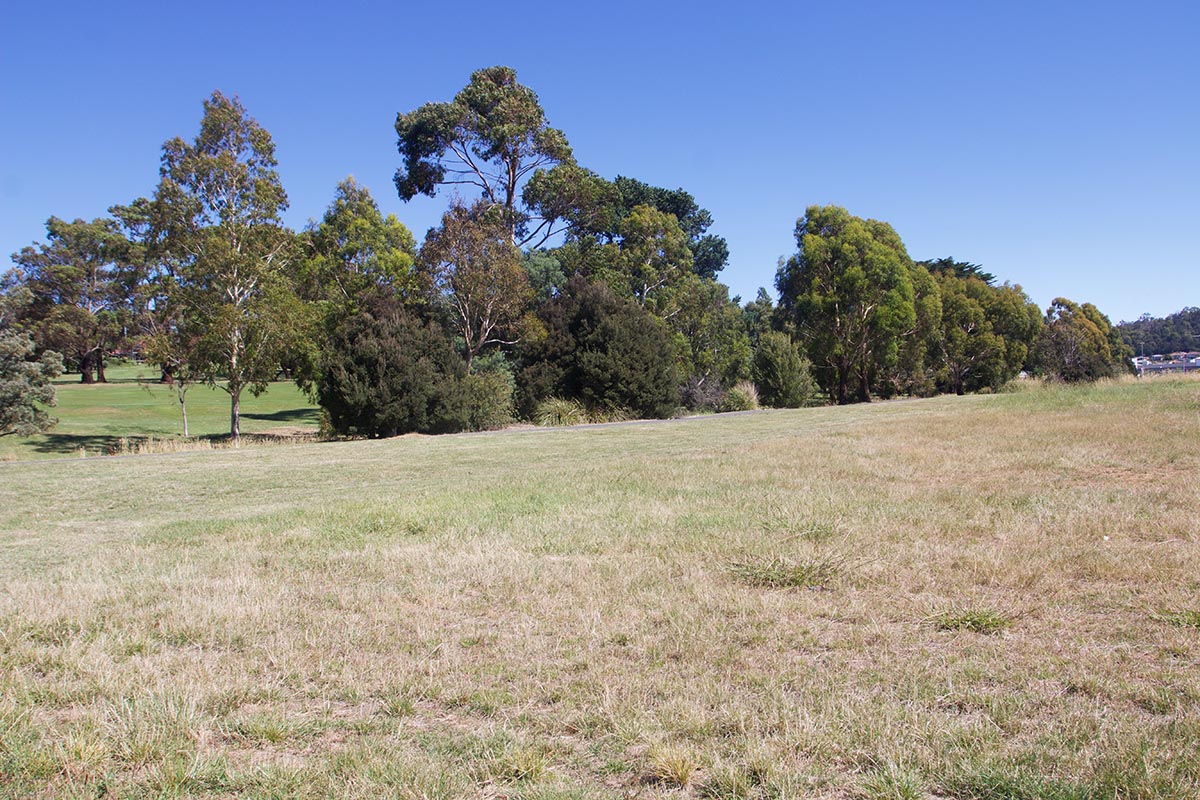
I visited King’s Meadows in 2017. Before I visited, I could find no record of where the convict depôt was located, and now I know if I had stood right on top of it, there would have been nothing above ground for me to see back then. So I found some parkland in the region near a light industrial zone that I chose this as being the closest I would get to the James Dyson convict experience for this area:—
Look’s sort of meadow-ish, doesn’t it? [2017]
However, thanks to some superb detective work by local historian and surveyor John Dent that was presented to the Launceston Historical Society in February 2018, followed up by an archaeological dig later in this year, I now know a lot more about the King’s Meadows Convict station then I did before. More to the point, the Convict Station has been located, even if it will soon disappear again, this time forever under the foundations of a new housing development:—
“Constructed in 1837, the Kings Meadow Convict Station housed more than 150 convicts, as well as officials and military personnel. It was built to assist with the Evandale to Launceston Water Scheme, which proved to be unsuccessful. The structure, which was about 40 by 40 metres, was abandoned as a convict station the in early 1840s, before being sold to a private landowner in 1854.”
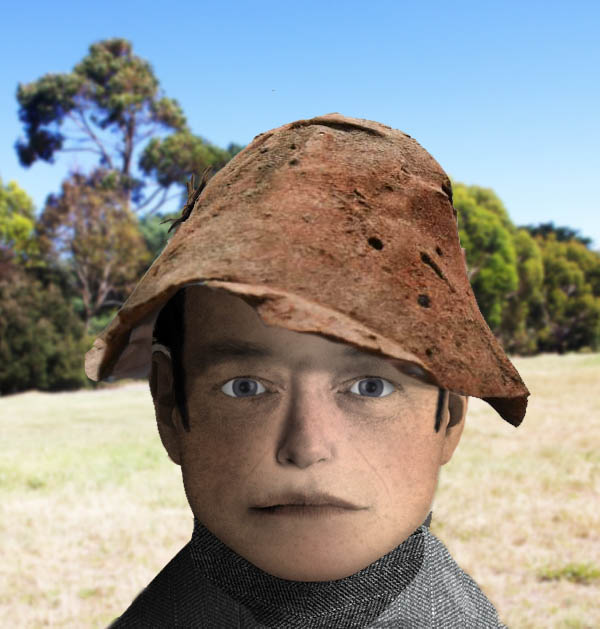
But the icing on the cake to this story is the discovery of the artefacts associated with this site, including a convict hat, of a design hitherto completely unknown.
As we know, there could have been over 150 convicts on the ground at any one time to whom this hat could have belonged, so the probability that this one hat could pinned down to the possession of one named convict who was confirmed to have been there at the time has to be fairly infinitesimal… for this to be so, would be far too great an outrageous coincidence, and as we know, outrageous coincidences never happen in this family….
…
… so here I present, for your edification and amusement, James Dyson in Tasmania:—
“Where did you get that hat?… Where Did you get that Hat?”
Albany, Fremantle and Perth: The three oldest cities in Western Australia.
They were not necessarily the first to be proclaimed cities (Perth was the first), they were not even necessarily the most economically and socially significant settlements in Western Australia at various times during the colonial era and afterwards (but Perth still is)— but they were the first to be inhabited by British colonists at their respective locations— and they had one other essential characteristic that bound them within a most holy trinity: At various times the inhabitants of all three violently detested the inhabitants of at least one of the other two and would do all within their powers to thwart the ambitions of any who had the temerity not to be them.
Albany, on the shores of King George Sound on the far south coast was the oldest British settlement in Western Australia and had a superb natural harbour. Firstly named Frederick-town, It predated the collection of shacks on the banks of the Swan River by at least three years, and for these two reasons alone, incurred the undying hatred of the citizens of Fremantle and Perth.
Fremantle was the second settlement to be founded. A rocky headland surrounded by bleached white sand adjacent to the mouth of the Swan River and an absolutely useless port due to the stony bar that blocked the mouth of the river. The adjacent coast was fortressed by hidden rocks and reefs, and exposed to the gales and cyclones that could sweep in from the Indian Ocean, summer or winter. Fremantle was the initial capital for James Stirling’s Swan River Colony, so significant money was spent by the government to build a courthouse for the town, and by various grandees to erect fine stone houses on Cantonment street, so as to be near the seat of power in the land. Then Stirling decided on Perth as the site for his capital, and the resources expended on the Fremantle Court building (now long demolished) meant that the public building in Perth would have to be a timber shack for many years to come, and the abandoned shells of the well-heeled’s mansions would grace the tiny town of Fremantle for many decades afterwards. Thus the Fremantle — Perth rivalry was born.
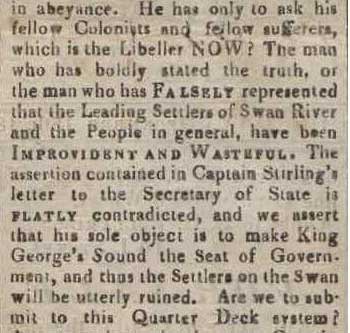
Perth came third. Located on the opposite side of the river from Fremantle, and wedged between a large hill, a loop in the river and swamps to the north, Perth was to be the capital only because the Governor said so. Fremantle frequently lobbied to have the seat of power transferred back to her sandy grasp,
Swan River Guardian, Thu 15 Dec 1836, Page 42
and for a brief horrific moment when Governor Stirling returned from his sojourn back to Britain to schmoose some more money for his struggling settlement, it seemed he might be about to transfer the capital to Albany. However there was deep resentment within the opposing settlements that Stirling chose to open up a landward road between his chosen capital and Albany before any such road between Perth and Fremantle.
Being on opposite sides of a wide river that was inaccessible to large ships due to that stone bar across the river mouth, in the absence of a road (even the bad one that was eventually formed) or a single bridge between Perth and Fremantle, those with small boats made a killing with their monopoly on transport. It was more expensive at times to ship something from Fremantle to Perth then it was from Britain to Western Australia. This was another reason Perthites could detest the men of Fremantle.
But Western Australians were never too particular about who they were against—
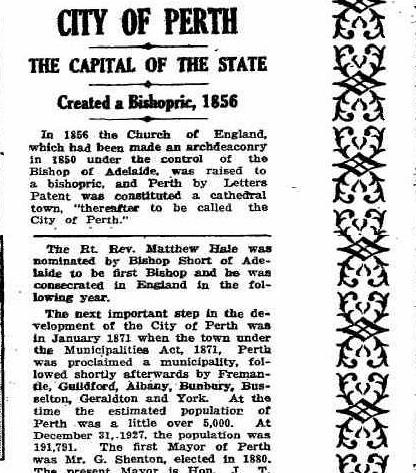
Perth was the first settlement to be declared a city in the Colony of Western Australia. This occurred at a rather arbitrary point in history in the year 1856. It was decided by they the powers-that-be that Western Australians should no longer groan under the yoke of a Church of England Bishop from the Eastern Colonies, so Perth would be made a bishopric. Only a city could be made a bishopric, so Queen Victoria, defender of the faith &c &c. proclaimed that Perth was now a cathedral city on 23 September 1856.
Sunday Times, 2 June, p. 7
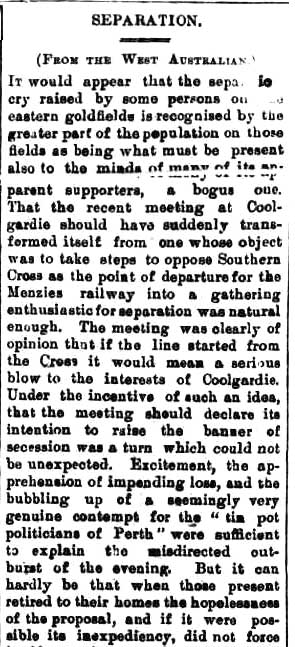
For the previous six years Western Australia had been under the religious administration of the Bishop of Adelaide. It must have rankled those who took such matters seriously that the Colony of South Australia had been founded many years after that of Western Australia and was now out-performing them by nearly every metric. South Australian grain needed to be shipped to the west to feed the older colony. Vested farming interests in the Avon valley lobbied for tariffs on grain imports. You might think Western Australians hated their immediate neighbours less than those from rival colonies, but you would be wrong.
Western Mail, Fri 2 Oct 1896 Page 32
Perth’s population in 1856 was under 5000. Fremantle was not declared a city until 1929 when it’s population was 27,000. Albany was not officially gazetted a city until 1997. It’s population would have then been over 30,000. For better or for worse, administrative power was centralised in the hands of the Perthites and there was nothing the merchants of Fremantle or the burghers of Albany could do about it— although there was a time when Albany almost became the capital city of it’s very own state.
This was during the 1890’s when the Federation of the Australian Colonies was being seriously discussed and the powers-that-be in Perth seriously did not want to secede any of their hard fought for local powers to a new authority that would inevitably be based on the other side of the continent. The complication was now, there was another new population centre in the Colony that threatened to dwarf all the others in influence and wealth: The gold mining conurbation of Kalgoorlie/Boulder/Coolgardie. Albany had been treated so badly by Fremantle and Perth (Perth had callously ignored Albany’s interests when the railway had been ploughed through the centre of the town during the 1880s, while Fremantle had gleefully stripped Albany of it’s shipping businesses when it finally acquired a half-decent port in 1897) that the Albanians (Yes, they called themselves that) were quite prepared to join Kalgoorlie in a new Colony/State of Aurelia, and THEN join the new Australian Commonwealth. The territorial integrity of the Colony of Western Australia was only preserved by the surrender of the Western Australian leadership to the public will for union with the rest of Australia (and a plum posting for their premier as Treasurer for the new Commonwealth.)
And that is the main point of this article: Albany, Fremantle, Perth—for over a century-and-three-quarters their respective leaderships have been badmouthing each other for political gain. As for their people, they mostly knew they came from somewhere else, anyway.
The Members of the Sons of Australia Benefit Society 1837 – 1897
Complete membership lists exist for only two out of the sixty years this weird little Western Australian institution existed, and they only record the members on the books for that particular year. Twenty-six names are listed on the inaugural member list sent to the government in 1837, and eighty-four different names are recorded on the return sent to the Western Australian government in August 1895 listing those entitled to a share of assets of their society at it’s impending dissolution.
That’s 110 authenticated names. There are 171 names on the list below. The difference has been made up by mentions in the local newspapers for those who joined, resigned, or died, between the two years mentioned above. These additions also includes some names who have confirmed associations with the society, who could (in theory) be members, but probably never were. These include members of the Stone family and some of the caters for the anniversary dinners over the years.
I’m sure there are between 40-100 actual paid up members that are still missing from the historical record. If you know your ancestor was a member of the Sons of Australia Benefit Society please let me know so I can add them to the list.
P.S. This list is now a downloadable spreadsheet for ease of perusal.
It could be argued that by 1873, James Dyson, owner of a Swamp and an urban block on the corner of Murray and King Streets in the City of Perth, was at the height of his wealth and influence—He had been elected to the Perth Municipal Council back in 1867, and was an inaugural member of Perth Road Board in 1871—so it would seem that there would be no end to the local government contracts he would be able to steer his way.
The Perth Gazette and West Australian Times, Friday 3 March 1871 page 3
But this article is not about James, but about his son, Joseph, for this was the year that Joseph stepped (ever so slightly) out of his father’s shadow and established himself as a Perth identity in his own right. Until this moment, when Joseph’s name appeared on a historical document, it was not immediately apparent whether it was in the context of his own interests or that of his father’s.
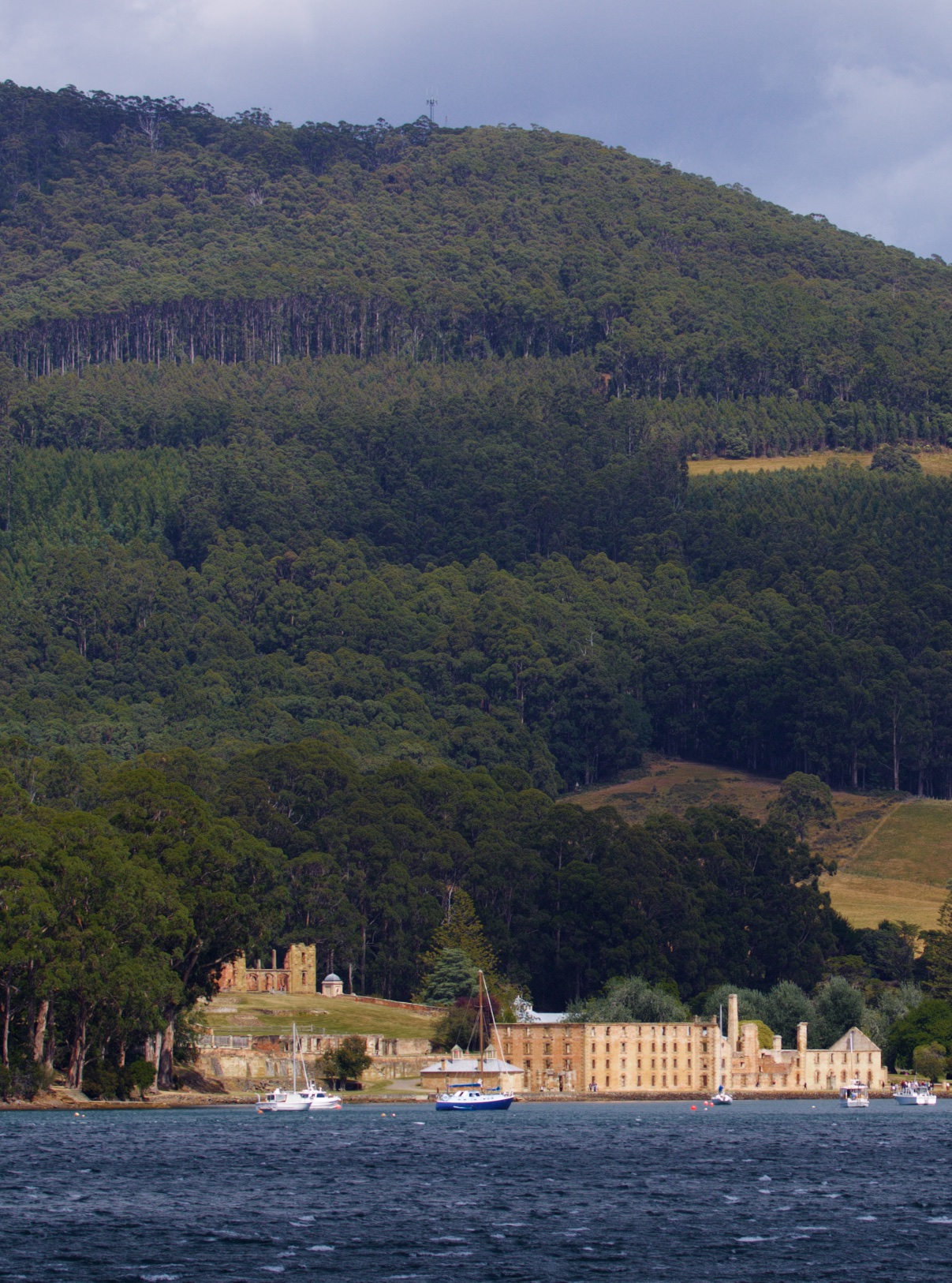
William Elsegood was a prison guard at Port Arthur, Van Diemen’s land. James Dyson was not at Port Arthur: He was on the other side of the island at the time.
Joseph had married Mary Ann Elsegood (aged 19) daughter of former soldier William Hunt Elsegood on 2 September 1872. While I speculate that it might have been a shotgun union (literally?) between the two, I haven’t identified anything to suggest they were not a loving couple, for while their union would be tragically short, Joseph would never remarry, and there is every indication he retained a close connection with his Elsegood in-laws long after Mary’s death.
By the time of the marriage, the first Dyson’s Corner was bursting at the seams. Apart from his father, step-mother and brother, there might have anything up to ten or eleven half-siblings in residence (and a twelfth was born in May of that year). There would have been at least two or more domestic servants living with the family, and more employed by the various family businesses. According to a later anecdote, James Dyson was one of the biggest employers of labour in the colony. Many of these employees were ticket-of-leave convicts. Dyson may well have employed his in-laws as a carters for his timber business—or Elsegood’s sons— builders and carpenters, most of them — may have purchased his products. They were all hosed in close proximity to each other on Murray Street in the city.
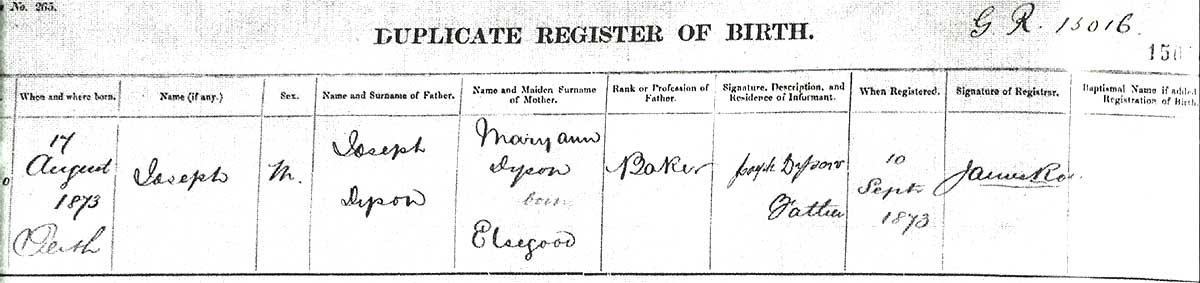
Note the lack of evidence for bastardry
Joseph Dyson junior was born on 17 August 1873. Maybe the Elsegood and Dyson residences both passed the point of bursting.
The second Dyson’s Corner was to be found a little way further down on Murray street, towards the city centre on the north-west corner of the intersection with William street. On the south-west side of this intersection were properties owned by the Wesleyan Methodist congregation in Western Australia. On either side of the two chapels built in 1833 and 1842 respectively, was the new Wesleyan Church that had been constructed by materials in part supplied by Joseph’s father. Immediately opposite the new Dyson compound was the Sunday School. Joseph Dyson’s connection with the Methodists was certainly a part of his life that he greatly valued—It’s hard to see how one could be a volunteer Sunday School teacher for one’s church without being so committed.
William Street and the Wesleyan Quarter about 1885. Joseph Dyson’s store is on the far right [SLWA]
One of the harder facts to establish when researching Australian colonial history is whether a trade or profession assigned to an individual by the records refers to them actually practising that trade or them employing someone else to do it for them. This is particularly the case with those who involved themselves in public life—How on earth could they afforded the time to attend all those meetings as well as do a day’s work for themselves? To participate fully in the public life of the colony there was also a financial barrier to entry. A citizen required assets or property worth at least £150 to be eligible to serve on a jury. Both James Dyson and William Elsegood passed this watermark about the year 1860. Son Joseph’s material assets are not so clearly defined: He did not own his new residence on the corner of Murray and William Streets: It was leased from a frustratingly obscure individual named H. Williams about who I know very little. Dyson opened his new concern on the first day of the New Year, 1873.
The Inquirer & Commercial News, Wednesday 29 January 1873
The question remains whether Joseph did the baking himself or relied on staff. His father had employed a handful of ticket-of-leave men specifically as bakers since the mid-1860’s, the last so described was a William Maynard whom James employed in December 1874, but there were many more ticket-of-leavers employed by both James and Joseph for whom their employment occupations have not been recorded. It might also be that the “general” part of the general servants that Joseph mostly employed might have included work in the bakehouse. The names and occupations of the non-convict workforce in any of Joseph’s (and James’s) concerns have never been identified, but there is one recorded story that might relate to Joseph’s bakery (or another one on Murray street):—
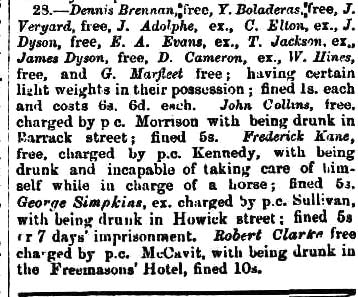
Perth’s Early Bakers. Dear “Cygnet,”—About the early bakers. There was G. Marfleet, for a start. He was at the corner of Hay- street and William-street; John Scollard, opposite the Town Hall, in Barrack-street; T. Molloy, in Murray-street; John Liddelow, in Hay-street; J. Dyson, in Murray-street; Donald Camerson, at the corner of Hay and King streets; and Denis Metheringham, in Murray-street, where the Bohemia Hotel now stands. A little experience I had with one of the abovenamed. It would appear that this baker had had some trouble with an employee named Toby in the bake house, resulting in the baker being placed in the dough trough. I was not aware of this incident, and, whilst walking along Murray-street with a boy friend, this baker approached us on the same footpath. My boy friend said: “Do you see that boy on the opposite side of the street?” I said: “Yes.” He said: “You are not game to call out to him, ‘Toby, who fell in the dough.’ ” I very promptly called out, and the next thing I knew the baker had me in his grasp, and you can imagine what followed. For years this baker was taunted with this call by the boys of Perth.
The other of James Dyson’s sons (the ones at least, he remained capable of providing for) had been given some training in a trade; printing and blacksmithing primarily—maybe Butchering and Baking had been Joseph’s chosen skill. He also continued his father’s business as a general dealer. After a year in business on his own account he was now described as “well known” in the City:—
One of those cases of BAREFACED THEFT which are remarkable for the audacity displayed by the perpetrators in their efforts to secure the object of their search, came under the notice of Mr. Landor, our worthy police magistrate a few days ago. One Mr. Daniel Johnson who had but recently returned from one of his periodical visits to the charming establishment presided over by Mr. H. M. Lefroy, in your town, where he had been rusticating during the summer months, was proceeding along Murray Street one day last week, admiring the architectural improvements of the metropolis when his eye—was it by chance?—fell upon a pair of elastic side boots, suspended from a nail in the shop of Mr. Dyson, the well known baker and storekeeper. “Shall I have nought to encase my pedal extremities and protect them from the wild blasts of this wintry weather?” said he; and at that moment he walked up to the door of the aforesaid baker and storekeeper, drew from his pocket a penknife, gazed cautiously round, nerved himself for the action, and with the words, do or die, on his lips, rent the cord in twain, extended his right arm, and vanished with the boots. The hawk eye of the proprietor however caught sight of him, and the police were soon on his track. When charged with the theft before the magistrate he stoutly denied the impeachment, but Mr. Dyson as stoutly asserted that he could not be mistaken in his identification of the thief, who, failing to prove an alibi, was invited to return to Mr. Lefroy’s establishment, where he will remain a guest for the next two years.
So Joseph was most certainly behind the counter of his general dealership. Professionally, he was doing all right, but in the domestic sphere there was the the agony of his young wife’s illness and the losses within her own family. Mary’s seventeen-year-old sister Elizabeth died in September 1874; Then in November died her father, aged 55. Three other siblings died in infancy or early childhood, Mary Ann was the fifth child out of thirteen.
The Cloisters about the year of the accident [SLWA]
That was the situation on 4 December 1874 when Joseph saddled up a trap to take his sickly wife out to visit her recently widowed mother who was now living by the Swan River foreshore under the shadow of Mt Eliza. He was passing what is now known as the Cloisters on St George’s Terrace when his horse took fright and bolted.
The out-of-control horse and cart plunged down Mill Street, which is on a steep incline. At the end of the street was a stony open drain or culvert, and it was here that the terrified horse tripped up and the cart and its occupants tumbled out. Joseph’s arm was badly broken. The poor horse’s leg was broken and the beast had to be put down. Somehow Mary Ann escaped injury, but the truth of it was she was in the last stages of a terminal illness.
But not Mary Ann
She died of tuberculosis four weeks after the accident. She was only twenty-two years old. She was buried in the newly inaugurated Wesleyan Cemetery in East Perth and she was probably the first to be interred in the existing plot that contains the remains of her husband’s father, step-mother and various other siblings. Her name is not on the surviving grave stone.
When he lost his mother, their son was only two years and four months old. The mystery remains as to which side of his family had have more influence on the upbringing of this child: Dyson or Elsegoods? Joseph Dyson junior attended school with various Dyson half-uncles and aunts, but it was the husband of an aunt on the Elsegood side: Richard Tremlett Hardman, who may have assisted Joseph getting a job in the postal service during 1894. Hardman was later the Deputy Postmaster General. It can’t have hurt his career to have such a family connection.
The Western Australian Times, Friday 6 November 1874 p3
But by 1877, the negative influence of his Dyson side would have become impossible to ignore. Joseph the Elder’s father (and an indeterminate number of siblings) had moved in with them to that house on the corner of William and Murray street. His dad’s finances (and second marriage) had both collapsed. Joseph’s half-brother Drewy was gaining a reputation as one of the worst hooligans in the colony and other brothers were now presenting themselves before the city magistrates as well.
The targets for their larrikinism were often the Wesleyan Church and the Temperance Movement—both causes close to Joseph Dyson the Elder’s heart. Was their elder brother’s… pious?.. nature getting right up their noses? The original Dyson’s Corner, the old family property on the corner of King and Murray Street was sold to cover debts, it fell into the ownership of one of Joseph’s brother-in-laws: John Joseph Elsegood.
Elsegood transformed the old place into a hotel: The City Hotel, and the first Dyson’s Corner was no more. But that was not the end of the name… for the remainder of Joseph Dyson’s tenure on the corner of Murray and William street, and for many years afterwards, this location was also known as Dyson’s Corner.
I had nearly completed an article covering the first half of George Dyson’s life—I had had it illustrated and ready to go, when I had the urge to look up one more reference (as you do).
Problem was, I found it.
I also found another portrait of one of James Dyson’s many children. Cause to celebrate? Eventually perhaps, but for now I’m fuming that the carefully constructed narrative of George Dyson’s life I had lies in tatters and an incredibly more nuanced and interesting story still remains to be written. I had wanted to publish something now! So instead I intend to present a brief overview of George Dyson’s life, the most accomplished Dyson you’ve never heard about.
The West Australian, Wed 26 May 1886 p3
The family twig occupied by George, one of the twenty-one children of James Dyson (former Tasmanian convict, later Western Australian civic identity), was the barest for the longest period of time. He was born 24 November 1864 in Perth, presumably at the family compound on the corner of Murray and King Streets, to James Dyson and his (by then) lawfully wedded second wife Jane. He was baptised in the Wesleyan Church, and he attended the Old Perth Boy’s school on St George’s Terrace, as had most of his brothers. There are records of young George’s involvement with various debating societies connected with the Wesleyan Methodist church, and then there is the strange incident at the Perth Town Hall during 1886 when he was boorish at a ball and had to spend a few hours in the Police Lockup to cool off. Strange behaviour coming from George, but absolutely what you would expect from nearly any other child of James Dyson during this time.
He owned some property in Hardinge street in the city during the 1890’s but he was always an absentee landlord. (The cottages on these properties might be those mentioned here that were being used for the purposes of prostitution!) It was obvious that George had moved interstate (or to the eastern colonies in pre-federation speak). Slowly it emerged that George had been apprenticed to the printing trade (as had been another of his brothers), was involved in the union movement, and dabbled in politics (as his father had done) only he had done it in Sydney, New South Wales.
The problem is that Sydney is many magnitudes larger in size than his birthplace of Perth, and there were many more people there called Dyson, and a significant proportion of those all seemed to be called George. This was one final complication that only a son of James Dyson (of Perth) could fall prey to: Two George Dysons, both living in the Paddington area of Sydney about the same time, both with histories in the newspaper trade, and both candidates for public office in the same general electorate. Naturally enough, they were both on opposite sides of the political questions of the day, even more naturally our Dyson used the confusion to wind up his namesake.
Not our George [The Sydney Morning Herald, Fri 27 Sep 1935 Page 16]
These are the portraits of the two George Dysons so far mentioned, not to be confused with a third George Dyson who was connected with a union of bakers in the area about the same time. Our George Dyson had a brother who was a baker back in Perth, so it was not unreasonable to suspect that there might have been a connection there. Nor does it seem that our George Dyson, who was at one time vice-president for the Typographical Association (An early union for print workers) was the same George Dyson who was secretary of the Papermakers’ Union and travelled to Britain in the early twentieth century to meet with British Unionist comrades…
There were even multiple George Dysons among George’s own siblings. This George was the second of his name; the first was a half-brother who had died in a carting accident some five years before his namesake was born. Don’t get me started of the three nephews of our George named George Henry or Henry George…
Our George was apprenticed to the Stirling brothers newspaper proprietors who were also associates of his father within the context of the Sons Of Australia Benefit Society. Whether by luck, family connection — or even natural talent — the young man was parachuted into a management and editorship position for a weekly newspaper in Albany in late 1886. He was twenty years old. After eighteen months he hopped on the next mail streamer for the eastern colonies. Six months later, that Albany newspaper abruptly closed. You must draw your own conclusions as to how successful his first gig had been (at least until I write up this period of his life properly).
Settling in Sydney and working for a large publication called the Evening News, he seemed to have found his natural environment. He rose swiftly through the union movement as a delegate for that aforementioned Typographic Association, finally to be nominated as a candidate for what would become the Australian Labor Party in its first ever electoral contest in the lower house of the New South Wales parliament during 1891. He failed to secure a seat by a mere handful of votes. He was now aged twenty-three.
Freeman’s Journal, Sat 20 Jun 1891 Page 16
For a great number of complicated reasons, some possibly connected with the utter mess his family back in Western Australia were embroiled in, George seemed to have become disillusioned with the nascent labour political movement, and for his other political passion — Free-Trade — despite the strong personal following he had by now amassed — that movement’s leadership rejected him as a political candidate during the 1894 election cycle. However, he was passionate enough for this cause to continue campaigning vigorously for the other endorsed candidates, as he had also done during his time with the labour movement. The campaign trail took him to a number of towns in rural NSW including Moree and Molong. This proved to be a boost to his newspaper career: He was recruited for jobs as editor and general manager of the local papers in both these towns for a time:—
We may here remark that Mr. George Dyson, the well-known democratic freetrader, who was at the last general election one of the Secretaries of the Free Trade and Liberal Association of New South Wales, has been appointed editor of the Molong Express, Mr Dyson is not altogether unacquainted with this district. At the last election he visited several centres of the electorate and addressed meetings in support of the candidature of Mr. H. C. McCulloch, who was at the time suffering from an illness and was unable to fulfil his appointments, hence Mr. Dyson’s presence here during the campaign. The speech which he delivered at the local School of Arts on the occasion was one of the most cultured and forcible ever delivered in Molong on the fiscal question. In addition to being a good and fluent speaker, Mr. Dyson is an able and fearless writer. In this district, he will have a splendid field for the exercise of his abilities.”
By late 1898 George Dyson was back in Sydney in his preferred suburb of Paddington. He considered running again for colonial parliament that year as a single-issue candidate, but seems not to have done so. Next year he married. He was thirty-five years old. His new wife was thirty-six and a divorcee with three children by her former husband; a greatly respected former newspaper journalist and then current town clerk for the city of Paddington, Mr Augustus Vialoux. Awkward? I have no idea who got custody of the children but I suspect it was not George and his new wife. The former Miss Jane Annie Utting was herself the daughter of a distinguished and highly respected journalist Mr. John James Utting. Perhaps it was for this reason there is absolutely nothing about the Vialoux divorce in any of the newspapers when in any other instance they would be all over a story like this like flies on the carcass of a dead rhino. Perhaps it is also the reason that George Dyson’s newspaper and career in politics quietly fades away about this time.
For roughly the last three decades of his life George Dyson lived quietly and relatively unobtrusively in the Sydney suburb of Woolloomooloo, running a small Grocer’s shop and general store, much as his father had done during his later life, but he would not have been a Dyson if he did not have at least one appearance before the local police court for some minor trading infraction:—
The Sydney Morning Herald, Tue 5 June 1900 p8
Like his father he had ambitions to be a city councillor, unlike his father he never succeeded, but he nominated for the Bligh Ward of the Sydney City Council in both 1901 and 1912.
A few years before his death, he moved to 12 Griffin Street in Surrey Hills. It was there he died on 8 March 1928, aged sixty-three years. The next day he was buried in the Waverley Cemetery, but there were at least two more twists to his tale. George Dyson was buried in the Roman Catholic portion of that burial ground. Had he converted to Catholicism? When, and what had been the ramifications?
He had married a divorcee— how was that reconciled? Maybe it wasn’t. He and Jane had no children of their own together; and the same year George died, Jane Annie Dyson remarried… her former husband Augustus Vialoux. It is by no means certain at this stage whether that wedding took place before or after George Dyson was laid in the ground.
For a family member who had been nearly completely forgotten George Dyson has proved to have one of the richest historical records of any of his kin. Unlike 99% of his contemporaries, we have insights into what he actually thought and said about subjects including the behaviour of the rest of his family. He is the only Dyson I know of to have been immortalised in verse (other than Drewy!) and then by none other than by that stalwart of incipient Australian nationalism (and racism) the Bulletin Magazine.
[The Bulletin Vol. 11 No. 605 (19 Sep 1891) p14]
As has been said at the end of so many editorials of the time…
When Thomas Dyson was a young boy, he shot the son of his father’s main business rival in the head. After that, his fortunes could only improve…
Wheelwright, house builder, real-estate mogul, furniture manufacturer, poultry breeder, entrepreneur— Thomas Dyson was all of these things. Like his father, he was a success at most of his endeavours. Unlike his father, his success mostly endured.
Thomas was the first child of James Dyson and Jane to be born after Jane’s first husband was no longer on the scene, but some years before his parents finally tied the knot. Perhaps it was to avoid the word “bastard” scrawled across his official birth certificate (as was the custom of time), his parents did not bother to apply for such paperwork. Nevertheless, Thomas Dyson was born in Perth on 15 January 1855.
He was not immune to the scandal and tragedy that dogged the family name, but perhaps because he got his own personal downfall out of the way at such a young age (even by Dyson standards) he was able to better weather the later catastrophes that befell the wider family; insulated by both physical distance and (perhaps) a lesser set of personal failings than his hapless parents, brothers and sisters. While he was more than capable of being a bloody idiot, Thomas was probably the most lucky Dyson of his generation at his chosen endeavours, and his family life appeared to be mostly a happy one. Thomas, essentially, was the non-dysfunctional one of the clan.
The greatest event of moronic stupidity in his life he committed when he was thirteen. It was the year 1867 and the family fortunes were on the rise. His father was fast becoming one of the largest employers in the colony on the back of a growing business empire, the core of which was supplying timber and other building supplies, shopkeeping, a butchers and bakers, market gardening and horse trading. With such economic clout his father could no longer be socially ignored. He was treasurer for such societies as the Oddfellows and a rising member of the Sons of Australia Benefit Society, a seat on the Perth Municipal Council beckoned as the highest civic appointment someone of Dyson’s class could hope to aspire to. Then his teenage son shot the much younger child of a business rival in the head at near point-blank range with a rife.
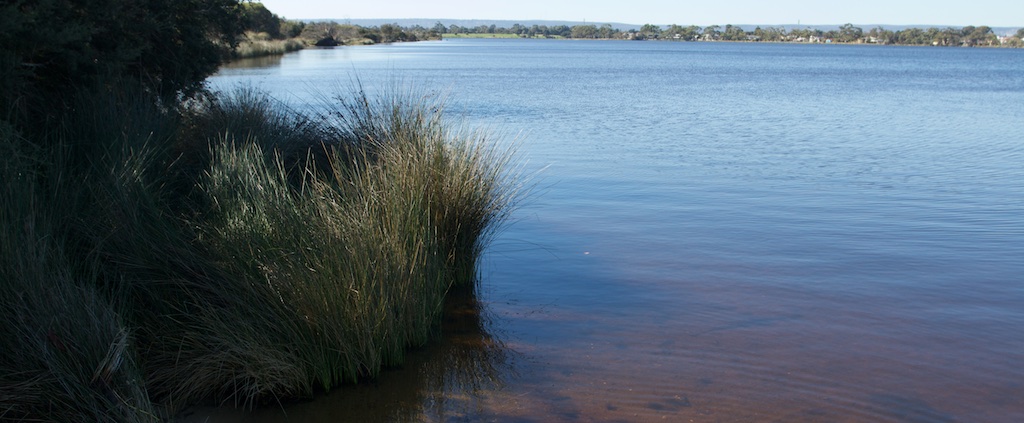
The wetlands around Perth have long been drained. This is the nearby Canning River.
It was somewhat beside the point that the rifle was loaded with a blank charge and the eight year old Benjamin Mason junior seemed to have escaped with naught but a severe blow to the side of the head and powder burns. If Thomas’s intention was to scare the living daylights out of the young kids who accompanied him on his hunting expedition into the lakes that still sprawled to the north of Perth, he well and truly succeeded. Police Magistrate Edward Wilson Landor was not impressed. The only thing that saved young Thomas from a gaol sentence was the absence in the Colony at that time of any juvenile detention facilities. Thomas was confined to a cell for 24 hours before being returned to the court, and Landor saved his harshest language for Thomas’s father, whom he lambasted for “allowing little boys to go out shooting” in the first place. He then surrendered the lad into the custody of that same father.
What happened next is not in doubt. Only the timing of “when” remains obscure. Most of Dyson’s sons by his second marriage were placed into apprenticeships for some mechanical trade. There were at least two blacksmiths, two print compositors — Thomas was apprenticed to a wheelwright. Those other sons often completed their apprenticeships at locations some distance away from Perth, such as Champion Bay (Geraldton) or York — Thomas was sent (or exiled, if you prefer) much further away than that. His apprenticeship was most likely served out in Geelong, in the colony of Victoria.
An unrepresentative photograph of Geelong, Victoria taken by the author, 2017
It was in that city that his future wife was born on 3 August 1857. Miss Margaret Wilkinson was the daughter of Thomas, a hat maker (deceased) from Cumberland in England, while her widowed mother was an Irish force of nature called Catherine (known as Kate). The youngish couple married on 15 February 1879 in the Anglican Church of St Luke, Emerald Hill (which was an early name for South Melbourne).
The new Mrs Dyson lied about her age on her marriage certificate, presumably to smooth over the fact that Margaret was not quite 21 at the time. This must have been a subterfuge for administrative simplicity rather than deception, for as future events would demonstrate, one did not cross the iron will of Thomas’s new mother-in-law lightly. All the evidence so far suggests that Thomas did get on well with his new extended family and his marriage was a loving and successful one. They had six children together—all boys—at various locations around the Melbourne metropolis between 1879 (near exactly nine months after they wed) and 1888 (which was also the year Thomas’s father died).
Thomas’s independent success at business came through work as a house-builder and real-estate agent operating in the Melbourne suburb of Footscray. One of the more appealing aspects of Thomas’s story (we’ll get to the less appealing bits eventually) is how his wife gave every appearance of being an active, equal— perhaps more than equal— participant in the family’s business affairs. Many commercial properties were in her name alone, as was newspaper advertising. Mrs Margaret Dyson’s properties did, however, have an unfortunate tendency to keep burning down.
Thomas might have been insulated from the family’s implosion of fortune back in the west, he could not escape the whiff of scandal that being linked to a disreputable family could bring — in this instance Thomas had married into the scandal. His brother-in-law was William John Henry Wilkinson. Back in 1880 William married Miss Ellen Teresa Bradford. In 1885 (at the urging of his mother), Wilkinson, now a government telegraph clerk, instituted divorce proceedings against his wife on the grounds that he had been under-age at the time of their wedding and did not understand what he was doing. William had been seventeen and his bride-to-be was eight years his senior. William, (like his elder sister) had lied on his marriage licence.
The Argus, Saturday 3 October 1885 p9
Launceston Examiner Saturday 7 November 1885 p1S
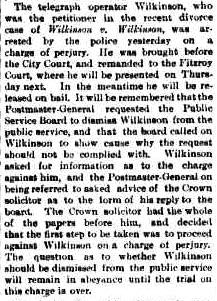
The continent-wide moral panic was vocal and furious. The idea that someone might end a marriage because they were merely young and stupid struck a chord with everyone across the continent stuck in a loveless union because the option to legally end it simply wasn’t there. The anger focussed on the young man for daring to think he could get away with what so many must have thought of, but dared not do. There was a strong stink of misogyny to the whole proceedings: He was held in contempt for the power his mother seemed to exert over him— and probably also his failure to dominate a much older wife. Wilkinson was not granted his divorce. Instead his case was discussed in the Victorian Parliament as the Postmaster-general recommended he be sacked from government service. Finally he was charged with perjury— for lying on his marriage certificate. But even worse scandal was to follow: By a jury of his peers William Wilkinson was acquitted on that charge.
Williamstown Chronicle, Saturday 16 January 1886 p2
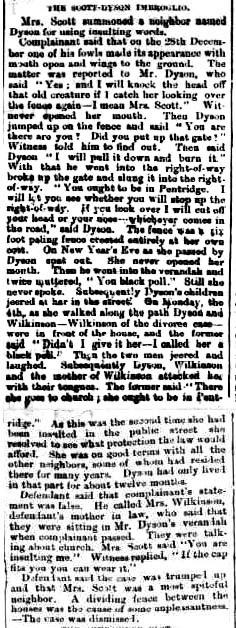
This was where Thomas Dyson came to notice. By early 1886 the family had been settled in Footscray for about twelve months. One day William Wikinson and Thomas’s mother-in-law paid a visit. Outrage that she was living next to someone with scandalous in-laws was one provocation too many for his next door neighbour Mrs Scott. However, the offensive language charge she brought against Dyson was dismissed when it finally reached court. (In case you were wondering, a “Poll” is a type of cow.)
Thomas Dyson (unlike the rest of his clan) tended to win his court cases.
At the end of 1889, Dyson was listed as provisional director for a new company: The G. M. Pickles’ Melbourne and Suburban Carriage Company (Limited)— a similar style of business to that which his younger brother Drewy was attempting to run back in Perth. Thomas’s involvement with (and the company itself) was short lived. The last years of the 1880’s and the first years of the 1890’s was a time of economic depression in the eastern colonies. Meanwhile, back in the West, a gold-mining boom was getting underway, and the population of Perth was expanding at last.
Thomas’s transfer back to Western Australia was a gradual process between 1893-1896. He occupied property on the west end of Murray Street, not far from his mother’s well-established brothel. He had maintained relationships with at least some of his siblings during his long exile, most notably sisters Mary Jane (Jacky) and Mabel Grace, who he may have housed in Footscray during 1892, given that the address where Mabel gave birth to an illegitimate child (who was then adopted by their other brother Drewy) was only a few blocks away from his home there.
Part of William Victor Dyson’s Victorian birth certificate. The Victorian bureaucrats were not wimps—unlike their Western Australian counterparts.
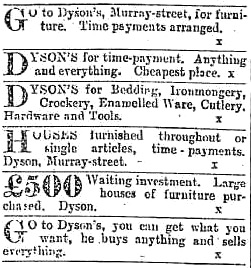
The long period of transition to the west might have been to avoid disrupting his children’s education at schools in Melbourne, but eventually all the family was living in Perth, including at least one of Margret’s brothers (but not the infamous one). Their initial address was on George Street (a lost street of Perth) off Hay Street. There are advertisements for Thomas offering seeds for sale, and for recruiting an interior decorator, but by October 1893 the Dyson family were definitely established back on Murray Street and Thomas was advertising household furniture for sale.
The Daily News, Saturday 5 February 1898 p5
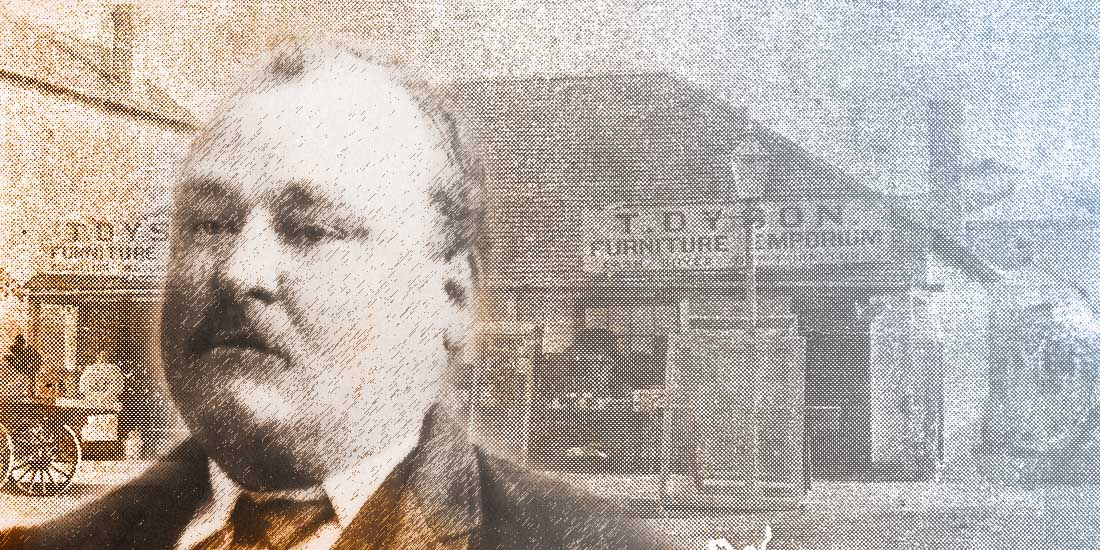
At some stage during the late 1890’s from premises on Murray Street, Thomas Dyson, was not just buying and selling furniture but manufacturing it in as well. He might have been the first large-scale manufacturer of furniture in Western Australia, (but this might also just be family propaganda). He was however, considered a significant enough manufacturer in the Colony that he was invited to speak to at a Perth Town Hall meeting on the impact of Federation (of the Australian colonies) would have on trade. Dyson’s position was that the abolition of the tariff between the colonies would have no adverse effect at all and was in favour. Offering an opposing view was Mr James Pearse, who owned a large boot factory in North Fremantle. He stated that he would immediately have to close his factory if Federation went ahead (The Pearses then made a fortune selling boots to the army during the Boer and Great Wars, and the factory remained open to the 1960’s ).
The West Australian, Monday 16 July 1900 p8
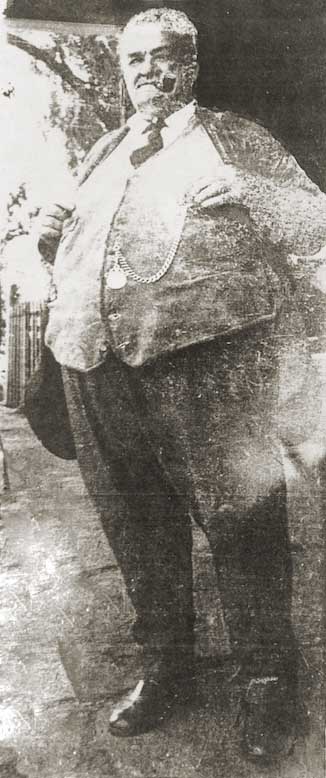
Not Thomas Dyson [SLWA 9689B/118]
It might have been more than just friendly commercial rivalry with his younger brother, Drewy. The two shared obsessions with animal breeding— both were contestants (and judges) for dog and poultry shows in Perth. They were both similar physically, much to the chagrin of the victim of Drewy’s more volatile tongue, when he dragged Thomas by mistake into court instead:
“Yes, myself and brother are very much alike, only the brother is better looking”
Thomas might have shared the same wry sense of the ridiculous as his brother, but he also had a streak of arrogance, verging on bloody-mindedness, that could land him in serious trouble. He was lucky in August 1899 not to be imprisoned for contempt of court when he told his fourteen-year-old son Gilbert not to front the magistrate for throwing stones in Wellington Street. It was only Margaret’s intervention on behalf of both recalcitrant father and son that saved the day. He also drove his work-cart through King’s Park at the end of the day to unwind… raising the ire of the Perth City Council. It is hard to work out who was being the more bull-headed on this occasion—The Perth city council passed a bye-law specifically targeting Dyson for doing this. But Thomas escaped a court-imposed fine on a technicality.
If Thomas did not himself actively retire around the beginning of the twentieth century, he certainly stepped back from public view. It was his wife Margaret and several of their sons, particularly James and Percy Dyson who fronted the family businesses from this time forward. Eldest son Harry was a pearler, then a publican up in Broome in the north-west of the State (now part Commonwealth of Western Australia).
The Daily News Friday 26 July 1901 p3
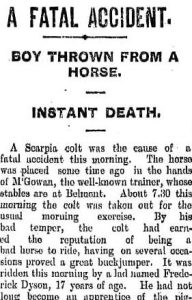
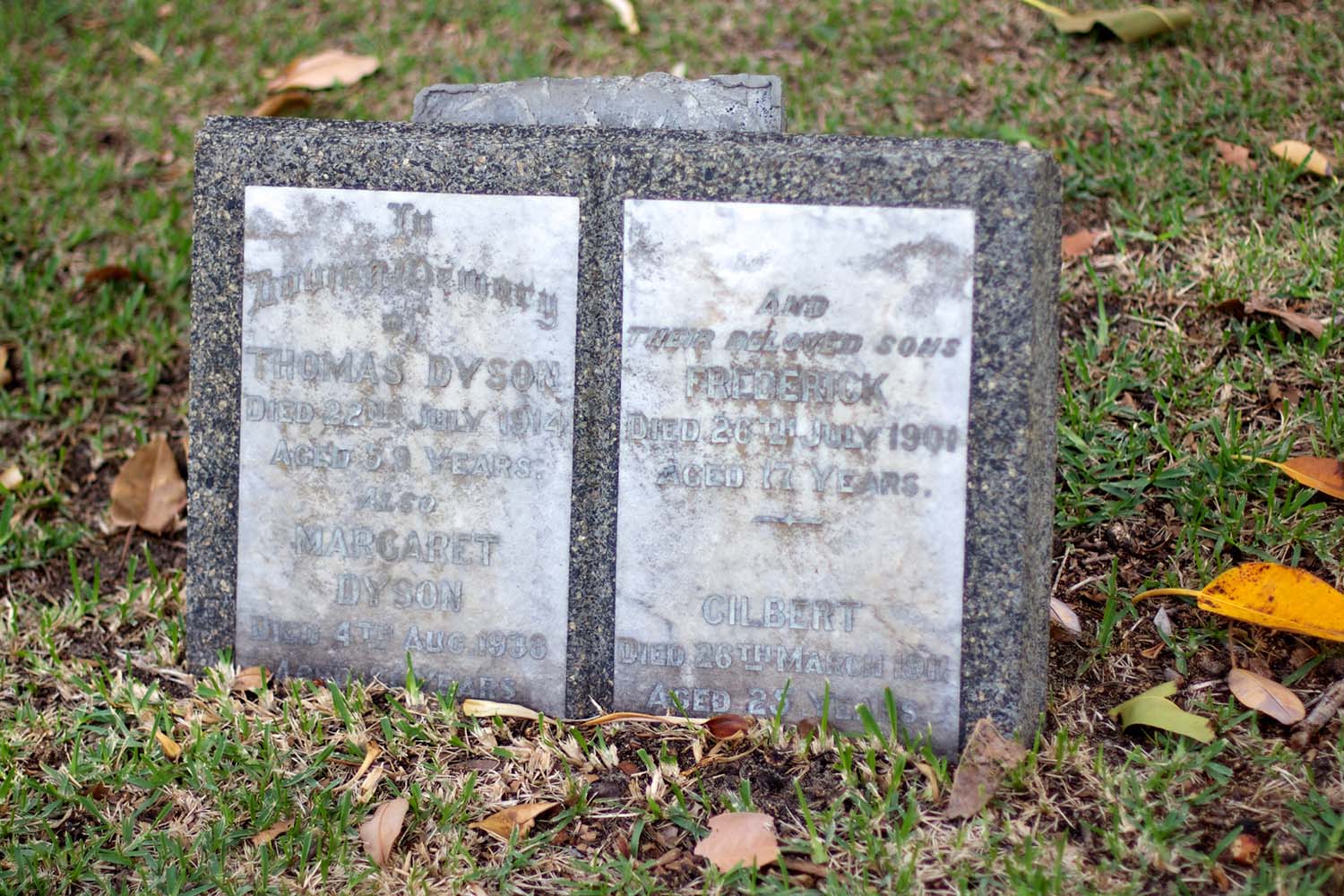
The last decade-and-a-half of Thomas’s life was punctuated by several family tragedies that may have contributed to his own end. His mother died down the road from where he lived in August 1899. How close Thomas was to her is not recorded, but she left nothing to him in her will. Then in July 1901 his seventeen-year-old son Frederick, who was in training to be a jockey, was killed in a gruesome riding accident at Belmont. First on the scene was horse trainer George Towton, who cradled the dead boy in his arms. Several years later, Thomas’s brother Septimus (not to be confused with Thomas’s own son of the same name) would marry Towton’s widow—so it was very much a family tragedy.
The West Australian Tuesday 26 March 1912 p1
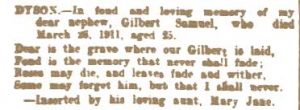
In March 1911 son Gilbert died, aged 25. It had been a long illness, and to his funeral came his uncles Joseph and Drewy, and his aunt Jacky, to whom Gilbert may have been especially close. Joseph Dyson himself was dead within a year.
Thomas Dyson died at his home at 535 Murray Street on 22 July 1914. He was 59 years old. He was buried in the Methodist portion of the Karrakatta Cemetery in Perth by the undertaking firm of C. H. Smith & Co. (Founded by the former husband of his sister Hannah, who divorced her and remarried!) in the same plot occupied by his sons Frederick and Gilbert. His wife Margaret eventually joined him there in 1938, They had the good fortune to be interred in a corner of Karrakatta that is (for the time being) immune from the renewal process that will shortly obliterate the monuments of most of his children and wider family.
The grave of Thomas, Margaret, Frederick and Gilbert Dyson in Karrakatta Cemetery, WESLEYAN section AA no. 0238
Fanny Dyson’s end was horrible and no-one comes out of this event looking good.
Part 3
Post Mortem
As a rule, I’m not a huge fan of conspiracy theories. I believe it’s a mistake to attribute to planning what can just as easily be explained by laziness, apathy or plain forgetfulness. In the case of the death of Fanny Dyson, James Dyson’s first wife, I make an exception; there has been a calculated attempt to cover up the true circumstances of her death, and the State was complicit in this cover-up just as much as Fanny’s family were. Both family and state had failed to save her life.
Within weeks or days of Fanny’s suicide in 1854, her newly widowed husband was negotiating with entrepreneur and Colonial financier George Shenton to buy the property later to be known as “Dyson’s Swamp.” Around the time of Dyson’s eventual marriage to Mrs Jane Edwards in 1862, Shenton presented the family with a bible (which he had a reputation for doing, for people he felt needed it). Shenton senior was an extremely complicated individual and it is impossible to judge what his attitude to Dyson was or how much he knew of events (It’s hard to believe he didn’t know everything). I am in no way implying that Shenton was involved in any way in the cover up of Fanny’s death, but that family bible he donated was the original means the family employed to obscure the circumstances of her death. It is within it that Fanny Dyson’s death is recorded as 12 May 1850, which, of course, is not possible. A later custodian of this bible also backdated the wedding of James and Jane from 1862 to 1852 which was not a senseless act only if it was wished to make it appear that the four children born to the couple before 1862 had actually be born to a married couple.
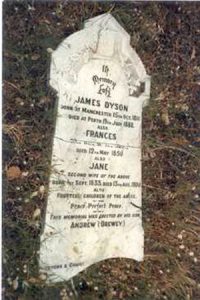
Who gained custody of the family bible (and who has it now) is unknown to me, but Drewy Dyson and his family must be prime contenders for no other reason that it was Drewy who erected the headstone in the Old East Perth Cemetery after 1920.
The champion male malaprop is Drewy Dyson, some of his howlers being guaranteed to put a kink in the side of a curry-livered misanthrophist. Last week he was asking as to the health of a friend’s wife, remarking that he hadn’t seen her lately. “I dare say you haven’t,” said the friend, and he whispered something in Drewey’s ear. The latter assumed a shocked expression. “You shouldn’t call it that,” he said in a mock remonstrance. “That’s vulgar. You should put it in French and say she’s eccentric” !!
The Wesleyan Methodist portion of the cemetery where the family grave site is located was not opened until decades after Fanny’s death, so that is not where she lies. But in Drewy’s defence his step-mother had died before he was even born. Who knows what stories he was told about her by those around him? Was he given the same answer that one of his future distant nephews would have when asking a relative who remembered Drewy:
“Who was Drewy Dyson?”
[THWACK] (the sound of a hand hitting a little boy’s ear)
That the family were able to so successfully distort the record for so long is ultimately due to the failure of the government to maintain the standard of record-keeping that they demanded of others (and required from themselves). Where are the statutory death certificates for Fanny Dyson, or her infant daughter Hannah (died 1850); where are the birth certificates for Thomas, Hannah (Janes’s daughter), Andrew and John Dyson? Where is the inquest into Fanny’s suicide?
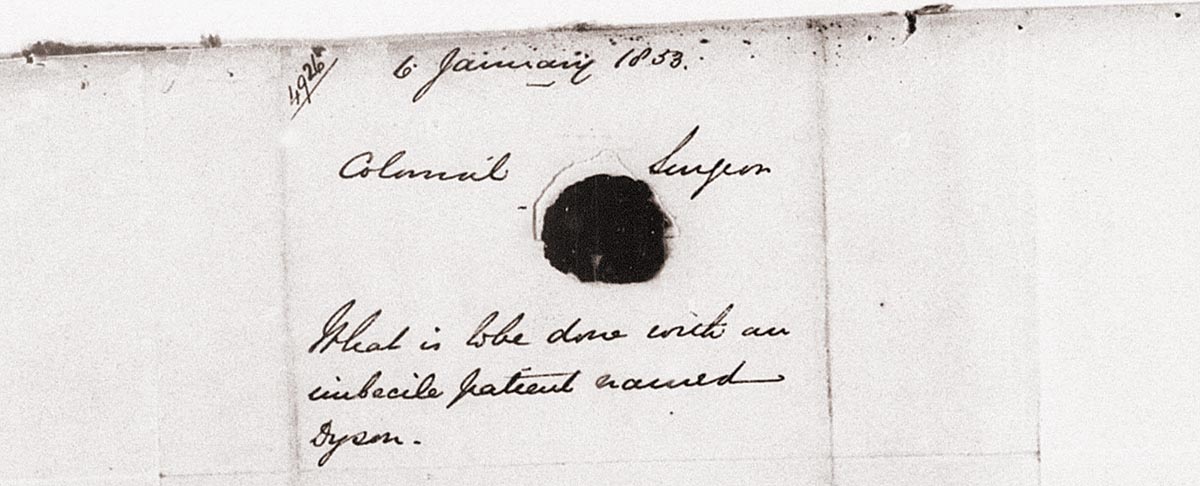
Here is a contemporaneous report made by a police magistrate to the colonial secretary about another death in the colony.
SRO CSR 36/308/93
There should be a letter like this about Fanny’s case but there is not.
I spent several days in the State Records Office (WA) going through the microfilm of ingoing and outgoing correspondence for the Colonial Secretary’s Office from 1852 to 1854, searching for any mentions of any of the Dysons, the Perth Lunatic Asylum or Police business that might relate to Fanny’s death. Other than the conversation between the Assistant Police Magistrate for Perth, the Colonial Surgeon and the Colonial Secretary on behalf of the Governor, all I have found is what I have presented in Part II: the Evidence. Outside the Colonial Secretary’s correspondence— which is considered to be largely intact—there are no repositories in the State Archives relating to the activities of the Police Magistrate, the Colonial Surgeon, or any Lunatic Asylum of this period that are not concerned with government convicts.
It is hard not to conclude that from the time Western Australia became a convict colony in 1850, the sole interest of the government was the management of the convict establishment and civilian matters were an inconvenient distraction from this work. At the same time as the convicts made their appearance, there was an upswing in the number of government-sponsored free immigrants to the Colony, for which the local economy was ill-equipped to absorb. (This does begin to explain how Dyson could be short of timber-cutting work in the midst of a construction boom) The convicts had their own hospitals and mental institutions, but the existing civilian services also had to absorb the immigrant influx. Only the convict establishment (funded directly by the Imperial Government) maintained proper record keeping practices.
Governor Fitzgerald ordered the construction of a new Colonial Hospital (i.e: a civilian one) with a custom-built Lunatic Asylum for Perth. This building, (which remains at the core of the existing Royal Perth Hospital) was not opened until 1855, and replaced numerous temporary structures before it. The absence of clear records makes it near impossible to work out where its predecessors stood or which ones Fanny was incarcerated in.
There was a predecessor of the Colonial hospital next to the site occupied by the Perth Town Hall. It was demolished soon after the Hall was constructed in the 1870’s. This may have been where the mentally ill of Fanny Dyson’s time were imprisoned. However, there is also mention of a Female Lunatic Asylum in what became an immigrant depot at the end of William Street, but this was closed in 1852 before Fanny could have been admitted, which raises an unanswered question: Were there two Asylums buildings differentiated on sexual grounds, or were they one structure? Fanny was under the care of a Matron who appeared to hate her guts. I would very much like to know the name of this individual.
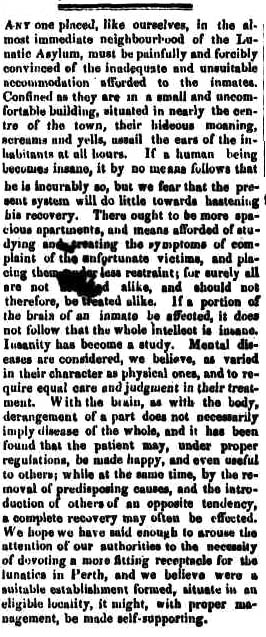
There is mention of an Asylum on Wellington street in the converted stalls of a stable next to the old racecourse. Not being able to precisely identify this location, it seems at odds with a newspaper report from 1852 which implies that the Asylum was next to the office of the Inquirer newspaper.
There are too many unanswered questions for me about Fanny Dyson’s last days and death, and we may never know the true circumstances of her end, however
J’Accuse
Her husband, James Dyson, who assaulted her, made it impossible for her to live in her own home. I always knew he was a bit of bastard, but this crossed a line for me that I cannot forgive. I cannot know whether his wife— my great-great-great-great-grandmother— really was insane or not. The Colonial Surgeon and the Police Magistrate didn’t think so, but they admitted her anyway. There’s a word for making someone believe they are insane when they are not—”gaslighting“. I’ve battled clinical depression much of my adult life. That fact has been used against me on more that one occasion. I have been “gaslighted“. I don’t forgive those who took advantage of me for their own petty purposes and I don’t forgive my ancestor for what he did and allowed to happen to Fanny.
But James Dyson has been dead for 130 years. I now know what he couldn’t have know back in 1854 when it must have seemed that all the obstructions in his way were lifted. James Dyson would pay for what he did to his first wife. Only the veil of silence cast by the awfulness of what had gone down before obscured the magnitude of his failure.
On the 2 August 1852, James Dyson appeared before the Assistant Police Magistrate Charles Symmons in Perth and was fined eight shillings with costs for creating a disturbance the previous night. Those are the bald facts as presented in the local paper, which often preserve more details than survive in the official records. However, I discovered an exception: Police Magistrates sometimes wrote to the Governor via the Colonial Secretary’s office, and these letters were readily accessible on microfilm at the State Records Office (SRO) of Western Australia in Perth. I discovered that the correspondence mostly concerned re-offending convicts and rarely the day-to-day court processes. But I can safely assume from the later letters of Charles Symmons to the Colonial Secretary that on 2 August 1852 James Dyson was probably beating up his poor wife.
Letter received by the Colonial Secretary from the Acting Police Magistrate for Perth:
August 6th 1852 Perth
Sir
The wife of James Dyson, Sawyer of Perth, having been, in my presence, examined by the Colonial Surgeon, and reported by that Officer of feeble & unsound mind, although not actually insane, and as moreover, it has been proved before me as Police Magistrate, that the said woman is in the habit of being struck and otherwise illtreated by her husband who has received a woman of bad character into his house.
I have the honour to request that the said Mrs Dyson may be received as an inmate of the Government Lunatic Asylum, and in and of her maintenance therein, I shall make an order on her husband for the weekly payment of (8) Eight shillings.
I have the honor to be, Sir, Yr Very Obdt Serv Chas. Symmons Asst Police Magistrate
the Hon, the Col Secretary, Perth
The Governor of Western Australia, Charles Fitzgerald initialled his approval of this course of action.
Letters sent by Colonial Secretary to the Colonial Surgeon and the Assistant Police Magistrate of Perth:
August 6 1243 [To the] Colonial Surgeon His Excellency having authorised the admission of the wife of a woman named Dyson into the Government Lunatic Asylum, I have the honor to request you will give the necessary instructions for her reception. Dyson has been ordered by the Police Magistrate to pay 8/. a week towards the maintenance of his wife.
[To the] Asst Police Magistrate I have the honor to acknowledge the receipt of your letter of this date applying for admission into the Government Lunatic Asylum for the wife of James Dyson from whom you will claim[?] the payment of 8/. a week. I am directed by His Excellency to enclose such admission.
Sc. W.A.S
But three months later Symmons was requested to update the authorities,—
Letter sent by the Colonial Secretary to the Acting Police Magistrate for Perth:
12 November 1852
[To] C. Symmons Asst Police Magistrate Referring to your letter of the 6th August last I have the honor by direction of His Excellency to enquire whether the weekly payment of eight shillings is duly made by James Dyson for the maintenance of his wife in the Lunatic Asylum. The Woman is a sower of much trouble and the sum ordered to be paid barely compensates for the annoyance experienced by the Matron from the lazy and filthy habits of her Patient.
Sec/ W.A.S.
Letter received by the Colonial Secretary from the Acting Police Magistrate for Perth:
Perth Nov 16th 1852
Sir,
In reply & gen’s of the 12th Instant, I have the honor to inform you that I have received from James Dyson payments at the rate of eight shillings per week for the first three months of his wife’s location in the Perth Lunatic Asylum. I shall pay the sum, (amounting to £4-16), into the hands of the Colonial Treasurer.
I have the honor to be Sir Yr very Hond Servt Chas Symmons Asst Police Magistrate
The Hon, the Colonial Secretary
This letter was annotated with instructions to be passed back to Mr Symmons. “…
Letter sent by the Colonial Secretary to the Acting Police Magistrate for Perth:
Asst Police Magistrate Perth In acknowledging receipt of your letter of the 16th Inst reporting that James Dyson had made payments of eight shillings per week for the first three months of his wife’s location in the Perth Lunatic Asylum I am instructed by the Governor to inform you that he considers such rate of remuneration inadequate to the trouble and annoyance which this woman occasions to the Matron of the Establishment and that Dyson should be called upon to pay an increased sum of ten shillings per week; in addition to which he should also deposit something to purchase articles of clothing for his wife’s use.—
sec / W. A. S.
Symmons replied promptly:—
Perth November 20th 1852
Sir,
In acknowledging the receipt of your’s of the 18th Instant suggesting that James Dyson should be called upon to pay an extra sum of two shillings per week for the support of his wife now an inmate of the Lunatic asylum — I have the honor to report — that I find when inquiring that in this last 2 months Dyson’s employment as a Sawyer has been very slack, and his earnings comparatively small —
He professes his utter inability on making a more liberal allowance, considering that he has three children to support — & the present dearness of the necessities of life.
Dyson expresses his willingness to supply his wife with suitable & sufficient clothing.
According to his statement, she has 4 gowns, 2 other under garments, & consequently, could namely, he supposed, be in that want which your letter would infer.
I have the honor to be Sir Yr very Obdt Serv Chas Symmons Assist. Police Magistrate
And this was the situation until January of 1853 when it was the turn of Dr John Ferguson, the Colonial Surgeon, to write to the Governor. It was he who had responsibility for Fanny Dyson’s case.—
Letter received by the Colonial Secretary from the Colonial Surgeon:
Perth 6 January 1853
Sir,
I beg leave to bring under His Excellency’s notice the case of Mrs Dyson, at present a patient in the Lunatic Asylum. Mrs Dyson has been an inmate of the Asylum for nearly five months, and during great part of that period has been under continuous treatment for her Disease, but I regret to say, with little or no benefit to herself — the knowledge that her Husband is living with another man’s wife, (a Mrs Edwards) has taken such a complete hold of her mind, and her animosity to return home has become so constant & intense that I consider her case, in this account a hopeless one for present treatment.
I would therefore suggest the propriety of sending her home to her husband – I’d not present to her such an opinion as to her for the Govt. can interfere in her case, to see that the poor woman receives, from her husband, that kind treatment which she so essentially requires, or whether on such it would be practicable to have Mrs Edwards removed from Dyson’s house to her own Husbands’, who, I am informed, is still willing to receive her – but I am clearly of the opinion that no good can come to Mrs Dyson herself, under existing circumstances, by a further residence in the Asylum at present.
I have the honor to remain Sir, Your most obedient Servant, John Ferguson
The Governor’s response was chilling..
Letter sent by the Colonial Secretary to the Colonial Surgeon:
[To the] Colonial Surgeon In reply to your letter of the 6th Instant relative to the case of a woman named Dyson now a Patient in the Lunatic Asylum I have H.E.’s directions to authorise your sending her in charge of a Policeman to her husbands House, and to refuse receiving her again into the Asylum. The matter must then rest with Dyson and the Magistrates.—
Sec.
If there is more government correspondence about Fanny Dyson’s case, it has yet to be identified. If a policeman did escort Fanny back to her home he would also have observed that Mrs Jane Edwards— the other woman— was just about to give birth to her first child with Fanny’s husband. Any possibility of reconciliation between any of the parties was most likely extinct by 27 April 1853 When James Dyson and the aggrieved husband of Jane brawled in the street. It’s possible Fanny stayed out of the Asylum for a time, but she was most probably back in the custody of the Government when she met her end.
There is only one record which contains an indirect mention alluding to her final and tragic fate.
Original Police records for this era in Western Australia’s history are very rare. The newspapers published court business, but not every week, and not completely. This criminal indictment book from 1854 lists a case prosecuted that the local pressmen decided for what ever reason, not to report. On 25 June 1854, James Dyson was charged with:—
“Refusing to continue to support his Wife”
But the charge was dismissed. The reason given:—
“Dismissed by taking his [sic] life”
James Dyson certainly did not take his own life in 1854. Substitute “her” for “his” and it all makes tragic sense.
This is a reconstruction of the last years of the life of Mrs Frances (Fanny) Dyson, the first wife of James Dyson, and mother to his first four children. This is a very different narrative to the one that which has heretofore been told, and has been accepted as the truth for nigh on one hundred and twenty years.
Part 1:
The Death of Fanny Dyson
This is a narrative of events. Evidence for these events are presented in Part II
At some point between early 1851 and the middle of 1852, James Dyson received into his house on the corner of Murray and King Streets, Perth, the extremely young wife of Mr Richard Edwards of Guildford. Jane Devling married Edwards during August 1850 when she was only sixteen years old (and four months pregnant with child)— so when she arrived into Dyson’s household, she also brought with her an infant daughter named Ellen Christina, who would be raised as a Dyson. By 1852, the future second Mrs Dyson was 18 years old and her new hubby about 42. James had three surviving children from his own marriage: George, aged 9; Joseph, aged 7; and William, aged 5. A daughter, Hannah, survived only a couple of months back in 1850.
But still alive and under the same roof with her husband and his new mistress was James Dyson’s first wife, Mrs Frances (Fanny) Dyson.
There did not seem to be a formal mechanism for divorce during this early period of the Swan River Colony’s history, but to give James Dyson his due, he did not just throw his wife of nine years and mother of his children out into the street when the newer and shinier model arrived. No, instead he beat her and abused her so that by the time she arrived in a state of catatonic shock before the desk of the Assistant Police Magistrate and the Colonial Surgeon, those two gentlemen felt they had no option—even though they acknowledged that she was not actually insane— but to recommend to the Governor that Mrs Dyson be committed to the Perth Lunatic Asylum. Governor Charles Fitzgerald, supreme ruler of the Colony, gave his assent to this proposal on 6 August 1852 and Mrs Dyson was sent to the converted stables on Wellington Street (next to the old race course) that served as the hospital/asylum for Perth.
The Perth Gazette and Independent Journal of Politics and News, Fri 9 Apr 1852 Page 3Inquirer, Wed 14 Mar 1855 Page 2
Again, to Dyson’s credit: he was content to pay for his wife’s maintenance in the asylum to the value of eight shillings a week and even to (eventually) hand over her wardrobe— consisting of four gowns and two sets of undergarments. He only protested when the colonial authorities attempted to up the payment to ten shillings a week— due, they said to the extra trouble and work Mrs Dyson’s needs placed on the asylum staff. He pointed out that his work as a sawyer had been a bit “slack” lately—also, he did have three young children to feed, and the cost of living was so expensive those days… The authorities seemed to have accepted Dyson’s excuses.
Five months later, Dr Ferguson, Colonial Surgeon, responsible for Fanny’s care, wrote to the Governor to express his concern that he could do nothing further for his patient. In his opinion, Mrs Dyson was obsessed with that other woman living in her house with her husband. Ferguson made inquiries and discovered that the man that the other woman was actually married to would be all too pleased to take back his errant spouse. The Doctor’s question to the Governor: Was there anything the State could do to compel Jane Edwards to leave Dyson’s house and return to Richard Edwards?
The governor seems to have taken something of a personal interest in this case— up till now. Ferguson was instructed that he could send Mrs Dyson home with a policeman and bar her admission back into the Asylum, but after that it was solely the business of the Police Magistrate… and James Dyson. Fanny would have discovered, arriving home, Jane Edwards heavily pregnant with Fanny’s husband’s child. Just to ram home the point, when the child was born three weeks later, on 25 January 1853, the boy was christened “James” and there has never been any real doubt about who his father was.
Two months later occurred the famous street fight between Dyson and the husband of the mother of his most recent child. It would be a fair assumption that reconciliation between any of the parties was now impossible. This was the last public appearance of the luckless Mr. Richard Edwards, junior, in the records of Western Australia.
The Perth Gazette and Independent Journal of Politics and News (WA : 1848 – 1864), 6 May, page 3
Wherever he disappeared to, everyone were so confident he was no longer alive by February 1862, James and Jane could finally have the church wedding they may well have so long planned. But if this was the case, it meant that Mrs Fanny Dyson also had to be dead as well.
***
There is no death certificate for Mrs Fanny Dyson. Her gravestone in East Perth Cemetery has a patently wrong year on it of 1850, but it was erected it nearly fifty years after her alleged death, and by someone not born when she died.
Fanny most likely died some time before June 1854. 12 May 1854 is the best guess at an exact date.
Fanny was most likely back in the Perth Lunatic Asylum. She certainly was not being looked after by Jane and James. Five months previously, Governor Fitzgerald who confirmed her original commitment to the asylum, presented a school prize to her son for academic achievement. It was unlikely she was allowed to attend the ceremony. Jane and James were also expecting their second child together (assuming Ellen Christina was not also James’s daughter) before Fanny finally was no more.
It was 1861 before a purpose-built building began construction in Fremantle to finally replace the Perth Lunatic Asylum. Records concerning mental health don’t even begin to be preserved in this colony until the opening of the Fremantle facility so the exact circumstances of Fanny’s death have not been preserved. Another possible explanation for this silence might just be embarrassment, or shame. Shame over the stigma of mental illness and official embarrassment that her end had occurred while she had been in the government’s care. The only formal record that the first Mrs Dyson had passed comes in the form of a rare surviving Police charge sheet from 1854, describing how James Dyson was called before the police magistrate yet again, this time charged with refusing to support his wife. The local newspapers, which published most court proceeding, also chose not to report this event. The charge was dismissed because by 25 May 1854 James Dyson had no lawfully-recognised wife to support.
The Fremantle Lunatic Asylum Fanny never lived to see.
Fanny Dyson had taken her own life.
The inconvenient truth of her existence could now be comfortably ignored.








 Reload document
  Open in new tab