Fanny Hoffingham or Hoffington. It might even have been Skeffington, but I’ve seen the original document from which that transcription arose and I now know that it was Hoffington too. She was the first wife of James Dyson, ex-Tasmanian convict and future West Australian property owner and entrepreneur. Mother to his first four children and cruelly discarded by him in favour of the nubile and teen-aged Mrs Richard Edwards (junior)… better known to history as Jane Devling, or Mrs Jane Dyson.
We now know she is not buried in the same family plot as her husband and his second wife, and that she was alive for several years after the date inscribed on her headstone in that cemetery. She took her own life probably in state care, probably in the Perth lunatic asylum during the year 1854 — an institution so badly represented in the the archives that not only is there no death certificate for Mrs Fanny Dyson, its not even clear where the asylum was located in Perth at that date.
That was the extent of what we knew about the first Mrs Dyson. Before her name appears on her marriage certificate dated 25 October 1842 the name Fanny Hoffington or any of its variants appears precisely nowhere.
It’s a useful mantra to employ, I suppose: If someone tells me “I guess we’ll never know for sure”… That’s a green light for me to bloody mindedly be sure. Then… once I’m convinced that “Yes, we probably know all that can be known, and that all the avenues of research have been finally exhausted..” … that’s when a vital piece of new information that totally upsets what you thought you knew about a particular subject is revealed.
Such was the case with Fanny — but it was instinct, not evidence, that made me suspect I had uncovered her secret, via a series of outrageous coincidences possibly even linking her to her future husband before either had left England’s shore. The trouble is that even outrageous coincidences may still be just that, merely coincidences. I was looking for hard evidence, but the documents from 190 years ago were not providing that. However, neither were they providing proof that my theory was false.
“Patriotism is the last refuge of a scoundrel” is quote I was certain came from Ambrose Bierce, but looking it up it appears to be from Samuel Johnston made at least a century earlier in 1775. Here is my own riff on the sentiment:
“DNA is the last refuge of a family historian”
Alan J. Thompson, 2019
A certain commercial genealogy website to which I have linked my own DNA test also provides a long list of others who share segments of the same chromosomes that I possess. A subset of these distant biological cousins also have publicly searchable family trees back to the generation of Fanny’s possible parents or grand-parents. Two of these trees contain Fanny’s proposed true family name and a match with an individual that might be an uncle, grand-uncle, grandfather, or even father for her. This name does not appear in any other context on my current family tree, nor do any other matches with my known family names appear in these other trees.
This would not be conclusive proof on its own, nor can it be said that further documentary evidence may not still be uncovered that will demolish the baroque, Byzantine story of the first Mrs Dyson that I believe I have successfully constructed. But I’m now prepared to state my theory and die on this hill if that be my fate.
Fanny Hoffington was an alias for her real name which was Fanny Johnstone nee Dewhirst. A false name was necessary as her first husband Lorenzo Johnstone was very much alive and serving out the last days of his fourteen-year sentence as a convict in Van Diemen’s Land. The two had married in Launceston on 15 January 1840. At that time Fanny was also a convict — but despite that her conduct had been terrible to the extent that eighteen months had been added to her seven year sentence for theft, she was granted her absolute freedom on 3 July 1840. This was the same day that another convict felon received his freedom. His name was James Dyson.
Both had much in common: Both were from the same part of the world — both were sentenced in the same court house in Yorkshire, for similar crimes committed in Halifax in the West Riding of that county. They could well have known each other back in that town. He was a Bad Boy, she was a Bad Girl. In all probability she fled Van Diemen’s Land with Dyson on the barque Napoleon when she (the boat) sailed from Launceston on 1 May 1841. They were both much closer in age than what either had stated on their marriage certificate. He was closer to thirty than twenty-three, and Fanny was probably a couple of years older than James rather than a year younger (as she claimed) at twenty-two.
So James Dyson’s first wife was a one-eyed sex-worker from Halifax, Yorkshire, convicted of stealing from one of her clients, and would have been found guilty of bigamy if her track-covering had not been near-perfect.
The more things change, the more they stay the same.
Geraldton in 2011. It would be fair to say the port did not look like this in 1876 and does not look like this today.
There was no doubt he did it.
Geraldton, Western Australia, January 3, 1876: A man had just murdered his spouse. It was his second marriage, they had two young children together and a third was on its way, but they were far from being a happy couple. His business acumen had deserted him and money was tight. He drank a lot now — and they were packing up to move house yet again. He had been drinking that day and they had been arguing yet again. Then he produced the shotgun. He threatened to shoot his wife.
The removal-man took the weapon away from him, telling him him he “was mad.” The gun was hidden in a locked room and his wife was given the key. How scared she was is not entirely clear: earlier she had dismissed the concern of the removalist by saying “Take no notice of him.” It was probably to the relief of everybody when he went out to the pub.
He returned later in the afternoon and the couple engaged in their last childish argument together over the affordability of a pair of child’s shoes. Bridget Mountain was their domestic servant. For most of that day she had been occupied in the kitchen which was slightly separated from the main house across a court yard. About 4 o’clock she heard her mistress cry “Oh! Bridget! the gun! the gun!” The servant girl ran to the kitchen doorway which her mistress was running toward — then a shot rang out.
The sound drew the next door neighbour outside, and caused the master of the nearby government school to look out his window. Both saw the man in the yard with the shotgun raised to his shoulder aiming at the kitchen door. Bridget saw him too and felt the shot particles that hit her in the leg. The wife cried “Bridget, I’m shot! I’m dying!” as she fell through the kitchen doorway. Bridget caught her and closed the kitchen door. What her mistress did next makes sense only if she realised the eldest of her two children was still outside with the husband who had just shot her. One deliberate minute later she opened the kitchen door and stepped back outside. The door slammed shut and then a second shot rang out. Both the schoolmaster and the next door neighbour witnessed the man raise the gun and fire the shot which killed his wife. He aimed for her head, the top of which he blew off. Also watching as her father murdered her mother and unborn sibling was their two-year-old daughter. When the police constable arrived, the man was holding the child in his arms and was seated next to the body of his wife. “I’ve done it.” he stated. After being allowed to whisper something in the ear of the corpse, he was lead away unresisting to the police lockup.
He had been charged on the spot with murdering his wife. That was
also the conclusion delivered by the inquest in Geraldton held the
very next day. The man was held in custody in the lock-up until he
could be shipped down to Perth for his criminal trial which was
scheduled to be held in the Supreme Court in Perth three months
later. While in custody he admitted to his gaoler:
“I wish to God this had never happened; for the sake of them that’s gone ; but what’s done can’t be undone.”
On 10 April 1876, when his first trial began, one thing was never questioned, he had killed his wife in the circumstances described above. But this was a colony where who you were was infinitely more important than the gravity of the crime you had committed. This man belonged to a culture where it was considered an insult to his society for a trained lawyer to mount a defence for an aboriginal prisoner. It had shaken that same society to the core when a white man had recently been found guilty by a magistrate of manslaughter of an aboriginal man and sentenced to a couple of years in gaol (that magistrate was promptly sacked). But the prisoner in the dock was not an aboriginal man, and he had the most expensive legal team a scion of the colonial gentry could afford. Most crucially, the man on trial for his life was called Kenneth Brown and he was the older brother of Maitland — probably the most popular white man in the colony. A verdict of guilty was by no means assured.
Maitland Brown was also a killer — and in open celebration of the blood on his hands he was the undisputed hero to a significant proportion of settlers, particularly the elite property owners of whom he was an exemplar. His reputation was made by the ruthless extermination of a number of aboriginal people he had deliberately gone to their country to destroy. A career in politics beckoned. By 1876 he was virtually a one-man opposition party to the Governor and Government of the day. If responsible government had existed in the colony at the time (ironic, as Brown opposed this system at this stage of his career), he would have been elected unopposed head of that new government. When his brother shot his wife and unborn child to death Maitland was at the apex of his influence. The question was how far was he prepared to leverage his popularity to save his family’s honour (and his brother’s life). The popular perception that Maitland Brown was all powerful in the colony of Western Australia was about to be tested against the reality of that perception.
Among Equals
Maitland F[#$]ng Brown
The legend of Maitland Brown’s omnipotence was very much reinforced
by the outcome of the first trial. The jury failed to reach a
verdict, a miss-trial was declared when a sole member of the panel
refused to go along with the majority’s wish to acquit Kenneth
Brown on the grounds of his being of unsound mind. A significant
amount of gaming the system had gone into play to engineer this
near-win for the defence. The population of Western Australia was
still quite tiny, and only a small subset of this population — men
with a certain quantity of money or real estate — were eligible to
serve on juries. The size of the population was such that everyone in
this category would know everyone else — related by family,
friendship or business ties. The defence did not leave this to chance
— half the names on the roll they objected to, until the only ones
left were exactly the subset of the population who would do anything
for Maitland Brown, their hero — even pervert the course of
justice.
Some of the supposedly confidential deliberations of the jury members
were leaked into the public domain during the weeks that followed —
and it appears that Maitland Brown’s supporters had overplayed
their hand:—
“He was ready to listen to reason [the hold-out juror], but when the leading spirit among the eleven, in a last attempt to convince him said, ‘Don’t think of the prisoner, he is a scoundrel; think of the family.’ He replied, ‘If that is your best argument I have nothing more to say.’”
The Weld Club in 1874. The tossers on the front verandah may well include jurors in Ken Brown’s trials. [Battye Library]
The names of the twelve jurors are all known, but in the reverse
situation of the member of the firing squad randomly given a blank
(so as to assuage his conscience that he did not fire the killing
shot), the identity of the man with a conscience remains a secret.
His name belongs to one of the following: George A. Letch, Dennis
Brennan, William Britnall, John D. Manning, James R. Mews, John
Allpike, Walter Easton, William Rewell junior, Alfred Minchin, Henry
W. McGlew and James Manning. Captain George F. Wilkinson was foreman
of the jury as well as being a foundation member of that exclusive
Perth club for gentlemen: The Weld Club. Maitland Brown was also a
member, as was an unidentifiable member of the second jury who was on
record bloviating at the bar or at the billiard tables:
“… He would not agree to a verdict of guilty, whatever might be the evidence…”
The jury of the second trial comprised Selby J. Spurling (foreman), Thomas Connor, George W. Smith, James Allpike, Thomas Jones, E. W. Haynes, William Coombs, Henry Caphorn, William Smith, Alexander Cumming, Charles Watson and Reginald Hare. It may have been more than just the failure of the previous trial that spurred the prosecution to make their case out more aggressively — In the intervening month, six Fenian political prisoners had broken out of Fremantle Gaol and made good their escape by sea on an American-flagged ship. A colonial vessel hastily commissioned as a gun boat gave chase, but when reality dawned that recapturing the escapees would also start a war between Great Britain and the US, the colonials backed down and the prisoners got away. There might have been a begrudging acceptance before this that the brother of Maitland Brown might be allowed to get away with murder. — but now a second public official humiliation could no longer be stomached.
This time the attorney general explained in great detail how the evidence raised could not excuse a murder and called further witnesses attesting to Kenneth Brown’s sanity. The defence likewise upped the ante. They called the aged mother of Kenneth and Maitland to the stand. The palpable embarrassment leaps off the page of the court transcripts as she testified that madness ran in her family and that her own mother allegedly tried to kill someone. Expert witness after expert witness was called to confirm this assertion, even Maitland Brown himself took the stand. In 1876 the Supreme Court occupied a barn-like structure on the same site as the building that replaced it at the beginning of the 20th century. It was formerly the government commissariat for Perth, but where the sacks of corn or gunpowder were once stacked, as many members of the public who could cram the galleries were there to watch their justice system in action. It may be that an increasing number of them did not like what they heard. Maitland Brown, even on the witness stand, was consistent in his guileless honesty (or gobsmacking hubris, if you prefer). He (in rather more words than less) attributed his brother’s mental decline to the fact that he had made a match with someone of significantly lower class than himself. The weekly newspapers covered both trials in minute (to the point of being libellous) detail. That was the contention of the defence who attempted to bring writs of contempt of court against a couple of them. The judge dismissed this action.
After three days of evidence and a careful summing up by the judge, the jury was sent into isolation to consider the verdict. A few more days later and it was clear that this jury was not going to come to an unanimous verdict either. As was the case with the first trial, the defence had made any number of objections against potential jurors who might not have taken to heart that Maitland Brown was their peer as much as his brother was. It was a successful strategy (in the short term) for it bought the defence time. By the end of the sessions the list of suitable jurors on the roll had been exhausted and ordinarily wouldn’t have been regenerated until the next sitting of the court — in another month’s time. But rejecting jurors wholesale who didn’t meet the defence’s criteria of “friendliness” carried with it an increasing risk the more times a conclusive victory eluded them. The same family, friendship or business ties that bound those they had accepted were near identical for those they rejected — those who now realised that the family of Maitland Brown who heretofore they may have admired, or at least been neutral towards, had as good as said they were not to be trusted. Then there were those members of that class Kenneth Brown’s late wife belonged to. Ordinarily, they would not have been called to serve on a jury, but they were present in the gallery in great numbers.
The judge called for a third jury to sit in a trial that would start the same day the old one closed. The defence challenged the remaining dozen men in the juror’s-book and when it was over only ten had passed muster — too few for a trial. It seemed that it was all over for another month. The attorney-general made a suggestion. The Judge concurred. The doors of the courthouse were shut, so as not to allow any of the gallery visitors to escape, and officers of the court also headed outside to sweep the nearby docks. The judge was Sir Archibald Burt, chief justice of the Supreme Court. He may have been a fellow member of the Weld club, drinking along side Maitland Brown and any number of the jurors called to date, but he was also a lawyer, and one thing no member of that profession can ever tolerate is having the piss taken of their office. An ancient ritual called a tales was called.
Telling tales
Two special jurors were sworn in by the court — then in turn, they
called members of the public in the courthouse (or just passing
outside) to the stand, and questioned them rigorously as to whether
they were eligible to be a member of a jury. Each of the tales, both
of them, was a miniature trial in its own right, with
cross-examinations by the defence, prosecution and the learned judge.
By the end of the process the full jury compliment of twelve were
empanelled. They were Rice Saunders (foreman), Michael Benson junior,
James Green;
Harry Williams, Frederick Tondout;
John Urquhart,
Sydney Chester,
Francis Armstrong junior,
Frederick Platt and
Alexander Halliday; with
John Summers and
James Snowball the two
dragged in off the street.
The evidence of the third trial was a carbon-copy of the second. The conclusion of the jury was not. Kenneth Brown was found guilty of wilful murder by unanimous decision. He was promptly sentenced to death.
Twelve days later behind the walls of the Perth Gaol, Kenneth Brown was hanged. His brother Maitland stood by him on the scaffold while he died. From the moment of the “guilty” verdict onwards, legend supplanted fact as far as the fate of Kenneth Brown was concerned. Such was the influence Maitland Brown was supposed to exert that the prison guard was doubled around the gaol in the days up to the execution lest the wardens could be simply bribed to let their prisoner go. Maitland himself was only supposed to have been allowed to see his brother before the end on giving his personal word of honour to the Governor (of the Colony of Western Australia, not the governor of the gaol) that he would not aid his brother’s escape. Even so, long after the body of Kenneth Brown had been returned to his family for a private inhumation, the story arose (and was believed to be true by even Kenneth Brown’s own descendants) that he escaped the gallows with his brother’s help, and made his way to America, much as the Irish political prisoners had so recently successfully done.
In reality, Maitland Brown’s fortune had been largely spent by the time of the conviction on exorbitant legal bills accrued by the defence. Politically, he was now damaged goods and he resigned his place on the Legislative Council after the third trial. He would return to politics in future years, but he was no longer the universal hero of the colony he once had been. He never stood for office once responsible government was introduced a decade-and-a-half later. The affair publicly revealed the fault lines in Western Australian colonial society that had been baked into it since it creation nearly half-a century ago, but maybe this was something that could only be discussed openly in a neighbouring colony —
“[…]‘trial by jury was on its trial in this colony.’ It is almost impossible for any one who has not resided here to understand how the small population of this place is united and connected by relationships or by mutual interests, how little public feeling there is, and how greatly private feelings or interests guide the actions of people in matters great and small. The country wants new blood and increased commerce with the outer world, from which it has been so long excluded […]”
However, in the Fremantle Herald, a local paper despised by
the local elites for if no other reason than it was founded and
written by expired convicts (the very bottom of the heap) felt
confident enough to editorialise —
“Public feeling, which in the first instance was quiet, was roused by the challenging of the jury and the extravagance of the defence; […]”
One member of the public so roused, was so indignant that the legal
system of his home town was being subverted, made his opinion known
to the world at large, and if the following memoir of him can be
believed, influenced the court on the course of action that they
followed in the third trial —
“Dyson pere it was who was so insistent, during the trial forwilful murder of the scion of a celebrated W.A. family, that some of the first and second juries which had disagreed had been got at, that when a third trial was about to commence the judge suddenly issued an order to police and warders to go out into the public street, preferably down towards the waterside, and bring in a dozen working men in their shirt sleeves for choice to act as a jury. This was done and the accused man was promptly found guilty deservedly and executed.”
This Dyson pere is, of course, James Dyson, until recently Perth City Councillor and still an elected member of the Perth Road Board. There is no contemporary evidence of him ventilating his opinion at this time, but seriously — knowing what is known about his character, what were the chances of him remaining silent if his temper was riled? And James Dyson had cause to have the judicial system fresh on his mind. His son had just been gaoled for theft. Andrew “Drewy” Dyson had a somewhat unique vantage point to observe what subsequently unfolded while he served six months hard labour in Old Perth Gaol. Drewy might not have heard his father speak publicly on the subject — but he might have heard Maitland Brown and the defence team discussing his father… If James Dyson had so publicly set himself against the family of Maitland Brown and his influential friends what then were the consequences?
Old Perth Gaol
One year later, first Dyson’s Corner then Dyson’s Swamp, the bedrocks of his family’s economic security, went up for sale. James failed to be re-elected to the Perth Road Board, thus ending his civic career. His marriage failed and the husband of one of his daughters repudiated their marriage. He was forced to move into the residence of his eldest son Joseph.
Fifty years or more after the trial and execution of Kenneth Brown, the tale of Dyson’s alleged influence on the proceedings was published. It came to light during reminiscences on the occasion of death of James’ most famous son Drewy. The Sunday Times article is uncharacteristically coy about the identity of “the scion of a celebrated W.A. family” who his late father helped send to the gallows. Something else was going on at about the same time.
A child of Kenneth Brown, a daughter from his first marriage to the daughter of the Colonial Chaplain, Frederick Wittenoom, was attempting to run for the WA parliament for a second term. She was not successful in that year, 1927, nor would ever succeed again. If the coded message of her family’s shame in Drewy’s obituary was a bit of political gaming and did influence the vote in anyway, it would be the second time a Dyson had interfered with the political fortunes of this influential family. Edith Dircksey Cowan (nee Brown)’s place in Australian and Western Australian history was assured in any case. She was the first woman elected to any parliament in the Commonwealth. She has a university named after her and her face is on the Australian $50 note. She was also a founder (in 1926) of the Royal Western Australian Historical Society.
Money talks.
Is
it any wonder the Dysons were effectively wiped from the living
memory of Australian history?
James Dyson served the last few years of his sentence as a convict in Van Diemen’s Land in the district around Launceston. One location that is named in his record is now a suburb of that city called King’s Meadows. It would not be accurate to say we did not know what Dyson was doing while he was stationed there — We do — He was on a chain-gang, performing hard labour on the roads around that town.
The clear as mud portion of James Dyson’s convict record about his time at Kings Meadows
What ever the crime was that got him an [obscured] number of months on the chain gang, we know it involved violence, and that he was sentenced to work on the roads from King’s Meadows by Robert Wales, police magistrate for the Morven district — better known today as Evandale — 18km south of Launceston.
Dyson was assigned to northern Van Diemen’s Land in July 1837. He was assigned to Morven on the 4 December, then was sent (back?) to King’s Meadows barely a week later. This suggests he probably wasn’t involved in digging the irrigation tunnel tunnel that had been started in Evandale but was abandoned around this time, but he might have been put to work constructing what is now the highway between Launceston and Hobart.
I visited King’s Meadows in 2017. Before I visited, I could find no record of where the convict depôt was located, and now I know if I had stood right on top of it, there would have been nothing above ground for me to see back then. So I found some parkland in the region near a light industrial zone that I chose this as being the closest I would get to the James Dyson convict experience for this area:—
Look’s sort of meadow-ish, doesn’t it? [2017]
However, thanks to some superb detective work by local historian and surveyor John Dent that was presented to the Launceston Historical Society in February 2018, followed up by an archaeological dig later in this year, I now know a lot more about the King’s Meadows Convict station then I did before. More to the point, the Convict Station has been located, even if it will soon disappear again, this time forever under the foundations of a new housing development:—
“Constructed in 1837, the Kings Meadow Convict Station housed more than 150 convicts, as well as officials and military personnel. It was built to assist with the Evandale to Launceston Water Scheme, which proved to be unsuccessful. The structure, which was about 40 by 40 metres, was abandoned as a convict station the in early 1840s, before being sold to a private landowner in 1854.”
But the icing on the cake to this story is the discovery of the artefacts associated with this site, including a convict hat, of a design hitherto completely unknown.
As we know, there could have been over 150 convicts on the ground at any one time to whom this hat could have belonged, so the probability that this one hat could pinned down to the possession of one named convict who was confirmed to have been there at the time has to be fairly infinitesimal… for this to be so, would be far too great an outrageous coincidence, and as we know, outrageous coincidences never happen in this family….
…
… so here I present, for your edification and amusement, James Dyson in Tasmania:—
“Where did you get that hat?… Where Did you get that Hat?”
I had nearly completed an article covering the first half of George Dyson’s life—I had had it illustrated and ready to go, when I had the urge to look up one more reference (as you do).
Problem was, I found it.
I also found another portrait of one of James Dyson’s many children. Cause to celebrate? Eventually perhaps, but for now I’m fuming that the carefully constructed narrative of George Dyson’s life I had lies in tatters and an incredibly more nuanced and interesting story still remains to be written. I had wanted to publish something now! So instead I intend to present a brief overview of George Dyson’s life, the most accomplished Dyson you’ve never heard about.
The West Australian, Wed 26 May 1886 p3
The family twig occupied by George, one of the twenty-one children of James Dyson (former Tasmanian convict, later Western Australian civic identity), was the barest for the longest period of time. He was born 24 November 1864 in Perth, presumably at the family compound on the corner of Murray and King Streets, to James Dyson and his (by then) lawfully wedded second wife Jane. He was baptised in the Wesleyan Church, and he attended the Old Perth Boy’s school on St George’s Terrace, as had most of his brothers. There are records of young George’s involvement with various debating societies connected with the Wesleyan Methodist church, and then there is the strange incident at the Perth Town Hall during 1886 when he was boorish at a ball and had to spend a few hours in the Police Lockup to cool off. Strange behaviour coming from George, but absolutely what you would expect from nearly any other child of James Dyson during this time.
He owned some property in Hardinge street in the city during the 1890’s but he was always an absentee landlord. (The cottages on these properties might be those mentioned here that were being used for the purposes of prostitution!) It was obvious that George had moved interstate (or to the eastern colonies in pre-federation speak). Slowly it emerged that George had been apprenticed to the printing trade (as had been another of his brothers), was involved in the union movement, and dabbled in politics (as his father had done) only he had done it in Sydney, New South Wales.
The problem is that Sydney is many magnitudes larger in size than his birthplace of Perth, and there were many more people there called Dyson, and a significant proportion of those all seemed to be called George. This was one final complication that only a son of James Dyson (of Perth) could fall prey to: Two George Dysons, both living in the Paddington area of Sydney about the same time, both with histories in the newspaper trade, and both candidates for public office in the same general electorate. Naturally enough, they were both on opposite sides of the political questions of the day, even more naturally our Dyson used the confusion to wind up his namesake.
Not our George [The Sydney Morning Herald, Fri 27 Sep 1935 Page 16]
These are the portraits of the two George Dysons so far mentioned, not to be confused with a third George Dyson who was connected with a union of bakers in the area about the same time. Our George Dyson had a brother who was a baker back in Perth, so it was not unreasonable to suspect that there might have been a connection there. Nor does it seem that our George Dyson, who was at one time vice-president for the Typographical Association (An early union for print workers) was the same George Dyson who was secretary of the Papermakers’ Union and travelled to Britain in the early twentieth century to meet with British Unionist comrades…
There were even multiple George Dysons among George’s own siblings. This George was the second of his name; the first was a half-brother who had died in a carting accident some five years before his namesake was born. Don’t get me started of the three nephews of our George named George Henry or Henry George…
Our George was apprenticed to the Stirling brothers newspaper proprietors who were also associates of his father within the context of the Sons Of Australia Benefit Society. Whether by luck, family connection — or even natural talent — the young man was parachuted into a management and editorship position for a weekly newspaper in Albany in late 1886. He was twenty years old. After eighteen months he hopped on the next mail streamer for the eastern colonies. Six months later, that Albany newspaper abruptly closed. You must draw your own conclusions as to how successful his first gig had been (at least until I write up this period of his life properly).
Settling in Sydney and working for a large publication called the Evening News, he seemed to have found his natural environment. He rose swiftly through the union movement as a delegate for that aforementioned Typographic Association, finally to be nominated as a candidate for what would become the Australian Labor Party in its first ever electoral contest in the lower house of the New South Wales parliament during 1891. He failed to secure a seat by a mere handful of votes. He was now aged twenty-three.
Freeman’s Journal, Sat 20 Jun 1891 Page 16
For a great number of complicated reasons, some possibly connected with the utter mess his family back in Western Australia were embroiled in, George seemed to have become disillusioned with the nascent labour political movement, and for his other political passion — Free-Trade — despite the strong personal following he had by now amassed — that movement’s leadership rejected him as a political candidate during the 1894 election cycle. However, he was passionate enough for this cause to continue campaigning vigorously for the other endorsed candidates, as he had also done during his time with the labour movement. The campaign trail took him to a number of towns in rural NSW including Moree and Molong. This proved to be a boost to his newspaper career: He was recruited for jobs as editor and general manager of the local papers in both these towns for a time:—
We may here remark that Mr. George Dyson, the well-known democratic freetrader, who was at the last general election one of the Secretaries of the Free Trade and Liberal Association of New South Wales, has been appointed editor of the Molong Express, Mr Dyson is not altogether unacquainted with this district. At the last election he visited several centres of the electorate and addressed meetings in support of the candidature of Mr. H. C. McCulloch, who was at the time suffering from an illness and was unable to fulfil his appointments, hence Mr. Dyson’s presence here during the campaign. The speech which he delivered at the local School of Arts on the occasion was one of the most cultured and forcible ever delivered in Molong on the fiscal question. In addition to being a good and fluent speaker, Mr. Dyson is an able and fearless writer. In this district, he will have a splendid field for the exercise of his abilities.”
By late 1898 George Dyson was back in Sydney in his preferred suburb of Paddington. He considered running again for colonial parliament that year as a single-issue candidate, but seems not to have done so. Next year he married. He was thirty-five years old. His new wife was thirty-six and a divorcee with three children by her former husband; a greatly respected former newspaper journalist and then current town clerk for the city of Paddington, Mr Augustus Vialoux. Awkward? I have no idea who got custody of the children but I suspect it was not George and his new wife. The former Miss Jane Annie Utting was herself the daughter of a distinguished and highly respected journalist Mr. John James Utting. Perhaps it was for this reason there is absolutely nothing about the Vialoux divorce in any of the newspapers when in any other instance they would be all over a story like this like flies on the carcass of a dead rhino. Perhaps it is also the reason that George Dyson’s newspaper and career in politics quietly fades away about this time.
For roughly the last three decades of his life George Dyson lived quietly and relatively unobtrusively in the Sydney suburb of Woolloomooloo, running a small Grocer’s shop and general store, much as his father had done during his later life, but he would not have been a Dyson if he did not have at least one appearance before the local police court for some minor trading infraction:—
The Sydney Morning Herald, Tue 5 June 1900 p8
Like his father he had ambitions to be a city councillor, unlike his father he never succeeded, but he nominated for the Bligh Ward of the Sydney City Council in both 1901 and 1912.
A few years before his death, he moved to 12 Griffin Street in Surrey Hills. It was there he died on 8 March 1928, aged sixty-three years. The next day he was buried in the Waverley Cemetery, but there were at least two more twists to his tale. George Dyson was buried in the Roman Catholic portion of that burial ground. Had he converted to Catholicism? When, and what had been the ramifications?
He had married a divorcee— how was that reconciled? Maybe it wasn’t. He and Jane had no children of their own together; and the same year George died, Jane Annie Dyson remarried… her former husband Augustus Vialoux. It is by no means certain at this stage whether that wedding took place before or after George Dyson was laid in the ground.
For a family member who had been nearly completely forgotten George Dyson has proved to have one of the richest historical records of any of his kin. Unlike 99% of his contemporaries, we have insights into what he actually thought and said about subjects including the behaviour of the rest of his family. He is the only Dyson I know of to have been immortalised in verse (other than Drewy!) and then by none other than by that stalwart of incipient Australian nationalism (and racism) the Bulletin Magazine.
[The Bulletin Vol. 11 No. 605 (19 Sep 1891) p14]
As has been said at the end of so many editorials of the time…
There is currently no known authentic likeness that exists of James Dyson.
He was a prominent man of his time— merchant, land owner, Perth City Councillor—he was present at certain key events in the history of the city: He was definitely present at the opening of the Perth Town Hall, he was most likely present at the opening of the Perth Railway Station, The Wesleyan Church, Royal visit, parades… All these events were photographed, but there is no currently identified photograph of James Dyson. Even of his many, many children (with one notable exception that possibly explains the rule), no images appear to have survived.
The veracity of the sole written description that comes down to us of his appearance depends whether you accept (as I do) that he was a Van Diemen’s Land convict, in which case we have this documentation:
CON18/1/15
Now, it is possible to feed these details into an identikit program to generate an impression of what Prisoner 901 looked like. Best of all, there is such a program exactly for Australian Convict records, and when you run that program, you get this:—
(The only parameter I had to change was the eye colour that the program kept trying to make brown rather than the stated grey.) Try it for yourself!
Although he was a bit shorter than today’s average, a number of his sons were noted for their height… and width. (Given that the family were involved in both the butchering and baking trades, it’s a fair bet that improved diet had much to do with this).
Always classy: Drewy Dyson
Going to the extreme (as always) was Andrew Dyson. Drewy achieved his greatest fame at the end of the nineteenth century for being the fattest man in Western Australia. He is (I guess, inevitably) the only child of James for who original likenesses exists*, and being Drewy, they exist in excess: many photographs, written descriptions and even cartoons.
Drewy Dyson also provides us with a very good idea of what his elder brother Thomas looked like. One day in May 1897 Thomas Dyson was hauled into Court to face Mr. Cowan, the Police Magistrate:—
The Inquirer & Commercial News (Perth, WA : 1855 – 1901) Friday 14 May 1897 p3
Traces of James might be seen in a scattering of images of his grandchildren. George Henry “Harry” Dyson (left) was Thomas’s eldest son and clearly shows shows the family similarity to his famous uncle if not also his grandfather.
Ellen Christina Edwards is sometimes considered to be James Dyson’s daughter although in all probability she actually was the daughter of Jane Devling (Dyson’s second wife) and her first husband Richard Edwards.
This image of one of her own daughters is interesting to compare how much of Jane and how much of James there might be in the many children they did have together. While we might have some sort of image for James now, for his wives we have less than nothing.
Including Ellen, Dyson had twenty-two children, nine of who would go on to produce offspring of their own — of those nine there would be only one surviving grandchild from the children of his first wife. (This happens to be the branch of the tree that I am descended from). Recently the existence of some earlier family photos of my Dyson family have become known to me and some of the blanks of a visual map that ties me to this family were filled in, but there is still so much missing. The appearance of Joseph Dyson, James’s eldest son remains a complete mystery to me.
What do you see when you see a family photo?
About ten years ago I started researching my own family history. As a graphic designer, it was perhaps inevitable that I would start by collecting and restoring family photos… Isn’t there a saying: “When your only tool is a hammer, every solution starts resembling a nail”?
Scanning and cleaning up the old photo albums was to make connections with how grandparents looked like their grandchildren, children like their parents… or not, as was my case. Then my siblings started families of their own, and in the faces of my beautiful nieces and nephews I saw the their parents, and grandparents, and back through the generations as far as the visual record stretched. What I didn’t see is me. When I looked in a mirror I didn’t see family, only a stranger stared back.
For until that time the only family I had ever known was my adoptive family.
To be utterly clear, they are and always will be my family. And 100% of the time me being adopted has been a non-issue. It had never been a secret; just a matter of fact— like the sky being blue, or that pineapple on a pizza is an abomination. —But there was something missing that until I found it I could not define.
The Dysons are part of my biological family. My maternal grandmother was born a Dyson. In 2009 we finally made contact. In 2017 she was 88 years young.
My grandmother and me, 2017.
There is no one reason why I began my family history search, or why I continue with it—I refuse to differentiate between my adoptive and biological family trees — They are both integral to who I am, and that is possibly one of the answers, I feel a sense of completeness in myself that I had never felt before—that and the ability to channel the inner bastard that I know now to be integral to my heritage.
When I look in the mirror I no longer see a stranger.
Now where the hell is that photo of James Dyson I know must exist?
Television and photo-plays have theme tunes. Nation-states have theme tunes which they call National Anthems. For most of Australia’s past two centuries, the national theme tune has been “God Save the [Queen/King]” (which does say quite a lot about the mentality of those who made that choice). Outside show-business identities and fictional characters, real people tend not have their own personal theme tune which plays whenever they make an entrance in to a room. (The President of the United States’s personal theme music pretty much confirms my previous observation.)
Thus, it is pretty damn special that I can now confirm that James Dyson (1810-1888) convict, entrepreneur, ratbag and most glorious ancestor of them all, also had his very own theme tune that the band struck up when he rose to his feet.
A theme tune isn’t like a personal favourite song,— the recipient doesn’t have to like it— whether Old Man Dyson appreciated his choice we can never know, but if he did understand the full significance of what was assigned to him, I would like to think he would have smiled, if only ironically. Then, as now, and probably throughout all of musical history, the smash-hits and ear-worms of contemporary musical culture were adopted and championed by those who assigned a meaning and significance to the music exactly opposite to that intended by the musician creator.
So it was or could have been for Dyson’s very own theme tune “A Grand Old English Gentleman,” delivered by the ensemble of the “Free” Templar Band on the occasion of the thirty-ninth anniversary dinner of the foundation of the “Sons of Australia Benefit Society”.
Mr. M. STOKES proposed the next toast, that of the Treasurer of the Society, Mr. Jas. Dyson, speaking in eulogistic terms of that officer’s services. The toast was enthusiastically received, the Band playing “The Fine Old English Gentleman.”
Mr. DYSON, in responding, thanked the meeting for the hearty manner in which they had disposed of the toast of his health.
I would guess that is was only the melody of the chorus line “Like a fine old English gentleman, All of the olden time.” that was played by the band, that would have been enough to get the idea across. As with any assembly of nineteenth-century men in self-congratulatory mode, it is impossible to tell whether they were mocking or deadly serious in their appreciation of what was, by 1877, already a hoary old chestnut, although, in its original form, it had only been composed back in 1835;
I’ll sing you an old ballad That was made by an old pate, Of a poor old English Gentleman Who had an old estate, He kept a brave old mansion At a bountiful old rate With a good old porter to relieve The old poor at his gate Like a fine old English gentleman, All of the olden time.
In 1835, James Dyson had been a year in Van Diemen’s Land, and a convict for twice that time. It may have been a longer time before that when he had last known the protection of a family home in the old country of Lancashire. The family James Dyson left behind certainly had no “brave old mansion“, and it was not until 1861 when his older brother Andrew became master of the decrepit manor house, Birchen Bower, complete with ghost story, legend of buried gold, and Chartists drilling in the neighbouring fields, that the Lancashire Dysons had substantial property. James Dyson had been a land owner at least since 1848 when he bought a lot on the corner of Murray and King Street in the city Perth. He also owned a swamp. If Dyson though about this at all at that time, he had a reason to smile.
A song has to get really popular first before it can be successfully parodied, so “A Fine Old English Gentleman” had been parodied many times indeed— even by 1877. The most famous example was penned as early as 1841 by no less than the most famous English author of the nineteenth century, Charles Dickens. The melody, on the other hand, was nicked about a decade later by Sir Arthur Sullivan, the respectable half of the Gilbert and Sullivan musical team, and used in their production of the “Mikado” (1885) in the opening of the number “Behold the Lord High Executioner”—
Understanding where this motif comes from adds another layer to the comedy and demonstrates that W. S. Gilbert was not the only subversive one of the pair.
Then there were the straight re-writes of the lyrics to the same tune, Here is one from a Queensland newspaper of 1899, by an anonymous someone with no sense of humour whatsoever:
[…] Now surely this is better far Than all the new parade Of theatres and fancy balls, ‘At home’ and masquerade : And much more economical, For all his bills were paid. Then leave your new vagaries quite, And take up the old trade Of a fine old English gentleman All of the olden time.
The piss was asking to be taken, and us Australians did it as early as 1860 in a version entitled “The Fine Old Border Squatter“.
But here is the final twist, the song lives on today, stripped of it original lyrics, and according to the performers of this latest 20th century iteration:—
The original, a bourgeois pop song of the eighteenth century, gives a sycophantic picture of a rich old port-wine and roast-beef character, lolling on his estate and being kind to the poor at Christmas time. The present version gives the old song the ‘alienation’ treatment, by substituting a lower class hero, firmly non-conforming in habits. The Tinkers say: it was taught to us by John Howarth’s stepfather when we were barely of drinking age, and we’ve since heard it in many a pub: in fact, it’s quite a favourite taproom song in Oldham.
My pet peeve is the way certain of my ancestors have been air-brushed out of history just as blatantly as a Soviet apparatchik on one of Stalin’s bad days…
Dyson, the Perth marine-store dealer of Falstaffian brawn, is connected with the Groperopolis Wesleyan Church. Leastways his father built it. Old man Dyson, the yarn rues, had to wait a deuce of a time for his money.
This Dyson, is of course, Drewy, and the church his father James was supposed to have built is the Wesleyan Church on the corner of Hay and William Street. Completed in 1870, it is one of the earliest surviving buildings in Perth.
Wesley Church this very day, Perth, Western Australia
Aged nine in 1867, Drewy claimed to have worked on the build himself:—
“Drewey Dyson’s dad built the present Wesleyan Church. […] Anno Domini 1867, when Dyson, sen, was building the present Wesleyan Church, at the corner of Hay and William-street, the present Drewey Dyson, of West Perth, was billy-boy on the job, and used to make the tea at midday, run messages, and generally make himself useful in a small-boy way.”
Sunday Times (Perth, WA : 1902 – 1954) Sunday 2 July 1922 p7
Then there was the famous article and photograph of Drewy and “Lemonade Joe” Moor from 1922 which mentioned how the two assisted a Mr Carson to build the weather-cock on the Church steeple.
That seemed to be enough evidence:— James Dyson had built the Wesley Church, where his son Joseph would later be a Sunday School teacher and another son would be convicted of throwing eggs at the parishioners…
… Then I read all the official Wesley Church histories I could find… There have been quite a few over the years, mostly by pastors past and present, and the tale they tell is of progress ever upwards (but never quite explaining the utter irrelevance of their movement by the later half of the twentieth century and beyond). The most recent of these, however, was not written by a cleric, so was refreshingly open about some of the less than saintly shenanigans surrounding the institution. In Thea Shipley’s Full Circle: A History of Wesley Church Perth, published in 2003, there was a whole chapter devoted to the construction of the church building. Because I felt I could trust this author not to sugar-coat the history, and because there was absolutely no mention of any of the Dysons in any of the earlier histories either, I was forced to the conclusion that James Dyson’s role in the construction of the church was yet another Drewy Dyson fantasy. Benjamin Mason, Dyson’s rival in the timber trade was definitely recorded as having provided timber, and William Buggins, a well known builder of the time (and also connected to Joseph Dyson’s in-laws’ family) was mentioned to have overseen construction, that clinched it for me.
The front of the original St George’s Cathedral in the late 1860’s
It was not impossible that Drewy had miss-remembered which church his old dad had worked on. Construction on the first St George’s Church commenced a few years before James Dyson arrived in the colony. By March 1842, progress was still crawling as the iron roof ordered from England failed to arrive. As was noted in a later history:—
“It was then decided to make a wooden roof locally and the sawyers in the Colony combined to raise the price of timber for the purpose.”
[T. G. Heydon, “The Early Church in Western Australia”, The Western Australian Historical Society (Inc) Journal and proceedings Vol II. Part XI p1]
James Dyson was on the ground by now, and this sounds exactly what I would have expected him to do…
Even if he did not contribute to this initial phase, he was certainly involved in a later extension to the church in 1862. (It is important to note that this is not the same Cathedral building that stands today, which dates to the last years of the nineteenth century)
The Inquirer & Commercial News (Perth, WA : 1855 – 1901) Wednesday 2 July 1862 p2
Also involved in this extension is the same Mr Buggins previously referred to. Given that both he and Dyson are mentioned together for this project and Buggins alone is mentioned in the Wesleyan histories, it begins to look like Drewy’s memories might have been at fault.
Stereographic view of the back of St George’s Cathedral, for which James Dyson provided timber flooring.
The work on the original St George’s Church was famously slow and ill-funded and the story that Dyson did not get paid for a very long time rang true for his involvement with that project. On the other hand, the Wesley Church of 1870 (the second of its name), was begun in 1867 and was largely funded by the Shenton family, in particular, their patriarch, George Shenton (senior). When Shenton died suddenly and unexpectedly at sea in 1870, shortly before the building was opened, the outstanding sums were allegedly paid out by his family as a tribute his memory. This was the same Shenton Dyson bought his swamp from, and whose son, who would have paid the final bills for the church, would buy it back from Dyson some years later. Shenton senior had gifted to Dyson a family bible on the occasion of his (eventual) marriage to Mrs Jane Edwards. Given this history, it did not sound right to me that the Shentons would not pay their bills on time.
Here my investigations might have ended with the the conclusion that:—No, James Dyson didn’t build the Wesleyan Church, but his kids might have watched with interest, given that the family only lived a few houses down on Murray Street…
Then the trail led me to William Traylen, Methodist Pastor in Western Australia. He arrived in the colony only days after the death of Shenton, and was one of the first speakers from the pulpit of the newly consecrated church. He was involved in the temperance movement, and his name had arisen in conjunction with Joseph Dyson’s activities in the same sphere as was mentioned in the article concerning the mystery of Dyson’s Hotel. While researching further, I learned he kept a diary, some of which survived and has been published.
I tracked down this book (compiled by one of his ancestors), and found something that none of the official histories of the Wesley Church, Perth, had deigned to share with us*— It was a reproduction of an 1867 ledger during the construction phase of the church, and it revealed what the public record had tried so hard to obscure—
*(I do not include Thea Shipley in this complaint. Her manuscript was published posthumously and who knows what was cut out, or never written.)
Buggins, Mason, and James Dyson — all together on the ledger — all paid by the building committee of the Wesleyan Church. Dyson supplied both Bricks AND Timber and was paid £672, 7s and 10d. Yes, he built the Wesley Church; No, Drewy was not lying… for a change.
Today was a good day….
…So here are some more of my great-great-great-great grandfather’s bricks:
As a would-be historian, I am always torn between my desire to share the information I have collected and the desire to find that one final piece of the puzzle that will complete the story I want to tell. Most of the time, that final piece is not— and may never be— there, but what to do then? Should I hoard away what I have so far, or publish and be damned?
If this is not your first reading of this page and what you are reading is different to what you recall, it means I have found some new evidence and re-written accordingly. It is why I chose a weblog to write up my material in the first place.
If the original Dyson family in Western Australia was associated with any one place in Western Australia (other than the eponymous swamp in present-day Shenton Park) it was with Dyson’s Corner, in the town of Perth. One slight problem: there were two Dyson’s Corners, and the only element they possessed in common (apart from the residency of a family called Dyson) was that they were both located (but on different street-corners) in Murray Street, on the unfashionable northern side of the town.
The first Dyson’s Corner from an old title deed. The measurement numbers are in “chains.”
The first Dyson’s Corner was a parcel of land on the south side of Murray Street and the east of King street.
James Dyson, sawyer and timber merchant, finally came into formal ownership of the land on 24 January 1848, but he might have been in occupation much earlier than this, as a renter, possibly since his arrival in the colony back in 1841.
The first European “owner” of this land was a mysterious figure called Charles Brown. He was allocated these blocks in 1840, but only the following year he announced he was planning to leave the colony. As I can find nothing further about him (other than that he was possibly a member of the Methodist congregation, was known for his fruit trees, and owned other parcels of land in the city) I assume he left some time after that.
Inquirer (Perth, WA : 1840 – 1855) Wednesday 24 November 1841 p2
James Dyson paid the sum of £12 for the property in 1848. His neighbours were William Ward, a brick-maker, (and foundation member of the Sons of Australia Benefit Society) also John Chipper, the town bailiff. The deed of transfer was witnessed by the colonial chaplain, the Rev. F. B. Wittenoom, who was also Justice of the Peace. But who did he buy the property from? There in lies the question.
Tracing early title deeds in Western Australia is difficult and expensive. Far be it for me to begrudge a professional historian being paid a very large sum of money to look up a private database for five minutes, but the resultant digital copies you receive, also at great cost for each document you request, were obviously made years ago on very sub-standard equipment. Here is the name of the person Dyson bought the “corner” from as it appears in my document:
Can you decipher this name?
John ? was a sawyer, as was Dyson. Were they business partners? When did John ? buy the property, was it from good ole Charlie Brown? Is that surname Stafford, Hollands, Hutton, or something else entirely?
Its not Stanton, which is a shame, as John Stanton (1797-1877), an early councillor on the Perth town trust, a prominent papist, retired soldier, policeman and barrel-maker would have a documented altercation with Dyson in a couple of years time.
The Perth Gazette and Independent Journal of Politics and News (WA : 1848-1864) Friday 30 September 1853
It would be nice to know exactly what the argument was about. Stanton grazed cattle within the Perth jurisdiction. Dyson provided pasturage and water for the Perth herd on his property at Dyson’s Swamp.
A year before Dyson threatened Stanton, on the night of 2nd August 1852— a Monday evening— Dyson created some sort of disturbance in the street that also ended up in court. A month later, his neighbours right across the road, Stephen Hyde and wife Hannah decided to sell up. If the two events are linked, this was a sad ending to a long association. This couple had been witnesses at Dyson’s marriage ten years before. Maybe they did not approve of how he was treating his first wife now? Just to add a little spice to the mix, in September, Mrs Hyde was convicted and fined for assaulting a Mrs Staunton. Was this Staunton the mis-spelled wife of John? When John Stanton died in 1877, Dyson’s probable business rival Benjamin Mason (whose son had been shot by Dyson’s son) was one of his executors.
Hyde (then a bricklayer) had tried to sell up previously in September 1850 (not long after the first convicts arrived). Changing his mind, he instead applied for the licence to turn his premises into a tavern, which he named “The Vine“. Hyde eventually sold up to a man named Henry Alexander Towton, a former Parkhurst boy (forerunner to the convicts) who had well and truly made good. After the Hyde family had departed for South Australia in early October, Towton re-named the establishment the “No-Place Inn“.
This is the No Place Inn, as seen from across the road from Dyson’s Corner [SLWA Collection]
Towton’s son was born there the very same month. George Towton grew to be a famous horse trainer in the colony. He was present when one of Dyson’s own grand-children was killed in a racing accident in 1901. After George Towton died in 1906, Dyson’s son Septimus married his widow, but it was not a successful union.
“Perth looking west from the town hall tower, 1885”BA1116/45 State Library of Western Australia
There are no images of Dyson’s Corner from the time the family were in occupancy. The only known vision of the site is a part of a panorama from the top of the Town Hall dated to approximately 1885. The main house on Dyson’s corner is coloured red. On the other side of the road is the No-Place Inn in orange. A description of the corner from a few years earlier:—
A first class 2-storey House, containing Shop and good Cellerage, Bakehouse and Oven ; also a 4-roomed Cottage, good Stable and Kitchen, and Shed to stable 4 horses ; fine Well of Water and a trellis.”
In 1874 the whole property was mortgaged for the sum of £500 advanced to him by members of the Stone family through the Western Australian Bank. What ever the scheme this money was required for did not pay off, so the Corner and most of his other assets, including Dyson’s Swamp, had to be sold three years later.
The location of Joseph Dyson’s Bakery, also known as the 2nd Dyson’s Corner.
By 1883 James Dyson’s second marriage to Mrs Jane Edwards was well and truly over, and he had to move into the residence of his eldest surviving son Joseph, located on the corner of Murray Street and William Street. This was the second Dyson’s Corner. Whether James cast out Jane, or her step-son refused to receive her in his home, or Jane herself desired to be rid of the lot of them is not clear, but she went to work for John Liddelow, a general dealer and butcher as a housekeeper in his premises just a bit further down the road on the corner of Murray Street and Barrack Street. Liddelow was a social acquaintance, if not a friend, of her former husband, and might have thought he was doing someone a favour giving her a job. It would be a decision he would regret.
Liddelow’s Corner {image: SLWA]
The original Dyson’s Corner on the corner of Murray and King Street, post-Dyson ownership — continued a strange intersection with its former occupier’s fortunes. That will be the subject of part two.
Joseph Winterbottom was the old bastard pursued by Oldham police across the border from Lancashire into the West Riding of Yorkshire in the summer of 1833. Arrested by the Halifax Constabulary, he was immediately identified by visiting Oldham bloodhound Heywood as a known rogue and vagabond, and proceeded to squeal like a pig, identifying the four men who were his accomplices in robbing a local Halifax man on the road that previous night.
But when the case went to trial, Winterbottom was not among those in the dock. Instead he was a witness for the prosecution against those four much younger men for whom he was probably the leader of this most DESPERATE GANG OF ROBBERS™. For this base treachery, his sometime associates were sentenced to seven years in Van Diemen’s Land. Winterbottom, walked free, at least for a time.
When they finally got him, it was for stealing “five fowls, commonly called hens” in 1837, and was sentenced to fourteen years transportation. He was forty-four years old by then, so he was nearly twice the age of the associates when his evidence had sent them out before him. He was born about 1791 in Oldham and was quite literally a bastard. When he was baptized in St Mary’s Church, Oldham on 2 June 1793, his mother Hannah was still a spinster (i.e. unmarried) and his father was identified as one John Collinson.
There had been at least two convictions before his final one, he served three years in Salford Gaol from 1815 for a crime I can’t quite interpret from the record, and another for stealing calico and thread; a very Lancashire crime! Once in Van Diemen’s Land, he was convicted for stealing potatoes, but still, he received his Conditional Pardon on 7 July 1846 and full freedom on 5 April the next year. But not for him a return to England or a new life in the other colonies; the next year he was dead, in the district of Brighton, in what was yet to be re-named Tasmania.
Did his path ever cross any of those he betrayed? Unknown.
But on the record of death was a simple two line item:
Sometimes its just a name that piques your interest. Sometimes names are all you have. The Sons of Australia Benefit Society was formed in January 1837 and it’s final meeting was held in August 1897. For sixty years it seemed to be an ever-present feature in the social fabric of Perth, Western Australia— and then it was gone.
Swan River Guardian (WA : 1836 – 1838) Thursday 16 November 1837 p250The Perth Gazette and Western Australian Journal (WA : 1833 – 1847) Saturday 20 January 1838 p10
Most of what there is to know about the society comes from the contemporary press. There was no mention of it in the Perth Gazette and Western Australian Journal, supposed paper of record in the colony, until it’s first anniversary (and then it was a snide one). This was certainly due to the rivalry between that rag and the editor of the Swan River Guardian, William Nairne Clark. It had not always been that way— back in 1833 the Perth Gazette and Western Australian Journal had written in similarly approving terms of a benefit society newly established, named the Western Australian Union Society, but that same issue, it reported that W. N. Clark had resigned as secretary of the same. It does not seemed to have long survived his departure.
Nairne Clark should not be confused with Mr William Nairn, one of the society’s first trustees, nor should Mr William Nairn, blacksmith by trade, be confused with Major William Nairn, a prominent soldier/land owner in the colony’s earlier days. Mr Nairn’s son James was also a foundation member and both were members of the society’s cricket team that defeated an XI comprising the Gentlemen of Perth in a memorable match on 18 June 1850, despite the weather and the poor condition of the cricket ground. The umpire on that occasion was Alfred Hawes Stone. If Stone himself had been on a team it would have been with the Gentlemen, I suspect. He was a solicitor and Registrar of the Supreme Court. His younger brother, George Frederick Stone, if he had been playing, would probably have been on the Sons of Australia team, as in addition to being an up-and-coming lawyer and former Registrar of Births, Marriages and Deaths, he was also active behind the scenes in the formation of the society back in 1837.
It might be asked why did he interest himself in a similar manner. The answer was very simple, He felt it to be his duty. When only a child he was witness to an accident which befell a poor, honest, hard-working man, who, falling from a three-storey ladder, broke his leg. This man was helping to build the house in which he (the chairman) was destined for many years to live, and the poor fellow had in his rough but pleasant way always displayed a liking for him as a child. When the poor man was taken to the Dispensary close by I went also, and being anxious to know what the poor man would do for a living while he was unable to work, I inquired from one and the other till I found that he belonged to a Club, the members of which all put by something per week into a bag, while they were in work, for the benefit of themselves bye and bye, when they should be sick or out of work. I was so struck with this, and so relieved at the thought that my honest hard-working friend would not want while he was laid up, that as soon as I was old enough, I became an honorary member of the same society, and to this hour I believe my name still remains upon the books of the Society. (Loud cheers). From that time I have been always interested in the prosperity of similar institutions. I was at the formation of the society called “the Sons of Australia,” which in its infancy was thought to be a political society, and was regarded with an evil eye, but time has shown the vast amount of good that has been done by it, and it is now the wealthiest society in the colony. Like all other kindred endeavours for the public good, it had met with many discouragements, but he had done what little he could in conjunction with one or two others, and it was now a most flourishing society.
Stone alluded to distrust from the authorities in the earliest days and I would like to find more examples of this concern. The society was formed in the last miserable years of Governor Sir James Stirling’s administration. Although his noisiest critic (said W. Nairne Clarke, and the Swan River Guardian) were pretty well suppressed by 1838, it is extremely notable that the colonial chaplain, J. B. Wittenoom, was an early and public supporter of the new organisation. I think I have mentioned before that on the surface, Wittenoom should represent everything I detest about the early establishment in Western Australia. He was the only representative of the officially sanctioned state religion of England in Western Australia in the early colonial years, yet he seemed to spend as much, or more, time as a magistrate and school teacher, and yet more energy on social activities or looking after his family’s interests. When pressed, he had a petty streak that manifested itself when challenged by Wesleyan Methodists and the Evangelical factions in the Colony of his own Church of England— That said, his challengers were pretty damn insufferable themselves. Wittenoom had no reason to like W Nairne Clark or his paper, but neither did he have any reason to love the cronies around Stirling’s administration, who barely concealed their contempt for him even as they appreciated his geniality. In short, Wittenoom was no man of the people, but within his limitations he tried to do what was best for those within his remit, and for a supposed religious leader was refreshingly free of religious fervour.
It’s hard to find anyone find anyone with a bad word to say about G. F. Stone, chairman of the Sons of Australia in its first year — even Nairne Clarke is mild in his criticism, and by rights, being both in the legal profession and a government appointee to boot, he should have been a prime target for an all-out assault (Not being virulently attacked in the Swan River Guardian is about the highest praise you can get). But G. F. Stone was part of the ruling class and the whole purpose of Sons of Australia was self-help for the artisan class. Stone himself, modestly concedes he was only one of the founders. The others were probably:—
Charles Foulkes, a painter and glazier; William Nairn, a blacksmith; John Robert Thomson/Thompson/Tomson (no relation), a carpenter and joiner, William Rogers the Elder, a storekeeper. These four, along side Stone, were the first recorded managers of business for the Sons of Australia.
Charles Foulkes came to Western Australia in February 1830 on the Protector, a widower with an eight-year-old daughter. In 1837 he was forty-one and in addition to being the inaugural secretary of the Sons of Australia, was also secretary of a mysterious organisation called LODGE 1: The Philanthropic Society of 40 Friends. Now, its possible that this is what the Sons of Australia Benefit Society was called in it’s first year. There is no mention of it in the papers before or after 1837. A LODGE 2 spin-off was attempted in Fremantle the same year but vanished without trace.
Now confirmed: Lodge 1 & The Sons of Australia are one and the same.
The fourth anniversary meeting of the “Sons of Australia Benefit Society” took place on Tuesday, 19th instant, and we were well pleased to observe the unanimity and good feeling manifested on the occasion. The members, to the number of about forty, moved in procession to the Church, accompanied by the Rev. the Colonial Chaplain, who delivered an eloquent and appropriate lecture, illustrative of the benefits and objects of the Society. The reverend gentleman impressed upon his hearers the necessity for good conduct, by which alone the very useful objects the members had in view could be carried out, and expressed his approbation of the general state of the Society.
The members returned from Church in the same orderly manner, to dine at the United Service Tavern, where an excellent dinner was provided for them; Mr. Charles Foulkes in the chair. After the cloth was drawn, the usual loyal toasts were given, and the evening was passed in harmony and good fellowship. The Rev. the Colonial Chaplain intimated that his Excellency the Governor had requested him to convey to the members his cordial approval of the objects of the institution, and his satisfaction at the flourishing state in which it then was ; in proof of which a donation from his Excellency was at their service in aid of the funds.
This Society was instituted in the year 1837, at the instance of a large body of the operative class, and is for the relief of members in sickness, old age, and infirmity, and for the providing certain sums for the decent interment of the members. It is the first institution, in this colony, of a kind that has done so much good for the labourer, mechanic, and artisan, in England, and in other old countries, and it seems to us to be especially requisite in this land, where there is, as yet, no public institution for the reception of the aged and infirm. The rules and orders by which the Society is regulated appear to have been very carefully drawn, and entirely free from objection : especially we are glad to observe that all political or religious discussions are expressly forbidden.
That same anniversary meeting, the society unfurled their new banner, under which they would march for many years to come. Like their organisation itself, their emblem was a shameless knock-off from the International Order of Oddfellows: A hand touching a heart. By 1841, the Sons of Australia were thoroughly respectable. Stirling’s successor as Governor, John Hutt was himself the society’s patron, and later that same year, future treasurer and chairman James Dyson would arrive in the Colony (but no record survives of when he actually joined).
But for Foulkes, he would not have the chance to benefit from what he had started; he resigned his offices in 1844 and the next year followed his grown daughter to the new colony of South Australia where she married. It was not a successful move for her father:
[…] The thing which it is chiefly important that our readers should know, is, the statement which Mr. Steel (who has returned to this colony in the Paul Jones) makes relative to the prospects of employment in Adelaide, and the condition of those persons who, deluded by specious representations, and their own restless spirits, have lately gone to South Australia. Mr. Steel says that hundreds of persons are walking about Adelaide unemployed; that Mr. Foulkes (whom all our readers well remember) has not had a day’s work since his arrival in Adelaide; and that there is scarcely one of those who left this place for Adelaide who would not gladly return, if it were in their power.[…]
Worse, a copy of the Inquirer made its way back to South Australia…
It is quite evident that Mr Steel was not suited for this colony. The statement of hundreds of people being idle in Adelaide is grossly false. Instead of such men as Mr Steel, we want some good laborers[sic]. For example, if all the bullocks, drays, and draymen, were transported from Swan River, we could guarantee them employment.
Steel had been verbaled and as he had planned to return to South Australia with his family, he was furious. But Foulkes had been identified by name and he was stuck there as a walking example of a b—y insular West Australian. By 1852 he was declared insolvent. At some point between then and his death aged sixty-one, he took the only course of action open to one with no options left—he moved to Victoria.
Age (Melbourne, Vic. : 1854 – 1954), Wednesday 22 July 1857, page 4
It will not be often that one of my research subjects get to speak in their own voice, but Charles Foulkes is one rare example who has become just a little bit more than a name on a page. He seems to have liked a drink occasionally— On one occasion in Ougden’s Tavern during 1835 he was involved in an altercation where he was drunkenly accused of being a convict. Foulkes took great offence (although it was not he who was up on assault charges later on). He must have had some sort of not-entirely-respectable-reputation for when he stood to speak at a temperance meeting held in 1841, the Methodist minister in the chair attempted to suppress him hard.—
Mr. Foulkes rose to make a proposition. The Rev. Mr. Smithies said he should not do so. Mr. Foulkes,—I a British born subject —am I to be put down in this way before I have opened my mouth ? As a minister of the gospel, Mr. Smithies, you are bound to hear me candidly and dispassionately; I have not disgraced myself; I came here with a friendly feeling to the society ; and I have a strong interest in its welfare. I do no advocate it by gab, but in my breast. I feel how its best views can be promoted. Mr. Smithies—I will show you how you are interfering with the progress of the meeting by authority forthwith, (one of the rules of the society was then read which enforced the propriety of conveying instruction on the subject of temperance, and not admitting any disquisition.) The chairman requested Mr. Foulkes to proceed if he had any thing to state in conformity with this regulation. Mr. Foulkes—I have been put out, for every body knows that all men’s ideas ebb and flow. Mr. Smithies is a good sort of man in his way, but he is not in my line of life, or he would not have said I have no right here ; I am perfectly sober, and have not had a glass of spirits in my house for many months. But if I were drunk I should be the proper man to remain here, and to be listened to; it is not the sober you seek to reclaim but it is the drunkard, and the more drunkards you could assemble the better. I don’t come here with any cut and dried bits of speeches; I tell you my mind and you don’t seem to like it—now to disappoint you, as you at first put me out, I’ll not make a speech at all. (Laughter.) Mr. Smithies—sit down, or I will say something will make you look queer. Mr. Foulkes—I say, say it! you come it very queer!


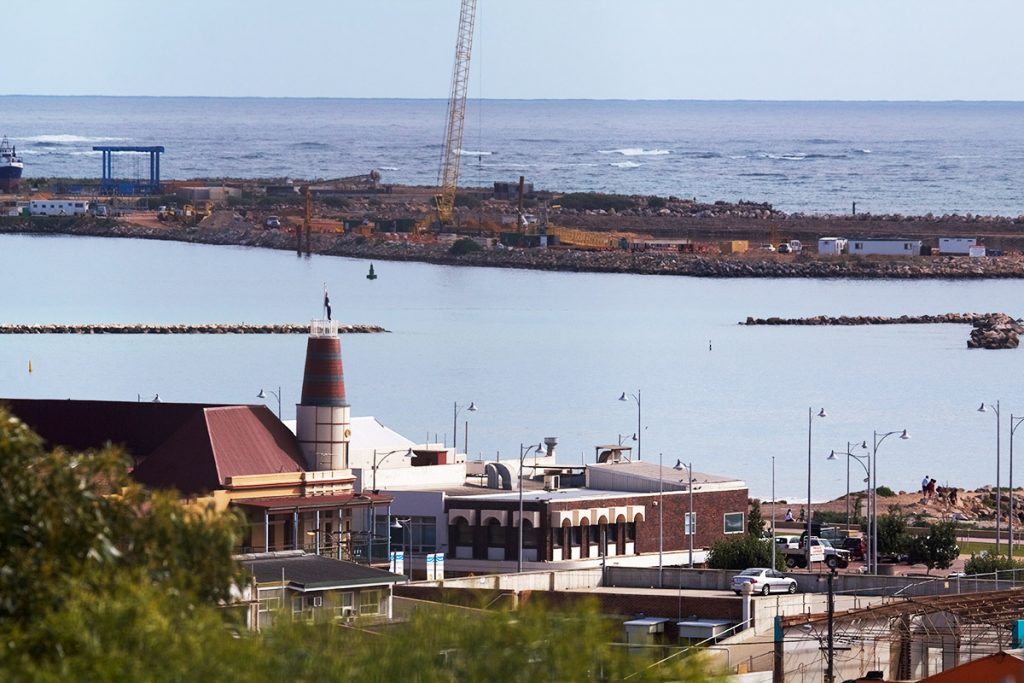
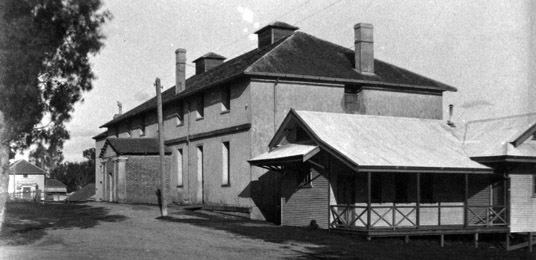
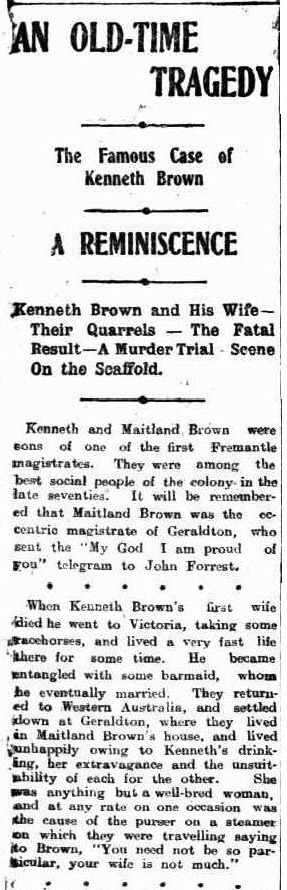
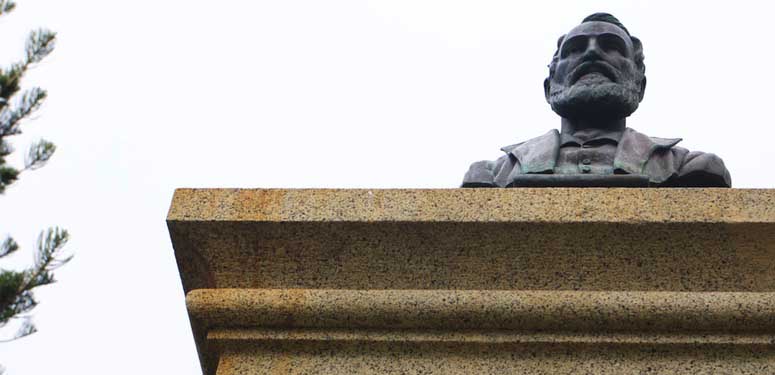
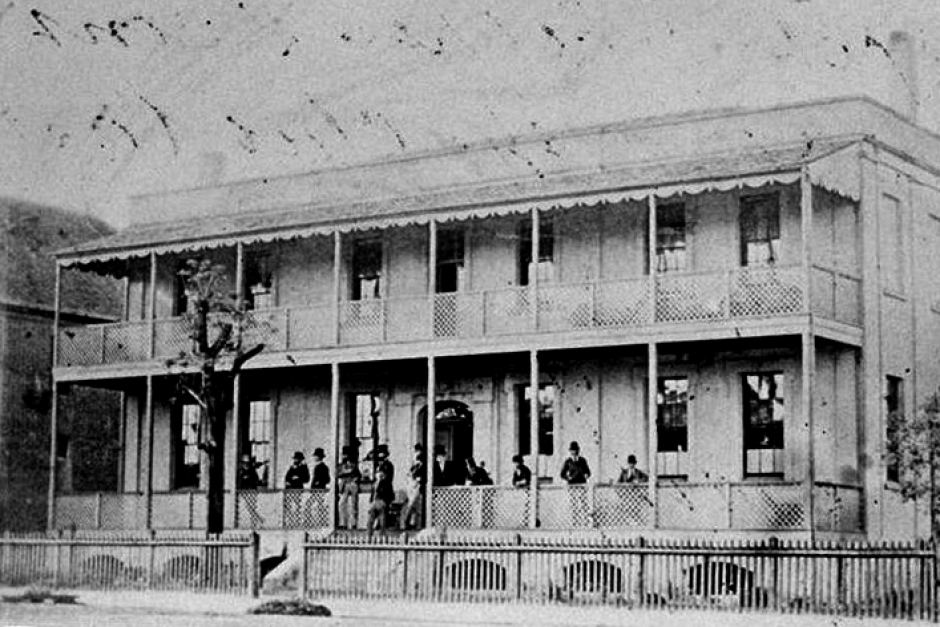
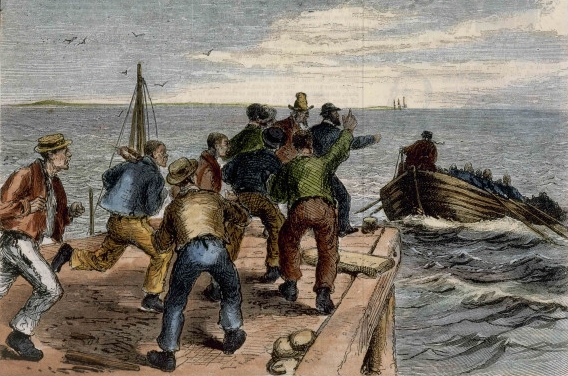
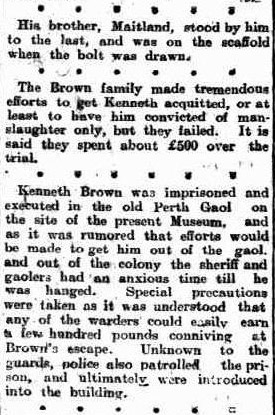
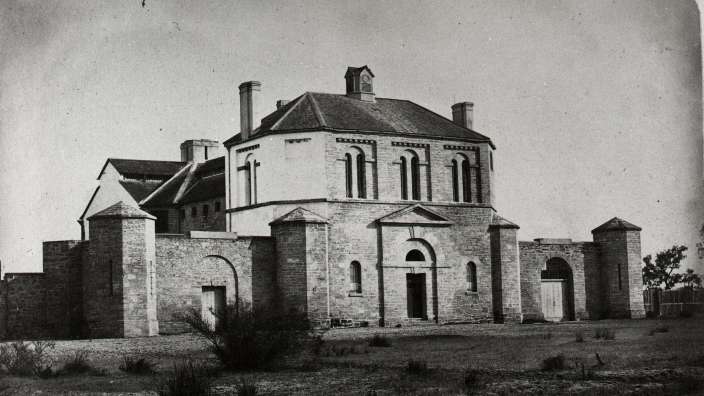
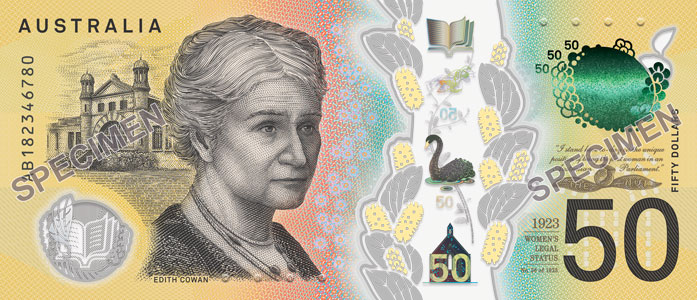


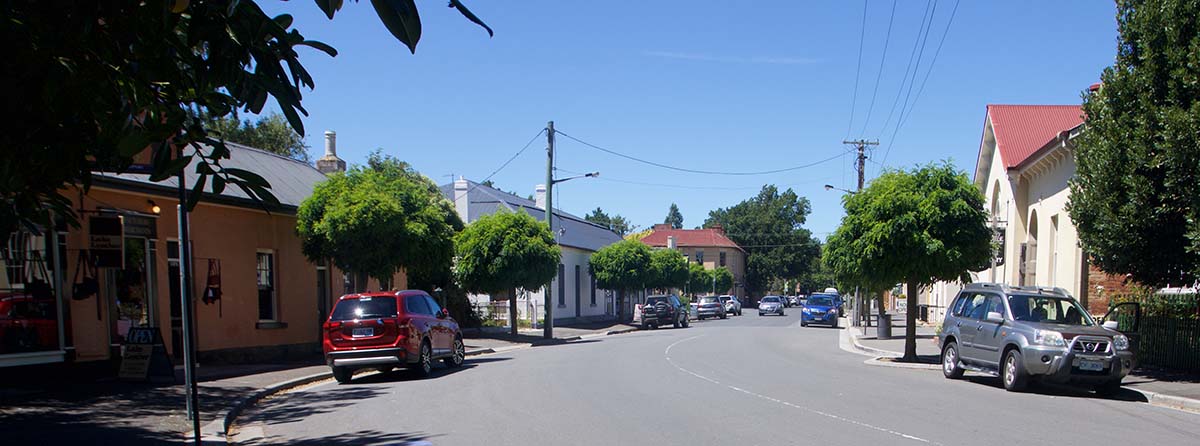

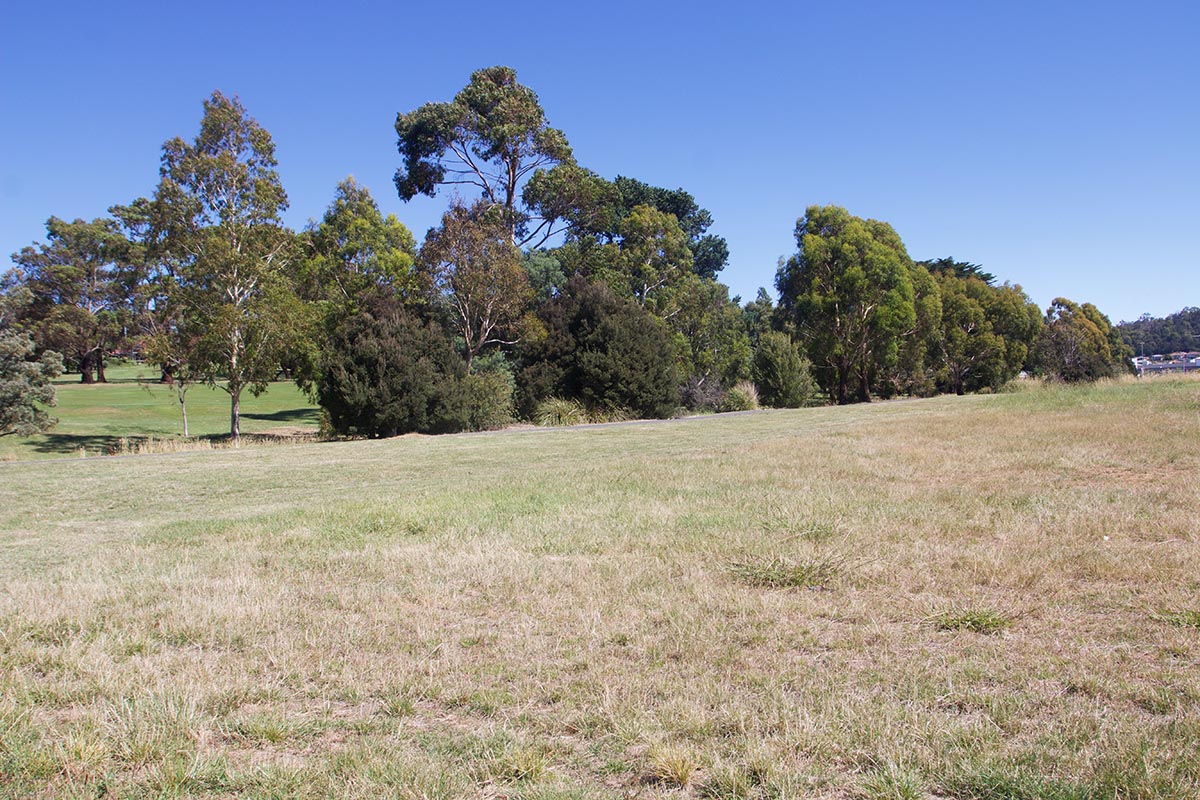
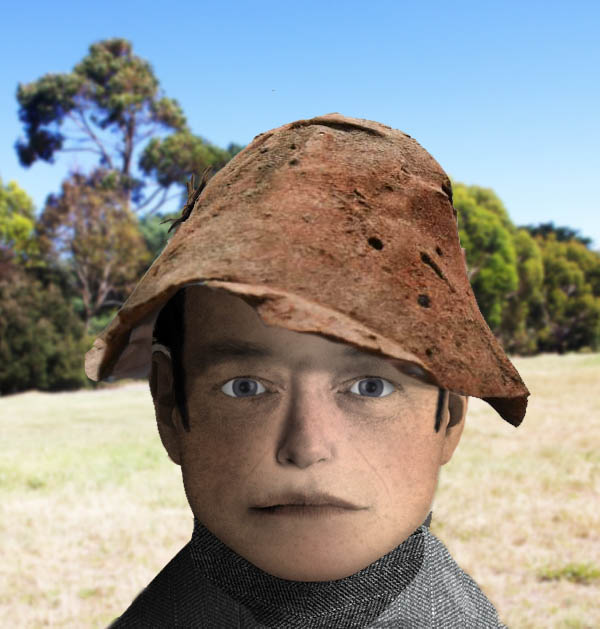


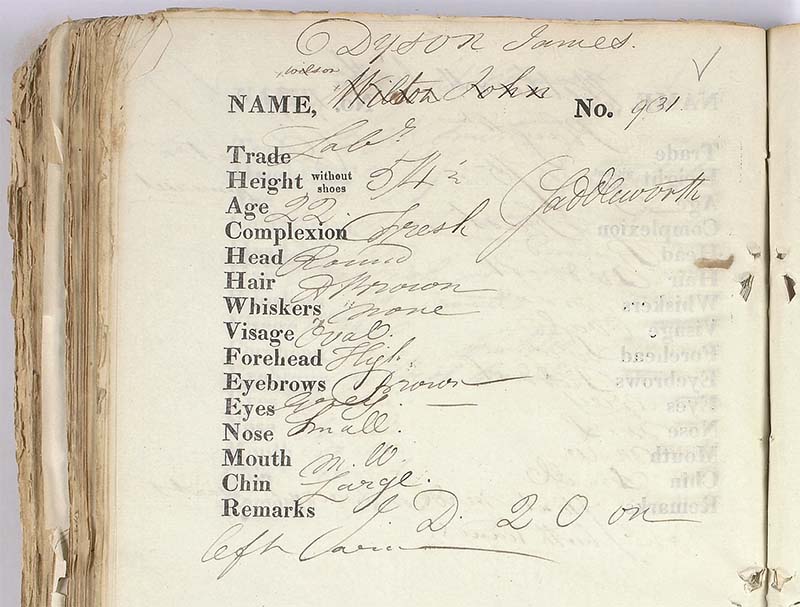
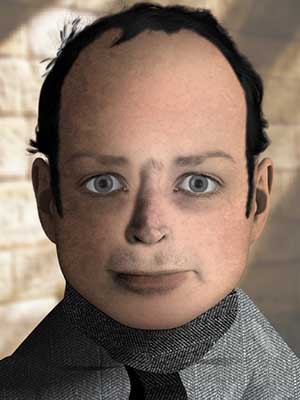
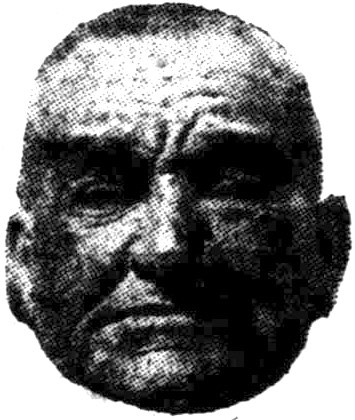
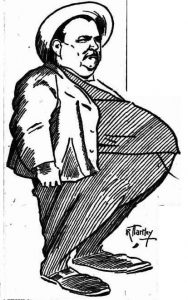
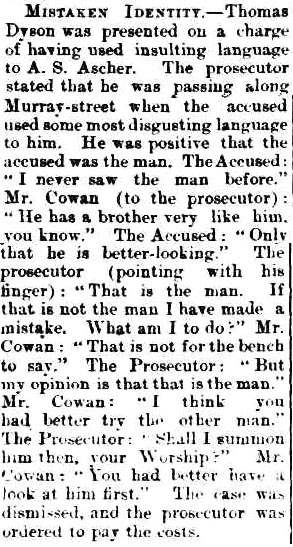
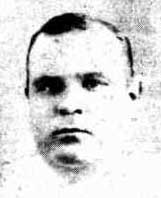

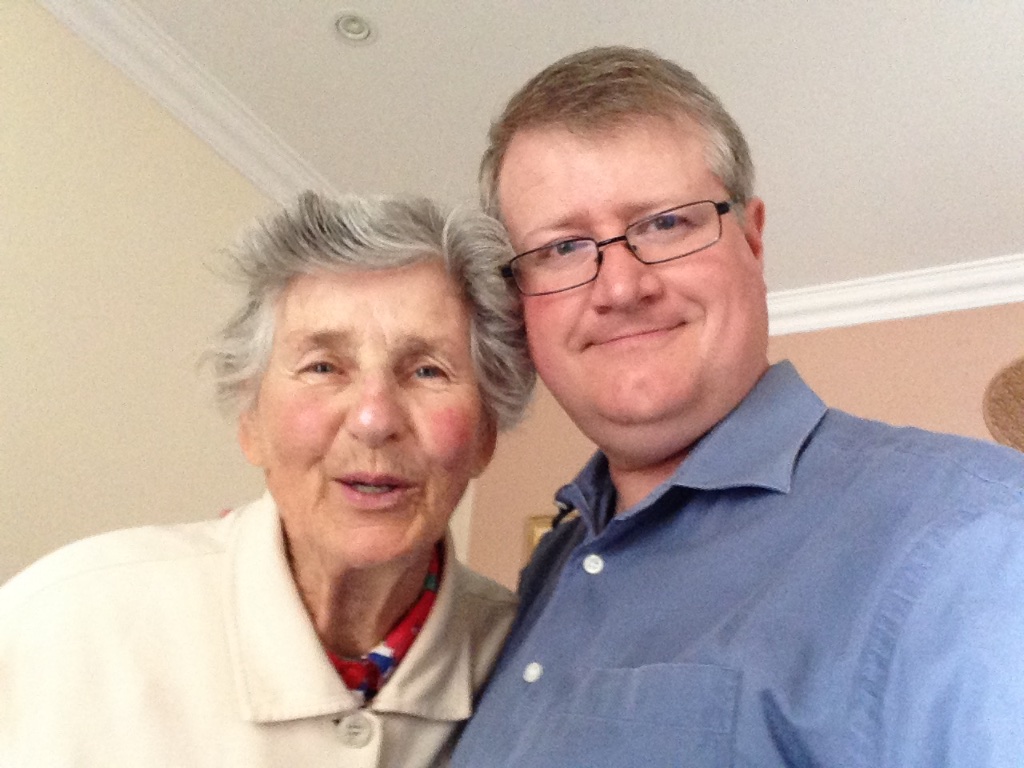


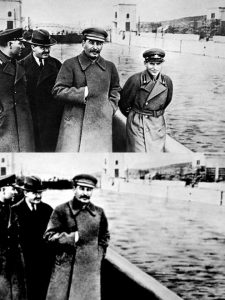
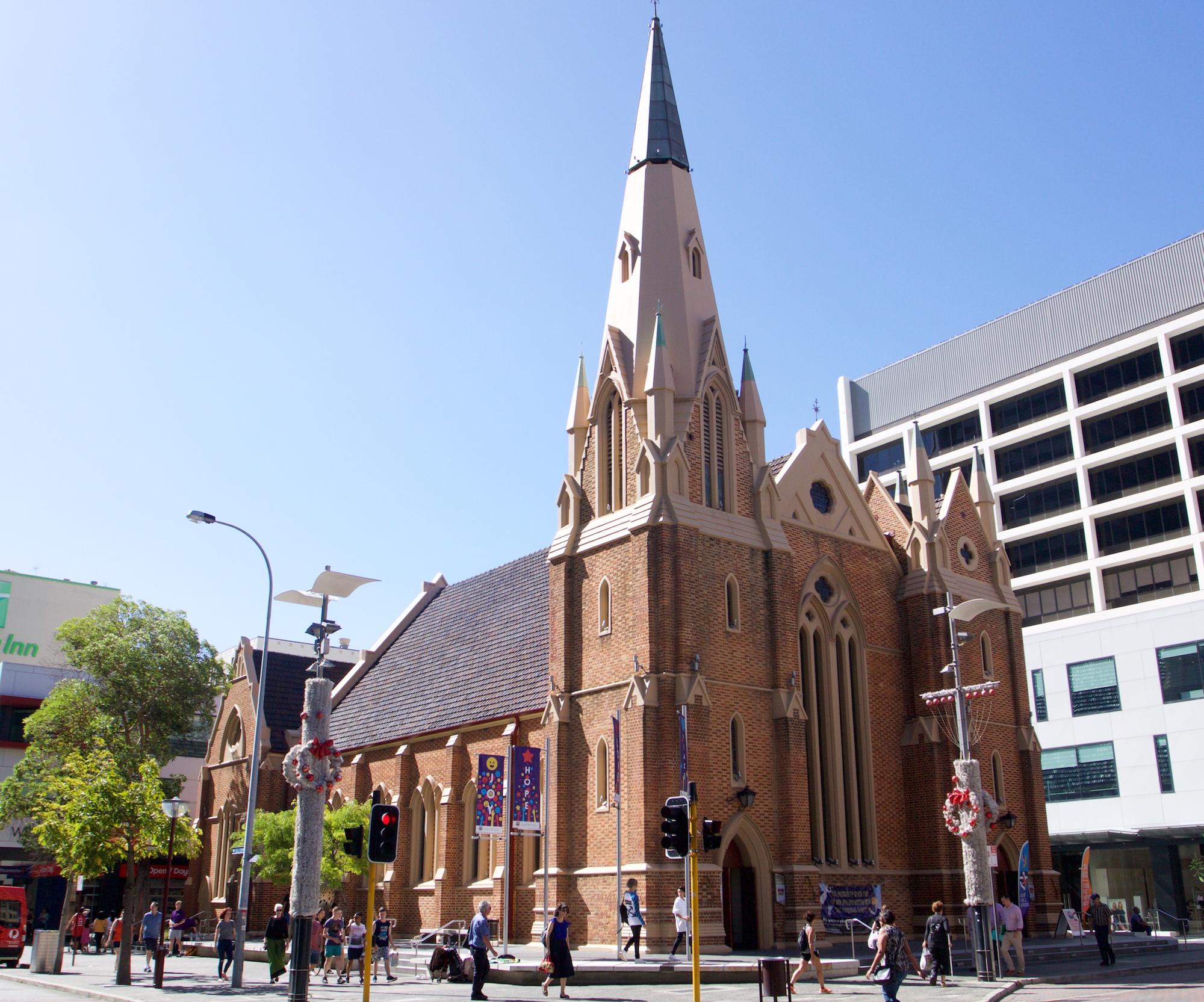
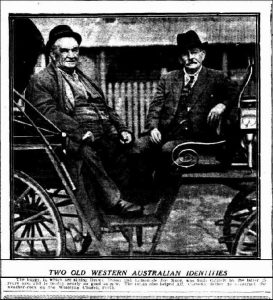
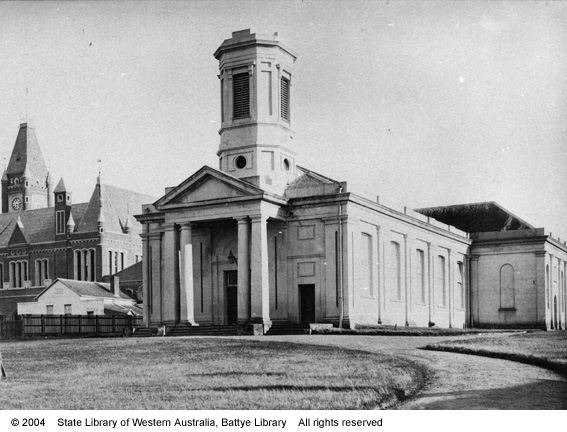
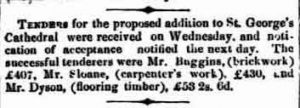
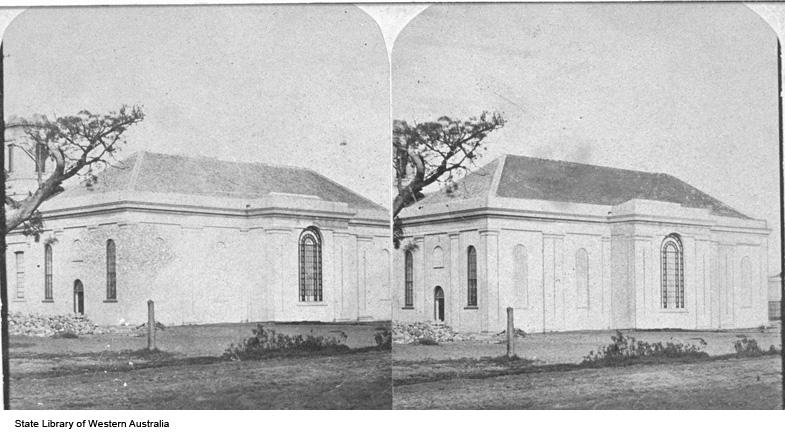

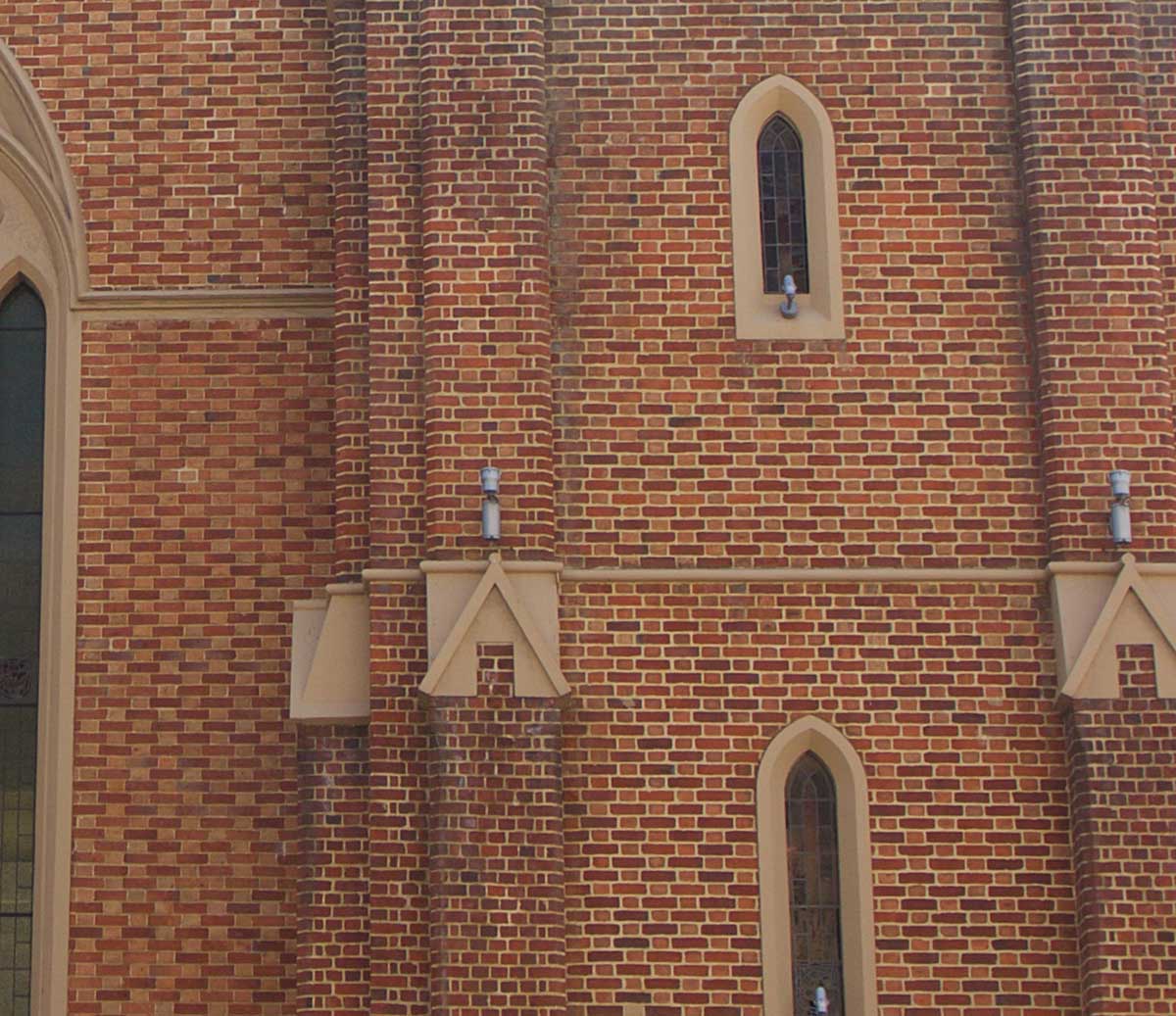

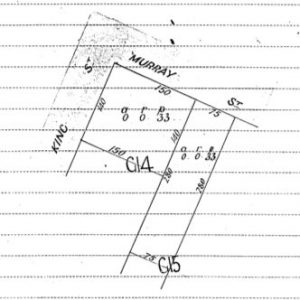
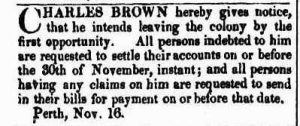
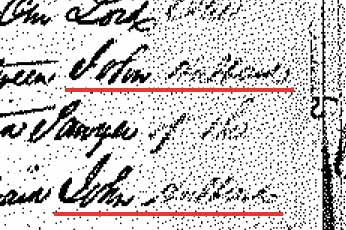
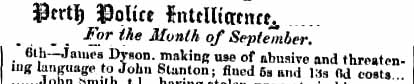


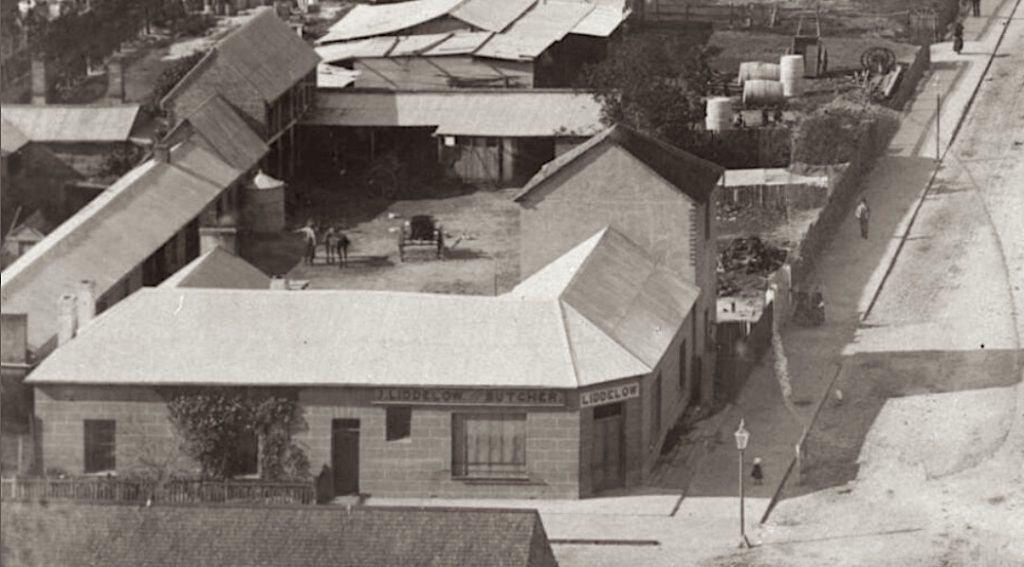


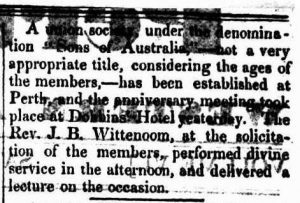
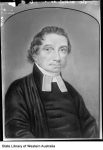
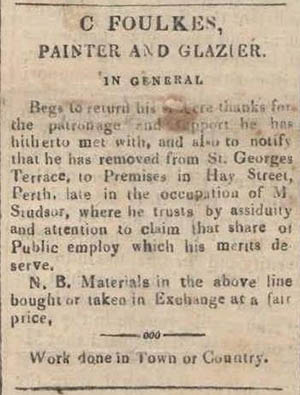

![[wikipedia commons]](https://en.wikipedia.org/wiki/Catalpa_rescue#/media/File:Fenians_escape_Fremantle.jpg)