Author: Alan Thompson

  • Bio: Edward Hales Taylor

    Bio: Edward Hales Taylor

    Bullshit Artiste

    He was at his most successful when was running a pub. He was at his most dangerous when he ventured outside his areas of expertise.— then, not even his gift of the gab could save him from wrathful creditors, business partners, or the local magistrate.

    The Bicentennial Dictionary of Western Australians has very little to say about him.—

    He was not in Western Australia for long — He was not to remain in any one jurisdiction long enough to be claimed by any as their own. Even those doing genealogical research on his family have managed to miss the bleedingly obvious because they were looking in the wrong place at the right time.
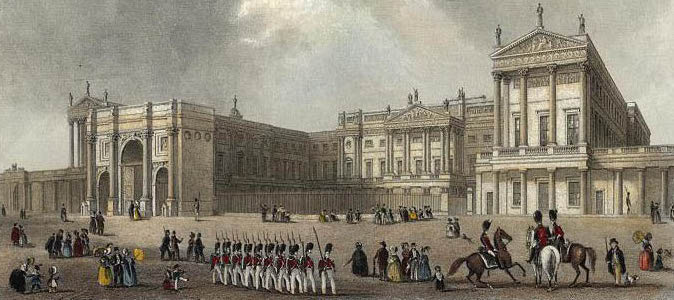
    Hint: He nearly lived here.
    Buckingham Palace engraved by J. Woods after Hablot Browne & R.Garland. 1837

    He called himself Edward Hales Taylor and claimed he was born in London in the year 1815. This was the same year his parents were married in the Church of St-Martin-in-the-Fields, Westminster, a few weeks after Napoleon met his Waterloo. Edward Taylor and the former Elizabeth Jenkins had their son baptised in the same church eighteen months later on 5 January 1817. They actually gave him the name Edward Hale William Taylor, but they were only his parents, so what would they know?

    The family lived at 23 Crown Court, London (just a couple of blocks away from a gaff known as Buckingham Palace). There is still a public house at the address, and The Red Lion Tavern was probably where Edward (senior) worked as a waiter in 1817, as well as where his son was born.

    To SA (not that one)

    At some date in the intervening quarter century, Edward Hales Taylor emigrated to Cape Colony in South Africa. This territory was only absorbed into the British Empire after 1815 due to the Netherlands and the Dutch East India Company backing the wrong side at Waterloo.

    He was living Cape Town, working as a butcher, when he married a local girl on 3 January 1842 in the Anglican Church of St Francis of Assisi in Simon’s Town.

    Harriet Jane Colman married Edward with the consent of her mother and step-father. She was 19 years old at the time and he was 25 (or 28). Their first child (out of eight) was born in Cape Colony exactly one year and eleven days later. There was a gap of seven years before the next child arrived.

    To SA (the other one)

    She was a pregnant with that same child when they all sailed from Cape Town on 30 January 1850, east across the Indian Ocean. The brig Mary Clarke landed the Taylor family at Port Adelaide in South Australia on 20 March 1850.

    Quite why the had decided to trade one SA for another is anyone’s guess. The assets they carried with them on arrival amounted to £90 in cash, with a further £35 raised from selling a dinner plate service after they landed.

    Nevertheless, on 10 June 1850, Edward Hales Talyor acquired a publican’s licence to run a drinking establishment named the “Billy Barlow” on Currie Street in the grottier northern portion of Adelaide. The general licence was transferred to him from a Mr Frederick James Coppin. Coppin had a very famous brother whose biography might give you some idea of the world of pain Taylor was about to find himself in:—

    Australian Dictionary of Biography entry for George Selth Coppin
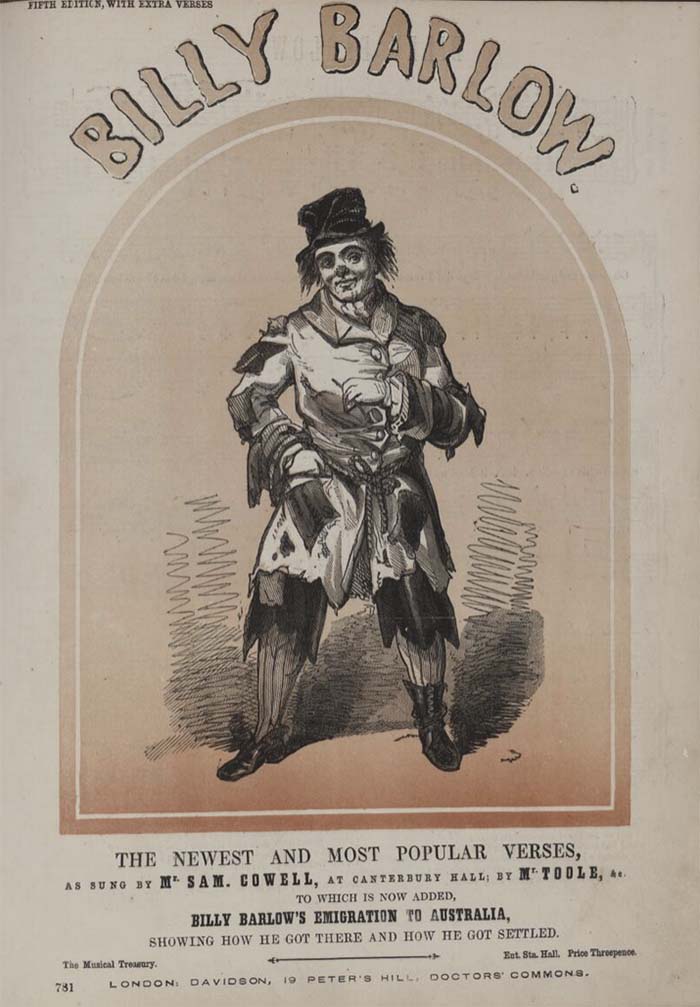
    I have no fecking idea.

    This was going to be a clown show.

    The Taylor’s second child was baptised in Trinity Church in Adelaide on 4 July 1850.
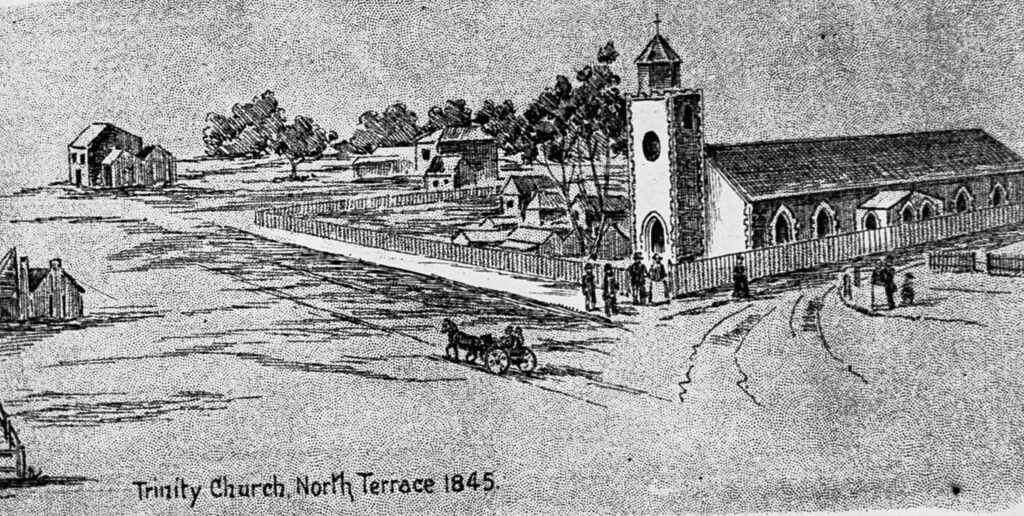
    By Colonel Light – Own work, CC BY-SA 4.0 wikimedia commons

    Edward Hales Taylor attempted to ingratiate himself with the locals. He joined the local Licenced Victualler’s Society where those in their profession could get together and complain about how hard done by they were by life in general. At a special meeting in August, he volunteered to be appointed a special constable in town, so he could legally throw out the rowdies in his new establishment.

    The “Billy Barlow” Hotel on its own was a profitable venture. But Taylor was soon losing £20 a week. For context, a shepherd might only earn the same amount over an entire year.

    The arrival in September 1850 of a celebrity newcomer to Adelaide from Van Diemen’s Land might have been the moment Taylor’s fortunes were irredeemably blighted. Charles Axtelle was another professional entertainer, acrobat, and (incidentally) also a recently freed VDL convict. Three months later the results of his and Edward Hales Taylor’s collaboration were thrust upon an unsuspecting South Australian public.
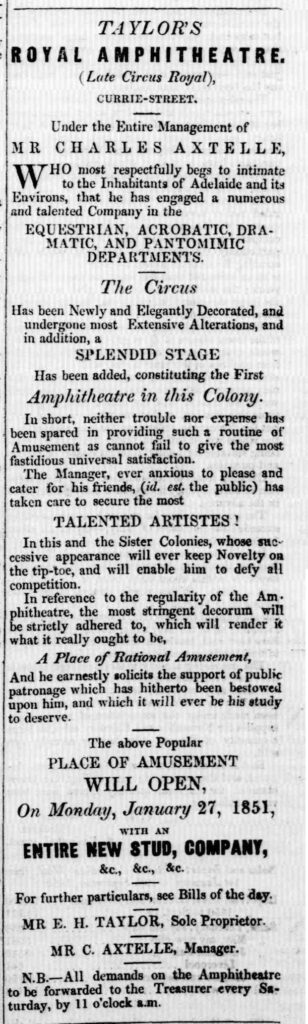
    TAYLOR'S ROYAL AMPHITHEATRE.
(Late Circus Royal),
CURRIE-STREET.
Under the Entire Management of MR CHARLES AXTELLE WHO most respectfully begs to intimate to the Inhabitants of Adelaide and its Environs, that he has engaged a numerous and talented Company in the EQUESTRIAN, ACROBATIC, DRAMATIC, AND PANTOMIMIC DEPARTMENTS.
The Circus Has been Newly and Elegantly Decorated, and undergone most Extensive Alterations, and in addition, a SPLENDID STAGE Has been added, constituting the First Amphitheatre in this Colony.
In short, neither trouble nor expense has been spared in providing such a routine of Amusement as cannot fail to give the most fastidious universal satisfaction.
The Manager, ever anxious to please and cater for his friends, (id. est. the public) has taken care to secure the most TALENTED ARTISTES !
In this and the Sister Colonies, whose successive appearance will ever keep Novelty on the tip-toe, and will enable him to defy all competition.
In reference to the regularity of the Amphitheatre, the most stringent decorum will be strictly adhered to, which will render it what it really ought to be, A Place of Rational Amusement, And he earnestly solicits the support of public patronage which has hitherto been bestowed upon him, and which it will ever be his study to deserve.
The above Popular
PLACE OF AMUSEMENT
WILL OPEN,
On Monday, January 27, 1851,
WITH AN ENTIRE NEW STUD, COMPANY,
&c., &c., &c.
For further particulars, see Bills of the day.
MR E. H. TAYLOR, Sole Proprietor.
MR C. AXTELLE, Manager.
N.B.—All demands on the Amphitheatre to be forwarded to the Treasurer every Saturday, by 11 o'clock a.m.
    Adelaide Times, 18 January 1851 page 4

    The enterprise endured all of one month until:—

    NOTICE.
    TWENTY POUNDS REWARD.
    WHEREAS some evil disposed persons have circulated a report that I am about clandestinely to leave the colony, such said report being injurious to my character, I hereby give notice that the above reward will be paid to any party who will give such information to H. Johnson, Esq., Solicitor, King William street, as will enable me to take legal proceedings against the originator or originators of the Report.
    N.B.—It is particularly requested that all parties having claims against me, will immediately forward the particulars to my Solicitor as above, in order that the same may be examined and discharged.
    EDWARD HALES TAYLOR,
    “Billy Barlow Tavern,”
    Currie-street.
    Feb. 20, 1851.
    Adelaide Times 21 February 1851 page 2
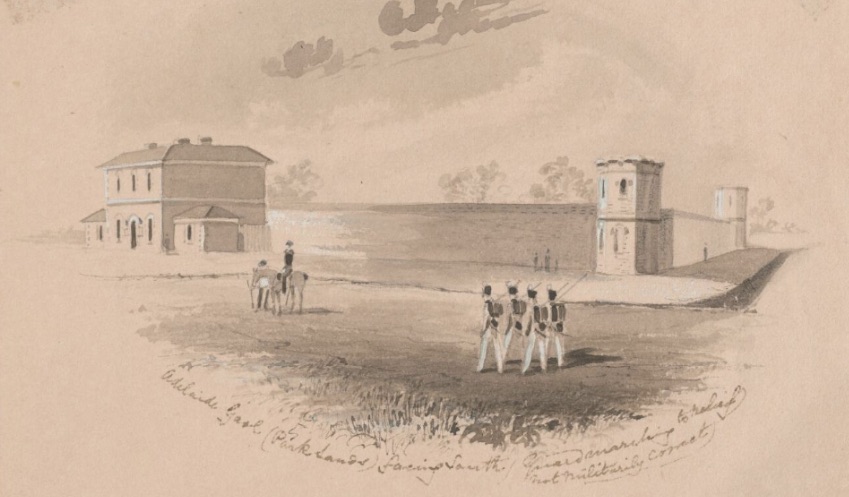
    Gill, Samuel Thomas. Adelaide gaol, park lands facing south, guards marching to relief, not militarily correct, 1850

    By May, Edward Hales Taylor was not just insolvent, he was in prison for debt. (Cue sad trombone.) He remained in the Adelaide Gaol until the beginning of August 1851. During September, the publican’s licence for “The Billy Barlow” was transferred to Charles Edward Walsh.

    Issues relating to his debts in South Australia were not resolved until after November 1853 — If they ever were at all.

    WAh WAh WA!

    Harriet and Edward’s third child together (and first son) might have been born either in South Australia or Western Australia, or even at sea between the two colonies. Either way, they were all safely relocated to Fremantle in Western Australia by the time Charles Henry Taylor was christened in a Catholic church on 11 December 1853.
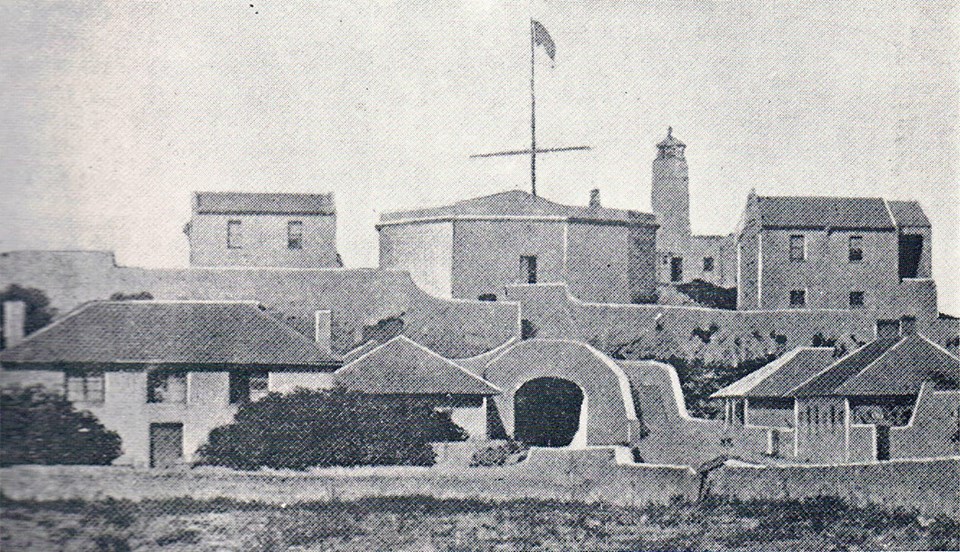
    Fremantle, 1853

    Taylor immediately got to work ingratiating himself with the locals. The the local issue of the moment was news of the discovery of gold over in the eastern colonies — and how the majority of the Western Australia’s free labourers now seemed determined to hop on the first boat they could find bound for Victoria.

    The horror of the situation that the great and the good in Western Australia were now facing, was that that they might be left solely with the company of the convict workforce they lobbied so hard to get sent to them not so many years before. They had got the convicts in because the free mechanics and labourers about seemed to prefer working for themselves and not for masters who treated and paid them like rubbish.

    Only now was it beginning to dawn on the merchants and traders of the colony was that it was those same independent men and their families the had recently scorned as “drunkards and wastrels” who spent real money in their establishments and kept the economy ticking over.

    A very serious meeting was held in Fremantle to discuss the crisis (which, naturally, Edward Hales Taylor attended). The decision was taken that only the discovery of gold in their own colony, could persuade their customers respectable citizens to stay.

    The meeting resolved to raise £1000 as a reward for the one who could find gold in Western Australia. About a third of that amount was promised during the evening. One of the largest amounts pledged to the cause was £20 from one “E. H. Taylor”. It was money he certainly did not possess. Fortunately for him, another three decades would pass before a payable gold discovery was made in Western Australia, and by then, he had long moved on.

    Instead, Taylor formed an informal partnership with a ticket-of-leave convict named Theodore Krakouer to speculate in trade goods between Fremantle and Bunbury. Krakouer brought with him his experience as a teamster to make a land journey between the two port towns, plus the money to buy the cart to transport the goods— which seemed to consist mainly of a great quantity of tobacco. Taylor brought to the enterprise — his gift of the gab?

    Krakouer was a Polish Jew. Poland was another of those territories which backed the wrong side in the Napoleonic wars. Here, the spoils went to the Russian Empire who made it a policy to persecute those of his religion. Krakouer was highly literate, but that literacy was confined to Hebrew and study of the Talmud. Then refugee in England, he could not write that language and could barely speak it. A little bit of petty swindling (just to survive) saw him sent to Britain’s last convict colony. Taylor wrote letters and dealt with various other businesses on Krakouer’s behalf. Sometime along the way, Taylor also manage to convince himself that he was the senior partner in their enterprise.

    The speculation was a disaster.

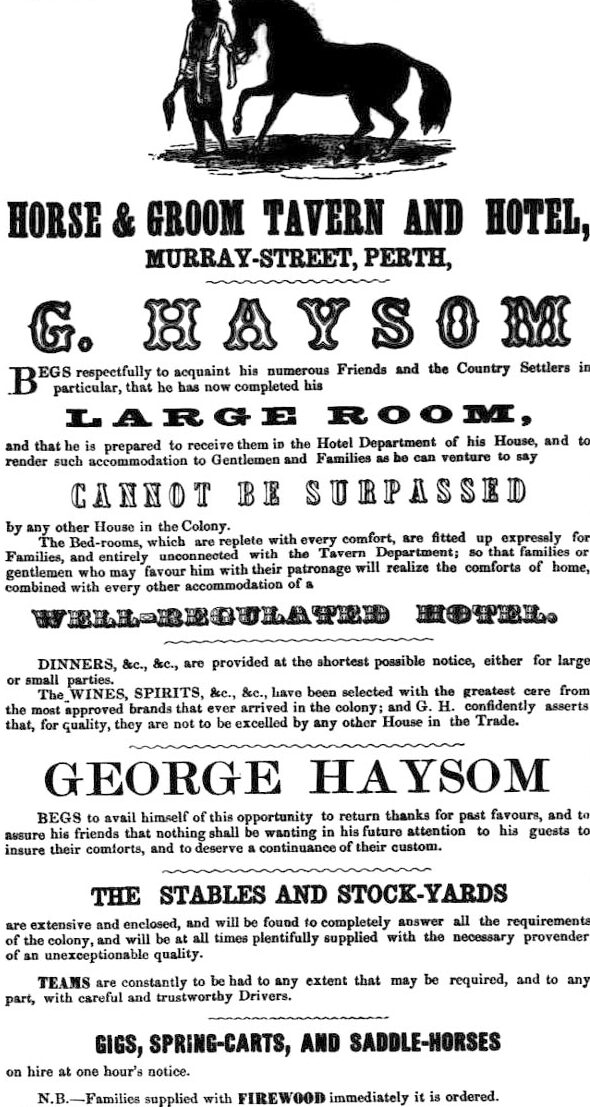
    Taylor returned to Fremantle alone with horse and cart. Krakouer remained in Bunbury, detained by the customs office down there. Dodgy tobacco was dodgy tobacco. Taylor returned the hired horse to it’s owner up in Perth — Mr George Haysom of the Horse and Groom Hotel. He still owed Haysom money, if not for horse hire, then for his outstanding bill on his bar tab. It was Taylor who offered to sell the cart to the publican. Haysom did not really want the cart, but he must have realised this it was the only way he was ever going to see any of what he was owed. He had no idea yet there was another party involved.

    The cart was valued at £25. Taylor demanded £26. Haysom was firm. Taylor folded. Haysom offered Taylor a drink gratis, to seal the deal. Taylor pocketed the money, minus expenses owed. There were now a lot of expenses.

    After Krakouer managed to extract himself from the clasp of the Bunbury authorities (only temporarily as it turned out), he was understandably livid with his alleged business partner. From the resultant court case it is unclear if he was angry because Taylor had sold his livelihood for a bar tab, or he sold the cart too cheap. Either way, Taylor’s now sublime bullshitting skills deflected that fury on to Mr George Haysom instead.

    They had a meeting with Haysom, after which he agreed to return the cart to Turner, but only to Turner. Why would he have handed it over to Krakouer when Taylor was the one he had been dealing with up till now? So Krakouer consulted a lawyer and sued… George Haysom.

    This civil trial was how the existence of Edward Hales Taylor in Western Australia was brought to this researcher’s knowledge. All that needs to be repeated here, is that the action against George Haysom was dismissed with prejudice. So much prejudice that the lawyer employed by Krakouer (and possibly Taylor as well) recommended to the judge that his own clients should be prosecuted for perjury.
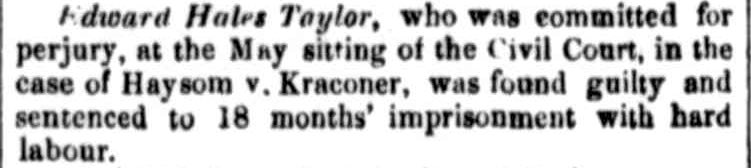
    Edward Hales Taylor, who was committed for perjury, at the May sitting of the Civil Court, in the case of Haysom v. Kraconer (sic), was found guilty and sentenced to 18 months' imprisonment with hard labour.
    Inquirer (Perth, WA) 12 July 1854 page 3

    So that went well.

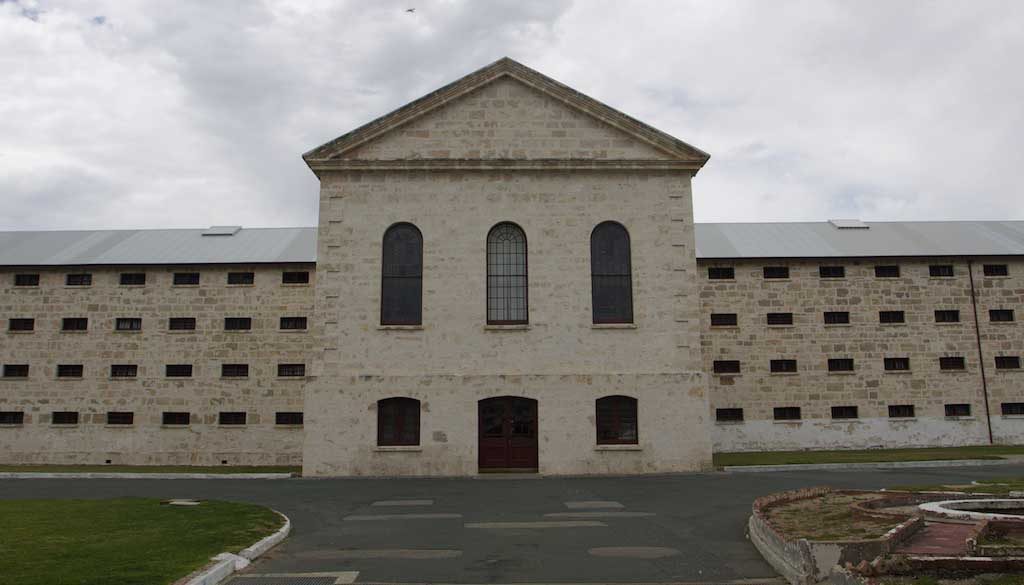
    Fremantle Gaol (2017)

    However, Edward Hales Taylor, now ensconced in the establishment at Fremantle, had one final card to play… and he played it beautifully.

    On 22 September 1854. his get-out-of-gaol-free card, Edward Hale (sic) Taylor (junior) was born in Fremantle. The following month:—

    LOCAL AND DOMESTIC INTELLIGENCE.
    It may be remembered that at the July Sessions, Edward Hales Taylor was convicted of perjury and sentenced to a term of 18 months for his crime. We understand that already this man has been allowed a remission of the remainder of his sentence upon representations which have been made to the Government, acting more upon their kindlier feelings than their better judgement. We merely notice this case from a feeling that justice should at all events be carried out, in our present position, and no handle given to our bond population for finding fault with the manner in which our laws are dealt out to our free inhabitants.

    Inquirer (Perth, WA) 25 October 1854, page 3

    “Mee” and “Oww!”

    Quite how soon after his release Edward Hales Taylor and family fled from Western Australia cannot yet be determined with any accuracy. The last possible date that can be inferred was before May 1856 (nearly two years later), when the postmaster-general for WA reported that correspondence for both “Mr and Mrs E. H. Taylorremained uncollected in his office.

    The last three children of Edward Hales Taylor and Harriet were born in Cape Town, Cape Colony, between 15 February 1857, 1 August 1859, and 3 May 1863. They had returned to the land of Harriet’s birth, while Edward Hales Taylor (senior) returned to the profession he was born into — that of victualler and publican.

    Edward Hales Taylor died on the job in the Masonic Hotel, Wymberg (a suburb of Cape Town), Cape Colony on 18 October 1875. He was buried in the churchyard of St John Wynberg, on 21 Oct 1875.

    Mr waabit!

    This ratbag should be an intensely interesting subject for further study, however I will not be the one to do it. Edward Hales Taylor is but one of many examples of rabbit holes I could dive down (and to be fair — I usually do —whether I can afford the time or not).

    This and the proceeding article on the court case were the result of about four days of intensive research.

    I don’t get paid to write any of this, so it’s now back to writing that bloody book about James bloody Dyson… something someone one day might even hand over bloody money to see.

  • I’m sure this is all completely normal

    I’m sure this is all completely normal

    There was nothing particularly unusual about the citizens of Perth suing each other in the civil courts during the 19th Century. It was more out of the ordinary not to be embroiled in some sort of legal action at any given moment. Being able to sh*tpost on social media instead, as a means of passing the time, lay a century or more into the future.

    The Inquirer and Commercial News (Perth, WA : 1855 – 1901)
    Wed 29 Apr 1857 p2

    George Haysom (1822 – 1868) was a successful carter, publican, horse-breeder and wheelwright — among his many positive personal attributes. His eternal fame in Western Australian history should be inviolable, for he was the first man ever in Perth to roast a bullock in public AND be the owner of the first ever horse in the colony to die of snake bite (that anyone knew of).

    Roasting a bullock: Another rabbit hole to dive down

    On Tuesday, 9 May 1854 it was Mr George Haysom’s turn to appear before the Commissioner as a defendant. He was represented this day by lawyer George Frederick Stone. His two prosecutors retained George Walpole Leake to represent them.


    Back in January, Haysom hired out one of his horses to this pair of speculators so they could transport some trade goods from Fremantle down to Bunbury. His horse was returned to him a couple of weeks later, but he still awaited a settling of the account, and that was when one of the customers returned to him with a proposition to sell him the cart used for the run — some of the proceeds from the sale would be returned to him to cover what he was owed.

    After some intense haggling over the cart’s value, they agreed on the sum of £25. To seal the deal, Haysom produced a bottle of ale (at his own expense) — “to wet the bargain” — That was how he rolled.

    Haysom had only been in possession of his new ride a couple of days when he was accosted by the other man who demanded to know why he had possession of “his” cart.

    Soon afterwards, the first individual who sold him the cart returned and begged him to let them both have it back. Haysom was fundamentally a decent sort. After a conference in the small parlour of his “Horse & Groom Tavern” with both the partners present this time, he agreed to return the cart if he was repaid his accumulated debt — a sum of £7 11s 2d.

    They agreed. Haysom was not paid in cash, but with a promissory note due at six weeks in the future. The following evening he received a letter from Mr George Walpole Leake, the lawyer for one of the partners, demanding damages for the detention and injury of the cart.

    […]what the deuce did you send me such a letter for ?”

    Haysom now wanted to know.
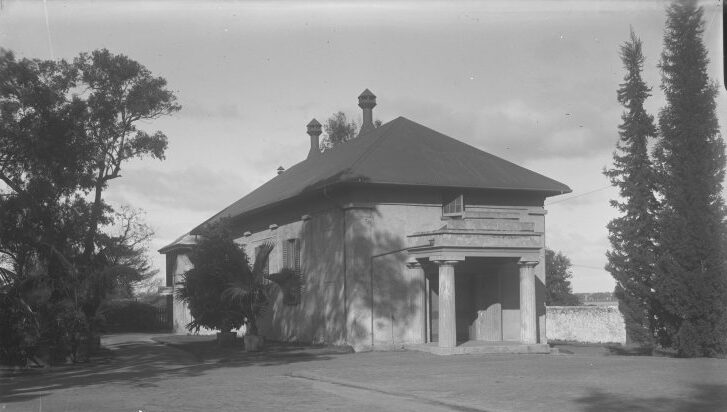
    The Old Courthouse
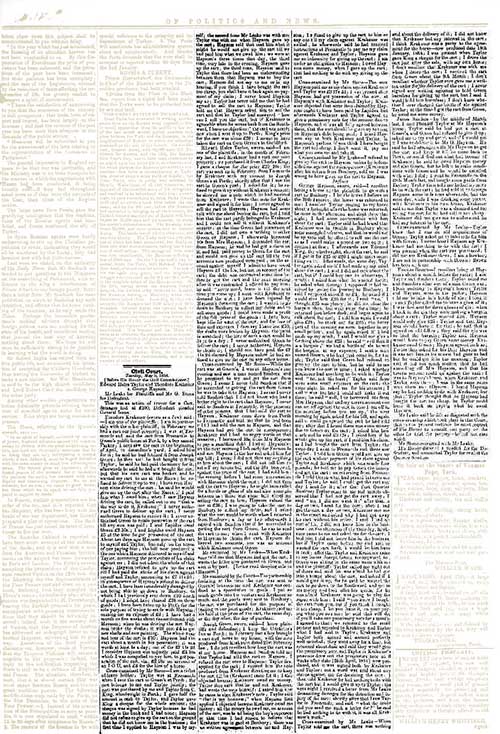
    The Perth Gazette and Independent Journal of Politics and News, 12 May 1854, page 3.

    The case was heard in the Old Court House building (the one impossible to take seriously once you have heard someone ask if it is the public toilet block for the Supreme Court gardens). The testimony of all the witnesses, who included Haysom and both his prosecutors, were presented in excruciating detail three day later in one of the local papers.

    All that really needs to be explained is that one of the prosecutors had sold their cart to Haysom without consulting his co-owner beforehand.

    The verdict was duly delivered in Haysom’s favour — as it should have been. None of this would be remotely interesting were it not for the summing up of the prosecutor’s legal representative after the last witness had delivered his testimony and was thoroughly cross-examined over it. Remember, Leake was being paid to advocate on behalf of the plaintiffs in this case

    Mr Leake said he felt so disgusted with the cross-swearing which took place in that Court, that in the present instance he must request of His Honor to commit one party or the other for trial for perjury —he did not care which.

    The Perth Gazette and Independent Journal of Politics and News, 12 May 1854, page 3.
    George Walpole Leake

    One of his clients was subsequently sent to gaol for perjury.

    His eccentric wit and the justice he dispensed was not always conventional”

    Says George Walpole Leake’s entry in the Australian Biographical Dictionary.

    Indeed!

    And here is where this article might ordinarily have concluded.

    George Haysom is an important figure in James Dyson’s story, alongside that of the Sons of Australia Benefit Society, and the history of the Perth City Council. — but it is his (carefully unnamed up to now) prosecutors that deserve a bit more attention.

    Theodore Krakouer (1818 -1877) was the one who initiated the legal action against Haysom. He was a Western Australian ticket-of-leave convict about who a lot has already been written because he has descendents famous for playing Australian rules football.

    He was the wronged party in this court case, however the one who he should have taken to court was not Haysom, but his erstwhile business partner, a shadowy figure by the name of Edward Hale(s) Taylor. It was he who sold the cart they co-owned while his partner was otherwise detained. It was Taylor who was subsequently sentenced to 18 months imprisonment for perjury after the civil trial.

    Krakouer deserves to be better known, but as far as I can tell, no one has ever put together all the pieces of Edward Hale(s) Taylor‘s story before. A rough attempt begins next.

  • The One that Got Away

    The One that Got Away

    There was one frustrating absence from all the convict documents digitised and available through the Libraries Tasmania site that directly pertain to the convict James Dyson. The link to the General Correspondence File of the Colonial Secretary’s Office (CSO1) tells you what it is, but not what it contains.

    Much as I would dearly love to visit Tasmania again and wallow amongst the microfilm, that’s not going to be possible any time soon. Then, thanks to a lead not affiliated with any of the “official” sources of knowledge, I learnt that a certain religious sect have in their possession the entire lot on microfilm and offer it free on their web site.

    These images are catalogued on familysearch, but give no searchable clue what these scans contain. The Tasmanian Archive’s site gives you slightly more than a clue but refuses to connect to the scans the Mormons have published. Or even let you know this source exists at all!

    5 November 2024 Update:

    Beware of the Leopard

    The scanned CSO documents are on the Library Tasmania web portal. Its possible they may always have been, but were so difficult to find they may as well not have been.

    Here is the permalink to CSO-1-1 on the James Dyson, Convict page.

    https://libraries.tas.gov.au/Record/Archives/CSO1

    Its necessary to scroll a loooooong way down before you reach

    https://libraries.tas.gov.au/Record/Archives/CSO1-1-719

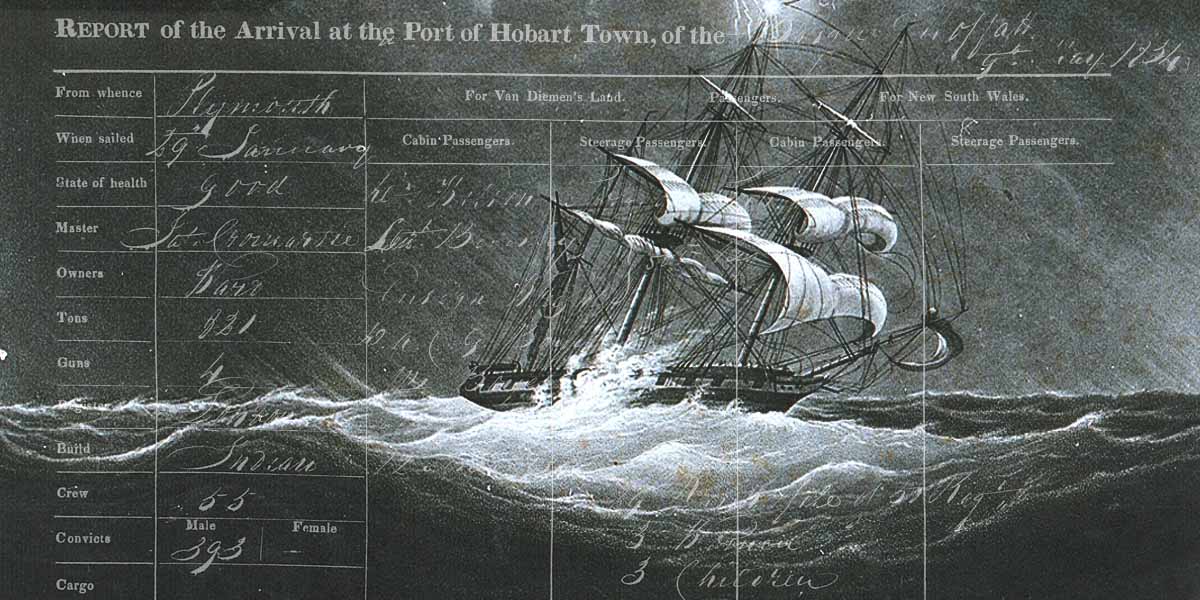
    The Convict Ship Moffatt arrived in Hobart Town on 9 May 1834 carrying convict James Dyson. I’ve managed to piece together a pretty detailed narrative of the voyage by piecing together contemporary newspaper articles, The Surgeon-Superintendent’s report (translated from the Latin), the way the voyage was supposed to proceed (according to Thomas Braidwood Wilson’s book and Lieutenant Governor Arthur’s evidence to a parliamentary committee), and what actually happened (according to the diary of a private passenger onboard ship.)

    The hitherto un-transcribed dossier of letters from the Colonial Secretary’s Office have proved to all be about the arrival of the Moffatt at Hobart and I’m relieved to find that I seemed to have got most of the facts straight — working it out the hard way. You, the potential reader of Dyson’s Swamp will have to endure many fewer “possibly’s” or “probably’s” when I review this chapter.

    What makes me happiest is that it confirms to me that Thomas Braidwood Wilson (R.N) Esquire, Surgeon Superintendent in charge of the welfare of every Convict on board the Moffatt was as full of shit as I always suspected him to be.

    I am also delighted to discover Captain William Moriarty plays an additional role in James Dyson’s history – it turns out he was the first new face he ever saw in Van Diemen’s Land.

    Sir
    I have the honor to acquaint you that agreeably to your request I have inspected the Transport Ship Moffatt arrived in this Port on the 9th Instant and have mustered the Convicts on board of her.
    The appearance of the vessel was creditable and cleanly, and that of the men healthy. I individually interrogated them as to the treatment they met with during the passage, and they expressed themselves perfectly satisfied thencewith, in regard to their provisions and in every other respect.
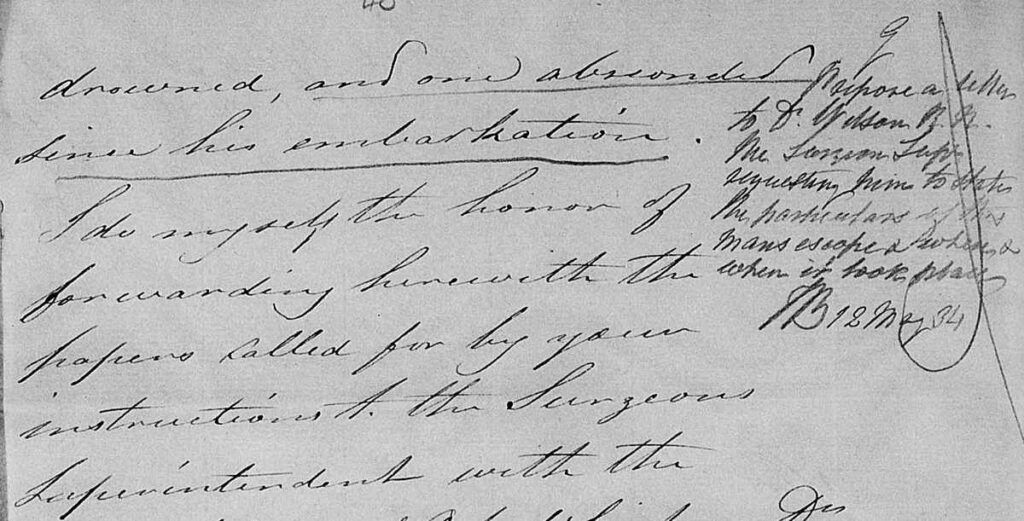
    Four Hundred Prisoners were embarked on board this Vessel five of whom have died during the passage, one drowned, and one absconded since his embarkation *
    I do myself the honor of forwarding herewith the papers called for by your instructions A. the Surgeons Superintendent with the
    exception of No. 4 which as Dr Wilson had [not?] closed his Accounts was not yet ready and Which he has promised to forward on Monday the 12th Inst

    I have the honor to be
    Sir
    Your very Obedient Servant
    Wm Morriarty
    Port Officer

    Jno Burnett Esq
    Colonial Secretary

    CSO1/1/719 Page 15674 no 39, 40

    * Then there was this glorious annotation to the report by the Colonial Secretary obviously on the behalf of an incensed Colonel Arthur:

    Prepare a letter to Dr Wilson R N The Surgeon Supt requesting him to state the particulars of this man’s escape & where & when it took place

    CSO1/1/719 Page 15674 no 40

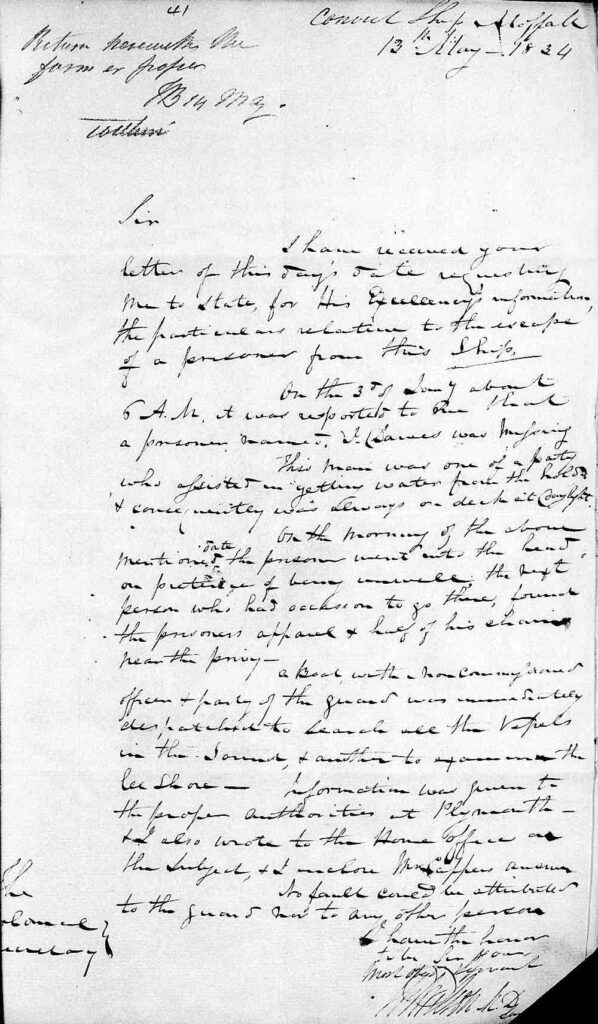
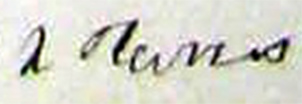
    Wilson’s reply from onboard Moffatt proves once and for all that a medical man’s handwriting is always borderline unreadable (at least it was not in Latin this time). My interpretation of this scrawl is underneath the image (I’m not quite that much of a bastard). —

    N.B. the original scans on a certain web site are of a much higher resolution.

    Sir
    I have received your letter of this day’s date requesting me to state for His Excellency’s information, the particulars relative to the escape of a prisoner from this ship.
    On the 3rd Jany about 6 A.M. it was reported to me that a prisoner named J. Davies was missing.
    This man was one of a party who assisted in getting water from the hold & consequently was always on deck at daylight.
    On the morning of the above mentioned date, the prisoner went into the drop[!] on pretence of being unwell, the next person who had occasion to go there found the prisoners apparel & half of his chains near the privy.
    A boat with a non commissioned officer & party of the guard was immediately depart south to search all the Vessels in the sound & another to examine the lee Shore. Information was given to the proper authorities at Plymouth. & I also wrote to the Home office on the Subject & I enclose Mr Cappers answer No fault can be attributed to the guard nor to any other person

    I have the honor
    to be Sir your
    most Obedient Servant
    [Mostly Illegible signature]

    CSO1/1/719 Page 15674 no 41

    So this is it. Probably the last post of 2022. A year I discovered this site still banned on Western Australian government filtered servers for reasons of … pornography. I am guessing this is down to my use of a certain … word. When I discovered this some years ago I removed what I thought was the offending word on a certain page. As I seem to be permanently on a black list with no obvious way of appealing the ban or even finding out on what grounds my domain was banned in the first place, I may as well use what words I feel like without filtering myself.

  • Four days with the VDL Establishment

    Four days with the VDL Establishment

    This particular entity was the New South Wales and Van Diemen’s Land Establishment, established 1825. After they failed to acquire any land in NSW for their venture into large scale farming in the colonies, it was rebranded as The Cressy Establishment, Cressy Company, or (most obscurely of all) the Van Diemen’s Land Establishment.

    Useful description of the VDL Establishment (aka: The Cressy Company).

    This Establishment should not be confused with the Van Diemen’s Land Company, ALSO founded at the same time and operated in both NSW and VDL. Most internet searches for the Establishment will return matches for the VDL Company instead, by virtue of the latter still being a going concern today (2022). The Establishment was over by 1855.

    Useful description of the VDL Company.

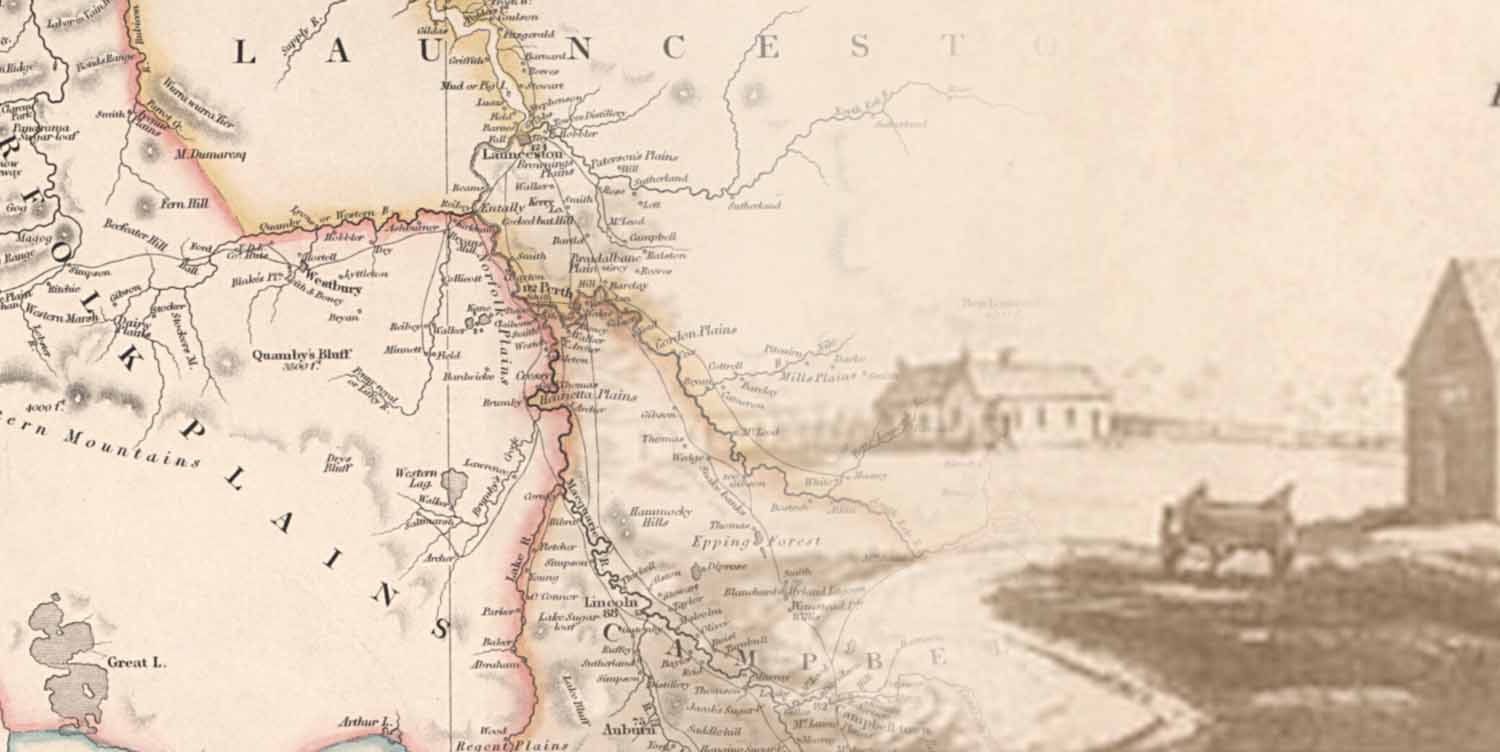
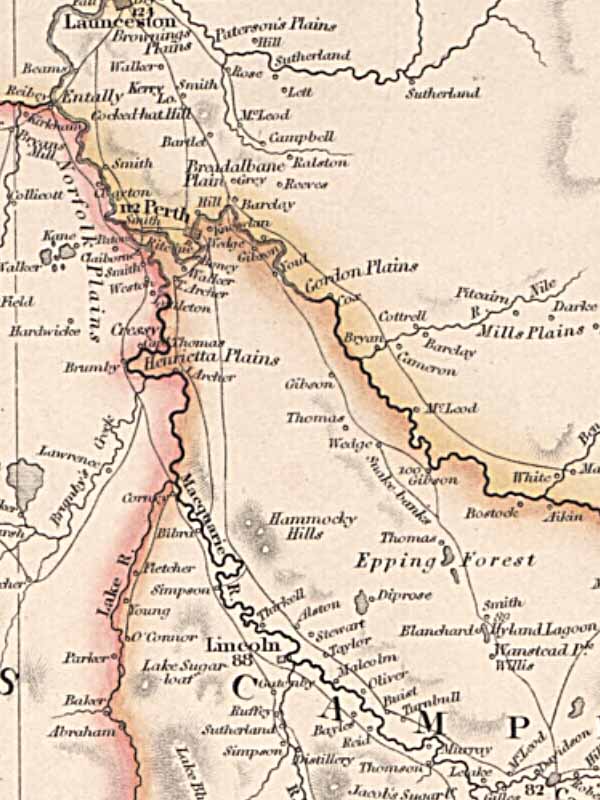
    The VDL Company‘s estates were located in the north western corner of VDL, while the Establishment lands were located south of Launceston on the Norfolk Plains, around the towns of Longford and what would later be named Cressy.

    Longford was initially named Latour after one of the seven gentlemen investors in the Establishment. Colonel Peter Lautour would later on destroy at least two investment and colonisation schemes in the Swan River Colony, which would directly impact the future of a VDL convict who was yet to be assigned to his VDL properties, before seeking a fresh start in Western Australia.

    It’s all very convoluted.

    Convict James Dyson was assigned to work for the Van Diemen’s Land Establishment all of four days between 2 and 5 October 1837. The magistrate he was hauled before on that final date was James Cubbinston Sutherland, who farmed on the Isis River south of Cressy. Sutherland was a JP for the adjacent Campbell Town Police District, and that was where Dyson was sent for his next dose of condign chastisement.

    Imperfect map with Cressy on it. Sutherland’s land is located centre bottom.

    The manager of the VDL Establishment on these dates was James Denton Toosey. What is unascertainable by me is precisely which portion of the estate Dyson had been assigned to, other than that it was probably on the southern range of the Establishment. I have no idea if was to Toosey Dyson was insubordinate to, or some other overseer. I have not been able to find a decent map of the Cressy Establishment’s holdings — if such a beast has even been drawn up.

    The relatively short history of the VDL Establishment, or Cressy Company is insanely complicated to investigate, due in large part to its principal investors litigating against each other incessantly. I’ve attempted to follow some of the court cases back in England where Colonel Lautour attempts to argue (unsuccessfully) that just because he was a blithering idiot was no reason he should not get his money back.

    Unfortunately, you’ve not read the last of Colonel Peter Lautour.

  • Bio: Samuel McKee

    Bio: Samuel McKee

    Or should that be M’Kie, M’Kee, McKee, McKie, Mackie, Mackay or Mc’Kie? Which variation of spelling you choose to use depends on the year, the season, or the aspect of the moon at midnight.

    Samuel McKie (Henceforth to be spelt (McKee) was born about the year 1800 in County Tyrone, Ireland. He married Ann Hall in the Parish of Camus, in the same County on 30 December 1821.

    By the year 1830 he was resident in Liverpool, England, prior to immigrating to the Australian Colonies. He did his due diligence — so when he sailed on the barque Brenda with wife, three children and a servant, bound for Van Diemen’s Land as a free settler, he had in his possession a letter of introduction from Downing Street, allowing him authority to apply for land grants in NSW or VDL. This letter was dated 29 January 1831.

    There was consternation in officialdom after he arrived in Van Diemen’s Land on 19 December 1831. The land grant rules had been changed, and McKee was no longer eligible for grants under the new rules. McKee did acquire some farm land near the town of Launceston eventually, however whether this was a grant or he had to expend his capital in purchasing the same is unknown.

    CSO1-1-618 File Number 14120 (image 2-p80)

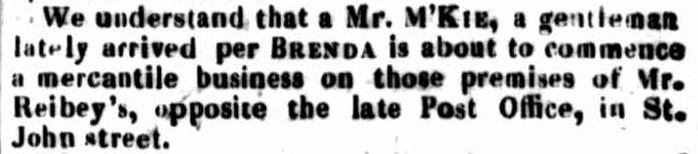
    We understand that a Mr. M'KIE, a gentleman lately arrived per BRENDA is about to commence a mercantile business on those premises of Mr. Reibey's, opposite the late Post Office, in St. John street.
    Launceston Advertiser, 15 February 1832 page 53

    He set up at first as a merchant on his own account in Launceston during March 1832. He was still a man of means by this date, for only a few months later he was able to enter a racehorse “Creeper” into the local Race Meeting. (it did not win).

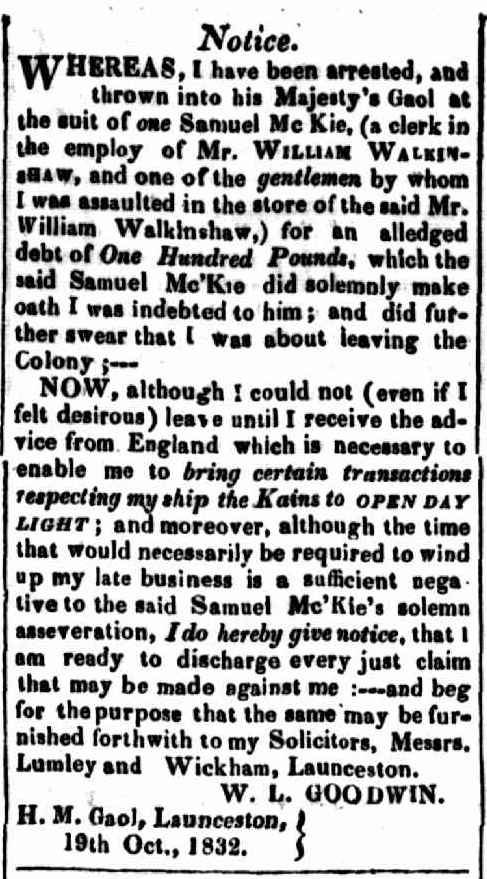
    Later that same year his circumstances were so reduced that he was now employed in the store of a Mr William Walkinshaw as a clerk. In January 1833, McKee and several other employees of Mr Walkinshaw were acquitted of assaulting one William Lushington Goodwin over an outstanding debt. The trial excited much public interest:

    Notice.
WHEREAS, I have been arrested, and thrown into his Majesty's Gaol at the suit of one Samuel Mc Kie, (a clerk in the employ of Mr. WILLIAM WALKINSHAW, and one of the gentlemen by whom I was assaulted in the store of the said Mr.
William Walkinshaw,) for an alleged debt of One Hundred Pounds, which the said Samuel Mc'Kie did solemnly make oath I was indebted to him; and did further swear that I was about leaving the Colony ;—
NOW, although I could not (even if I felt desirous) leave until I receive the advice from England which is necessary to enable me to bring certain transactions respecting my ship the Kains to OPEN DAY LIGHT and moreover, although the time that would necessarily be required to wind up my late business is a sufficient negative to the said Samuel Mc'Kie's solemn asseveration, I do hereby give notice, that I am ready to discharge every just claim that may be made against me :—and beg for the purpose that the same may be furnished forthwith to my Solicitors, Messrs. Lumley and Wickham, Launceston.
W. L. GOODWIN.
H. M. Gaol, Launceston, }
19th Oct., 1832. }
    The Independent (Launceston, Tas. : 1831 – 1835), 19 Oct 1832 page 3

    He applied to purchase some land north of George Town from the government for a commercial venture in March 1835. His application was rejected “Because not in accord with King’s Regulations”

    Samuel McKee had many convict servants assigned to him over the years. Unlike so many others, we know the names of more than a few of those assigned to him. As is usually the case, the only reason these names are known is that something went wrong. In the case of McKee, either he hated — or liked them too much.

    Oops!

    Bridget Monningham (almost certainly not her correct name) was back in the Female House of Correction in Launceston by the date she gave birth to Samuel MacKee’s daughter. Elizabeth McKee was born 3 August 1836.

    (Eighteen years on, this event might be related to a brawl on the Launceston docks when one of McKee’s other children received a £5 fine for defending his sister’s honour.)

    …Mr. Rocher for the defence urged that there must have been something behind the curtain to justify the assault, and if the account which he had heard were true, Fisher deserved not only what he had received, but a great deal more. He was informed, that a mob of had followed defendant and his sister all the way from the Cornwall, calling after them and frequently jostling them. …

    Launceston Examiner (Tas. : 1842 – 1899) 21 October 1854 page 3

    …defendant and his sister were returning on the evening the assault was committed from Ali-Ben-Sou-Alle’s concert, and that on the way home, a mob of fellows bustled and insulted Miss M’Kee. After taking his sister home, Mr. M’Kee, sen., and his son went in pursuit of the persons who had offered the unmanly indignities to the young lady, when they met Mr. Fisher and his witness opposite the Victoria Hotel, where an altercation ensued…
    The Cornwall Chronicle (Launceston, Tas. : 1835 – 1880) 25 October 1854 page 5

    At the other end of the spectrum was an odious creature by the name of Patrick Matheson:

    The Cornwall Chronicle (Launceston, Tas. : 1835 – 1880), 8 April 1837 page 2

    To the Editor.

    SIR, —Having seen in your paper of the 15th instant, a statement of Mr. W. Peel’s, respecting my conduct in the Masterson business, — I beg to offer to you and the public, in justification of my character, the following reply : […]

    1st In my service only two hours— Insolence — 10 days solitary confinement.

    2nd When three days out of cells — Absconded—two year’s ADDITION— 4th conviction.

    3rd. — By Mrs. Mc’Kee — Insolence— reprimanded — in my absence.)

    4th— By ditto, ditto, ditto.

    5th— By myself- -for being absent without leave — turned into Government, to be made a Messenger. (See Gazette of 10th March last.)

    6th— By myself — for being caught in a room in my dwelling-house, concealed under a bed —six months hard labor.

    Now, Sir, this is the man Peel says I recommended to be made a constable of. How could I, or any man of reason or common sense be guilty of such a thing, after such a catalogue of offences, and he in my service only two months. […]

    I shall let the matter rest for the present, and say no more on the subject, although I could fill a quire of paper on this fellow’s offences. — I am , Sir, your obedient servant,

    SAMUEL Mc’KEE.

    The Cornwall Chronicle (Launceston, Tas. : 1835 – 1880), page 1

    Somewhere in the middle was George Hayle, who escaped punishment for drinking after hours, only due to the good word of his master

    Otherwise, McKee was not too fussed about which assigned servant he tussled with. One court case in February 1838 saw him charged with assaulting the (unnamed) assigned servant of a fellow settler named Edward Umphelby.

    The unluckiest of McKees’s assigned servants has to have been Thomas Roper. He was reported by McKee at various times for disorderly conduct (25 lashes), Disobedience of Orders, Insolence, and being Out of the house. Roper died in Launceston Hospital on 16 July 1838, still assigned to McKee, aged 42. Reported cause of death: “Visitation of God.”
    Samuel McKee was declared insolvent for the first time in March 1839. Since 1837 he had been in the employ of Mr Henry Dowling, sometimes editor and publisher of the Launceston Advertiser. By 1839 at least, McKee was editing Dowling’s paper for him — Which was just asking for trouble:—

    Has not Samuel M’Kee, who is so free in his remarks about Goodman Hart—who has shewn the consummate bravery to attack the unhappy fellow after his hands are pinioned and he is prostrate— gone on in his business of a cow-keeper and farmer, ever since, as though he never had been insolvent? Has this renowned and creditable Samuel McKee, Editor of the renowned and creditable Advertiser, ever paid his creditors one shilling ?”

    The Cornwall Chronicle (Launceston, Tas. : 1835 – 1880) 5 October 1839 page 2.

    Some weeks after this, McKee was notified another convict servant was available to be assigned to his service from the Depot at Launceston. He collected convict James Dyson on 11 November 1839, however barely two months later he returned him to the depot on 8 January 1840. He no longer required his service.

    McKee had money troubles throughout 1841 and was declared insolvent again.

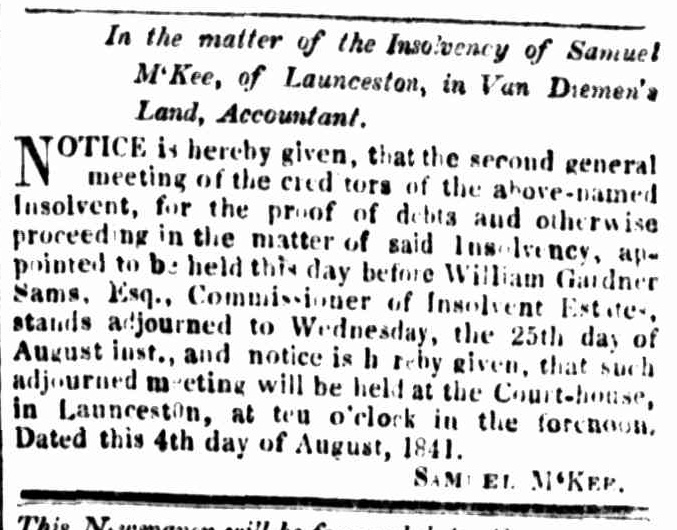
    In the matter o f the Insolvency of Samuel M‘Kee, of Launceston, in Van Diemen’s Land, Accountant.
NOTICE is hereby given, that the second general meeting of the creditors of the above-named Insolvent, for the proof of debts and otherwise proceeding in the matter of said Insolvency, appointed to be held this day before William Gardner Sams, Esq., Commissioner of Insolvent Estates, stands adjourned to Wednesday, the 25th day of August inst., and notice is hereby given, that such adjourned meeting will be held at the Court-house, in Launceston, at ten o’clock the forenoon.
Dated this 4th day of August, 1841.
SAMUEL M‘KEE.
    Van Diemen’s Land Chronicle (Hobart, Tas. : 1841), 13 August, p. 3

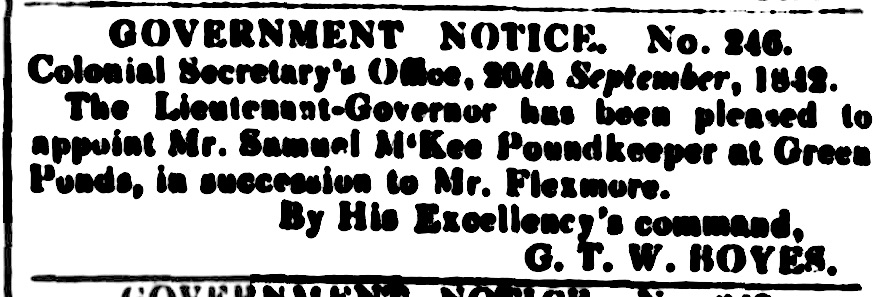
    By 1842 he was appointed the Government Poundkeeper at Green Ponds (now Kempton, although why you would change such an excellent name as Green Ponds is beyond me). Green Ponds is quite a distance from his property in Launceston, so he must have been desperate for work. In 1843 He was appointed Inspector of Stock in the same district.

    The Courier (Hobart, Tas. : 1840 – 1859), 30 September, p. 4

    He was declared insolvent yet again in April 1845, however his creditors could not be bothered to turn up to court. McKee returned to Launceston where he worked as an accountant or clerk for several businesses.

    By the middle of the following decade Samuel McKee was secretary of the lodge of a friendly society in Launceston. His family were grown up and moving to other colonies.

    Samuel McKee died at South Yarra in the Colony of Victoria at the age of sixty-eight, on 9 December 1868. His wife Anne died in Melbourne 23 Apr 1887.

  • Bio: Lt Pearson Foote (RN)

    Bio: Lt Pearson Foote (RN)

    At Deloraine, northern Tasmania, there is a grand Georgian-style house on the grounds of a property called Calstock. This was not built by Lieutenant Pearson Foote of the Royal Navy (1792-1871), but by a subsequent owner of the estate.

    Today, the building that was not his home is a four star hotel.

    Update: apparently it is not that any more. It got sold for an obscene amount of money..

    Apart from being an inspiration to future Libyan dictator Colonel Gaddafi, there has to be a lot more to Lt. Foote than is currently understood.

    Calstock and Harewood were the names of two properties owned by Lt Foote in the Westbury district of Van Diemen’s Land from the 1820’s to the 1840’s. Pearson (or Pierson) Foote was born in Cornwall, England on 5 April 1798. He was the fifth of eight children born to John Pierson Foote and Mary Thorn at Harewood House by the village of Calstock.

    His father dropped dead in June 1809. Pierson was his third son, so was never going to inherit the family estate even if he was old enough to at the time. Instead he joined the Royal Navy and was enrolled as an officer on 1 October 1824. Lt. Pearson Foote, RN, never seems to have been given command of a ship.

    Instead, Mr. P. Foote sailed in cabin class on the barque Nancy (H. Pryce, RN, commander) from England on 11 July 1829, reaching Van Diemen’s Land some time in March 1830. Some months after that he was granted land in the Westbury district in the north of the island and by August at least, had been granted the first of the assigned convicts he would use to develop his property.

    On 23 November 1830 he married Susan Parker, daughter of a neighbour on the Norfolk Plains. A record of this marriage was kept by the Admiralty against any potential claims for a future Royal Navy widow’s pension.

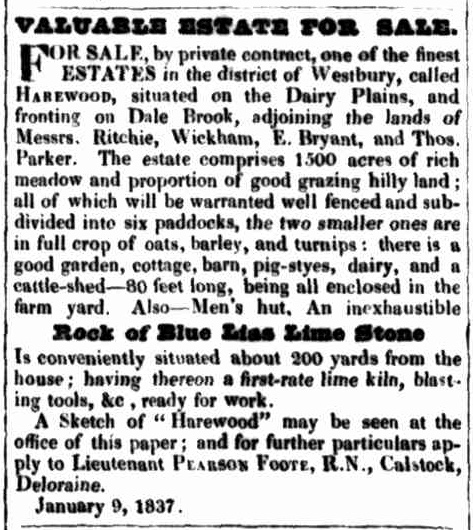
    Foote’s first property was on the Dairy Plains, which he named Harewood. He put Harewood up for sale after he acquired land at Deloraine.

    Launceston Advertiser (Tas. : 1829 – 1846), 16 February 1837, p. 1

    Being one of the Gentry, and thus eligible to use the epithet “Esquire” after his name, he was part of such worthy mutual admiration societies as the “Cornwall Agricultural Association” (Not the English one) and the local Horticultural Society. As a matter of course, he was appointed a Justice of the Peace and a magistrate for his region.

    His Excellency and suite then proceeded to dinner to the house of Lieut. Foote, R.N. at Deloraine, where that gentleman has done so much to improve his estate by clearing and breaking up the soil, building, &c.

    The Hobart Town Courier (Tas. : 1827 – 1839) 25 March 1836 page 4

    During March 1836 he hosted Lt-Governor Arthur himself at his residence at Deloraine. Afterward he attached his name to some grovelling in case his nose wasn’t brown enough.

    SIR,—We, the undersigned residents in the Northern Division of the Island, desire to express to your Excellency the satisfaction we have experienced at the visit you have made to its capital, and while we regret that your public avocations forbid a more prolonged one, we look forward to an early renewal of it, when we hope to have an opportunity afforded us of evincing our feeling towards yourself and Mrs. Arthur, by some public demonstration of respect.
    We have the honor to be,
    Sir,
    Your most obedient humble servants,
    Tho. Archer, M. L. C. J. D. Toosey, V.D.L. Est.
    W. P. Weston J. P. R. Vincent Legge, J. P.
    Wm. Archer J. P. M. Franks
    G. Yeoland J.P. Wm. Seccombe, J.P.
    W. Paton J.P. Henry Jennings
    Alfred Wm. Horne J.P. Pearson Foote, J.P.

    The Hobart Town Courier (Tas. : 1827 – 1839), 25 March, p. 4

    In late October 1838, he was assigned a convict named James Dyson to his service. In late November he sent the wretched man to Captain Moriarty to deal with for idleness and neglect of duty. Moriarty sentenced him to six months hard labour with the Snake Banks road gang before he was returned to Foote’s service about May 1839. Dyson was sent back to the depôt at Launceston by October. Foote may not have wanted him back.

    The town of Deloraine, Tasmania, in 2017 before I knew anything about the place.

    Over half a century ago Deloraine could boast of some distinguished naval and military men among the first land owners of the district for, in addition to Captain Moriarty at Dunorlan, there was that fine type of an English gentleman, Lieutenant Pearson Foote, R.N., the first owner of Calstock and Harwood, both of which properties he named after the family estates of the Footes in Devonshire, England, opposite Cote Hele, the seat of the Earl of Mount Edgecombe, a branch of which distinguished family our old and respected resident, Mr. J. L. Edgecombe claims to be.
    […][Foote] is spoken of by those who had the pleasure of his acquaintance as a most hospitable, if somewhat eccentric gentleman, who used to have a flag pole near where Calstock house now stands, the arranging and hoisting of flags on which used to occupy a considerable portion of his time.

    Western Tiers (Tas. : 1980 – 2004) 20 May 1983: 27. Web. 18 Jul 2022

    It’s important to state that Lt Pearson Foote was stark staring raving mad. If he was anyone other than a ‘gentleman’ he would have been locked up.

    Deloraine in 2017. I visited the town before I knew there was a connection there I needed to investigate.

    About the time a certain convict was due to be returned to Foote’s service, a bushranger gang swept through the Deloraine district. People were robbed. A man was murdered. The local constable claimed it never happened and blamed his constituents for getting into a panic, including one — unnamed — gentleman. —

    […] That no particular alarm exists among the settlers, is evident from the circumstances of one of them who lives beyond Deloraine having refused the protection of a party of constables, who were patrolling for the purpose of quieting the fears he might have entertained from the reports before alluded to.
    Another gentleman in the neighbourhood whose fears have been much excited, took the best precaution he could to protect his own person by surrounding himself with a party of young and amiable females, by far the most desirable and agreeable body guard he could have selected.
    I am, Sir,
    Your obedient servant,
    THOMAS JEFFCOTT,
    District Constable.
    Westbury. V. D. Land,
    April 23, 1839.

    The Cornwall Chronicle (Launceston, Tas. : 1835 – 1880), 27 April 1839, p. 2

    Jeffcott’s detractors (of whom there were many) were not so coy in their responses…

    … We applaud the gentleman’s courage, certainly, and have no hesitation in declaring it to be our opinion, that any MAN cloaking his own person from injury inside a barrier made of females, deserves immortalizing ; and we propose that an address be at once “got up,” declaratory of the gentleman’s heroism, and be entrusted to the District Constable for signatures, which may easily be procured amongst the chain-gangs, shingle-splitters and sawyers in the bush, provided always that the canvasser is authorized to promise tickets-of-leave and other sorts of indulgences.

    The Cornwall Chronicle (Launceston, Tas. : 1835 – 1880), 27 April, p. 2

    Finally, someone named names…

    … I cannot answer with regard to Lieutenant Foote’s being surrounded by a guard of “young and amiable females,” but I rather imagine they existed more in Mr. Jeffcot’s fanciful ideas, or perchance he was commencing to dream when he penned this sentence, However, it is now the ungracious task of Lieutenant Foote, as a magistrate, as a husband, and as a man, to come boldly forward and clear his character of that blemish which has been cut upon it (I am sure most unwittingly) by the foolish correspondent of the Launceston Advertiser. — I remain, dear Mr. Editor, yours,
    obediently,
    SUBSCRIBER
    Westbury, May 1.

    The Cornwall Chronicle (Launceston, Tas. : 1835 – 1880) 4 May 1839, p. 3

    Lt Foote sold up his properties in VDL during the 1840’s, moved to Victoria, deserted his wife and died in Melbourne in 1871.

  • Bio: David Williams

    Bio: David Williams

    of Patterson’s Plains

    Allow me to digress briefly before proceeding to the matter at hand:— David Williams and Henry Nicholls were both masters to whom James Dyson, convict, was briefly assigned to. How briefly? Two months in the case of Williams, Three days in the case of Nickolls. If I ever finish the book I am writing, this part of his life warrants about a page at most. Researching these two to understand their tiny part in his story has taken the best part of two weeks. This is why progress has been so slow and I’ve yet to even begin writing that page.

    Van Diemen’s Land settler David Williams was winding up his affairs in that colony when convict James Dyson was assigned to him about 14 July 1837

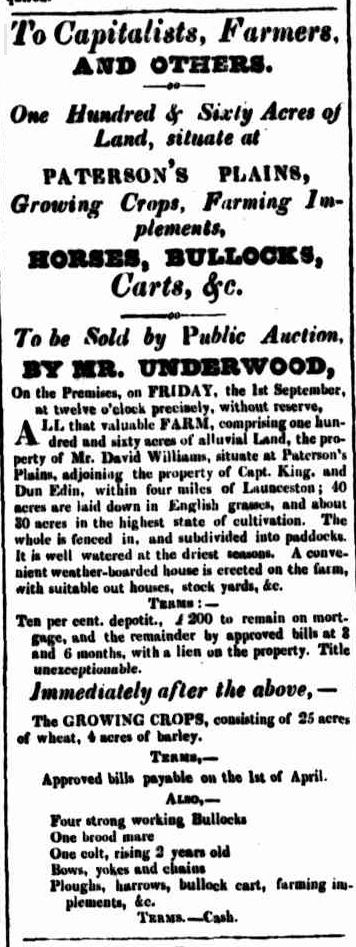
    To be Sold by Public Auction,
BY MR. UNDERWOOD,
On the Premises, on FRIDAY, the 1st September, at twelve o'clock precisely, without reserve,
ALL that valuable FARM, comprising one hundred and sixty acres of alluvial Land, the property of Mr. David Williams, situate at Paterson's Plains, adjoining the property of Capt. King, and Dun Edin, within four miles of Launceston; 40 acres are laid down in English grasses, and about 30 acres in the highest state of cultivation. The whole is fenced in, and subdivided into paddocks.
It is well watered at the driest seasons. A convenient weather-boarded house is erected on the farm, with suitable out houses, stock yards, &c.
TERMS:—
Ten per cent. deposit., £200 to remain on mortgage, and the remainder by approved bills at 8 and 6 months, with a lien on the property. Title unexceptionable.
Immediately after the above,—
The GROWING CROPS, consisting of 25 acres of wheat, 4 acres of barley.
TERMS, —
Approved bills payable on the 1st of April.
ALSO,—
Four strong working Bullocks
One brood mare
One colt, rising 2 years old
Bows, yokes and chains
Ploughs, harrows, bullock cart, farming implements, &c.
TERMS. — Cash.
    The Cornwall Chronicle (Launceston, Tas. : 1835 – 1880) 26 August 1837 page 3

    Sixteen days after the land on the Patterson’s Plains went up for auction, he returned Dyson to the Depot at Launceston. — “His master no longer requiring his service”. Dyson was next assigned to… But that’s another story.

    The biography of David Williams I have put together here is markedly different from some other accounts of his life posted elsewhere. I don’t believe he was ever a convict in NSW or VDL, nor do I believe it was he who died in the year 1841 falling off a cart while drunk near Hobart. If that is a disappointment to any family members, fear not — the truth is far more interesting, and there are far more avenues of research to wander down than I have even touched on.

    David Williams was born before 1792 somewhere in the British Isles. He enlisted in the 46th South Devonshire Regiment of the British Army sometime during the last years of the Napoleonic War. He departed England late in 1814 on the the troop ship Windham bound for New South Wales, then Van Diemen’s Land.

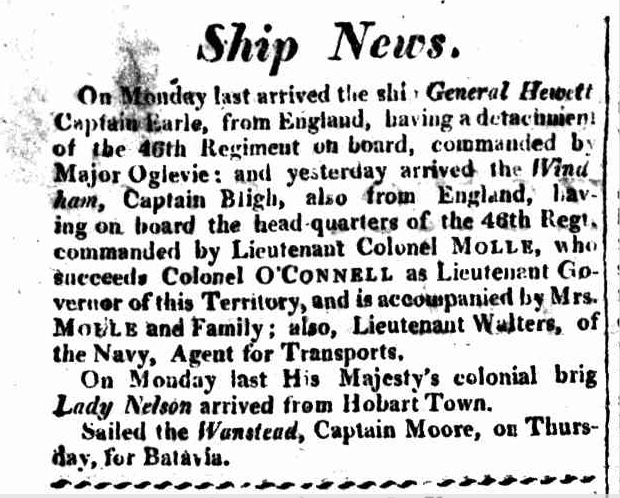
    Ship News
On Monday last arrived the ship General Hewitt
Captain Earle, from England, having a detachment
of the 46th Regiment on board, commanded by
Major Oglevie: and yesterday arrived the Wind-
ham, Captain Bligh, also from England, having
on board the head-quarters of the 46th Regt.
commanded by Lieutenant Colonel MOLLE, who
succeeds Colonel O'CONNELL as Lieutenant
Governor of this Territory, and is accompanied by
Mrs. MOLLE and Family; also, Lieutenant Walters,
of the Navy, Agent for Transports.
    The Sydney Gazette and New South Wales Advertiser (NSW : 1803 – 1842), 12 February 1814, p. 2

    Corporal Williams stayed in NSW for a time, but he resigned from the army at Port of Launceston sometime about the beginning of the year 1817. According to his record, he served 7 years. Do the sums — Someone is lying.

    He had definitely been farming in the Launceston district for a while by 1822, for he was then selling grain to the government commissariat at Port Dalrymple.

    For those family members bewailing I stripped their heritage of Australian Royalty — despair not. On 2 January 1826 at Launceston, he married Jane Jones, his assigned convict serving girl. Jane was then only one year into a seven year sentence for “Stealing Silk Handkerchiefs from a shop” in Northumberland. She did not cease being a convict after marriage, so she was lucky that an accusation of “Stealing sundry articles of Wearing apparel the property of Mr Naylor from his house in Launceston” did not stick.

    According to her conduct record (that ends abruptly after 29 April 1826) she was already married to someone named John Hamilton back in England. On her Launceston marriage certificate however, she states she was a spinster. Someone in officialdom slipped up again!

    Their first child, a daughter named Hannah, was born at Patterson’s Plains on 9 July 1828.

    The following year, grimmer tidings were to hand. They employed a stock-keeper on their estate. One Saturday morning he vanished never to be seen again. No one had any doubt back then that he’d been murdered.

    David Williams (junior) was born on 25 March 1830. Later that year his father operated the district Pound for Patterson’s Plains.

    By 1832, he also acquired a Publican’s licence for the district. What was it about former British Army Corporals and taverns?

    Still, the next year 1833, David Williams was mixing with the high and mighty of the district on civic matters concerning roads and bridges about the North Esk River. Later that year he breached some sort of regulation concerning his Liquor licence and was fined £2.

    In 1834 David Williams had two grants near Launceston confirmed. Presumably this meant he was now in possession of the title deeds for his properties on Patterson’s Plains.

    The record goes dark for the next three years.

    1837: An individual named Thomas Prosser claims David Williams and Joseph Bond Clarke obtained some promissory notes from him by false pretences. This allegation is never tested in court. Then in February that same year, Williams declares he has lost a promissory note to the value of £40 and threatens anyone who would dare cash that note in.

    His property goes up for sale in Patterson’s Plains during August. Those of his assigned convict servants he does not return to the Depot are transferred to his neighbours, such as Arthur Hellier of Launceston.

    His son Thomas Williams was born on 11 November 1838, but the place of his birth is now Launceston, rather than Patterson’s Plains. One month later, 20 December, the barque Socrates sails from Launceston bound for the newly established colony of South Australia.

    2 horses, 4 bullocks, 2 bags oats, 1 big seed, 20 packages furniture, 6 bags flour— D. Williams.

    The Cornwall Chronicle (Launceston, Tas. : 1835 – 1880) 22 December 1838 page 2

    During the middle of the next year David and Jane Williams departed Launceston for Adelaide on the schooner Lowestoft with one of their children. They may have travelled back and forth between the two settlements for a number of years afterwards, but Adelaide in South Australia was where their new home was to be.

    On 15 November 1843 in Adelaide, their 15 year old daughter Hannah married John Berry. Fifty nine years later, Mrs Berry died in Melbourne, Victoria at a ripe old age.

    Thomas Williams lived out the rest of his life in South Australia. He died aged 71 at Keswick in Adelaide on 7 October 1909.

    David Williams (junior) may have remained in Van Diemen’s Land longer than the rest of the family. It was probably he leaving Tasmania for the Victorian goldfields during the early 1850’s, and it was he who died at Eaglehawk near Bendigo in 1892. A warning to Williams family members — there is possibly a highly disturbing discovery to be made at the end of this trail.

    Mrs Jane Williams died at Kooringa, South Australia on 24 July 1858. She was 49 years old and been a widow since 28 April 1847. David Williams the Elder must have been a good few years older than the 55 years of age the authorities there believed him to be at the time. The inquest into his death in Adelaide is disappointingly sparse on details.

    On Thursday an inquest Was held on the body of David Williams, who was drowned, by falling into a well, at Bowden, on the previous evening, at 9 o’clock, and a verdict returned,” That the deceased died by falling into a well.”

    South Australian Gazette and Colonial Register (Adelaide, SA : 1845 – 1847) 1 May 1847 page 3

    Well, duh!

  • Bio: Henry Nickolls

    Bio: Henry Nickolls

    The Master of Corra Linn

    On, or just before 7 December 1837, Henry Nickolls, master of the Corra Linn estate on the Patterson Plains, was punched in the head by a newly-assigned employee and warned by him that “there was more where that came from”. Which is something of an inversion of the typical master / servant relationship.

    This is only one of many possible interpretations that the historical record allows… but it’s how I’d like to imagine the confrontation between Nickolls and convict James Dyson played out. It makes for a more lurid opening line than “Assaulting and Threatening Violence to his Master” which is as close to an accurate translation as can be gleaned from James Dyson’s surviving Convict conduct record generated for his time in Van Diemen’s Land.

    Dyson was immediately sentenced by the police magistrate at Evandale to six months hard labour on the roads at the Kings’ Meadows Convict Station (where Dyson most absolutely positively wore one very stylish hat).

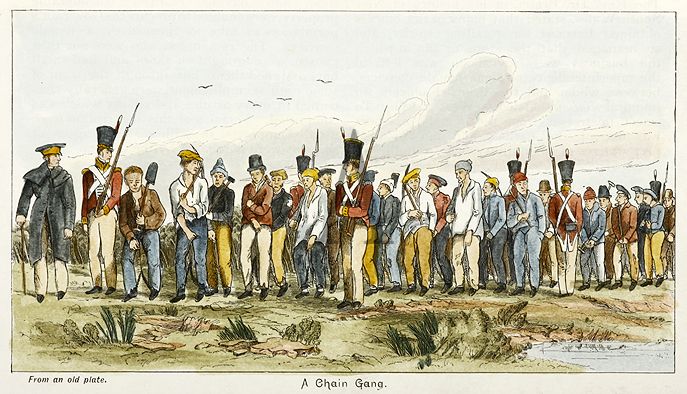
    A Hobart Chain Gang
    A generic Convict Chain Gang. Accuracy not vouched for.

    But who was Henry Nickolls, about whom Dyson made a judgement call that it was better to spend the six months in a road gang than have to endure him as a master any more than three days?

    Henry Nickolls, Esq.

    Was born in Little Stukely, Huntingdonshire (now part of Cambridgeshire) towards the end of the year 1793. Aged 33, he married 29 year old Charlotte Wilkins on 23 August 1826. The newly-weds sailed from London to Van Diemen’s Land on the ship Admiral Cockburn the following month, arriving in Hobart on 14 February 1827.

    He was sent out there by two gentleman to manage and farm on their behalf, the extensive properties they had acquired in the Colony. Their names were…

    JFC!

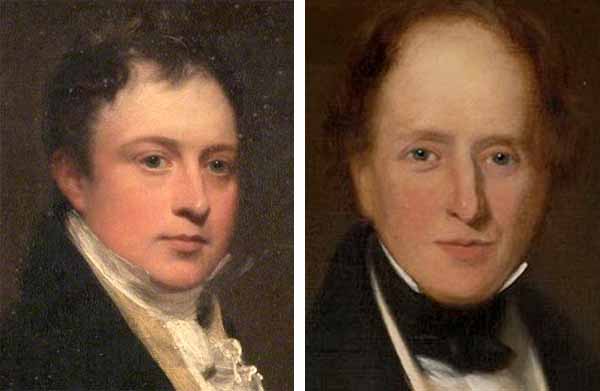
    Sir John Owen (Bart) & Edward Lord

    Wikipedia page for Sir John Owen (Bart)

    Australian Dictionary of Biography entry for Edward Lord

    These “gentlemen” — a politician and soldier respectively, were brothers. Sir John changed his name so he could inherit a prosperous estate in Pembrokeshire with a baronetcy attached. This estate in Wales (the old one, not the New South one) was named Orielton. He also inherited a seat in parliament as part of the deal.

    Edward Lord had once been a soldier of the officer class. He had been kicking around Van Diemen’s Land since the time of the original British incursion. He had even been an acting-Governor briefly back in 1810. His most notable act in office was burning all the incriminating documents from his predecessor’s reign. He was not popular with his peers, but having a politician brother who was now a minor aristocrat meant both of them had wangled some of the choicest land grants the Colony had to offer.

    Orielton in Van Diemen’s land, near the town of Sorrell, seems to have been run productively by their agent Nickolls. Nickoll’s speciality was cattle and horse breeding. The issues that eventually arose between he and his employers might have been due to one of his masters needing more and more money to fund an expensive political habit. (Owen was gobsmacked that his constituents keep fielding alternate candidates against him at election time just because he didn’t pretend to represent their interests). Richard Lord on the other hand, was probably just being a ruthless arsehole.

    Whether Nickolls was replaced voluntarily or otherwise as agent for Owen and Lord is not clear. However from 1 September 1831, it was Alexander Goldie now in charge at Orielton and the brother’s other interests, with the mandate to wring as much cash out of the cows for his employers as possible.

    Alexander Goldie has his own Australian Biographical Dictionary entry.

    Nickolls was also of the gentlemanly class. While still in the employ of Sir John Owen (Bart), he made successful application for land grants on his own account. His status was confirmed by an appointment to be a Justice of the Peace by the Lieutenant Governor very soon after his arrival — A mark of some esteem from a soldier for someone who only obvious connection with soldiering was with someone no-one else trusted as far as they could throw him.

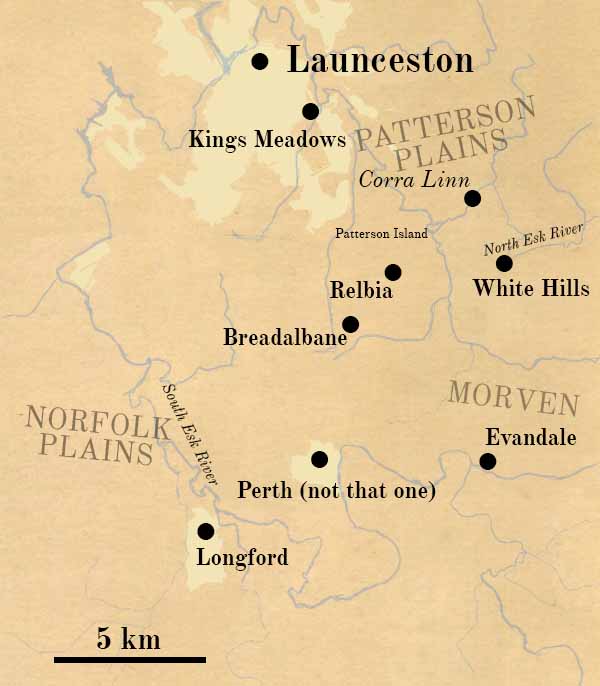
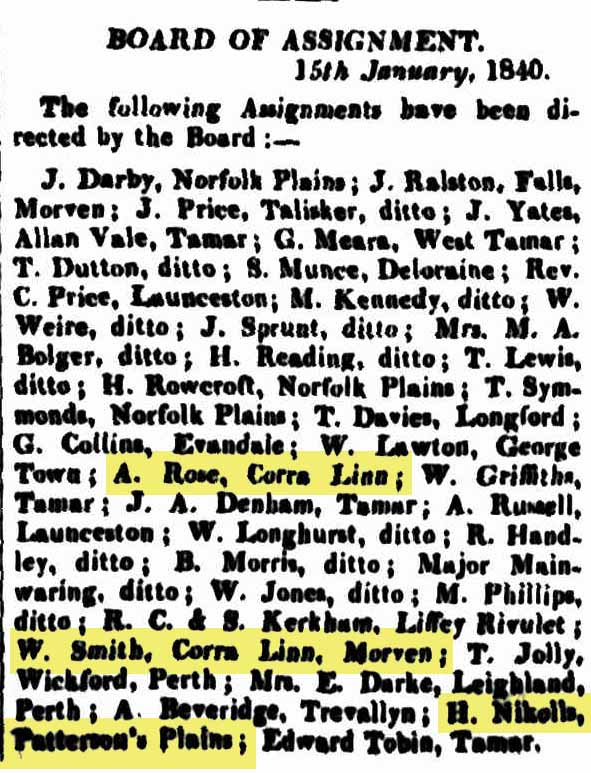
    Nickoll’s initial land grant in 1828 was for 2000 acres in the Brighton district. He next applied for 2500 acres more in the Morven District, close to the South Esk River, during 1833. “Corra Linn” is located by the North Esk in that district, so if this is not a typographical error, and his application really was approved — the latter may be the land near the town of Longford where he finally resided.

    His first attempt at free enterprise, after separating from Owen and Lord, was winning a tender to provide a mail service between Hobart Town and Launceston. — Entirely on horse back. He purchased six used saddles from the government for the purpose. But the gloomy prediction of one of the Launceston newspapers proved prescient —

    We have already stated that Mr. Nichols has obtained the contract for the conveyance of the mail throughout the Island. It is taken at £990, ferries free, and commences on the 2nd June. We wish him success. Individuals who by any means benefit the community are justly entitled to their earnings, but we fear that the present most infamous state of the roads, and want of bridges, are more likely to ruin a contractor than to put money in his pocket. The present system of colonial government is altogether bad, and until the desired change takes place, but little good may be expected by the community.”

    The Independent (Launceston, Tas. : 1831 – 1835) 12 May 1832 page 3

    We can probably assume that Henry Nickolls lost his deposit. To make ends meet, he was compelled to seek employment from the government.

    His appointment as commandant of an institution on Flinders Island lasted between September 1834 and November 1835. He was not gaoler for any who were formal prisoners of the British crown, yet none of the 134 or so inhabitants under his management were free to leave.

    They included as many of the First Nations peoples as could be captured alive after a genocidal war of conquest waged against them. It was never described as such in the terminology of the day, but Henry Nickolls was ruler of one of the world’s first concentration camps. By the time the Wybalenna Aboriginal Establishment was abandoned in 1847, only 47 Palawa were still alive.

    He turned down further government employment as a manager on the Launceston docks. When he also appeared to reject an official appointment at Circular Head with the VDL Company (where his nemesis Alexander Goldie was once employed), that government was through with him.

    He attempted to pressure the administration for more employment by name dropping all the worthies he was writing to back in Britain to lobby on his behalf. Being written to sternly by Lord Fitzwilliam and the Bishop of Chichester was not enough to sway the Colonial Secretary. The regretful notation to his letter of pleading reads-

    I wish I could do something for Henry Nickolls but alas I cannot.

    Instead, one year later (or by January 1837 at the latest), Henry Nickolls was in residence at Corra Linn.

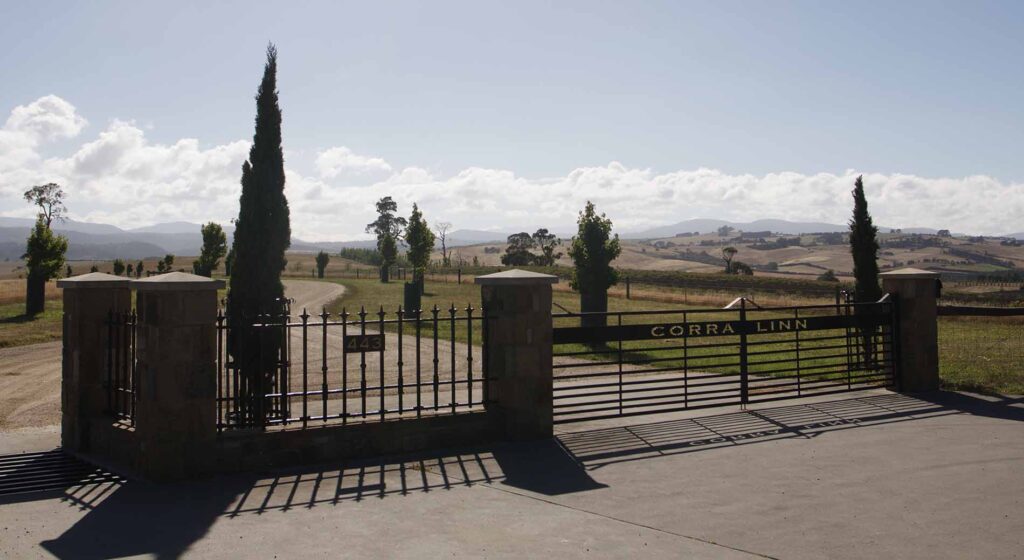
    Gateway to the Corra Linn Estate off Relbia Road in 2017
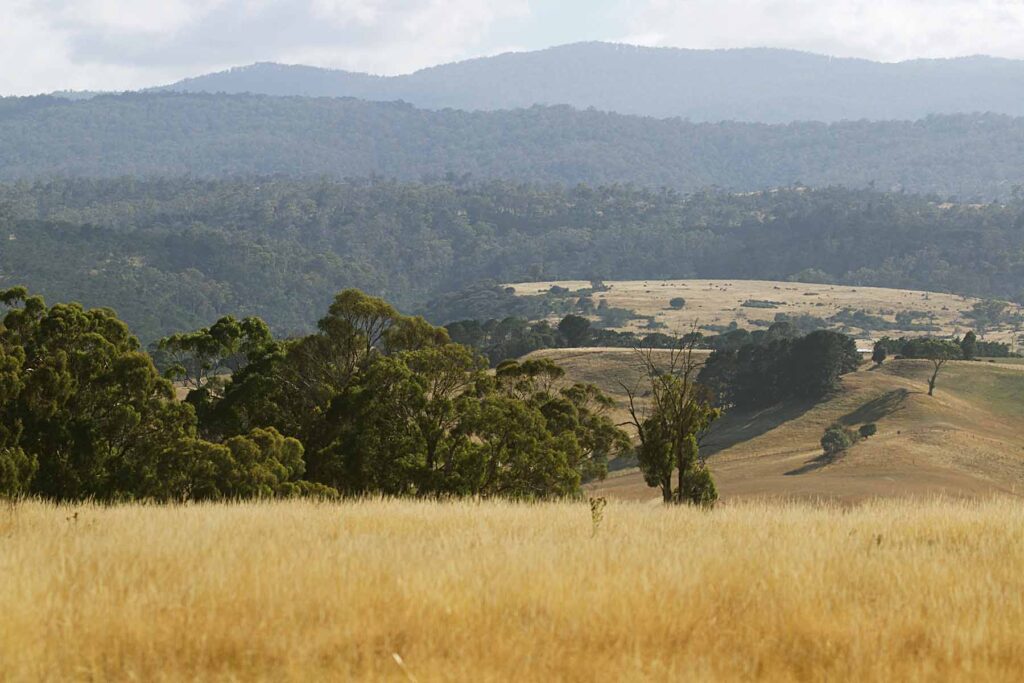
    The road to Corra Linn 2017

    Corra Linn / Corra Lynn

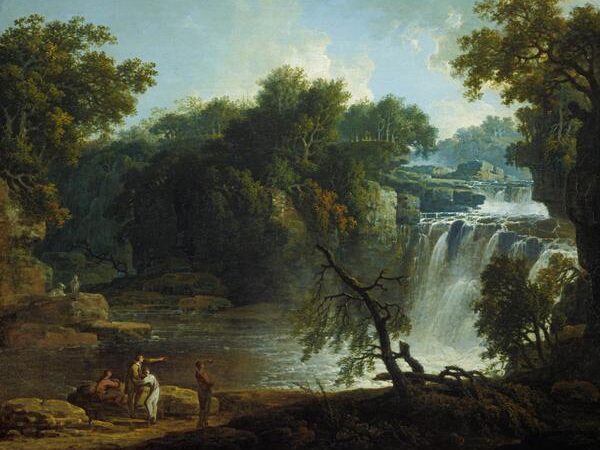
    The land around the North Esk river known as Patterson Plains was the location of government stockyards acquired by a Lieutenant David Rose after he retired from the army in 1814. A waterfall and gorge on the North Esk river adjacent to the property resembled (somewhat) one from his native Scotland.

    Corra Linn in VDL. Very pretty, but not seeing the resemblance

    Lt. Rose dropped dead in 1826, “hastened by a wound from a dog bite” according to his Australian Biographical Dictionary entry.

    The heir to his estate seems have been a nephew, Alexander Rose. It must have been he, a decade later, who leased some of that land to Nickolls. The Rose family retained other portions of the inheritance to work themselves, so Henry Nickolls next did his bit for neighbourly relations by taking Alexander to court over a barn that he commissioned him to complete which did not live up to his gentlemanly expectations.

    … At the instigation of Mr. Home, the witness, Gardiner, was asked how wide the spaces were between the logs, to which he answered that towards the ground they were not wider than to admit a man’s arm, but they encreased towards the top.
    Mr. Home — Cannot pigs get in ?
    Witness— Not unless they were to FLY !

    “SUPREME COURT—CIVIL SIDE.” The Cornwall Chronicle (Launceston, Tas. : 1835 – 1880) 13 January 1838 page 1
    The Cornwall Chronicle (Launceston, Tas. : 1835 – 1880) 25 January 1840 page 4

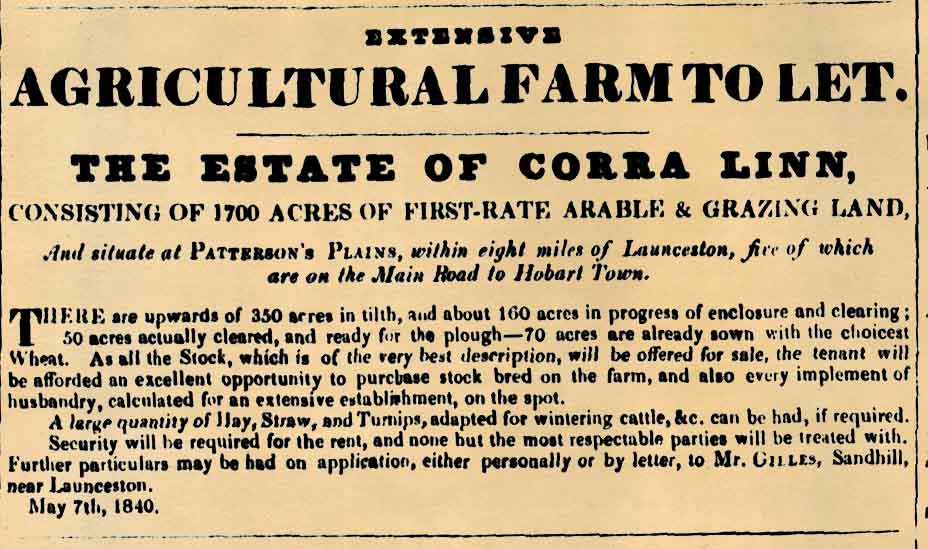
    Henry Nickolls was out of Corra Linn by January 1840, but was still a presence in the district. Then Alexander Rose and his family departed Van Diemen’s Land for a few years and the next time Corra Linn was up for rent, a Mr Gilles of Sandhill was managing the deal.

    Launceston Advertiser (Tas. : 1829 – 1846)Thu 7 May 1840 Page 1
    Patterson Plains 2017

    There is ‘nary a peep out of Henry Nickolls Esquire for some time until:—

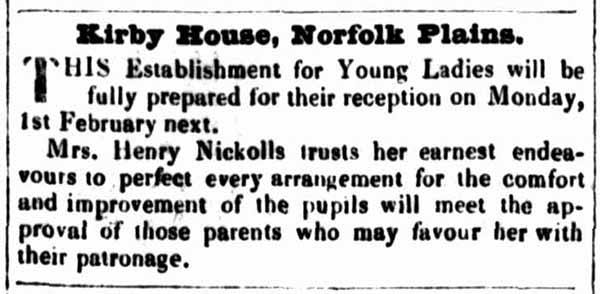
    Kirby House, Norfolk Plains.
THIS Establishment for Young Ladies will be fully prepared for their reception on Monday, 1st February next. '
Mrs. Henry Nickolls trusts her earnest endeavours to perfect every arrangement for the comfort and improvement of the pupils will meet the approval of those parents who may favour her with their patronage.
    Launceston Advertiser (Tas. : 1829 – 1846) 27 January 1842 page 2

    When the wife of a gentleman goes into business on her own account during this era, there are really only two ways of interpreting the situation. Either she has suddenly come into some wealth that her genteel husband has no access to, OR the couple’s finances have deteriorated so badly that he had to send the missus out to work to keep cigars and cognac on the table.

    Henry Nickolls, Esquire, now of the town of Longford in Norfolk Plains district, placed himself into voluntary administration for insolvency on 18 July 1842.

    Under the Insolvency of Mr. Henry Nickols, of Norfolk Plains, and by order of John Atkinson, Esq., Assignee.
    TO BE SOLD BY PUBLIC AUCTION,
    By Mr. B. Francis,
    On the premises at Norfolk Plains, on THURSDAY and FRIDAY, the 15th and 16th September, at twelve o’clock precisely,
    TWELVE FRENCH BEDSTEADS,
    Chintz and dimity furniture
    Wool mattresses
    Feather beds and bedding
    Rosewood, loo, telescope, and dining
    tables
    Cheffioniers, sofas, couches
    Sets of chairs, plate, linen
    China, glass
    And 150 volumes of sundry books
    Fourteen capital milch cows
    Thirteen steers and heifers
    Six working bullocks
    One Hereford bull
    Two useful saddle horses
    One jaunting car
    Sets of harness, &c.
    ALSO,
    All the farming implements
    A strong bullock cart
    One horse cart
    Ploughs, harness
    Dairy utensils
    And numerous other effects.
    The auctioneer particularly calls the attention of gentlemen and others to the above furniture, the whole being of a very superior order, and nearly new. The cattle have been selected with care, and known to be first class.
    TERMS — Under £25, cash ; above that sum,
    an approved endorsed bill at 3 months.

    Launceston Examiner (Tas. : 1842 – 1899), 3 September, p. 5

    The Nickolls family lost their bedsteads but kept the house. Not much is heard from Henry Nickolls in the newspapers after that. He was presented to the Governor at a Levee held in Launceston during the year 1843. He resigned as a Justice of the Peace then, and tried his luck again with the Government for work, applying for a paid appointment in the Convict Department at Launceston. He also applied for a magistrates’ gig in his old stomping ground back in Sorrell during 1850.

    By now, the next generation of his family were emerging into public view. His son Henry Berkeley Nickolls was appointed postmaster to Bishopsbourne, a locality east of Longford in 1849.

    Henry Nickolls died at Longford 30 December 1872, aged 78.

    Nickolls seems to be both the historically correct and the preferred spelling of his family name, however, every other permutation (Nickol, Nicholls, Nichols) will appear somewhere in relation to this individual or his family. Henry and Caroline did have other children, but a distressingly large number of then died in infancy during their years at Corra Linn.

    He should not to be confused in the historical record with a Henry Nickolls, farmer of Brighton, Tasmania who died in 1885, or the convict named Henry Nickolls who arrived on the convict transport Moffatt, (but a later voyage than the one that brought James Dyson to Van Diemens’ Land!).

  • A departure from Van Diemen’s Land

    A departure from Van Diemen’s Land

    I’m a bit shocked to realise that it’s been six years since that I first posted a transcription of James Dyson’s conduct record as a convict in Van Diemen’s Land. For the past year I’ve been writing up the story of his time on the island. I think I understand now most of what happened between 1834-1840, and in the process I’ve revised that initial transcription quite considerably. As is always the case, the solutions only seem obvious with hindsight.

    There is now only a single entry in the record that I have not been able to find a convincing explanation for. The context is this: At the bottom of the Convict record is a row of dates and abbreviations that indicate when, and to which authority a convict has been assigned. For example: C.P.M. would be the local Chief Police Magistrate the prisoner has been sent to. In the case of James Dyson, The Snake Banks road gang was the actual place this authority sent him to.

    The place or authority our recalcitrant miscreant was sent to on 2 October 1838 probably is somewhere or someone related to the Cressy Estate around the Norfolk Plains District west of Campbelltown.

    Update 15 September 2022: I think the mystery is now solved! See below…

    It is something to do with the Van Diemen’s Land Establishment (also known as the Cressy Company to distinguish it from the Van Diemen’s Land Company of north western Tasmania). This we can deduce from the next record of Dyson’s misbehaviour dated only three days after he was sent there:

    5/10/1838 VDL Establishment / Incorrigible idleness and using abusive language. 26 lashes & returned to Government / [ordered by] J[ames]. C[ubbiston]. S[utherland].

    Sutherland was a land occupier on the Isis River who acted as a JP for those who could not get into town to see the Police Magistrate.

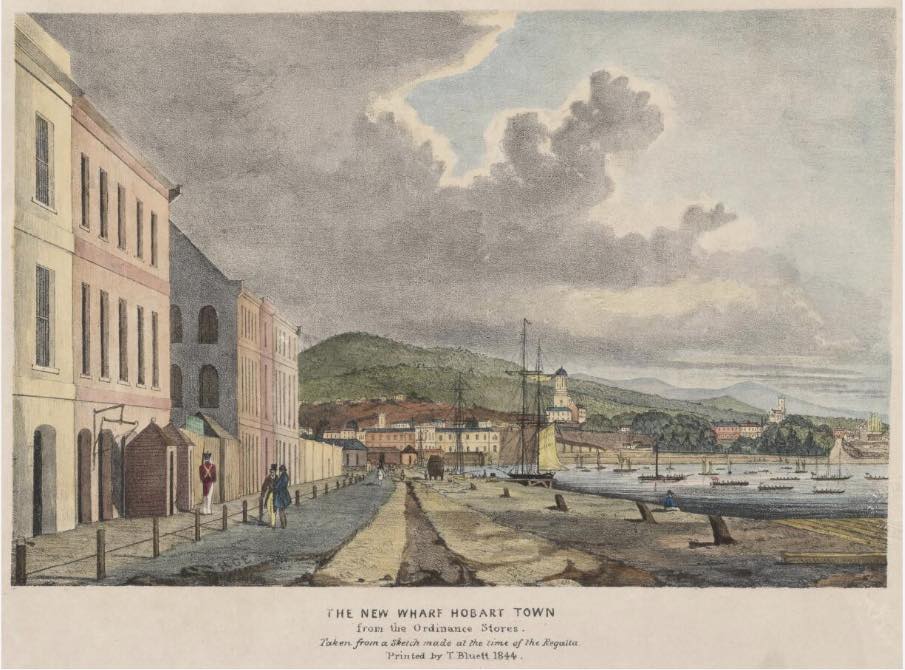
    When he first arrived in VDL in 1834, one of Dyson’s first assignments was the completion of this wharf — these days part of Salamanca Markets

    If I’ve been able to confirm nothing else about his time in Tasmania (and this is by no means an original observation) James Dyson was someone who seriously did not like authority.

    James Dyson’s conduct record in Van Diemen’s Land 1834-1840

  • Unreliable Witness

    Unreliable Witness

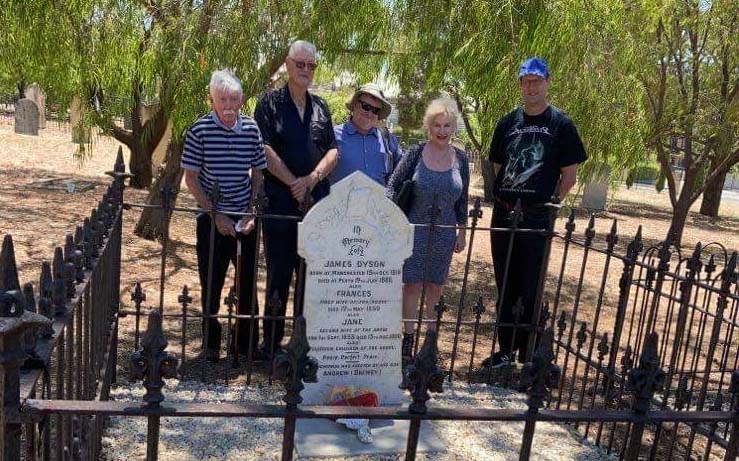
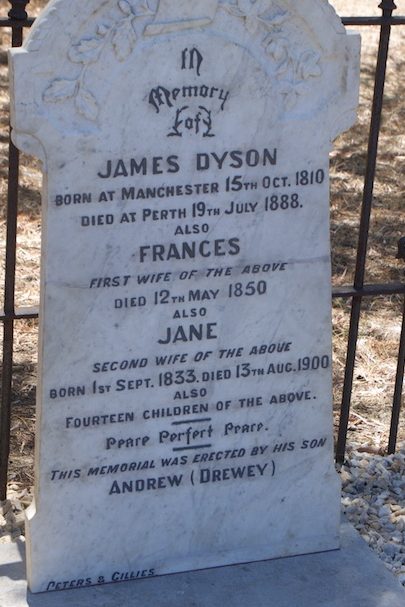
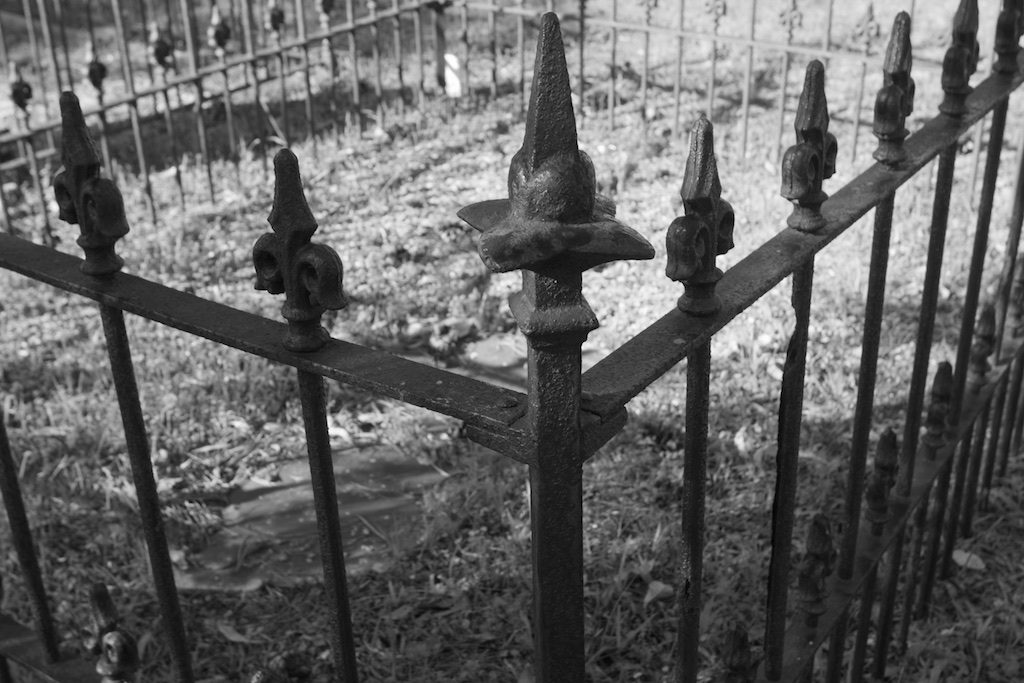
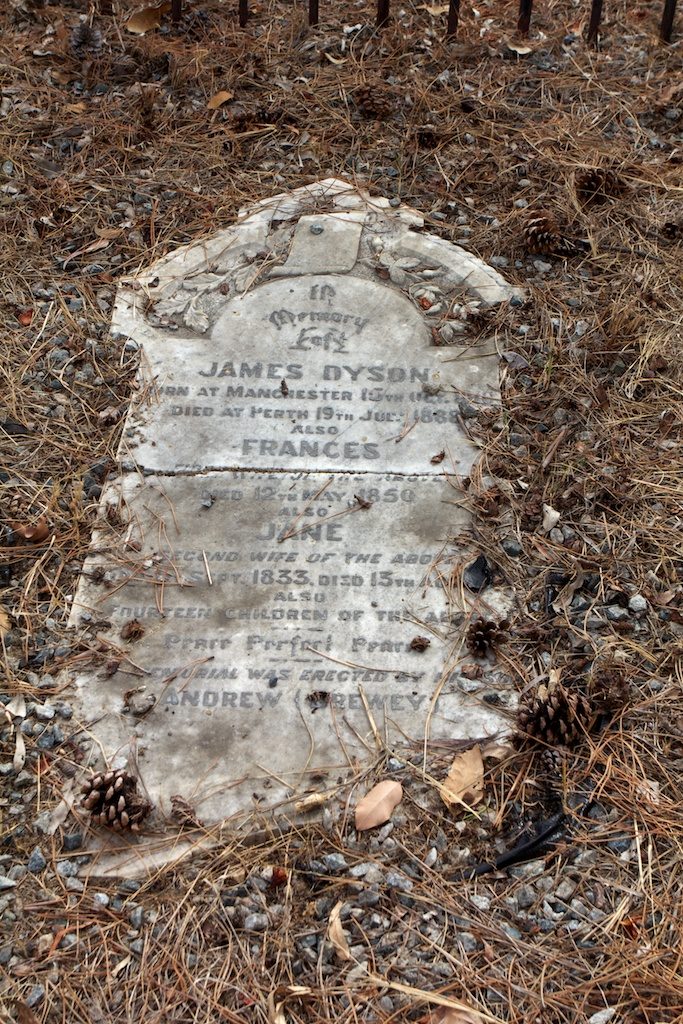
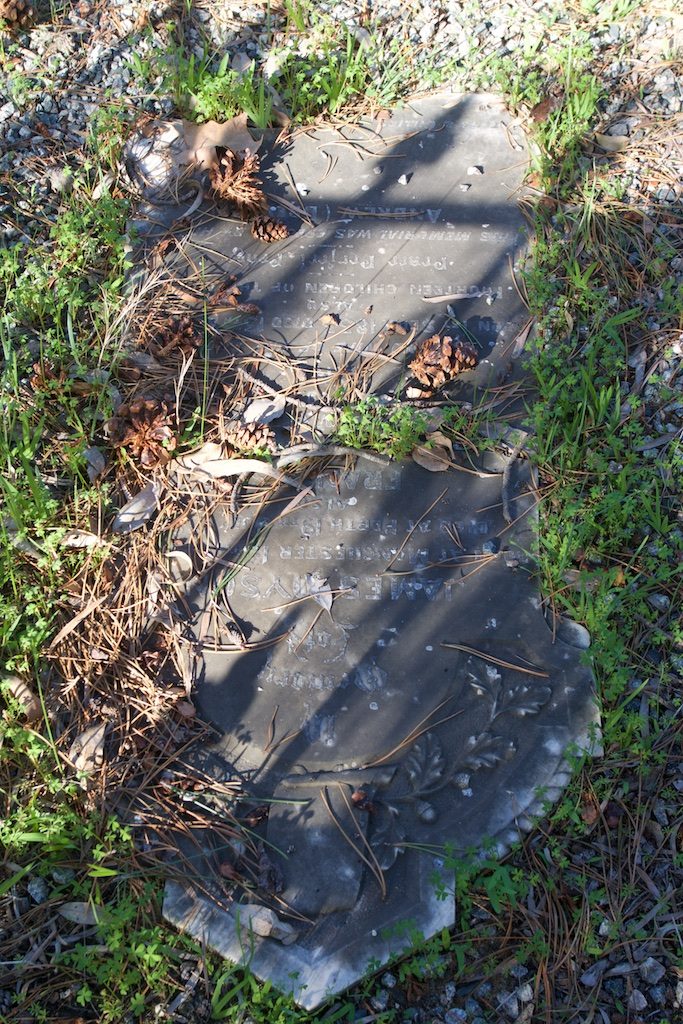
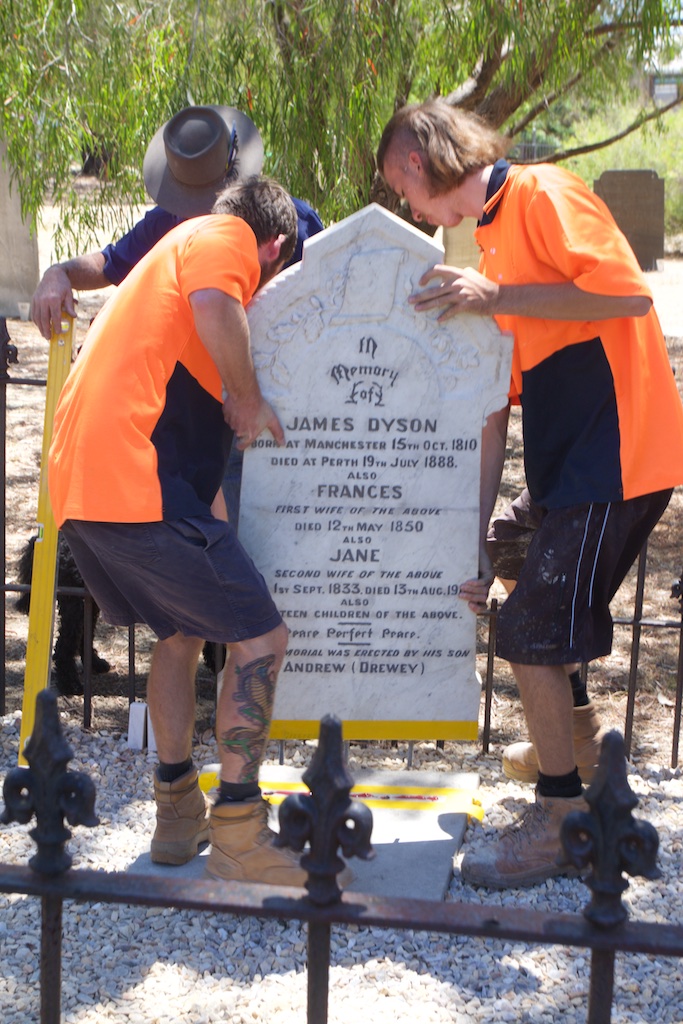
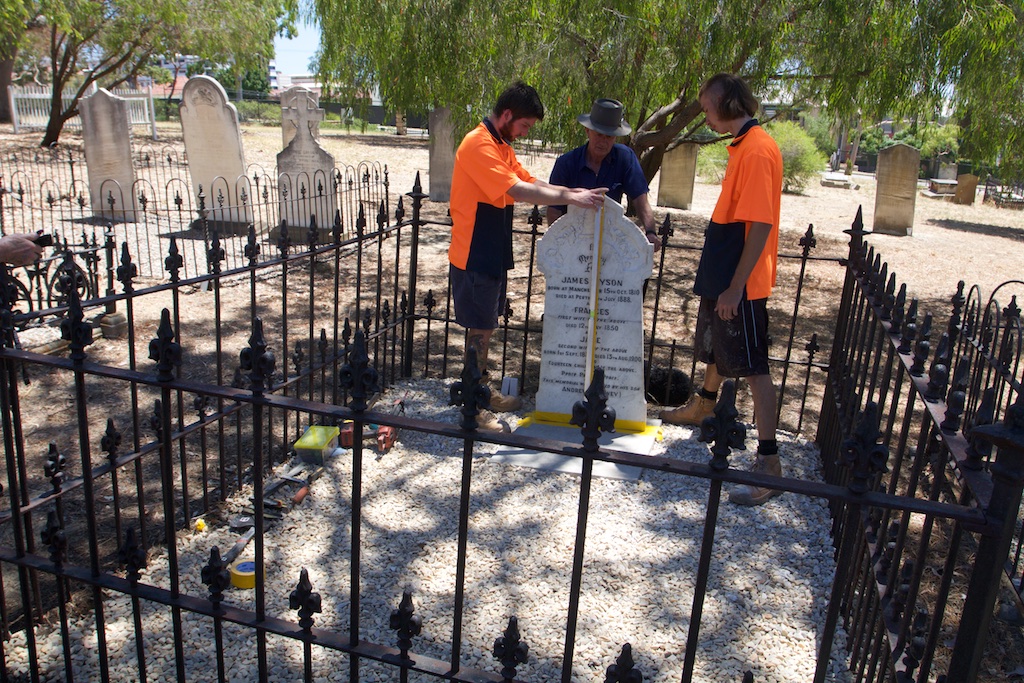
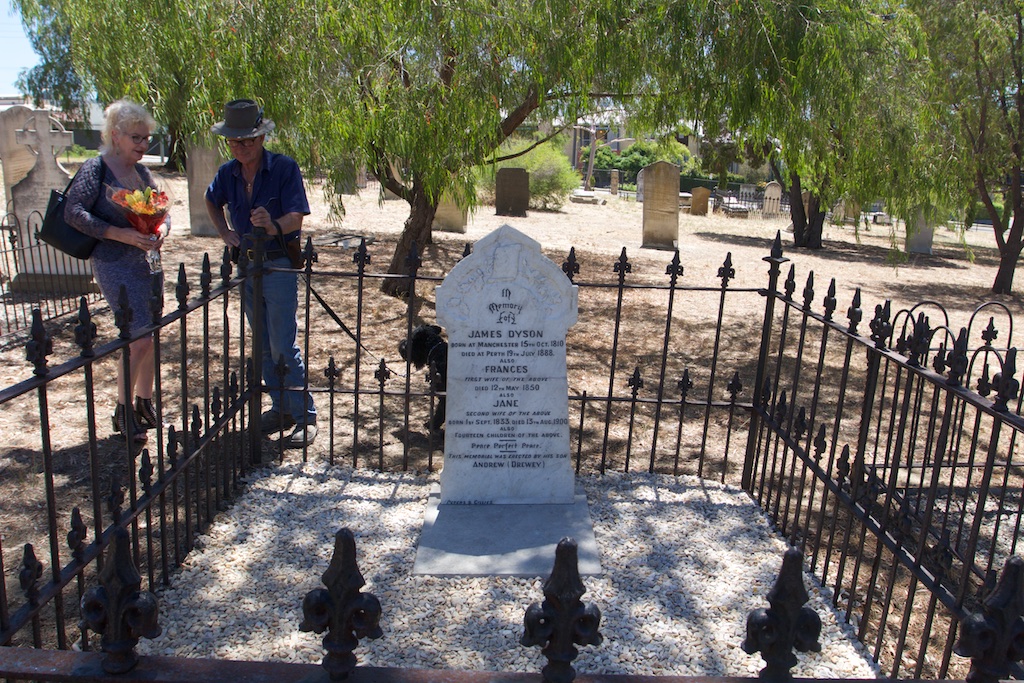
    The Dyson family grave site in East Perth Cemetery.

    This is a 2022 sequel (of sorts) to the article On Cemetery Hill posted June 2018

    Cemetery Hill in East Perth was the home of numerous discrete burial grounds for the occupants of the Perth settlement from the time it was set aside for that purpose in 1829 until its closure to fresh burials in 1916. Each of the grounds were — in theory — managed by various Christian religious sects or the representatives of certain ethnic minorities. In practice — who buried who/what/when was a free-for-all.

    By the last decade of the nineteenth century — when the population of the city was suddenly swollen by those arriving on the coat-tails of the gold seekers, the rules of supply and demand ensured the profession of funeral director suddenly became an attractive one. Those best in a position to provide this unavoidable service were coach makers, wheelwrights, and those in associated trades. Not only had they the ready-to-go transport up the sandy road to Cemetery Hill, they could knock up the the coffins as well.

    The Daily News, Friday 18 March 1892 p 2

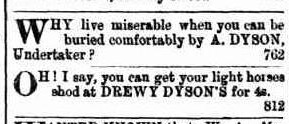
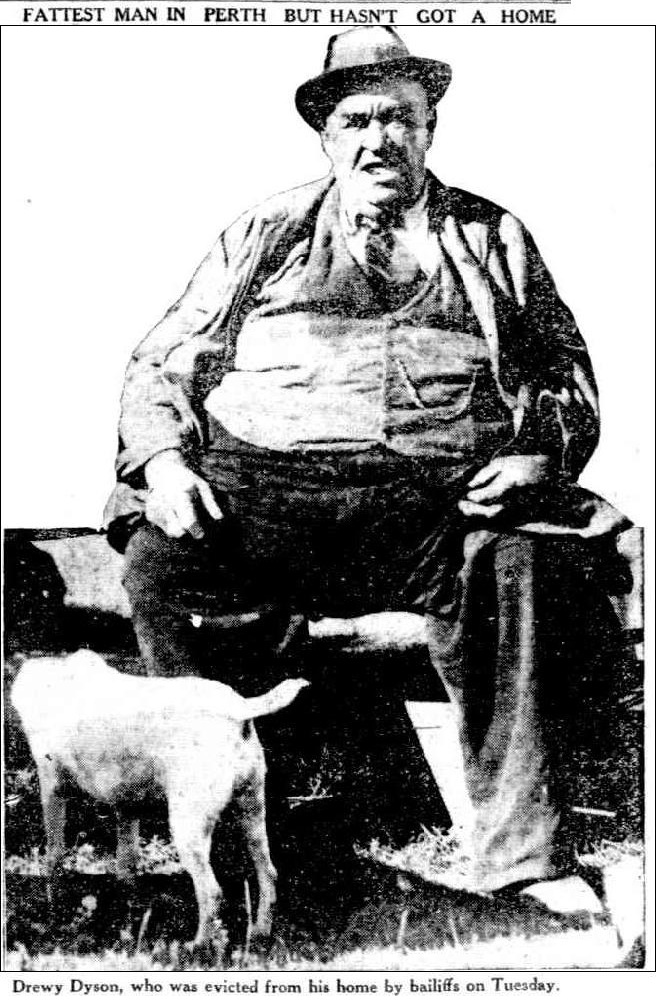
    One such entrepreneur was Andrew “Drewy” Dyson, some time blacksmith, livery proprietor and coach builder. He would bury anyone, any denomination, any time,.. all for just £5. By the end of the boom he was broke…

    All joking aside, by 1900, after Mrs Jane Dyson — Drewy’s mother, and the last verified family member of the Dyson family buried in East Perth — died, Drewy was verifiably down on his luck. The debts were mounting. His mourning carriage and hearse were offered for sale early in 1899, so it is a fair assumption he was no longer in the funeral trade from that time.

    PERTH LOCAL COURT.
    THURSDAY, NOVEMBER 16.
    (Before Mr. J. Cowan, P.M.)
    […]
    APPLICATIONS, ETC.—W.A. Produce Co. v. A. Dyson, motion for committal for non-compliance of judgment order, £2 instalments due ; order to issue for seven days’ imprisonment, warrant to lie for a fortnight.”

    The West Australian, 17 November 1899 p6

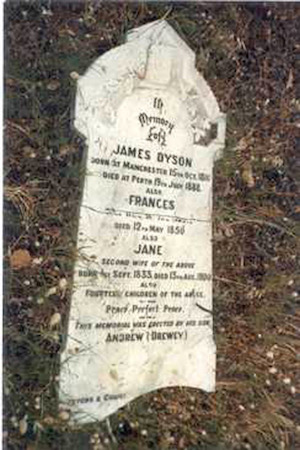
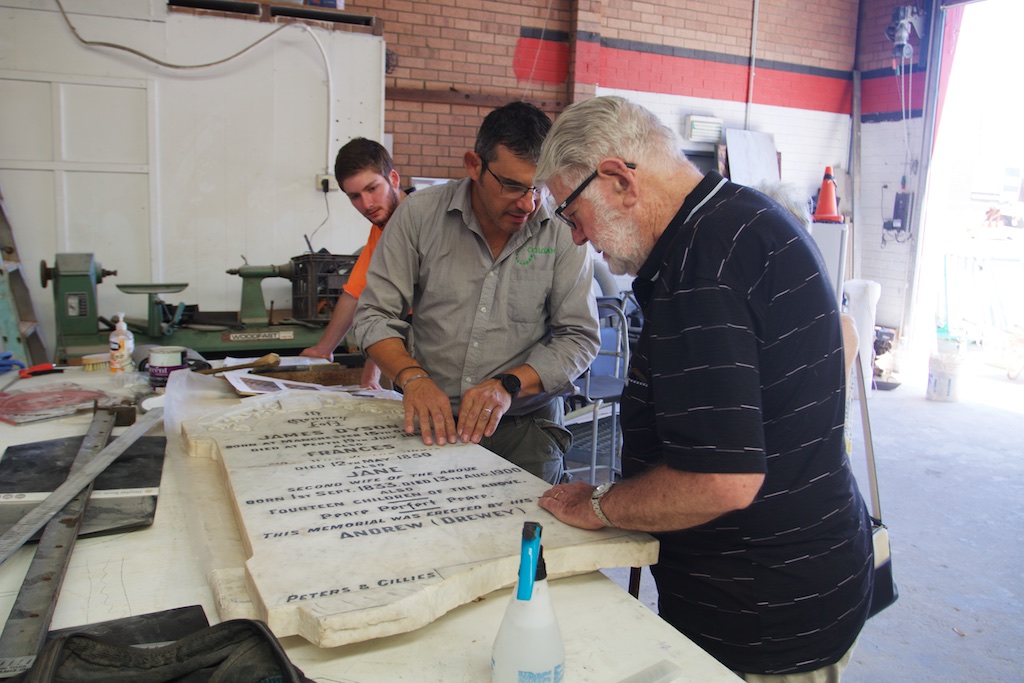
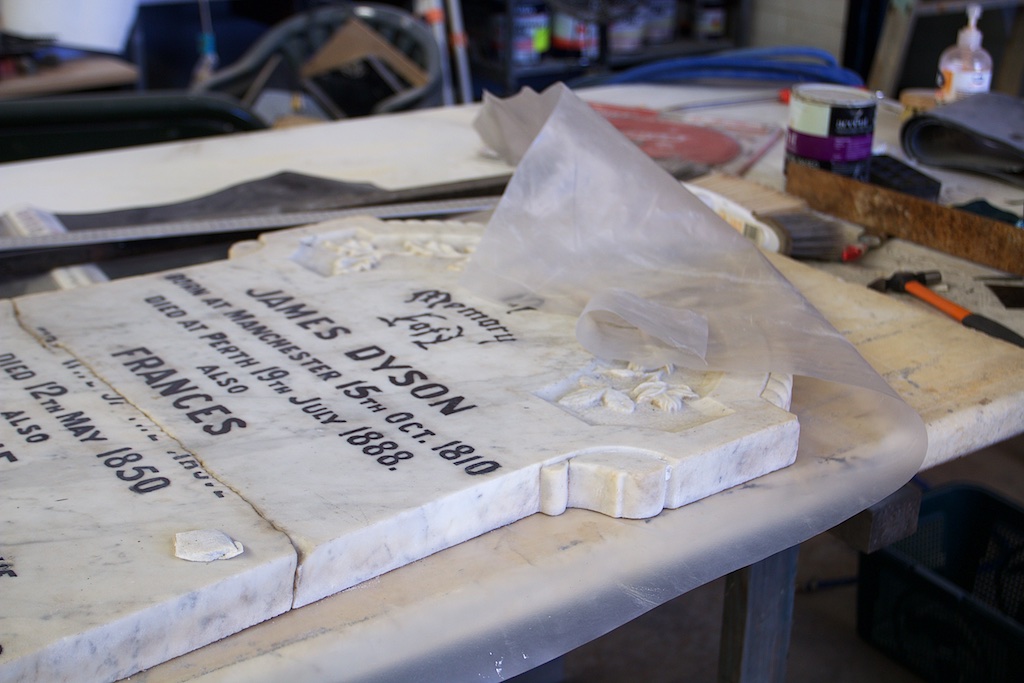
    So how did he afford the headstone that commemorated the existence of his mother, father, and his father’s first wife? It was he who commissioned and paid for this monument, and we know this, because it says so on the inscription, and if he had not paid monumental masons Peters and Gillies for their work, the court action to recover the debt would have been in all the papers. Everything else Drewy Dyson ever said or did was reported in ridiculous detail at the time. E.g.:

    Drewey Dyson, of the peculiar physical proportions, caused a commotion in Mounts’ Bay-road the other afternoon. He was swimming his horse in the river beyond the brewery, both he and the prad being in the altogether.
    After the natatorial exercise; the horse was in better wind than the man, and when Drewey reached the bank he collapsed, all his efforts not availing him to assume the perpendicular. An alarm was given, and the brewery people, the old men from the depot, and the young people from Crawley quickly assembled to view what appeared in the dim religious light to be a stranded whale. When the case was accurately diagnosed, the blushes that illuminated the landscape of Crawley were such as have never previously been called up by the sight of any other kind of fish. Drewey gradually recovered.”

    Sunday Times (Perth, WA : 1902 – 1954) Sunday 26 March 1905 p4
    Mirror (Perth, WA : 1921 – 1956), 7 August 1926, p. 1

    Andrew “Drewy” Dyson died on 17 April 1927. He was buried in the City’s replacement burial ground of Karrakatta Cemetery. If he was broke in 1900, he was positively destitute in 1927 — so it is probable he never had a headstone for himself. Even if he did, it would not have survived. This new official cemetery was a place of memory with a policy of “renewal” whereby the plots are respectfully bulldozed and headstones dumped in a skip (or at the very least stripped of any context) a few short years after interment. Thus it is a historical irony that it it is still possible to visit Drewy’s exact resting place. The name on the current headstone is not of he, but of his son, and that is the sole reason it survives.

    Question: “Who do you have to try to kill to get your grave preserved in Karrakatta Cemetery?” Answer: “Yes”

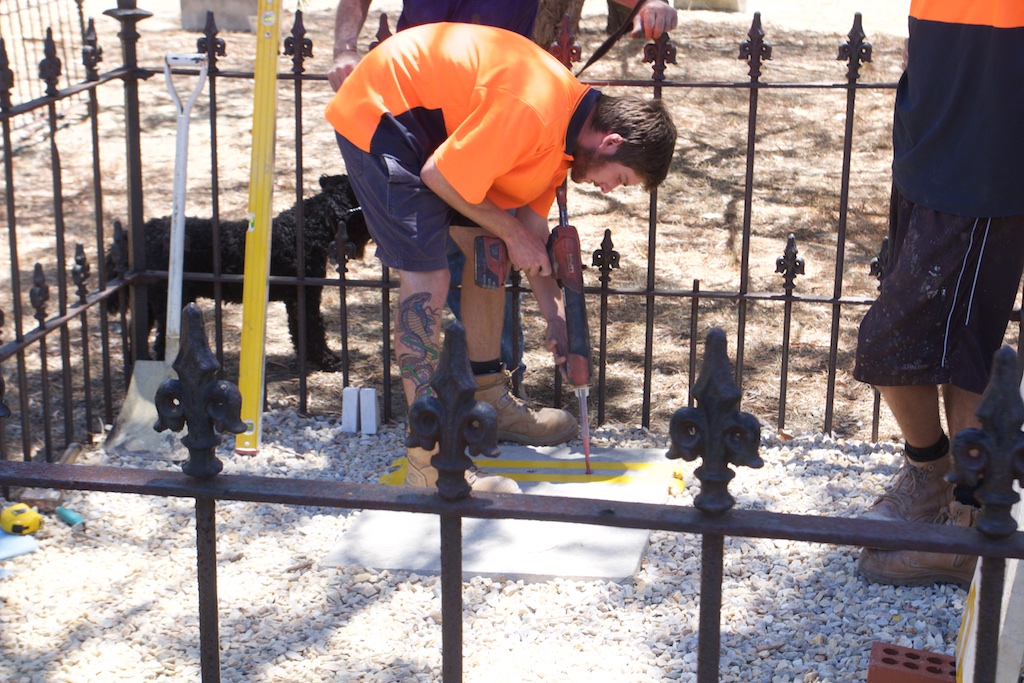
    Some questions that could have been easily answered 100 years ago will, by the sheer entropy of time, be unanswerable today — Assuming that is, if there’s even enough information left to formulate a question. The quest to preserve one of the few tangible reminders of the Dyson family’s past in Western Australia would prove to be an opportunity not only to ask, but to answer some of these questions about the family grave site in East Perth. Not the the least of these questions has to be: How did it survive at all?

    In the intervening 100 years or so since the East Perth Cemeteries were closed for new burials, responsibility for the maintenance of the monuments in the old burial grounds was vested in no-one. Bulldozers flattened large chunks of the site and any headstones found damaged were wilfully torn down and ground into rubble during the course of the twentieth century.

    The degradation continued until the National Trust of Western Australia were finally permitted to assume control of what was left by the year 1994. Hundreds — if not thousands — of grave stones had by then been lost, and mediocre record keeping back when it was an active burial ground will ensure that many who lie in the entities of what is now collectively known as the East Perth Cemeteries will lie in anonymity for ever more.

    Nevertheless, the Dyson family plot is one of the rare survivors. Maybe it is mostly intact because there was no one in authority to order its destruction.

    Plot 75

    East Perth Cemeteries Plot 75 (in 2018)

    During the second decade of the twenty-first century, a number of descendents of those who lay in what had once been the Wesleyan Cemetery in East Perth — independently came to the realisation that one of the few physical reminders that their ancestors walked the earth was dissolving back into the earth at an accelerating pace. Photographs of the headstone taken over the past forty years illustrated a worrying trend.

    1982
    2013
    2018

    The National Trust WA’s website tells the story of what happened next:

    Dyson grave restoration at East Perth Cemeteries

    Progress in 2020

    This photo courtesy of the National Trust WA 2021.

    Postscript

    A profound thanks to Kerri Rose for her generous financial support without which this project could never have been completed.