Tag: convict

One who has been “convicted” of a crime, but in this context, one who had been convicted of a crime and then sent to the Colonies of Australia to serve out their sentence. To have a convict in the family is either the deepest shame or a badge of honour.

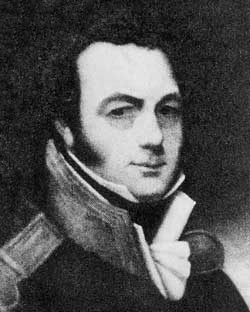
  • Bio: Lt Pearson Foote (RN)

    Bio: Lt Pearson Foote (RN)

    At Deloraine, northern Tasmania, there is a grand Georgian-style house on the grounds of a property called Calstock. This was not built by Lieutenant Pearson Foote of the Royal Navy (1792-1871), but by a subsequent owner of the estate.

    Today, the building that was not his home is a four star hotel.

    Update: apparently it is not that any more. It got sold for an obscene amount of money..

    Apart from being an inspiration to future Libyan dictator Colonel Gaddafi, there has to be a lot more to Lt. Foote than is currently understood.

    Calstock and Harewood were the names of two properties owned by Lt Foote in the Westbury district of Van Diemen’s Land from the 1820’s to the 1840’s. Pearson (or Pierson) Foote was born in Cornwall, England on 5 April 1798. He was the fifth of eight children born to John Pierson Foote and Mary Thorn at Harewood House by the village of Calstock.

    His father dropped dead in June 1809. Pierson was his third son, so was never going to inherit the family estate even if he was old enough to at the time. Instead he joined the Royal Navy and was enrolled as an officer on 1 October 1824. Lt. Pearson Foote, RN, never seems to have been given command of a ship.

    Instead, Mr. P. Foote sailed in cabin class on the barque Nancy (H. Pryce, RN, commander) from England on 11 July 1829, reaching Van Diemen’s Land some time in March 1830. Some months after that he was granted land in the Westbury district in the north of the island and by August at least, had been granted the first of the assigned convicts he would use to develop his property.

    On 23 November 1830 he married Susan Parker, daughter of a neighbour on the Norfolk Plains. A record of this marriage was kept by the Admiralty against any potential claims for a future Royal Navy widow’s pension.

    Foote’s first property was on the Dairy Plains, which he named Harewood. He put Harewood up for sale after he acquired land at Deloraine.
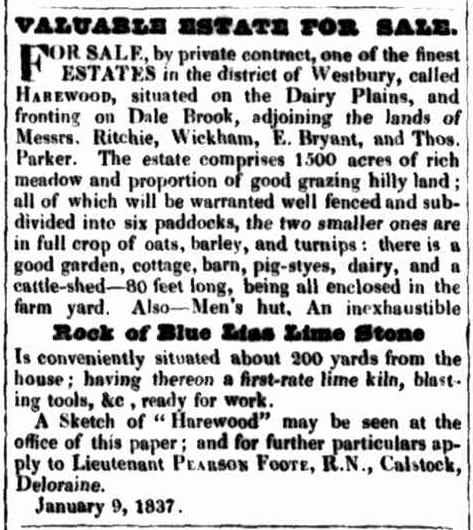
    Launceston Advertiser (Tas. : 1829 – 1846), 16 February 1837, p. 1

    Being one of the Gentry, and thus eligible to use the epithet “Esquire” after his name, he was part of such worthy mutual admiration societies as the “Cornwall Agricultural Association” (Not the English one) and the local Horticultural Society. As a matter of course, he was appointed a Justice of the Peace and a magistrate for his region.

    His Excellency and suite then proceeded to dinner to the house of Lieut. Foote, R.N. at Deloraine, where that gentleman has done so much to improve his estate by clearing and breaking up the soil, building, &c.

    The Hobart Town Courier (Tas. : 1827 – 1839) 25 March 1836 page 4

    During March 1836 he hosted Lt-Governor Arthur himself at his residence at Deloraine. Afterward he attached his name to some grovelling in case his nose wasn’t brown enough.

    SIR,—We, the undersigned residents in the Northern Division of the Island, desire to express to your Excellency the satisfaction we have experienced at the visit you have made to its capital, and while we regret that your public avocations forbid a more prolonged one, we look forward to an early renewal of it, when we hope to have an opportunity afforded us of evincing our feeling towards yourself and Mrs. Arthur, by some public demonstration of respect.
    We have the honor to be,
    Sir,
    Your most obedient humble servants,
    Tho. Archer, M. L. C. J. D. Toosey, V.D.L. Est.
    W. P. Weston J. P. R. Vincent Legge, J. P.
    Wm. Archer J. P. M. Franks
    G. Yeoland J.P. Wm. Seccombe, J.P.
    W. Paton J.P. Henry Jennings
    Alfred Wm. Horne J.P. Pearson Foote, J.P.

    The Hobart Town Courier (Tas. : 1827 – 1839), 25 March, p. 4

    In late October 1838, he was assigned a convict named James Dyson to his service. In late November he sent the wretched man to Captain Moriarty to deal with for idleness and neglect of duty. Moriarty sentenced him to six months hard labour with the Snake Banks road gang before he was returned to Foote’s service about May 1839. Dyson was sent back to the depôt at Launceston by October. Foote may not have wanted him back.
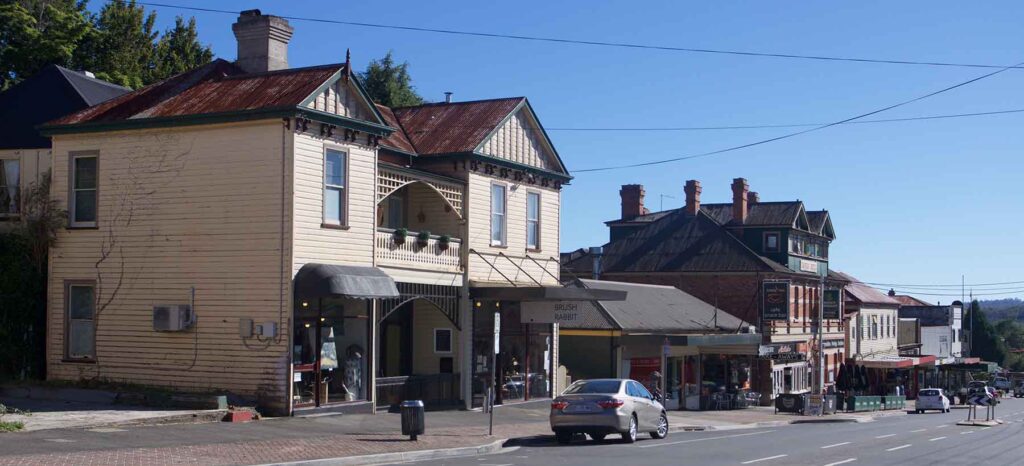
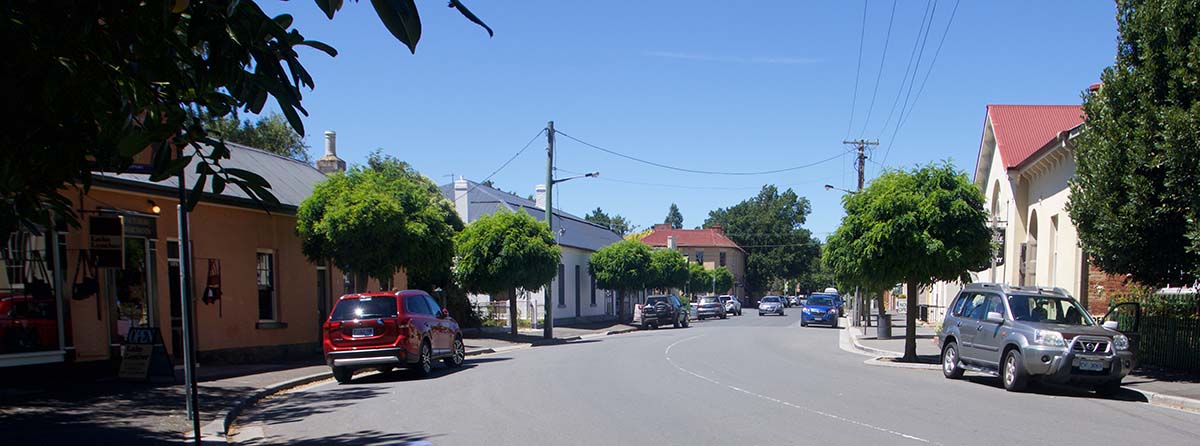
    The town of Deloraine, Tasmania, in 2017 before I knew anything about the place.

    Over half a century ago Deloraine could boast of some distinguished naval and military men among the first land owners of the district for, in addition to Captain Moriarty at Dunorlan, there was that fine type of an English gentleman, Lieutenant Pearson Foote, R.N., the first owner of Calstock and Harwood, both of which properties he named after the family estates of the Footes in Devonshire, England, opposite Cote Hele, the seat of the Earl of Mount Edgecombe, a branch of which distinguished family our old and respected resident, Mr. J. L. Edgecombe claims to be.
    […][Foote] is spoken of by those who had the pleasure of his acquaintance as a most hospitable, if somewhat eccentric gentleman, who used to have a flag pole near where Calstock house now stands, the arranging and hoisting of flags on which used to occupy a considerable portion of his time.

    Western Tiers (Tas. : 1980 – 2004) 20 May 1983: 27. Web. 18 Jul 2022

    It’s important to state that Lt Pearson Foote was stark staring raving mad. If he was anyone other than a ‘gentleman’ he would have been locked up.
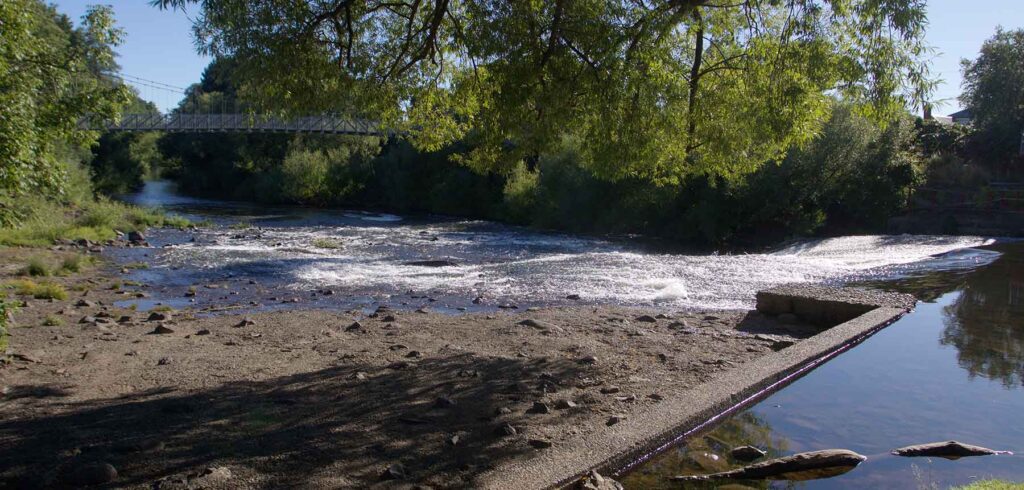
    Deloraine in 2017. I visited the town before I knew there was a connection there I needed to investigate.

    About the time a certain convict was due to be returned to Foote’s service, a bushranger gang swept through the Deloraine district. People were robbed. A man was murdered. The local constable claimed it never happened and blamed his constituents for getting into a panic, including one — unnamed — gentleman. —

    […] That no particular alarm exists among the settlers, is evident from the circumstances of one of them who lives beyond Deloraine having refused the protection of a party of constables, who were patrolling for the purpose of quieting the fears he might have entertained from the reports before alluded to.
    Another gentleman in the neighbourhood whose fears have been much excited, took the best precaution he could to protect his own person by surrounding himself with a party of young and amiable females, by far the most desirable and agreeable body guard he could have selected.
    I am, Sir,
    Your obedient servant,
    THOMAS JEFFCOTT,
    District Constable.
    Westbury. V. D. Land,
    April 23, 1839.

    The Cornwall Chronicle (Launceston, Tas. : 1835 – 1880), 27 April 1839, p. 2

    Jeffcott’s detractors (of whom there were many) were not so coy in their responses…

    … We applaud the gentleman’s courage, certainly, and have no hesitation in declaring it to be our opinion, that any MAN cloaking his own person from injury inside a barrier made of females, deserves immortalizing ; and we propose that an address be at once “got up,” declaratory of the gentleman’s heroism, and be entrusted to the District Constable for signatures, which may easily be procured amongst the chain-gangs, shingle-splitters and sawyers in the bush, provided always that the canvasser is authorized to promise tickets-of-leave and other sorts of indulgences.

    The Cornwall Chronicle (Launceston, Tas. : 1835 – 1880), 27 April, p. 2

    Finally, someone named names…

    … I cannot answer with regard to Lieutenant Foote’s being surrounded by a guard of “young and amiable females,” but I rather imagine they existed more in Mr. Jeffcot’s fanciful ideas, or perchance he was commencing to dream when he penned this sentence, However, it is now the ungracious task of Lieutenant Foote, as a magistrate, as a husband, and as a man, to come boldly forward and clear his character of that blemish which has been cut upon it (I am sure most unwittingly) by the foolish correspondent of the Launceston Advertiser. — I remain, dear Mr. Editor, yours,
    obediently,
    SUBSCRIBER
    Westbury, May 1.

    The Cornwall Chronicle (Launceston, Tas. : 1835 – 1880) 4 May 1839, p. 3

    Lt Foote sold up his properties in VDL during the 1840’s, moved to Victoria, deserted his wife and died in Melbourne in 1871.

  • Bio: Henry Nickolls

    Bio: Henry Nickolls

    The Master of Corra Linn

    On, or just before 7 December 1837, Henry Nickolls, master of the Corra Linn estate on the Patterson Plains, was punched in the head by a newly-assigned employee and warned by him that “there was more where that came from”. Which is something of an inversion of the typical master / servant relationship.

    This is only one of many possible interpretations that the historical record allows… but it’s how I’d like to imagine the confrontation between Nickolls and convict James Dyson played out. It makes for a more lurid opening line than “Assaulting and Threatening Violence to his Master” which is as close to an accurate translation as can be gleaned from James Dyson’s surviving Convict conduct record generated for his time in Van Diemen’s Land.

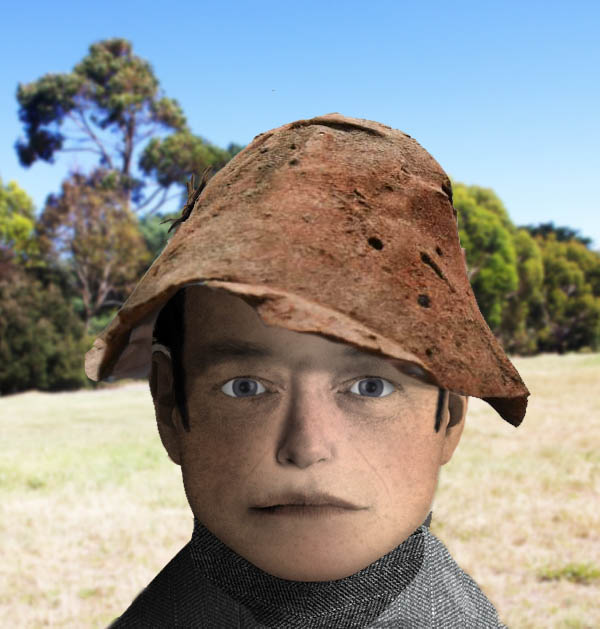
    Dyson was immediately sentenced by the police magistrate at Evandale to six months hard labour on the roads at the Kings’ Meadows Convict Station (where Dyson most absolutely positively wore one very stylish hat).

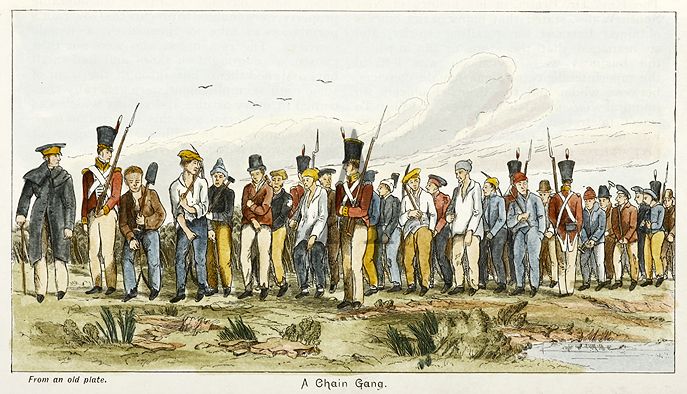
    A Hobart Chain Gang
    A generic Convict Chain Gang. Accuracy not vouched for.

    But who was Henry Nickolls, about whom Dyson made a judgement call that it was better to spend the six months in a road gang than have to endure him as a master any more than three days?

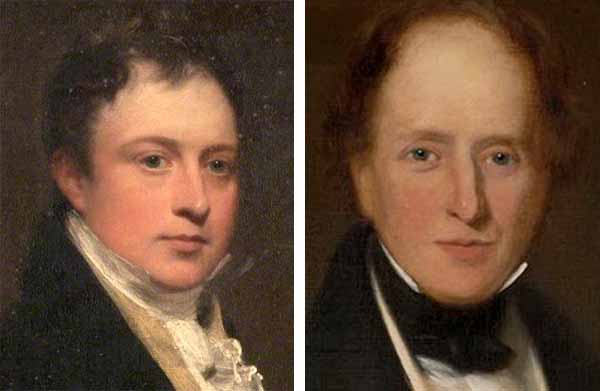
    Henry Nickolls, Esq.

    Was born in Little Stukely, Huntingdonshire (now part of Cambridgeshire) towards the end of the year 1793. Aged 33, he married 29 year old Charlotte Wilkins on 23 August 1826. The newly-weds sailed from London to Van Diemen’s Land on the ship Admiral Cockburn the following month, arriving in Hobart on 14 February 1827.

    He was sent out there by two gentleman to manage and farm on their behalf, the extensive properties they had acquired in the Colony. Their names were…

    JFC!

    Sir John Owen (Bart) & Edward Lord

    Wikipedia page for Sir John Owen (Bart)

    Australian Dictionary of Biography entry for Edward Lord

    These “gentlemen” — a politician and soldier respectively, were brothers. Sir John changed his name so he could inherit a prosperous estate in Pembrokeshire with a baronetcy attached. This estate in Wales (the old one, not the New South one) was named Orielton. He also inherited a seat in parliament as part of the deal.

    Edward Lord had once been a soldier of the officer class. He had been kicking around Van Diemen’s Land since the time of the original British incursion. He had even been an acting-Governor briefly back in 1810. His most notable act in office was burning all the incriminating documents from his predecessor’s reign. He was not popular with his peers, but having a politician brother who was now a minor aristocrat meant both of them had wangled some of the choicest land grants the Colony had to offer.

    Orielton in Van Diemen’s land, near the town of Sorrell, seems to have been run productively by their agent Nickolls. Nickoll’s speciality was cattle and horse breeding. The issues that eventually arose between he and his employers might have been due to one of his masters needing more and more money to fund an expensive political habit. (Owen was gobsmacked that his constituents keep fielding alternate candidates against him at election time just because he didn’t pretend to represent their interests). Richard Lord on the other hand, was probably just being a ruthless arsehole.

    Whether Nickolls was replaced voluntarily or otherwise as agent for Owen and Lord is not clear. However from 1 September 1831, it was Alexander Goldie now in charge at Orielton and the brother’s other interests, with the mandate to wring as much cash out of the cows for his employers as possible.

    Alexander Goldie has his own Australian Biographical Dictionary entry.

    Nickolls was also of the gentlemanly class. While still in the employ of Sir John Owen (Bart), he made successful application for land grants on his own account. His status was confirmed by an appointment to be a Justice of the Peace by the Lieutenant Governor very soon after his arrival — A mark of some esteem from a soldier for someone who only obvious connection with soldiering was with someone no-one else trusted as far as they could throw him.

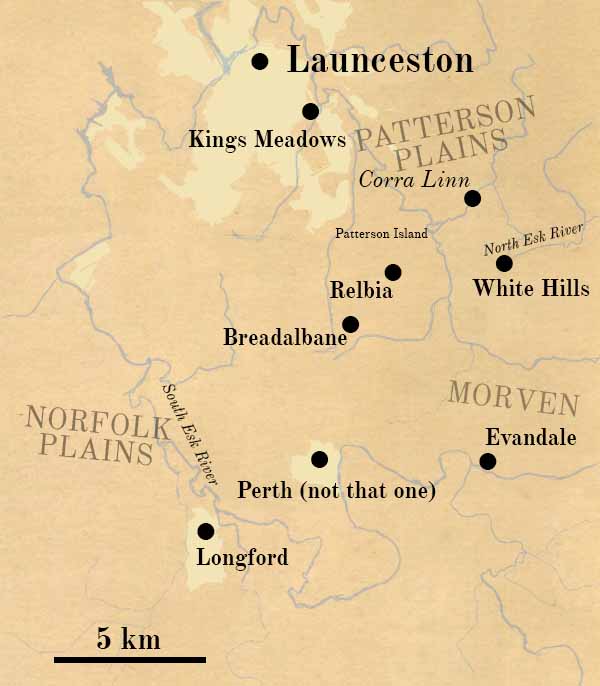
    Nickoll’s initial land grant in 1828 was for 2000 acres in the Brighton district. He next applied for 2500 acres more in the Morven District, close to the South Esk River, during 1833. “Corra Linn” is located by the North Esk in that district, so if this is not a typographical error, and his application really was approved — the latter may be the land near the town of Longford where he finally resided.

    His first attempt at free enterprise, after separating from Owen and Lord, was winning a tender to provide a mail service between Hobart Town and Launceston. — Entirely on horse back. He purchased six used saddles from the government for the purpose. But the gloomy prediction of one of the Launceston newspapers proved prescient —

    We have already stated that Mr. Nichols has obtained the contract for the conveyance of the mail throughout the Island. It is taken at £990, ferries free, and commences on the 2nd June. We wish him success. Individuals who by any means benefit the community are justly entitled to their earnings, but we fear that the present most infamous state of the roads, and want of bridges, are more likely to ruin a contractor than to put money in his pocket. The present system of colonial government is altogether bad, and until the desired change takes place, but little good may be expected by the community.”

    The Independent (Launceston, Tas. : 1831 – 1835) 12 May 1832 page 3

    We can probably assume that Henry Nickolls lost his deposit. To make ends meet, he was compelled to seek employment from the government.

    His appointment as commandant of an institution on Flinders Island lasted between September 1834 and November 1835. He was not gaoler for any who were formal prisoners of the British crown, yet none of the 134 or so inhabitants under his management were free to leave.

    They included as many of the First Nations peoples as could be captured alive after a genocidal war of conquest waged against them. It was never described as such in the terminology of the day, but Henry Nickolls was ruler of one of the world’s first concentration camps. By the time the Wybalenna Aboriginal Establishment was abandoned in 1847, only 47 Palawa were still alive.

    He turned down further government employment as a manager on the Launceston docks. When he also appeared to reject an official appointment at Circular Head with the VDL Company (where his nemesis Alexander Goldie was once employed), that government was through with him.

    He attempted to pressure the administration for more employment by name dropping all the worthies he was writing to back in Britain to lobby on his behalf. Being written to sternly by Lord Fitzwilliam and the Bishop of Chichester was not enough to sway the Colonial Secretary. The regretful notation to his letter of pleading reads-

    I wish I could do something for Henry Nickolls but alas I cannot.

    Instead, one year later (or by January 1837 at the latest), Henry Nickolls was in residence at Corra Linn.

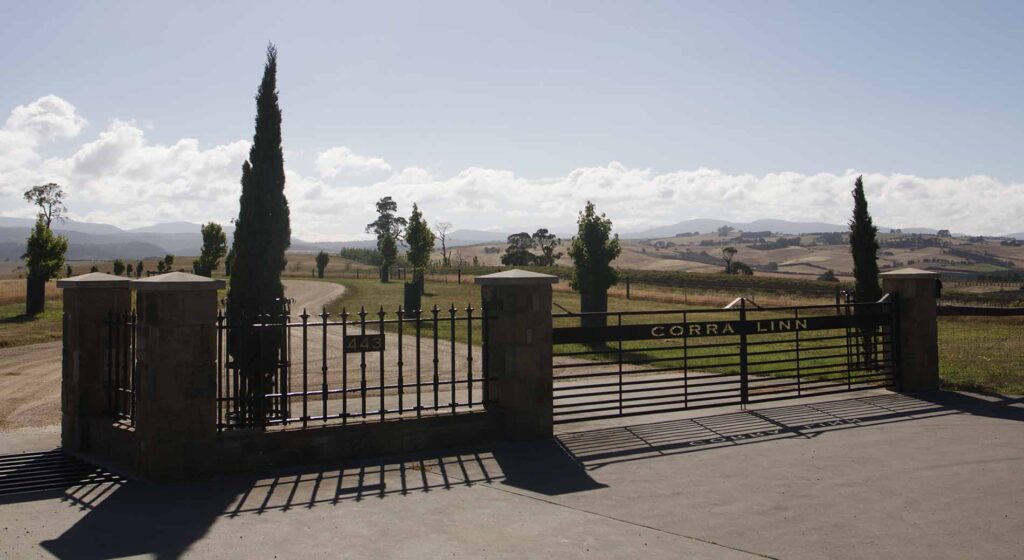
    Gateway to the Corra Linn Estate off Relbia Road in 2017
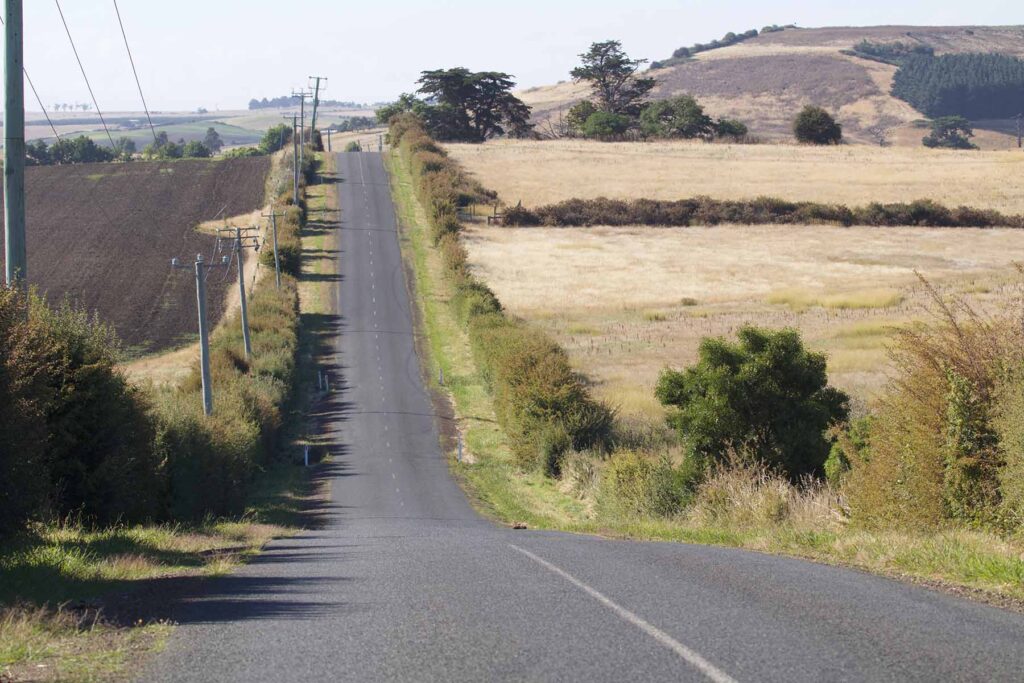
    The road to Corra Linn 2017

    Corra Linn / Corra Lynn

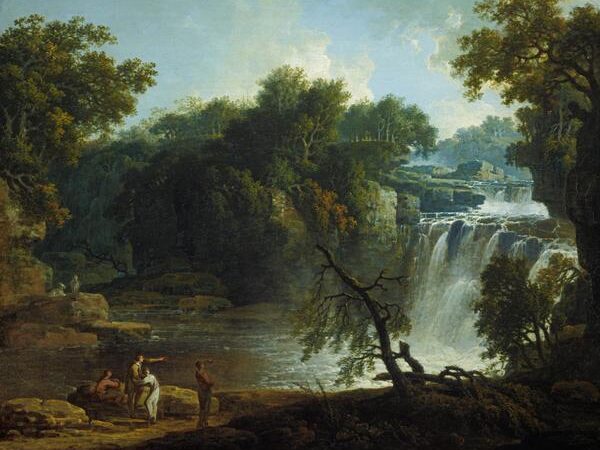
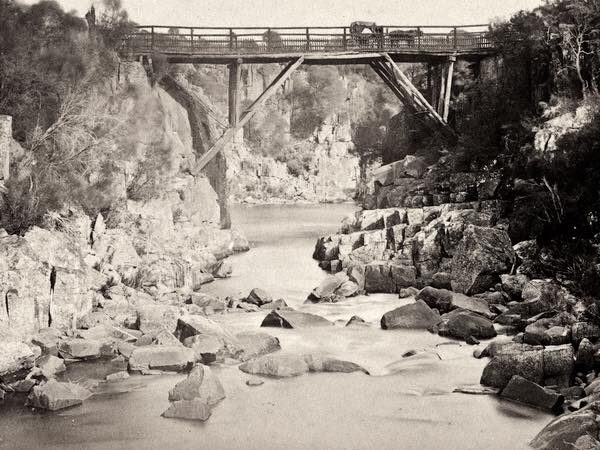
    The land around the North Esk river known as Patterson Plains was the location of government stockyards acquired by a Lieutenant David Rose after he retired from the army in 1814. A waterfall and gorge on the North Esk river adjacent to the property resembled (somewhat) one from his native Scotland.

    Corra Linn in VDL. Very pretty, but not seeing the resemblance

    Lt. Rose dropped dead in 1826, “hastened by a wound from a dog bite” according to his Australian Biographical Dictionary entry.

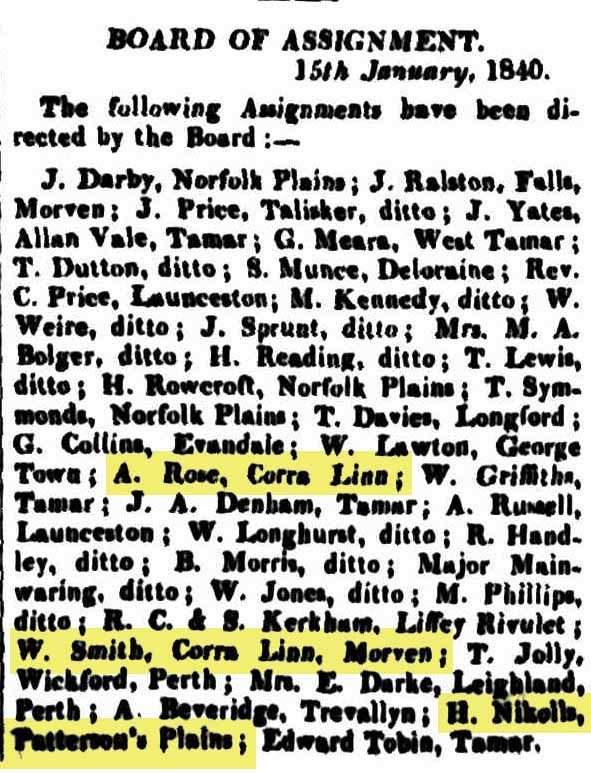
    The heir to his estate seems have been a nephew, Alexander Rose. It must have been he, a decade later, who leased some of that land to Nickolls. The Rose family retained other portions of the inheritance to work themselves, so Henry Nickolls next did his bit for neighbourly relations by taking Alexander to court over a barn that he commissioned him to complete which did not live up to his gentlemanly expectations.

    … At the instigation of Mr. Home, the witness, Gardiner, was asked how wide the spaces were between the logs, to which he answered that towards the ground they were not wider than to admit a man’s arm, but they encreased towards the top.
    Mr. Home — Cannot pigs get in ?
    Witness— Not unless they were to FLY !

    “SUPREME COURT—CIVIL SIDE.” The Cornwall Chronicle (Launceston, Tas. : 1835 – 1880) 13 January 1838 page 1
    The Cornwall Chronicle (Launceston, Tas. : 1835 – 1880) 25 January 1840 page 4

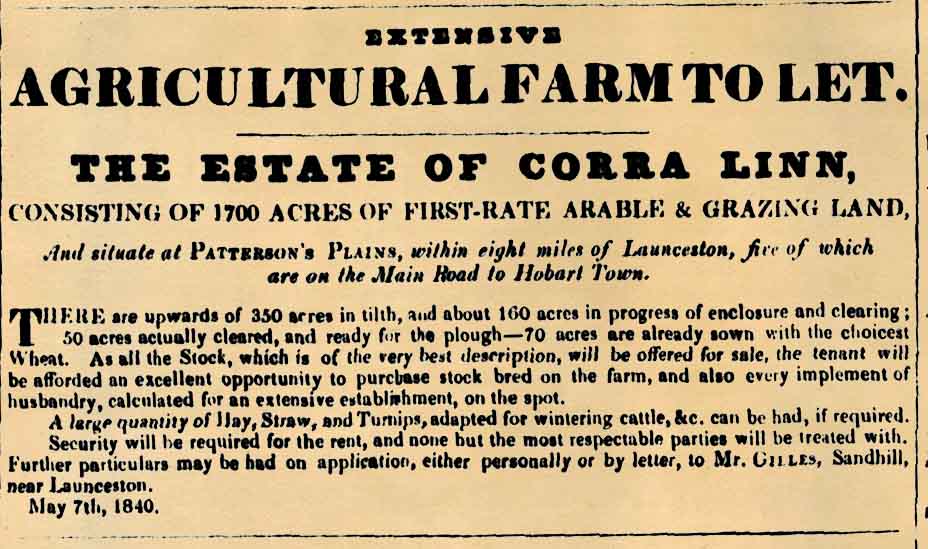
    Henry Nickolls was out of Corra Linn by January 1840, but was still a presence in the district. Then Alexander Rose and his family departed Van Diemen’s Land for a few years and the next time Corra Linn was up for rent, a Mr Gilles of Sandhill was managing the deal.

    Launceston Advertiser (Tas. : 1829 – 1846)Thu 7 May 1840 Page 1
    Patterson Plains 2017

    There is ‘nary a peep out of Henry Nickolls Esquire for some time until:—

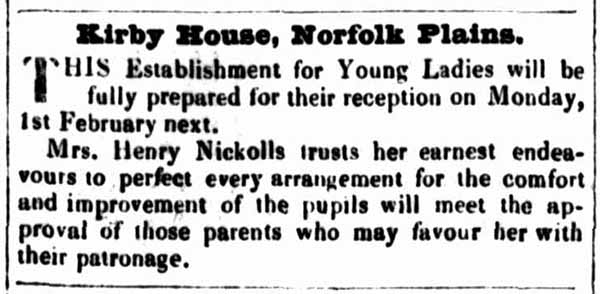
    Kirby House, Norfolk Plains.
THIS Establishment for Young Ladies will be fully prepared for their reception on Monday, 1st February next. '
Mrs. Henry Nickolls trusts her earnest endeavours to perfect every arrangement for the comfort and improvement of the pupils will meet the approval of those parents who may favour her with their patronage.
    Launceston Advertiser (Tas. : 1829 – 1846) 27 January 1842 page 2

    When the wife of a gentleman goes into business on her own account during this era, there are really only two ways of interpreting the situation. Either she has suddenly come into some wealth that her genteel husband has no access to, OR the couple’s finances have deteriorated so badly that he had to send the missus out to work to keep cigars and cognac on the table.

    Henry Nickolls, Esquire, now of the town of Longford in Norfolk Plains district, placed himself into voluntary administration for insolvency on 18 July 1842.

    Under the Insolvency of Mr. Henry Nickols, of Norfolk Plains, and by order of John Atkinson, Esq., Assignee.
    TO BE SOLD BY PUBLIC AUCTION,
    By Mr. B. Francis,
    On the premises at Norfolk Plains, on THURSDAY and FRIDAY, the 15th and 16th September, at twelve o’clock precisely,
    TWELVE FRENCH BEDSTEADS,
    Chintz and dimity furniture
    Wool mattresses
    Feather beds and bedding
    Rosewood, loo, telescope, and dining
    tables
    Cheffioniers, sofas, couches
    Sets of chairs, plate, linen
    China, glass
    And 150 volumes of sundry books
    Fourteen capital milch cows
    Thirteen steers and heifers
    Six working bullocks
    One Hereford bull
    Two useful saddle horses
    One jaunting car
    Sets of harness, &c.
    ALSO,
    All the farming implements
    A strong bullock cart
    One horse cart
    Ploughs, harness
    Dairy utensils
    And numerous other effects.
    The auctioneer particularly calls the attention of gentlemen and others to the above furniture, the whole being of a very superior order, and nearly new. The cattle have been selected with care, and known to be first class.
    TERMS — Under £25, cash ; above that sum,
    an approved endorsed bill at 3 months.

    Launceston Examiner (Tas. : 1842 – 1899), 3 September, p. 5

    The Nickolls family lost their bedsteads but kept the house. Not much is heard from Henry Nickolls in the newspapers after that. He was presented to the Governor at a Levee held in Launceston during the year 1843. He resigned as a Justice of the Peace then, and tried his luck again with the Government for work, applying for a paid appointment in the Convict Department at Launceston. He also applied for a magistrates’ gig in his old stomping ground back in Sorrell during 1850.

    By now, the next generation of his family were emerging into public view. His son Henry Berkeley Nickolls was appointed postmaster to Bishopsbourne, a locality east of Longford in 1849.

    Henry Nickolls died at Longford 30 December 1872, aged 78.

    Nickolls seems to be both the historically correct and the preferred spelling of his family name, however, every other permutation (Nickol, Nicholls, Nichols) will appear somewhere in relation to this individual or his family. Henry and Caroline did have other children, but a distressingly large number of then died in infancy during their years at Corra Linn.

    He should not to be confused in the historical record with a Henry Nickolls, farmer of Brighton, Tasmania who died in 1885, or the convict named Henry Nickolls who arrived on the convict transport Moffatt, (but a later voyage than the one that brought James Dyson to Van Diemens’ Land!).

  • Tales of the Moffatt

    Tales of the Moffatt

    The names of all the convicts are known, and the record of one particular convict on this voyage called James Dyson reports that he was in good heath and his conduct was “good”.

    In neither of the additional accounts now uncovered, is Dyson mentioned at all. This was not unexpected. Neither narrative was ever going to mention the name of a common sailor, servant, or soldier on board ship, much less the name of convict — unless they had done something dramatic, criminal or terminal — preferably all three.

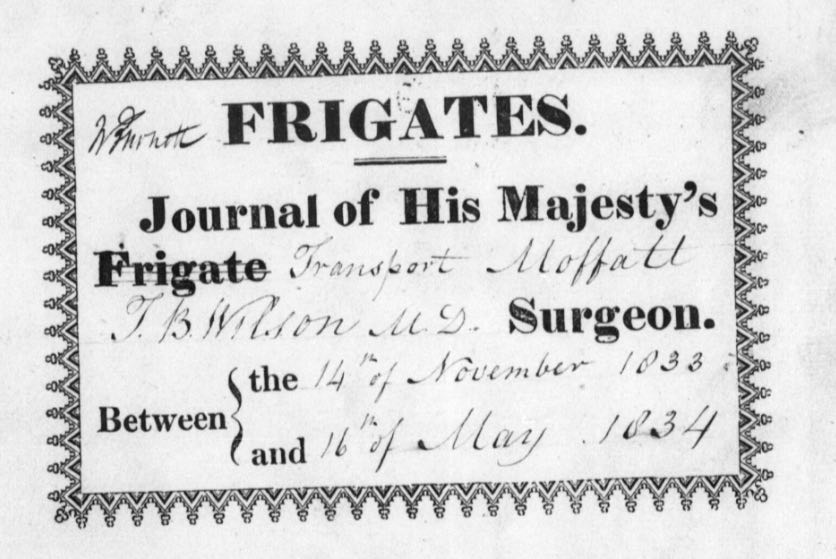
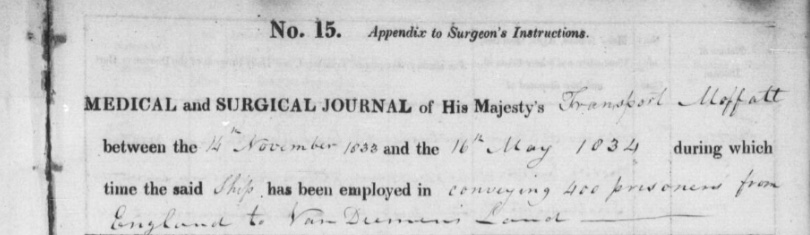
    Of these two primary sources, the first is the Medical and Surgical Journal kept by T. B. Wilson, M.D., Ship’s surgeon and Superintendent of the convicts on this voyage. Both the medical notes he took, and the summary of the entire journey for his masters back in England, he recorded in Latin — apparently for no other reason that he was a pretentious wanker. An extremely rough translation of the “General Remarks” part of this report reinforces my opinion of his character — an opinion increasingly shared by the author of the other detailed account of the voyage — G.T.W.B. Boyes.

    from Boyes’ journal

    Boyes was a bureaucrat returning to his office in VDL. Apparently he had known Wilson well when they had last been in the Colony together and had even been friends. However they may not have been confined on the same ship before, and Boyes may never have seen Wilson in action in his role as Superintendent. Boyes’ day by day journal records his increasing misgivings as to how Wilson performed his duties. At the beginning of the voyage he refers to the activity of “Wilson,” by the end, he he just referred to as “the Surgeon”.

    Boyes records events that are barely touched upon in Wilson’s journal, such as the unofficial trial conducted by the convicts when one of their number was caught stealing food — they had no faith justice would be done if they reported it to the superintendent— nor were the brawls among the convicts in the days afterwards. Six convicts did not survive the passage to Van Diemen’s Land. Not mentioned in the official account is that one of those drowned after falling overboard. Whether it was an accident, suicide, or he was given a push remains an open question. A seventh prisoner is sometimes referred to in other documents as having been “unloaded” before the voyage began. This is cute way of saying he jumped overboard, then either swam to shore or to an awaiting boat near Plymouth. Either way, he was not bound for Van Diemen’s Land.

    The sections of Boyes’ handwritten diary concerned with the voyage of the Moffatt between 22 October 1833 ’til 9 May 1834 now exist in the form of a transcription produced by me. I would reproduce it here on this site in its entirety so others need not re-invent the wheel next time, but the copyright notice on the blurry PDF scans of the diary so far made publicly available clearly states:—

    You may not develop a derivative version of the material.

    https://eprints.utas.edu.au/licence.html

    So I won’t, and you will have to refer back to the source, like I had to:—

    Boyes, George Thomas William Blamey 1835 , Diary of G.T.W.B. Boyes, Van Diemen’s Land, February 28th, 1833 – June 1st, 1835 , University of Tasmania Library Special and Rare Materials Collection, Australia.

    In regards to the Surgeon’s Journal, a transcription has been made of the five pages of the “General Remarks” that conclude the report, and these have been transcribed into Latin. A crude machine translation of this text into English is laughably bad, but enough of the gist of it is comprehensible, in that specific events referred to, can be cross referenced with Boyes’ diary entries, and that Wilson is using ridiculously grandiose language to describe both himself and his actions.

    Scans of the original journal can be seen here.

    My translation into English shall never be published while I still live. A representative paragraph is reproduced below to demonstrate WHY this shal be so:—

    Although during the course of time, some people human beings are now and again tempted by disease, still ship health first name until the twelfth of May, when Scurvy he provided himself as a companion; and at once made an ambush among the exiles. It is known that the scurvy fall into other prone diseases else; for this reason various diseases of the various diseases rushed forward; among whom diarrhea has been cured
    he rejoiced.”

    Google Translate

    However, my transcription IN LATIN of the Surgeon’s general remarks can be read below, or downloaded here (PDF). I cannot read or write Latin, but I make this available for anyone else who would like to try themselves.—

    GENERAL REMARKS

    Page 1

    Hiqus navis quadringentos exulum ab oris Anglicae pro legibus
    fractis, as Tasmanian usque deportatinuae decimo quinto kalendas
    Novembra, Chirungus Constitutus sum. Pridie Nonas qustem
    Mensis illam in fluno Tamesi prope “Deptford” jacentem conscende –
    Pridicque Idiis Militum trigintor, e legione qurm quorg es unmor exuled
    Custoditun navin conscenderment.

    Decmo quanto
    Kalendus Decembras, Omnibus ad Navxgationem long ano peratis
    iter inceptum est, et sub vesperam ejusdem dieu, juxta Navale
    apund “Woolwich”, in situ idoneo, naevim posuimus ; ibmque tridunum
    in ueupiendis contum et octogenta exulum Moratin sumns. –
    Eo facto iter fluvratile capiamus, ad portum prope Insulam
    Tolapionis (vernacule “Sheerness” appellatum) centurn et quinguajuta
    exulum ibi loci recepturn. —

    Quarto Kalendas Decembras,
    Exulibus conscensis, anchor soluta est, et veha fecimus, solliciti
    portum Damnonium, Plymouth Anglice nurcupatum, attingeie uti
    septuagenta exulum navim conscendere designate, adventurm
    nostriuan expectabantum. — attamen, ob ventis infaustis stationem
    adversnus Cantinm promontorium, “Margate” anglice dictam, non
    sine multo bidum detenti sumus. —

    Pridie Kalend. Decembris
    –procella nonmihie sedata iter factum est, ad stationem Downs
    anglica dictam, ibique loci, situ commado, ut ventus ex occidente
    perflaret, anchor os jeeimuus —

    Quarto Nones Decembras,
    qucamuis caelum minunre serenum est nee ventus secundus,
    tamin pertasi morae anchor as solvimes below venbus exparte
    adversis dedimuius, vrannguim anchor tem lentammus. Sed, tridnd
    consumpto in bane contentione cum procellis adversis, portum
    numis fistinantir ielictum repetere coacti sumus. Atque illic

    page 2

    sex dus ingratiis ad anchor as statum est.—

    Pridie Idus Decembra
    Vento pacato et ealo aspectu propiore, cequor undosum iteravimus ;
    et cursum obliguamus per fictum Anglicanum, atque post aliguot
    dies nune or as galliae nunc Angliae legents, justatique spumantubus
    equries undis, Vindelim attiginus ; yinsque portu potiri strenui
    nitebumur ; sed non comotes voti, turbine inimica, vi magna saevunte.
    Quin der causir et non potentes cum mari irato dintinus certare, utio
    Dravigamus ad sepugium petemdum in stationem, inter insulam
    Victim et Hautoniam sitam, Nomine Spithead longi latique Notam ;
    im quam brevi, belis plenis, deferimur.—

    Octavo Kalendar Januarius.
    Nucti ventum idoncums, Anchoris solutis, atgue carbasis expansis
    Aquiloni, sine mora “liqurmus portum pelagoque volannus.” —
    Postridie antem refugunm petre in sinum dictum Torbay, coacti
    sumus ; quppe “horrida tempertas calum contraxit”, et procella
    adversa magno furore fieniebatur.— tandem, die nempe quanto Kal. Jans.
    post conamina iterata, et caelo, et vento et mairn invitus, descoleratum
    portum attigimus.—

    Kalendis Januarius, Septuagenta
    exerlum im havim reciptc sunt ; nune igitum recepta sunt ;
    sed, ob ventis adversis saevintibus, cum vati procellosi fatigati
    posuere, et Aquilo leniter spiravit; Re ita se habente, nos male
    tolerantes morans, anchoris solintis uclisque pansis, “Rovehimun portu
    tenæque urbesgre vecdent”

    Vix autem a covspectu
    Darnmoniorius telluris deccsseranmus, quurm nubes pluviouxce
    calum obduceic inipicbant, et Ventus unfauste spiraie
    nihilominus, nollintibus cursum retio tenere gnavitei
    pugmatum est; et littoribus periculosis Cassiteri Sum ivitatis
    necnor, haus sune quadane diffecnbtate præternavigatis, Oceano
    Atlantico potiti surmis — Yandentesqure, ad plagas Austrinas
    liguidum iter prosequimur; pancisque in dicbus, regionibus
    procellarum pluvi amroque relictus mare acceptum legebamus. —

    Decimo quarto Kelendas Marties Tropicum Canceri —
    Quinto Nonas Sincam Æqunoctiaem — Decimo Sexto Kalendas Aprilis,

    page 3

    Tropicum Capricorni — Sexto Kalend. longites dinem Grenovre in —
    Prideque honas gusdem Mensis, Promontorumn Bonae Sper
    ventis plerumque secundis — pace terivinmus. Demque
    Nonis nenper Maiis, hora octava matuterna Neptunis arvis
    immensis aratis, Sublimica tellu, is Tasmaniæ in Conspectum
    venicbant bidneque decinde exacto, via long a feliciter,
    celeriterque peracta, Portum intravimus læti optaturm.—

    Hoc de itinere : nune quædam dicere de morbis qui sub ejus
    decursu obviam iverrnmut, transcundurm est.—

    Imprimus mentioneni faceie oportet, tantos exerluim
    navim unam numquam antehac conscendisse; ob camque causam
    Calum serenum et Venti secumdi maxime desiderander; quirppe
    que ad Aortim æquam experimento præbendamus hand parum prodessent.
    Res autem lonhe aliter sise habueriment, ut suprascriptis comperturm sit
    Igiturque Land mirermdum nonmublos Nautaruns et militurn,
    plunimosque epulumn, Objectos ex rei necessitate din siutuis qune,
    Aeri mutabilis, procellis hybernis, pluvusque frigidis morbis acuties,
    præsertum pulmonum Corripimsse;— Lumat autem scire,
    Morbos istas omnes (duobus exceptis, quorum historiæ in ephemeride
    scriptæ sunt) remedus adhibitis succubuisse.—

    Brevi post decessionem ab oris Angliæ, Ventum est, in
    regiones et salutiferas et Amænas; eodemgue tempore, Cohors
    morborum, ex causis Jam Memoratis Ortæ, in fingam se Vertebat,
    et socirtate Hygcia suavi inter oras longum Mansura refecti
    Sumus et accreati

    Etsi inter decursum vice, Nonnulli
    hominum, nunc et iterum morbo tentarentur, tamen Navis salubus
    appelleretum ad usque duodecimumus Kalendarum Maii, quum Scorbutus
    comitem se præbebat; atque extemplo, inter exules insidiosw grassabatur.—

    Notum est, Scorbuticos incidere in alias morbos proclivos
    else; ob eam rem, varii morbi in medium sese proferebaut;
    inter quos Diarrhoea sanatum obifficimes prima acii
    gaudebat.

    Quadraginstæ hominum auplusque
    scmel et sinme male se habuerment;— Eo tempore, ut
    facile credatun, sategi rcrum; Nihilo tamen secius, præmumun
    mihi pergratum est, Methodum Medendi plurimun belinsses;

    page 4

    omnesque ita affectas (uno excepto) salutem aut recuperifse aut
    ucuperaturas efse, quo tempore in portum Tasmania vernicbamus.—
    atque summo officirbar gaudio, homines tantas, tamdum tot us
    valetudini Secundæ ininuicas pass os (tribus ex toto numero as hosoconupion
    Missis) san os et, ubus supra dictis Cognitis atgue spectatis validos
    terram tetegisse; quod. accidit decimo septo Kalendarum Maii.—

    Quad attinet ad nationem Æportantes tractan Si, — ex
    ephemieridemetipsu, in qua omnes casus lethaliter finientes narrare
    curavi, discendum est.—

    Hæ de morbis, — nune non alienum sit perpansa, de more meo
    solito, us gestuendi in navim exules vehentem dicere; qupope que (rerum
    scilicet administratio) etsi non duecti ad onedice officium spectet, tamen,
    ut ad morbos præfutum, nee sine jure, sibi vindicat.—

    Haud ita multo post conscensionem exulem, quam commodissune
    distribute sunt atique in locis statutis collocati. Nonnulli, bene moratis,
    quibus quadam Auctontas ad alios intuendos concedenden selectisent;—hone
    securitas, Inpundities et decentia morum, facilius consererentus.—

    Quod attinet ad cibum eorum et potum; — ambobus liberie suppedit antum, et
    semper curaturm est, ut cibana bene cocta sint, et idoneis temporibus
    distributa. Sex libræ interque legiones tropicas Congius Agnæ, sime ullen
    deductione, quotidie, unicuique conceduntum. etiamque omnis exul
    fubet, singulis diebus, by orthum vini, succi limonumun, et Saecham a in 3
    cum libra Aquæ Mixton — Ciyius portus salutiferi et grati, partem demodtatum, hors
    undecimis ante mundum altheramque horis quartis post meudiem coramne
    presente vice sua quisque bibit. Hoe in modo omnes exulum bis undu
    sigillatim, sub menm Conspectum benuent us Land levis Momenti
    natione facile perspicienda.—

    Inter toturn itineris cursum, attentio summer ad muniditiem
    et corporusm et vestimentorum exulum, etiamque as vertilationem navis
    idoneum, quesque pumficatronerm, semper perseduli adhibetur —

    Cursu pelago inito, terraque relietea, exullum omines e
    catenis liberare consuctus sum ; illisque bene se germtibus, ad
    libitum, forum superiorem perambulare, ab orient solis ad occasuns
    usque, libertatem Concedeie; talique libertate concesson exiles abesos afer
    numguamn obsirn ern, e contrauio, est anihi voluptati profan,

    page 5

    necessitindinem quern quam unum pumende nun quam ortam ifse ; Etsi
    auten de ea re haud decet gloriari; tarnen, multitundine et genere hominum
    perpensis, liceat administrationem talem rerum, quadam laudes dignam
    else, arbitrari.

    Hac sunt que scriptu necessarius opinatus sum,—
    hunc nihu nuhi restat, hisi aveie, mithodum meurn munus perficiendir
    Archiatro nostio approbatum iri.—

    So there!

  • Researching a Convict Ship

    Researching a Convict Ship

    Moffatt (1) 1834

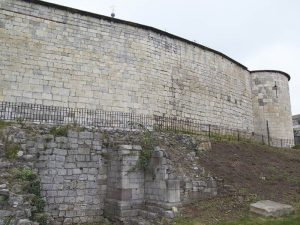
    York Castle in 2015

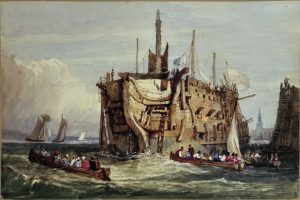
    James Dyson (1810-1888), civic leader and businessman of Perth, Western Australia had also been a convicted criminal in a former life. Sentenced to seven years transportation beyond the seas in July 1833, he spent the first few weeks of his sentence imprisoned in York Castle, then four months on the prison hulk Justitia anchored off Woolwich near London on the river Thames.

    Representative image of a hulk.

    On 20 November 1833 he was bundled on to the merchantman Moffatt at Woolwich, but the formal date of sailing from England to Van Diemen’s Land was not until 6 January 1834. The port of departure was Plymouth. One hundred days later the Moffatt arrived at Hobart town in the convict colony. It was a record speed for a crossing and the vessel carried a record number of convicts within its Indian teak hull.

    Of the four hundred prisoners loaded on board, 393 made it to their destination alive. Given that I would not be writing this if he had not made it — Dyson survived the voyage. Still, I would like to know more about this part of his life than what is regularly regurgitated in the standard sources.

    Claim a convict: Moffatt (1834)

    convictrecords.com.au: Moffatt (1834)

    Moffatt hauled convicts to Australia four times — Three to Van Diemen’s Land, and one to New South Wales. Convicts were categorised by which ship and voyage they arrived on, so James Dyson was linked to Moffatt (1).

    History of the Moffatt on wikipedia

    This was the Moffatt’s first time as a convict transport. Prior to that, she was an East India Company ship (The British cartel that owned India for the moment) and her master for her last voyage for the EIC who also commanded her first as prison transport was a young man named James Cromarty (also spelt Cromartie). He was 28 when he became master of the Moffatt in 1832.

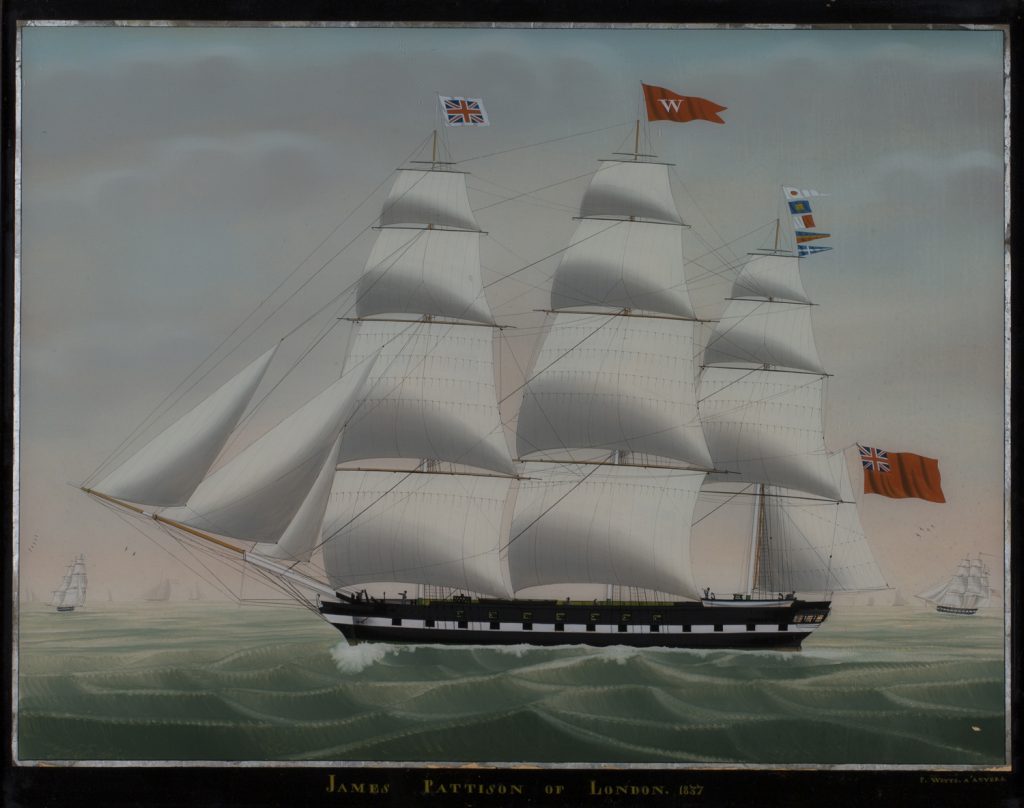
    A brief biography of him here would be a lot more published about him than I have so far found written: — Cromarty was born on South Ronaldsay amid the Orkney islands north of the Scottish mainland. Up until the captaincy of the Moffatt for the EIC in 1832, I know nothing about him. It may have been his first command but researching this point has been inconclusive so far. Then, between 1836-1840, he captained the sailing ship James Pattison until she was lost at sea due to fire. He and all his crew were rescued. He was then master of the Chieftain (1841) and then the Equestrian (1844-1847). He married a Miss Charlotte Kelly in Sydney back in 1836. Their home was in London and they had at least two sons together. Charlotte Cromarty disappears from the record after 1847 and by census time 1851, James Cromarty has retired from the sea and taken up farming near his birthplace on South Ronaldsay. He dropped dead 13 July 1882. He was 78 years old.

    Petrus Cornelis Weyts – ‘James Pattison of London’, reverse painting on glass, signed and dated 1837

    Whether deliberately or by chance, Cromarty was master of many immigration voyages to the Australian colonies. Whether his passengers were free or unfree, one thing both types of voyage shared in common was the presence of a surgeon to ensure that as many of the cargo got to their destination alive as possible. After many years of trial (and mostly) error, the best way found to achieve this outcome was to ensure that neither of these parties got paid unless either gave the other a good report and the cargo arrived mostly intact. Convict ships had surgeons from the Royal Navy. On board the Moffatt during 1834, this was Thomas Braidwood Wilson, RN (1792-1843).

    Thomas Braidwood Wilson in the Australian Dictionary of Biography

    Unlike that for Captain Cromarty, Surgeon T. B. Wilson’s official log of the 1834 voyage of the Moffatt survives. Further more, images of the original pages are now easily available for study. Just one little problem — This tosser wrote most of his journal in Latin — a dead language only specialist scholars can now read.

    You. berk.

    Marvel at the handwriting in the Journal images on Trove

    Unfortunately learning the language of the ancient Romans and the medieval church is somewhat outside my capabilities. There are some broad summaries of what the journal contains in the index of the archive where the originals are stored. The name of James Dyson is not mentioned, as far as I can decipher.

    National Archives, United Kingdom

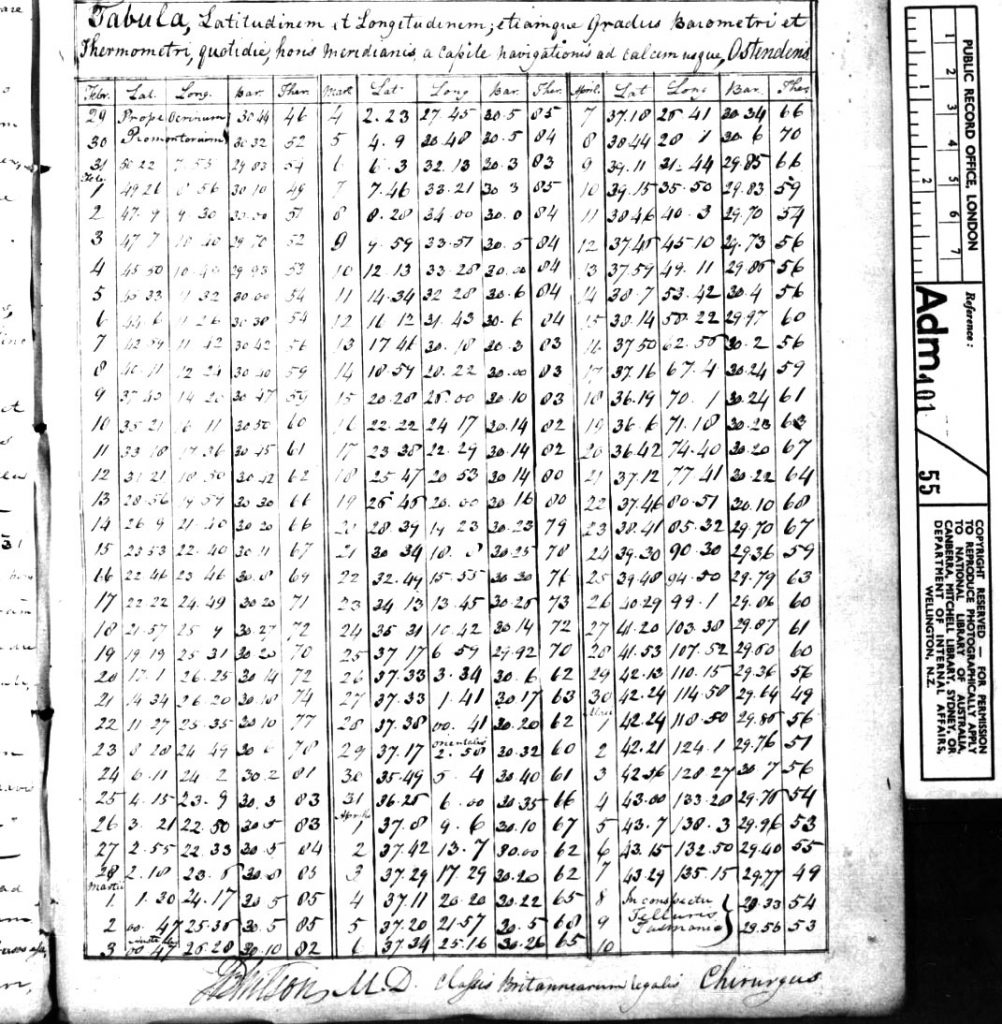
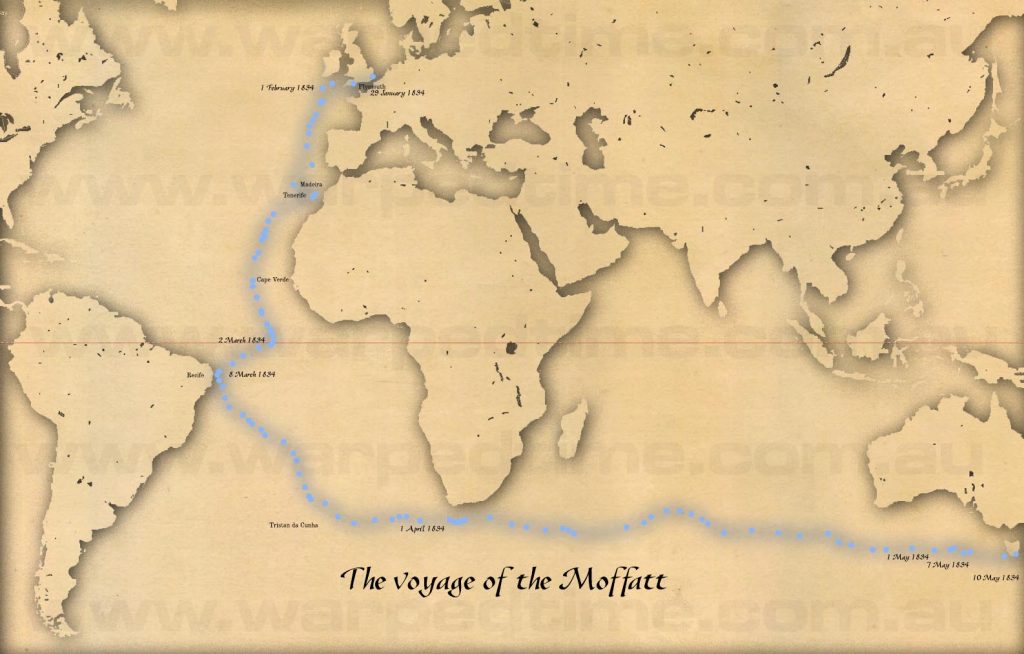
    There are no convict diaries for the Moffatt. Those that I have perused date a few years earlier or later on different ships, and all describe very different conditions on every separate journey. It is very frustrating not even being able to generalise on the experience. I could not even be sure exactly what was the route the Moffatt took. However, the one useful bit I could glean from the journal was this table:—

    This is actually useful.

    From which I was able to generate the following map:—

    Then I learnt a bit more about Surgeon T. B. Wilson. It turns out he had quite the career as an explorer — In Western Australia he named Mount Barker in the South West of the colony after his colleague Captain Collett Barker. In return, Wilson’s Inlet, near the town of Denmark on the south coast is named after him. Further more, this bastard who could not be bothered to write his official report in anything other than a language most — even then — could not read, then published a book of his travels in 1835.

    Note the date: Narrative of a Voyage Round the World by T. B. Wilson was published in London only a year after he sailed on the Moffatt, and lo! There is an appendix to this tome intituled: —

    Remarks on Transportation &c., &c.

    AS the subject may not be unacceptable to some of my readers, I shall make a few observations relative to convict ships,—the management of prisoners during the voyage, and their disposal and treatment in New South Wales, and Van Dieman’s Land.

    He then goes on to describe the same in meticulous detail, there is even a footnote in the manuscript relating to the troops guarding the prisoners on the voyage..

    * Last year (1834), I had charge of 400 prisoners (the greatest number sent in one ship), without any additional guard.

    Best of all, his entire publication is available on Project Guttenburg as a free ebook.

    Huzzar! Now if only there were any other passengers on the Moffatt who might have written… I don’t know… a diary perhaps?

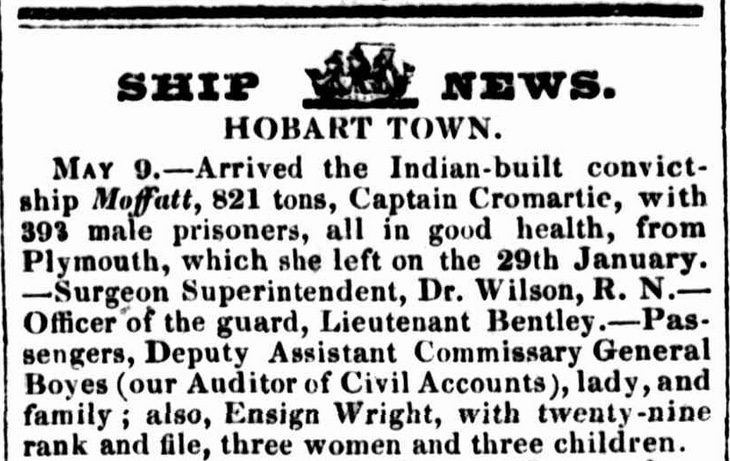
    SHIP NEWS. HOBART TOWN. MAY 9. — Arrived the Indian-built convict-ship Moffatt, 821 tons, Captain Cromartie, with 393 male prisoners, all in good health, from Plymouth, which she left on the 29th January. — Surgeon Superintendent, Dr. Wilson, R. N.— Officer of the guard, Lieutenant Bentley.— Passengers, Deputy Assistant Commissary General Boyes (our Auditor of Civil Accounts), lady, and family ; also, Ensign Wright, with twenty-nine rank and file, three women and three children.
    The Colonist and Van Diemen’s Land Commercial and Agricultural Advertiser (Hobart Town, Tas. : 1832 – 1834) Tue 13 May 1834
    Page 2

    So, who was this Deputy Assistant Commissary General Boyes when he was at home?

    George Thomas William Blamey Boyes (1787-1853): Australian Dictionary of Biography entry.

    So it turns out this dude was a diarist, and further more, his diaries have been transcribed and published — Oh wait, just Volume I: 1820-1832 — Thats… Oh bugger!

    Fortunately for me, the rest of his oeuvre is available for download on the website of the University of Tasmania Library Special and Rare Materials Collection. The downside is that the dates I require have not been transcribed and the pdf that contains the images has been compressed almost beyond the borders of illegibility. However, now I have a complete account of sailing ship Moffatt’s 100 days at sea in 1834. All that remains for me now to translate G. T. W. B. Boyes’ thoroughly indifferent handwriting. However, at least its not in Latin.

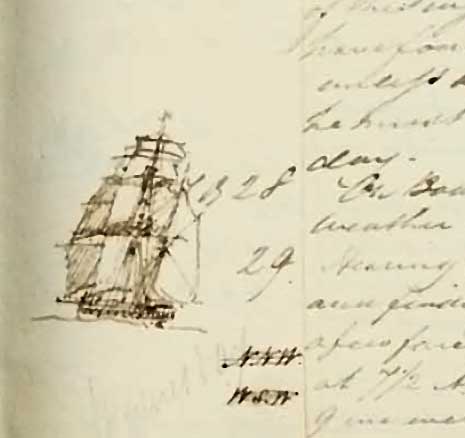
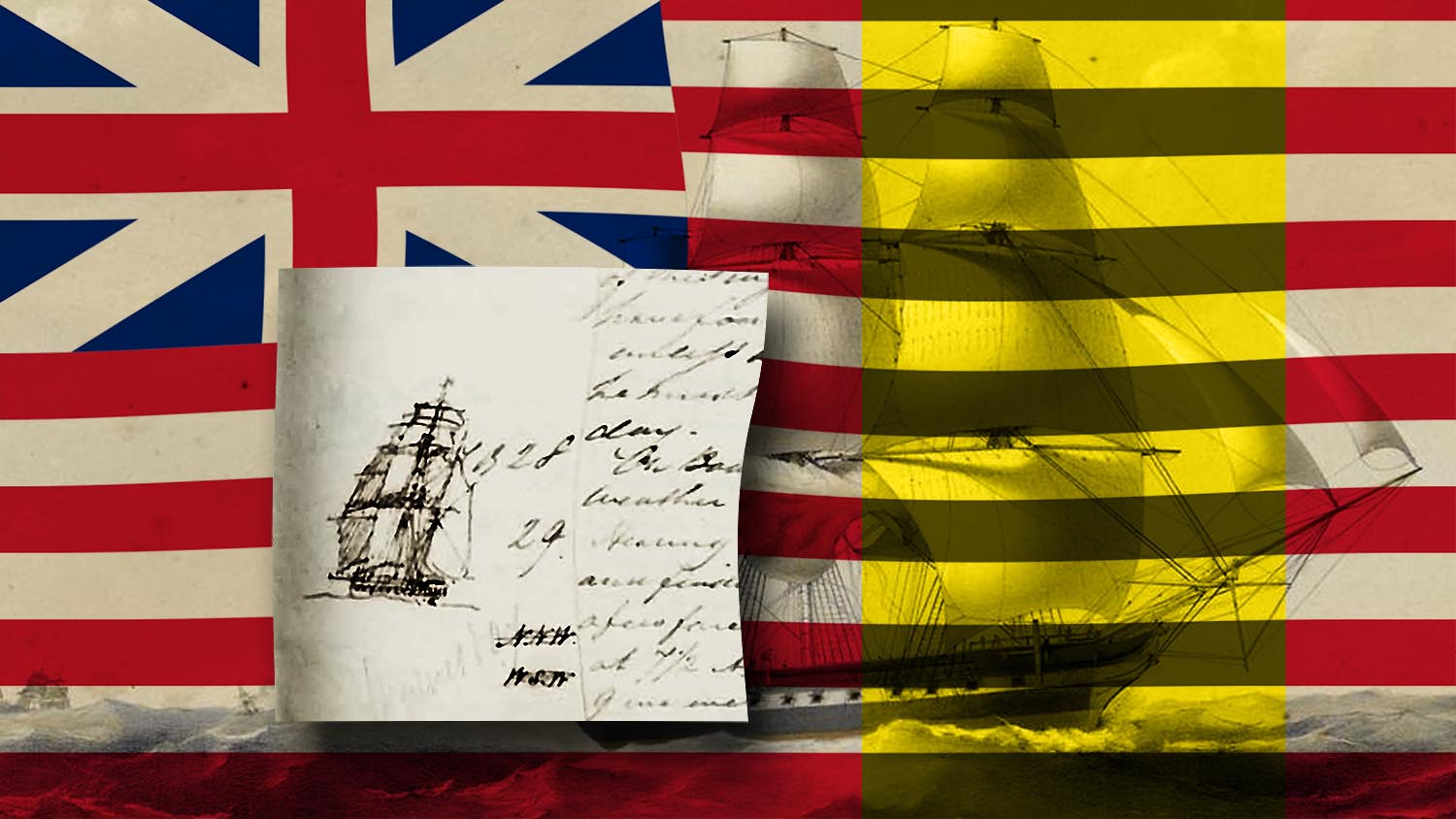
    Segment of a diary page by G. T. W. B. Boyes. Was this just a passing vessel or is it a portrait of the Moffat herself?

    Continued: More tales of the Moffatt!

  • What has been left unsaid..

    What has been left unsaid..

    There is a particular family in Australia who trace their lineage back to a William Murrells who arrived in the colonies of Australia as a young man by some uncertain means during the gold rush era of the 1850’s. On 28 August 1862 in the Victorian settlement of Snake Valley (or Carngham) he married a very young lady called Emily Buffin and they proceeded to breed like rabbits.

    Snake Valley, Victoria, Australia in 2011

    Thirteen children and 68 years later, he died at the home of one of his many daughters in Caulfield, Melbourne on 6 April 1932. His age was recorded as being 94, and he had been in the colony for about 79 or 80 of those years. He had spent most of those intervening decades employed as a clerk or book keeper. It was stated on his death certificate that his father had been a saddler in the horse-racing town of Newmarket, in Suffolk, England where he had also been born. His father was also called William. His mother’s name was Sarah. They had forgotten her pre-married name.

    And this was the limit of the knowledge of the back story of William Murrells (c 1838-1932) until fairly recently.

    The Argus (Melbourne, Vic. : 1848 – 1956) Monday 11 April 1932 page 1

    His English birth certificate was identified. He was born on the 27 February 1838 in Newmarket, Suffolk, the son of William Murrells, saddler, and Sarah, maiden name Dike — Although as far as the story of the father was concerned, all was now as clear as mud. The closest candidate in the record that could have been he — was a 24 year old publican in Newmarket who died eighteen days before the birth of his supposed son. However his death notice in the local paper would remove any doubt this was the father —

    The Lincoln, Rutland and Stamford Mercury (Stamford, England), Friday, February 23, 1838; pg. 3; Issue 7438.

    So the backstory to the Murrells clan began to gently unfold. William’s father William (the saddler) was the third child christened William by his parents and the only son to survive to adulthood. There was also a slightly older sister named Ann, but neither child was an adult when their father (also named William) died in Newmarket during December 1827. William was a victualler, which is a fancy way of describing an innkeeper or publican. The family business was the Wellington Inn in Wellington Street, Newmarket, which before the Napoleonic wars (which ended in 1815) had been known as the Fox & Goose Inn in Fox & Goose Lane. William the Victualler was 46 years old when he died.

    William Murrells’ (1781-1827) widow was Mary nee Peachey (1789-1860) who carried on her husband’s business after his death and raised their young teenaged children then aged 15 and 13. When Ann was 19 she married a man 12 years her senior named Thomas Aves. He was a bonding clerk from the nearby village of Exning. Whether they were happy together or not can not be determined: They were married nine years and died within days of each other in February 1841. Ann Aves outlived her brother by only two years. There were no children from this union.


    Mrs Mary Murrells (or Murrell: both spellings were used) would outlive both her children, dying at the age of 70 in 1860 on the premises of the family Inn. She had seen her son apprenticed in the trade of saddler (one who makes riding saddles) — presumably when he was a teenager. She might have regretted this choice of career, for to complete his training he moved to London, 100km or more away to to the south. He was probably employed by someone associated with the local horse-racing scene at Haymarket and he lived in the Soho district of the city of Westminster.

    He was also 19 and still an apprentice saddler when he married Sarah Dike, a native of the capital city and a domestic servant, in the incredibly grand parish church of St George, Hannover Square, on 26 October 1834.

    Church of St George Hannover Square. Pretty bloody fancy for a humble apprentice saddler and his domestic servant bride…

    They made their home in Marshal Street, near Golden Square, by the very beating heart of the capital of the British Empire. At an uncertain time between 1835 and his death three years later, he and his wife returned to Newmarket. He was by then a professional saddler, and being of age, perhaps only now he could take up his inheritance of the family inn.

    But instead he died, leaving a widow and only a single child (that we know of). What happened to the newborn infant between that date and his own marriage in 1862, (when by coincidence, aged 24, he was same age as his father had been when he died) is a void.

    Edit 17/11/2023: The English Census record for Newmarket for the year 1851 is missing from the archives. This could be concealing the truth about Mrs Murrells and her son.

    Mrs Sarah Murrells may have remarried in 1839, — to a Milkman widower in Cambridgeshire no less! — but there are discrepancies in the record — there is no trace of the younger William Murrells at her new home in the university city of Cambridge and she died there in 1855 aged 57. This would imply that she was nearly twenty years older than her first husband — but this would fit with what little we might deduce about the former Miss Sarah Dike.

    A few months after her marriage to William (the apprentice saddler) — a young man named Muffett, whose mother had been a friend, came to her early in the evening with the story that his father had just been arrested. Frederick Muffett wished to borrow a shawl so his mother could visit his father in gaol. This Mrs Murrells granted him, but after he departed, she found that her husband’s pocket watch and chain and a house-key were now missing. She immediately went down stairs and told her husband what had occurred.

    William Murrells took his wife and a police constable around to the residence of the thief’s mother. It was there they discovered Mrs Muffett attempting to hide her son behind a curtain. Frederick begged them not to arrest him as his father (presumably the same father who was in gaol) would pay them back in a day or so. The constable charged the young man with theft. At his eventual trial on 2 March 1835 at the Old Bailey Muffett was swiftly found guilty and sentenced to seven years transportation for simple larceny.

    That fact was not the interesting part of this discovery. Muffett served out his time on the hulks, and was never sent to Australia — so we are deprived of the astounding story of him eventually crossing paths down under with the family of the man whose parents he wronged.

    What is tantalising instead, is the line the defence questioning took with Mrs Sarah Murrells at Murfett’s trial. Her replies are given in full, but it feels like more than half of the questions asked have not been accurately reported. It’s almost as if someone’s reputation was being questioned, and that it was not the someone who was on trial, or even present in court that day. It’s almost as if the defence was daring the judge not to go down a particular path, lest someone very powerful got be annoyed… If that was the tactic — it didn’t work. The powers-that-be merely withheld certain statements from the trial transcript records and it wouldn’t surprise me to find out that he got a harsher sentence for his defence daring to follow this line of enquiry.

    The records of the Central Criminal Court of the Old Bailey in London are freely available on line so you can read the whole transcript of Muffett’s trial yourself.

    What I want to know is WHO was Colonel Nicholson? WHY did Colonel Nicholson have REASONS for wanting Sarah Dike to marry William Murrells? What possible relevance could this have to a pretty straightforward account of theft by another party entirely?

    Inquiring minds want to know — this one in particular as both William Murrells and Sarah Dike are also my GGGG grandparents…

  • Alias Hoffington

    Alias Hoffington

    Fanny Hoffingham or Hoffington. It might even have been Skeffington, but I’ve seen the original document from which that transcription arose and I now know that it was Hoffington too. She was the first wife of James Dyson, ex-Tasmanian convict and future West Australian property owner and entrepreneur. Mother to his first four children and cruelly discarded by him in favour of the nubile and teen-aged Mrs Richard Edwards (junior)… better known to history as Jane Devling, or Mrs Jane Dyson.

    We now know she is not buried in the same family plot as her husband and his second wife, and that she was alive for several years after the date inscribed on her headstone in that cemetery. She took her own life probably in state care, probably in the Perth lunatic asylum during the year 1854 — an institution so badly represented in the the archives that not only is there no death certificate for Mrs Fanny Dyson, its not even clear where the asylum was located in Perth at that date.

    That was the extent of what we knew about the first Mrs Dyson. Before her name appears on her marriage certificate dated 25 October 1842 the name Fanny Hoffington or any of its variants appears precisely nowhere.

    It’s a useful mantra to employ, I suppose: If someone tells me “I guess we’ll never know for sure”… That’s a green light for me to bloody mindedly be sure. Then… once I’m convinced that “Yes, we probably know all that can be known, and that all the avenues of research have been finally exhausted..” … that’s when a vital piece of new information that totally upsets what you thought you knew about a particular subject is revealed.

    Such was the case with Fanny — but it was instinct, not evidence, that made me suspect I had uncovered her secret, via a series of outrageous coincidences possibly even linking her to her future husband before either had left England’s shore. The trouble is that even outrageous coincidences may still be just that, merely coincidences. I was looking for hard evidence, but the documents from 190 years ago were not providing that. However, neither were they providing proof that my theory was false.

    “Patriotism is the last refuge of a scoundrel” is quote I was certain came from Ambrose Bierce, but looking it up it appears to be from Samuel Johnston made at least a century earlier in 1775. Here is my own riff on the sentiment:

    “DNA is the last refuge of a family historian”

    Alan J. Thompson, 2019

    A certain commercial genealogy website to which I have linked my own DNA test also provides a long list of others who share segments of the same chromosomes that I possess. A subset of these distant biological cousins also have publicly searchable family trees back to the generation of Fanny’s possible parents or grand-parents. Two of these trees contain Fanny’s proposed true family name and a match with an individual that might be an uncle, grand-uncle, grandfather, or even father for her. This name does not appear in any other context on my current family tree, nor do any other matches with my known family names appear in these other trees.

    This would not be conclusive proof on its own, nor can it be said that further documentary evidence may not still be uncovered that will demolish the baroque, Byzantine story of the first Mrs Dyson that I believe I have successfully constructed. But I’m now prepared to state my theory and die on this hill if that be my fate.

    Fanny Hoffington was an alias for her real name which was Fanny Johnstone nee Dewhirst. A false name was necessary as her first husband Lorenzo Johnstone was very much alive and serving out the last days of his fourteen-year sentence as a convict in Van Diemen’s Land. The two had married in Launceston on 15 January 1840. At that time Fanny was also a convict — but despite that her conduct had been terrible to the extent that eighteen months had been added to her seven year sentence for theft, she was granted her absolute freedom on 3 July 1840. This was the same day that another convict felon received his freedom. His name was James Dyson.

    Both had much in common: Both were from the same part of the world — both were sentenced in the same court house in Yorkshire, for similar crimes committed in Halifax in the West Riding of that county. They could well have known each other back in that town. He was a Bad Boy, she was a Bad Girl. In all probability she fled Van Diemen’s Land with Dyson on the barque Napoleon when she (the boat) sailed from Launceston on 1 May 1841. They were both much closer in age than what either had stated on their marriage certificate. He was closer to thirty than twenty-three, and Fanny was probably a couple of years older than James rather than a year younger (as she claimed) at twenty-two.

    So James Dyson’s first wife was a one-eyed sex-worker from Halifax, Yorkshire, convicted of stealing from one of her clients, and would have been found guilty of bigamy if her track-covering had not been near-perfect.

    Let the roller-coaster ride begin!

  • Choose your own Adventure

    Choose your own Adventure

    Not quite a love story yet.

    This is the tale of two convicts in Van Diemen’s Land. Their story does not have an end yet: happy, sad or otherwise. Can you help?

    The man

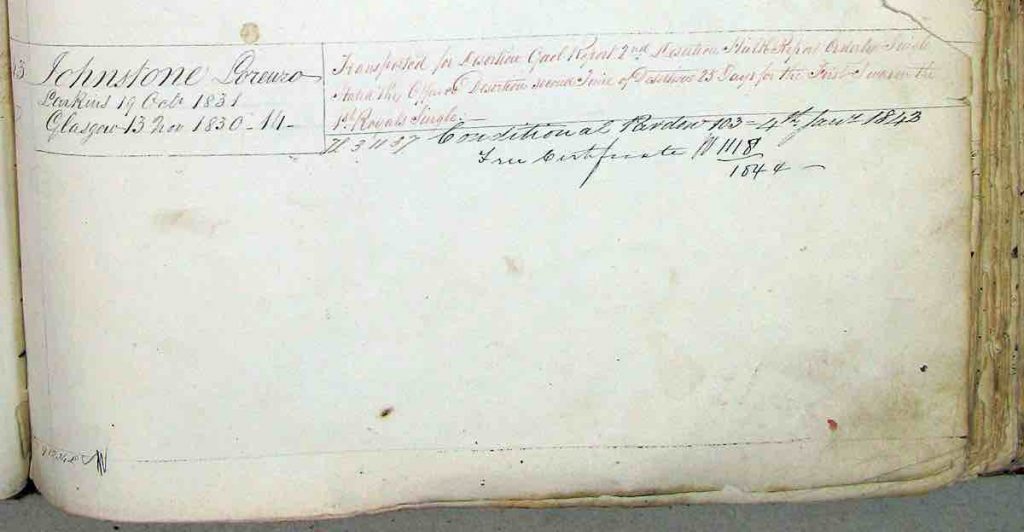
    Lorenzo Johnstone was an Irishman born around the year 1808. His complexion was brown and his face deeply pitted with the scars of acne or maybe smallpox. A labourer from the village of Muckney in County Monaghan, he may have very soon realised he had made a terrible mistake joining the British Army.

    The 1st Regiment of Foot was stationed in Ireland until about the time Johnstone turned seventeen. Then the Regiment was split in two, and the 1st Battalion of the regiment to which Johnstone was attached transferred to Scotland. His first Court Martial for desertion took place on 20 November 1829 in Fort George, Inverness. He served 25 days in the stockade for that infraction. The question that must be raised is whether Johnstone was trying to get back home to Ireland, or he was in dread of returning there — the Regiment was scheduled to return to Ireland in 1833.

    If his hope was to return to Ireland, that wish was to be fulfilled — albeit briefly. One year nearly to to day after he first absconded, His second Court Martial for desertion took place at Glasgow on the 13 November 1830. He was sentenced to fourteen years transportation. His convict ship Larkins, sailed from Downs, Ireland on 11 June 1831, and arrived in Van Diemen’s Land on 19 October. His military career was most certainly over and he seemed destined never to see Ireland or Scotland ever again.

    Lorenzo Jonstone’s conduct record in VDL [CON31/1/24 p81]

    Johnstone is one of those infuriating oddities — an Australian convict with a completely clean conduct record during his sentence. By May 1832, he was most certainly in Launceston (or its environs), for that is where a fellow felon, Thomas Quarrie, was convicted for nicking some of his clothes (to the value of four shillings). He was assigned to someone in the Launceston district on 9 December 1834.

    On 3 November 1837, at about the midway point of his sentence, he was granted his ticket-of-leave. This effectively paroled him to work for whoever he chose, or work on his own account. He could even be an employer, or take on apprentices. There were however, stringent restrictions on his movements, who he could associate with, or how late he could be out at night. But Lorenzo Johnstone remained resolutely on the right side of the law. So it was on 11 April 1838 that he submitted his application to the relevant authority for permission to marry. Within two weeks the reply was made via correspondence with the Colonial Secretary in Hobart. Permission was duly granted. Johnstone should have been a very happy man — He owned outright — or at the very least had unencumbered use of — a horse and cart, so he may have felt secure in providing a service that should always be in demand—transporting things from one place to another. He was thirty years old. Maybe for the first time in his life he felt that everything was moving in the right direction. If so it was a sentiment his bride-to-be may not have shared. The wedding date was delayed, and delayed again…

    permission to marry in 1838 [CON52/1/1p42]

    The woman

    Fanny Dewhirst claimed (or it was estimated) that she was born about the year 1813 — however if her parents were William and Mary Dewhirst and she was baptised in Heptonstall, near Halifax in Yorkshire on 28 August 1808, she was several years older than that. It might be a modern sensibility to hope that the later is true, for if it was the former, she was barely 16 when it was recorded that she was “on the town” a euphemism for having no home or protection, or more commonly — supporting herself by prostitution. At some stage before her arrest in 1832, she lost her right eye.

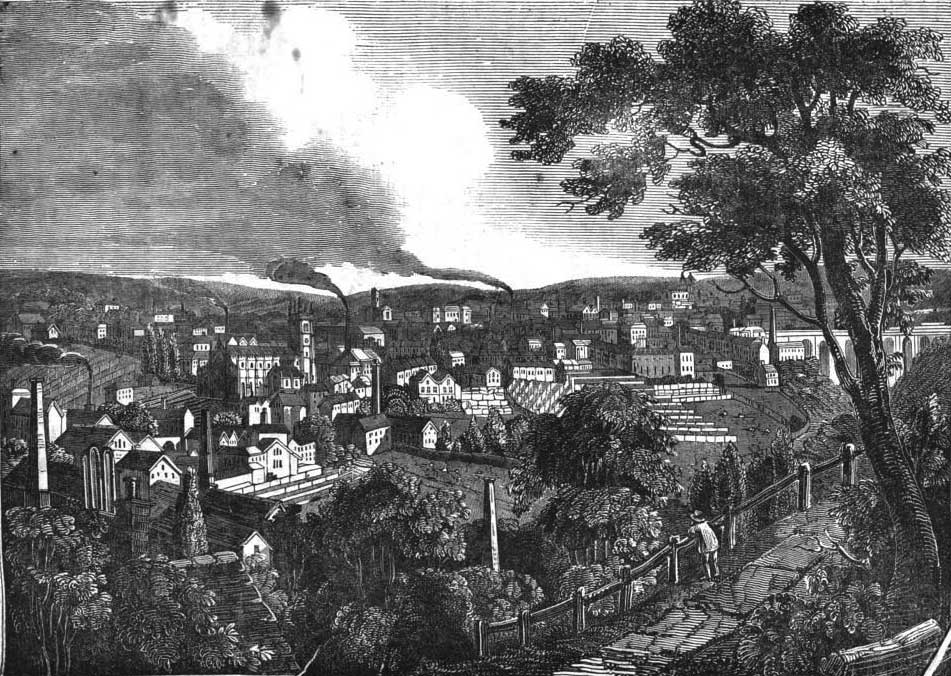
    Town of Halifax, Yorkshire, from The Penny Magazine, 15 March 1834
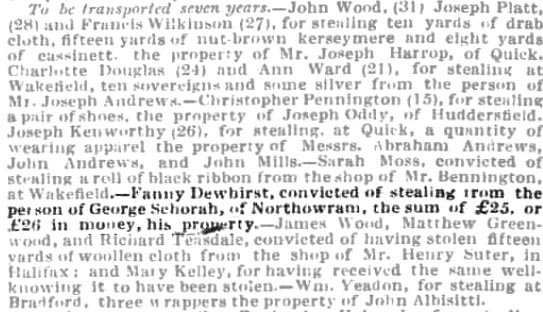
    Leeds Intelligencer, 12 Jan 1832, p4

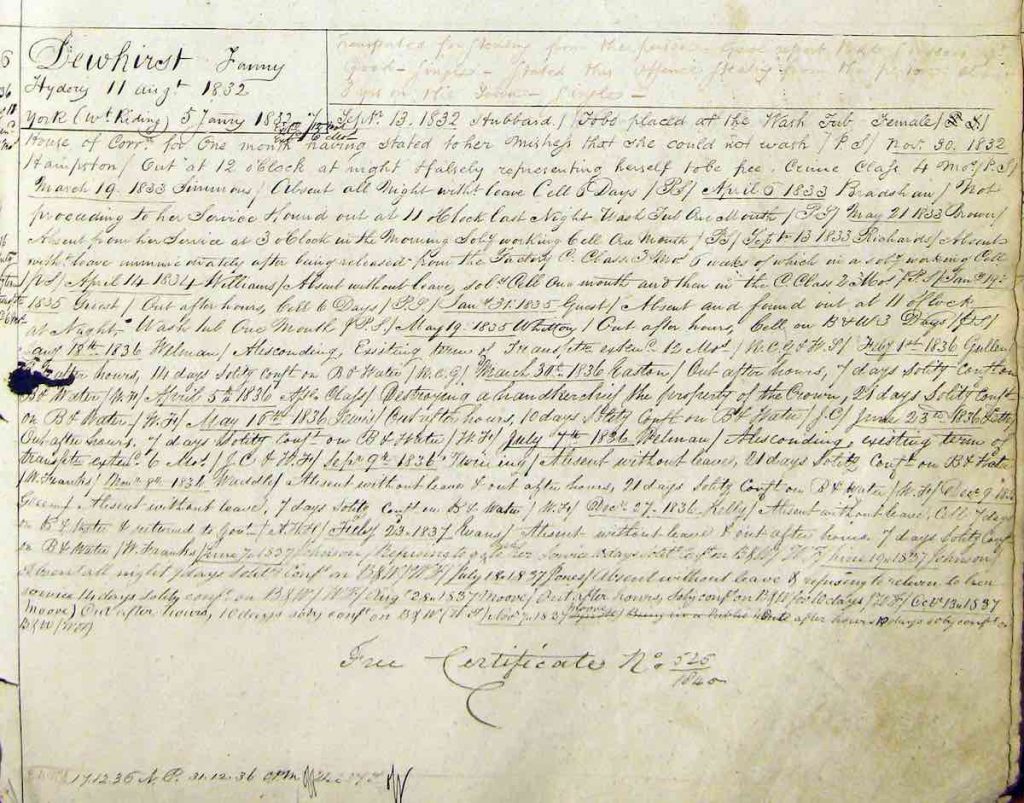
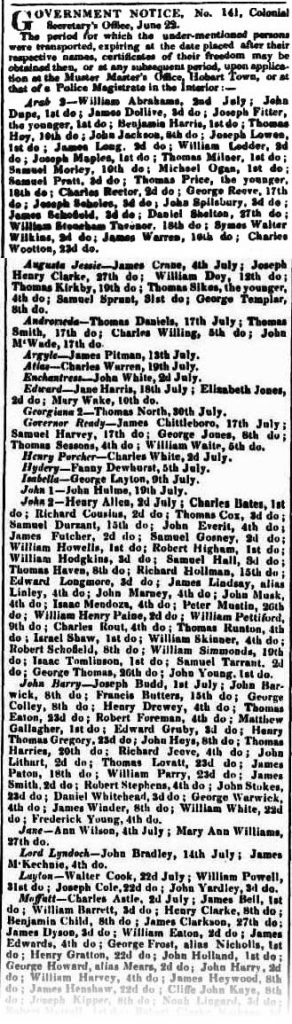
    On a winter’s day 5 January 1832 she was sentenced to seven year’s transportation for the theft of a very large sum of money from a man publicly identified as a Mr George Schorah of Northowram (a location a mile or so north-east of Hallifax town centre). £25-£26 was a vast sum of money for the time, and the sentence handed down at the West Riding Christmas General Quarter Sessions in Wakefield seems almost lenient until it is understood that Mr Schorah was most certainly also Fanny’s customer and the chairman of the court was a Reverend. Fanny Dewhirst was imprisoned at York Castle until March when she was transported down south to Woolwich, near London, then cross country west to Plymouth in Devon, where she would board her transport vessel to Van Diemen’s Land. The convict barque Hydery departed England on 11 April 1832 and arrived in Hobart Town on 10 August 1832. Within a month she was sent north to Launceston, and assigned to work as a domestic servant for someone named Hubbard. On 13 September 1832 her extensive bad conduct record gained its first entry.

    Fanny’s conduct record in VDL [CON 40/1/3 p79]

    She refused to do the laundry as ordered to by her mistress, so Fanny began the long relationship with the house of correction for female prisoners back south in Hobart Town — at the Cascades Female Factory where she served a month at the wash tub. It was the first of many sentences for a multitude of infractions of the rules. These included:— [being] out after curfew and falsely representing herself to be free; Absent all night without leave; Absent from her service at 3 o’clock in the morning; Absconding; Destroying a handkerchief (property of the crown); Refusing to go back to her service; Being in public (out after hours)… etc. This is only a small sampling of the cause of her subsequent punishments. “Being out after hours” is by far the most common offence for which she was charged (16 times) but “being absent without leave” (12 times) comes a close second. There were more than a few occasions when she could be found guilty of both at the same time. The usual punishment was solitary confinement on bread and water. It has been calculated that she spent 176 days (nearly six months) this way.

    One of her masters was Major Wellman of the 57th Regiment. He was stationed in Launceston and was assigned lands at Norfolk Plains (both locations associated with Fanny Dewhirst). Whoever he was, she must have detested this soldier or his family with a passion, for two times during 1836 when assigned to him she ran away. For the crime of absconding, her sentence of transportation was increased by eighteen-months.

    On 17 November 1837 she was sentenced to ten days of solitary confinement on bread and water for being out in public after hours. She was employed by someone called Moore who resided Launceston. This was the third time she had received the same sentence for the same crime while in Moore’s service. It was to be the last offence she was charged with for the remainder of her time as a transportee, now due to expire in July 1840. Then on 11 April 1838, Lorenzo Johnstone applied for leave to marry her. The government had no objections, but did she?

    Fanny Dewhirst could neither read or write. Those life skills she had acquired she had learnt the hard painful way. According to the conventional morality of the day she was supposed to just curl up and die when her situation failed to match the expectations of those who made the rules. If her life in Van Diemen’s Land and her life before that in Yorkshire suggests any thing it was that this was a person who would fight passionately to survive in the moment, regardless of the long term consequences. If survival was a moment by moment affair, then so would be pleasure. If she lived by the minute then Lorenzo Johnstone gave every indication of being someone who played a long game in life. A soldier’s life had taught him discipline, but she had already run away from one soldier. Did she really want to spent the remainder of her life with another?

    “We said yes, okay?” [CON52/1/1p43]

    Something strange happened on 28 November 1839. Lorenzo Johnstone applied a second time to marry Miss Fanny Dewhirst. Why he needed to apply to the authorities again is not remotely clear. Maybe too much time had elapsed between the first permission and the wedding ceremony? Once again, the Lieutenant-Governor initialled assent to the lawful and permanent union of the two convicts, which was communicated back to the parties on 26 December 1839. On 15 January 1840, Lorenzo Johnstone, aged 31, was married to Fanny, who gave her age as 21 (pull the other one), according to the rites of the Church of England in the Launceston parish church of St John. Lorenzo listed his trade as a gardener, but he would not have owned his own farm. He could not legally own land — yet.

    Lawful matrimony
    The Hobart Town Courier and Van Diemen’s Land Gazette, Friday 3 July 1840 p4

    For Mrs Lorenzo Johnstone, there was one final hurdle to overcome before her past as Fanny Dewhirst was definitively behind her. The moment came six months after her marriage on 5 July 1840 when she granted her Certificate of Freedom. She was free by virtue of servitude — She had served every hour, every day, every month, of her eight and a half year sentence. Now she was utterly free to go where she wanted to, live the life she chose. It would be a fair guess she hated Van Diemen’s Land and would want to get away from that island as soon as she was able to. But of course, she wasn’t free. She was married to Lorenzo Johnstone and he was still a Ticket-of-Leave convict. He had four years left of his sentence to serve. Here was the bitter irony — She had never conformed to the rules — she had flouted them at every opportunity (and paid the price). She was never granted a Ticket of Leave, much less a Conditional Pardon which was the next reward for good behaviour — yet even with an extension to her sentence by eighteen months, she now had more legal rights than her husband — who had started his sentence three years before hers — had a spotless good behaviour record, but could not legally leave the Launceston district.

    In the circumstances, it reads like a cruel joke that Lorenzo Johnstone’s conditional pardon mooted as early as January 1842 but not valid “until Her Majesty’s pleasure be known” was finally promulgated on 31 August 1843, for the following cause:—

    “Having served ten years in the Colony without a charge of misconduct”

    On 30 November 1842 Johnstone had been fined by a magistrate for a trivial cart-riding offence. Maybe that had been enough to delay his Conditional Pardon? He received his Certificate of Freedom by servitude in 1844. Now he could own land or leave the Colony anytime he chose — or was able to. In previous eras expired convicts were granted free land to work, but those days were long past. But had he time left to save his marriage?

    The leaving of Launceston [POL220/1/1 p223]

    It took six more years before he finally departed from Van Diemen’s Land. Gold had been found across the Pacific Ocean in California, USA, back in 1848, and on 9 May 1850 he sailed from Launceston on the Jane Francis bound for San Francisco. Being who he was, he dotted all the “i”s and crossed all the “t”s on the paperwork. This is how we can be fairly certain that his wife, Fanny Johnstone did not sail with him on that vessel. This is the last verified record of Lorenzo Johnstone and (in the negative) his wife. There are any number of unverified sightings. Here lies the point of danger in concluding this story…

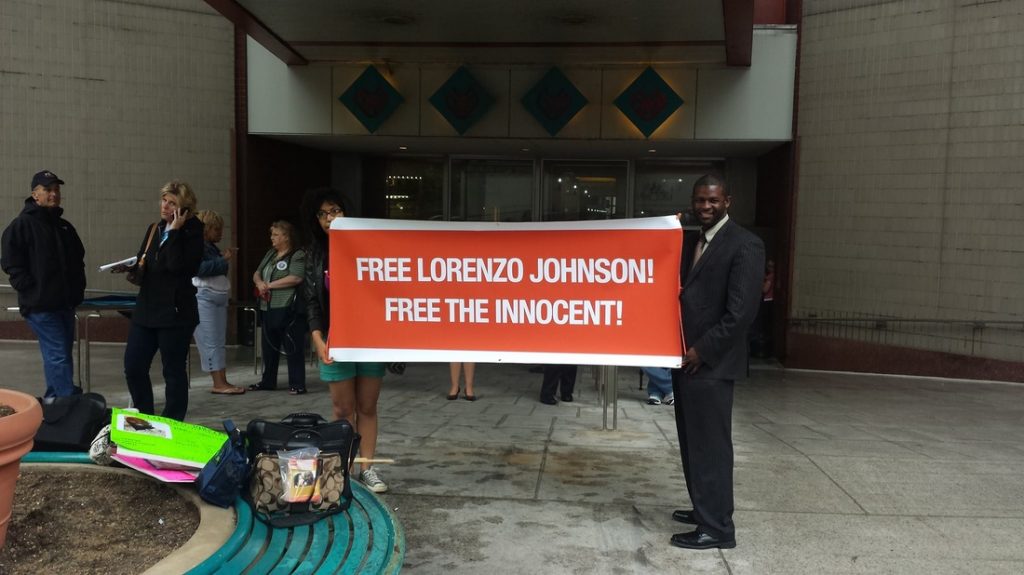
    https://freelorenzojohnson.org/

    In Pennsylvania USA, in the year 1995, a man named Lorenzo Johnston was convicted of murder and sentenced to life imprisonment without the possibility of parole. After seventeen years behind bars he was freed by a higher court on the grounds that he had been falsely convicted due to insufficient evidence. Four months later, yet another court sent him back to prison to resume his original sentence. As of today (April 2019) Lorenzo Johnson was a free man living with his family in New York. He spent twenty-two years of his life behind bars for a crime he most certainly did not commit.

    Now it should be fairly self-evident that Lorenzo Johnson and Lorenzo Johnstone are not the same person (Nor is it slightly feasible that one could be the great-great-great-great grandparent of the other). The stakes for me in a theory I have about the fate of the nineteenth-century individual after his wife’s freedom was granted in 1840 are immeasurably lower than that of a man wrongly convicted of a capital offence on circumstantial evidence and prejudice against him for the colour of his skin. I’m not going to state my theory here (though it shouldn’t be too hard to work out my line of reasoning from other articles on this site) because the case of Lorenzo Johnson — the one who had the misfortune to be in the wrong place at the wrong time and not be a pitted-faced Irishman — should be a warning about leaping to conclusions without being in possession of all the facts, or any proof at all. At the moment, all I have are coincidences — as did the jurors at Johnson’s first trial. The result was a gross miscarriage of justice.

    The dilemma…

    Herein lies my problem: I have a theory about this couple. However I cannot prove my theory, but I cannot conclusively disprove it either. Conclusive facts that would disprove my case would be records of husband and wife together after the year 1840, or records of Mrs Fanny Johnstone after that date living a life away from her spouse. There is some evidence in Tasmania that the latter is what might have occurred.

    Unfortunately Johnstone and its variants Johnson or Johnston are all too common as family names. Lorenzo Johnstone (the Irishman) was recorded as being capable of being able to read and write, so while others might have misspelled his name (and did) we can be reasonably certain that Johnstone is the variant that he prefered. There are records of a Fanny Johnstone having involvements with the law in Launceston between the years 1863 and 1871, However in only the earliest instance was she actually found guilty of something (fined 6 shillings for disturbing the peace with one Thomas Crawford) (In the last recorded, she was employed as a sick-nurse for the family of a police constable). The difficulty is that there were other families of Johnstones in that town during the era, and of that subset of the population were a number of other women named Fanny — both of the Mrs and Miss variety. I cannot prove the Fanny Johnstone I wish to trace is one of the above — nor can I disprove it yet. There is no death or burial record that I can identify for Fanny Johnstone that plausibly fits the former Miss Dewhirst, nor can I find evidence that supports her remarriage.

    As for Lorenzo Johnstone, his movements after 1850 are similarly hard to interpret:—

    • In October 1852 a Mr Lorenzo Johnson [sic] aged 37, sailed from the colony of Victoria to Launceston on a vessel called the Launceston…
    • But a Mr L. Johnson [sic] and wife sailed from San Francisco to Port Jackson, New South Wales on the vessel Abyssinia in the year 1853…
    • In 1876 an occupant of the Victorian goldfields named Lorenzo Johnson [sic] died, but according to his death record he was only a young man of 25 years. If this is correct, he was born sometime about the year 1851. The names of his parents are unrecorded and no record of his birth has yet been found.

    … So the fate of Lorenzo Johnstone remains as uncertain as that of his wife and for much the same reason.

    In Summary

    Can you help? Are you a researcher or even a descendant of Lorenzo Johnstone (or Johnson) born Muckney, County Monaghan, Ireland about the year 1808, or Fanny Dewhirst (or Dewhurst) born Halifax, the West Riding of Yorkshire, England about the year 1813 (or as early as 1808)?

    If you have come across stories concerning either of these two convicts in Van Diemen’s Land, or are connected to either by ties of family, I would love to hear from you and complete their story. If you know Lorenzo and Fanny are your ancestors or you wish to claim them as your own, please make that claim. That is what I would be doing… if I had the evidence.

    References

    Convict records for Lorenzo Johnstone at Libraries Tasmania

    Convict records for Fanny Dewhirst at Libraries Tasmania

    Fanny Dewhirst’s convict record has been completely transcribed by the Female Convicts Research Centre. Registration is required to view these transcriptions, but I can’t overstate how useful access to this database has been. https://www.femaleconvicts.org.au/

  • Dyson’s hat

    Dyson’s hat

    James Dyson served the last few years of his sentence as a convict in Van Diemen’s Land in the district around Launceston. One location that is named in his record is now a suburb of that city called King’s Meadows. It would not be accurate to say we did not know what Dyson was doing while he was stationed there — We do — He was on a chain-gang, performing hard labour on the roads around that town.

    The clear as mud portion of James Dyson’s convict record about his time at Kings Meadows

    What ever the crime was that got him an [obscured] number of months on the chain gang, we know it involved violence, and that he was sentenced to work on the roads from King’s Meadows by Robert Wales, police magistrate for the Morven district — better known today as Evandale — 18km south of Launceston.

    Dyson was assigned to northern Van Diemen’s Land in July 1837. He was assigned to Morven on the 4 December, then was sent (back?) to King’s Meadows barely a week later. This suggests he probably wasn’t involved in digging the irrigation tunnel tunnel that had been started in Evandale but was abandoned around this time, but he might have been put to work constructing what is now the highway between Launceston and Hobart.

    Evandale in 2017

    https://www.evandaletasmania.com/convict-built-water-scheme.html

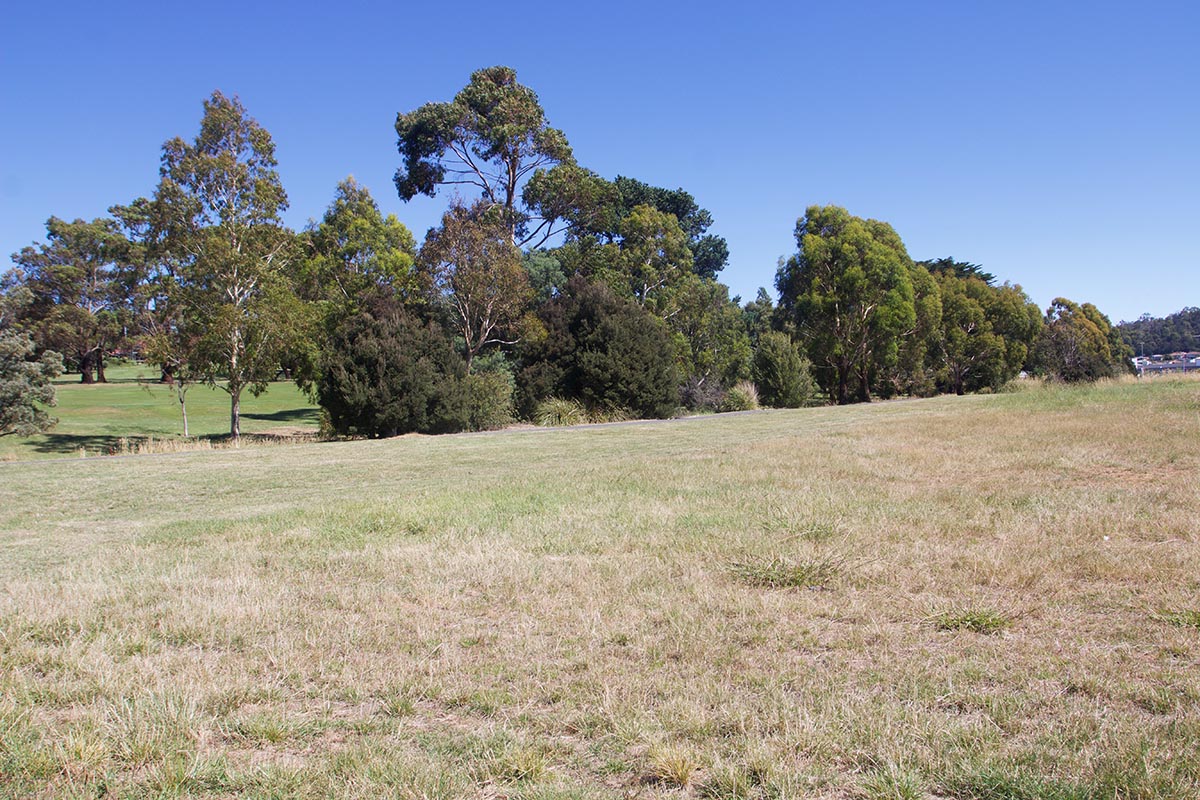
    I visited King’s Meadows in 2017. Before I visited, I could find no record of where the convict depôt was located, and now I know if I had stood right on top of it, there would have been nothing above ground for me to see back then.  So I found some  parkland in the region near a light industrial zone that I chose this as being the closest I would get to the James Dyson convict experience for this area:—

    Look’s sort of meadow-ish, doesn’t it? [2017]

    However, thanks to some superb detective work by local historian and surveyor John Dent that was presented to the Launceston Historical Society in February 2018, followed up by an archaeological dig later in this year, I now know a lot more about the King’s Meadows Convict station then I did before. More to the point, the Convict Station has been located, even if it will soon disappear again, this time forever under the foundations of a new housing development:—

    “Constructed in 1837, the Kings Meadow Convict Station housed more than 150 convicts, as well as officials and military personnel.
    It was built to assist with the Evandale to Launceston Water Scheme, which proved to be unsuccessful. The structure, which was about 40 by 40 metres, was abandoned as a convict station the in early 1840s, before being sold to a private landowner in 1854.”

    https://www.examiner.com.au/story/5741088/convict-station-unearthed-at-kings-meadows/

    But the icing on the cake to this story is the discovery of the artefacts associated with this site, including a convict hat, of a design hitherto completely unknown.

    https://www.examiner.com.au/story/5750368/hats-off-to-convict-history-at-kings-meadows/

    As we know, there could have been over 150 convicts on the ground at any one time to whom this hat could have belonged, so the probability that this one hat could pinned down to the possession of one named convict who was confirmed to have been there at the time has to be fairly infinitesimal… for this to be so, would be far too great an outrageous coincidence, and as we know, outrageous coincidences never happen in this family….

    …

    … so here I present, for your edification and amusement, James Dyson in Tasmania:—

    “Where did you get that hat?… Where Did you get that Hat?”
  • Winterbottom’s End

    Winterbottom’s End

    Joseph Winterbottom was the old bastard pursued by Oldham police across the border from Lancashire into the West Riding of Yorkshire in the summer of 1833. Arrested by the Halifax Constabulary, he was immediately identified by visiting Oldham bloodhound Heywood as a known rogue and vagabond, and proceeded to squeal like a pig, identifying the four men who were his accomplices in robbing a local Halifax man on the road that previous night.

    But when the case went to trial, Winterbottom was not among those in the dock. Instead he was a witness for the prosecution against those four much younger men for whom he was probably the leader of this most DESPERATE GANG OF ROBBERS™. For this base treachery, his sometime associates were sentenced to seven years in Van Diemen’s Land. Winterbottom, walked free, at least for a time.

    When they finally got him, it was for stealing “five fowls, commonly called hens” in 1837, and was sentenced to fourteen years transportation. He was forty-four years old by then, so he was nearly twice the age of the associates when his evidence had sent them out before him. He was born about 1791 in Oldham and was quite literally a bastard. When he was baptized in St Mary’s Church, Oldham on 2 June 1793, his mother Hannah was still a spinster (i.e. unmarried) and his father was identified as one John Collinson.

    There had been at least two convictions before his final one, he served three years in Salford Gaol from 1815 for a crime I can’t quite interpret from the record, and another for stealing calico and thread; a very Lancashire crime! Once in Van Diemen’s Land, he was convicted for stealing potatoes, but still, he received his Conditional Pardon on 7 July 1846 and full freedom on 5 April the next year. But not for him a return to England or a new life in the other colonies; the next year he was dead, in the district of Brighton, in what was yet to be re-named Tasmania.

    Did his path ever cross any of those he betrayed? Unknown.

    But on the record of death was a simple two line item:

    Cause of Death:
    Died by the Visitation of God.

  • Steam Powered Luddites

    Steam Powered Luddites

    James Dyson had built something of an empire in Western Australia on the back of supplying timber sourced the old fashioned way—by hand. Pity the other pit-sawyer though, who had to stand in that pit when the logs were being sliced into planks, and pity also the poor sap (pun intended) whose on-the-job-training did not include lessons where not to stand when the tree fell.

    Dyson’s business portfolio included more than just being a timber merchant, so his decline from being one of the largest employers in the colony to near penury cannot be attributed solely to competition in the timber trade, but one of his sons shooting a business rival’s son in the head would not have been conducive to any sort of cooperation when Benjamin Mason (father of the wounded party) together with his partner Francis Bird took the next logical step and introduced steam-powered machinery into the timber cutting process.

    The “convict fence” in the Canning River off Riverton in 2012.
    The Inquirer and Commercial News, 2 September 1868, p. 2

    Bird & Mason’s business was conducted on a scale that Dyson’s business model might have been unable to complete with. They also employed  many convicts. In 1864, they built a new mill at a place called Bickley Brook in the Darling Scarp east of Perth. Steam power was used to run a circular saw. On horse-drawn railway tracks, cut timber was carted to a landing site on the Canning River and sent down in barges to Perth and Fremantle. The traces of the posts that made up the path for the horses that dragged the barges across the shallow waters can still be seen today.

    Although Mason and Bird’s enterprise was not to survive the test of time, even better resourced companies would arise to carry on what they had started. But Dyson while was unwilling or unable to make the transition to the mechanised future of timber processing, other members of his family might not have been not so reticent.

    Back in the “Old” Country…

    A Lancashire Hand Loom Weaver.
    The Morning Post (Lancashire), 21 November 1870 p7

    Dyson’s father, Joseph, had been a cotton-spinning machine seller. That put him on the cutting edge of technology for the late eighteenth and beginning of the nineteenth century. His other sons who were not juvenile delinquents: Andrew, William and Joseph, all were involved in the spinning and weaving processes for cotton that was increasingly being centralised in powered mills, rather than in private homes and tenements such as their father had serviced. Bower Mill in Hollinwood, near Oldham, was initially an unpowered factory; it had been built for rope making, and that process was by hand. But during the same period of the 1860’s when James Dyson’s hand timber sawing business was at its peak, his brothers converted the ancient building to process cotton using coal fired steam engines.  Across the road from the mill was a Colliery, a seam of coal even ran underneath the mill itself. It should have been a match made in heaven, but instead subsidence in the mining tunnels caused severe damage to the floor of the factory. Not to worry though. After the inevitable protracted legal tussle, the two surviving brothers Andrew and Joseph won a frankly gianormous sum of money in compensation.

    Back to us Luddites.

    The Perth Gazette and Western Australian Journal (WA : 1833 – 1847) Sat 29 Aug 1835 Page 555

    The Swan River Colony that James Dyson found himself in what was possibly the most isolated British settlement in the world at that time (prepares to be bombarded with other examples). News from home was six months away at best (Home being defined as the British Isles in this case). The nearest neighbouring colonies were weeks away by sail, or more. Technological progress took some time to filter through to what was essentially an agrarian economy, but you’d be daft to think they weren’t aware of progress happening elsewhere. When steam ships eventually regularly paid visits to the western third of the Australian continent, they would bypass Perth entirely and call in at Albany on the far south coast for coaling. The coal they required in vast quantities had to be imported to the colony. King George’s Sound and Princess Royal Harbour were simply more sheltered locations to complete this laborious work then storm swept Gage Roads.

    The Perth Gazette and West Australian Times (WA : 1864 – 1874) Fri 25 Nov 1870 Page 2 (P.S. This is actually satire, y’know!)

    The Government imported a steam dredge at vast expense  in 1869 to reclaim land on the Perth foreshore and to deepen the river estuary. Like the other much derided plan of the time—The volunteers wanted a troop of mounted rifles, but their C.O. wanted them to be mounted artillery, the dredge was the subject of active derision.

    The Steam Dredge “Black Swan”

    Eventually the dredge did fulfil it’s promise, but the joke is still on us. After all the resources expended in reclaiming the foreshore for the public, a more recent government decided that this very same foreshore should have a large hole dug into it so rich people could pay a lot of money to stay in buildings around it. The pointless inlet that was created was about as popular as the dredging machine that had first filled it in, nearly 150 years ago.

    By 1871, even as his businesses were gradually running down, more and more of James Dyson’s attention may have been on his civic duties. He was on the council of the Perth City and the Perth Road Boards respectively. That year the members of the road board went to inspect a new timber cutting machine. I would be interesting to have heard Dyson’s reaction.

    The Perth Gazette and West Australian Times (WA : 1864 – 1874) Friday 10 November 1871 p3

    During his time on the City Council, both the electric telegraph and the first steam powered fire engine was delivered to the city.

    Dyson’s sons, you would imagine, would have been more in tune with new technology. You would mostly be wrong. Horse power was their limit. Their father had been born into the white heat of the cutting edge of the industrial revolution, which might have been why Thomas, Andrew, John and possibly Matthew were apprenticed as blacksmiths, but only Andrew and Thomas did any manufacturing. They had been born and grown up into a poor, rural and insular corner of the British Empire, where (essentially) a slave labour force rather than ingenuity was what got things done. Thomas had the most success mass producing furniture, but he went to Victoria. (Maybe shooting your father’s business rival’s son hadn’t turned out to be such a bad career move after all) Andrew built coaches (when he wasn’t on the bottle or behind bars) John ended up digging coal.

    Truth (Perth, WA : 1903 – 1931), Saturday 12 December 1914, page 7

    Andrew Drewy Dyson for all his many flaws, was no simpleton. He understood marketing. He was praised for his craftsmanship, (which was considerable when he stayed away from the bottle).  So when the first steam locomotive came to town in 1880, take this tale of the country yokel with a massive grain of salt, after all, Drewy probably wasn’t even there…

    THE RAILWAY.
    A week-end contemporary which specialises in reminiscences of Old Sydney should stick to yarns of Chowder, Clontarf, Surry Hills, the Argyle Cut, and other haunts of Noo South pushdom.

    Recently it printed, a picture of a railway locomotive in the Perth-yards, attached to some seated trucks, and labelled it “The First Railway Engine Used in WA” The letterpress goes on to say it ran on the Fremantle-Guildford line, and was the pioneer of all such traction.

    As a matter of fact, there was a well-equipped State-owned railway line between Geraldton and Northampton long before the Fremantle-Perth Guildford line was thought of, it being used for the cartage of passengers and base metals.

    When the Perth-to-Fremantle line was nearing completion a popular query amongst the younger of the local population was as to how the engine and carriages would dodge the trees en route.

    The elders explained, but the juvenile native-born, were a bit sceptical.

    The day arrived when the first Puffing Billy was to arrive in Perth from the Port, and the population of the capital gathered in expectant, half-doubtful multitudes where now is the Central Station.

    After a long wait some of the crowd voiced the opinion that the train wouldn’t be able to find its way up to Perth, and made bets of kangaroo skins, logs of sandalwood, etc., that black trackers would have to be sent out to bring it in.

    Finally, a loud, long-continued whistling was heard from the bush where now is Leederville. Later it sounded from about West Perth, and owing to a temporary break in the line the engine remained there some time, occasionally whistling to let the waiting crowd know it would be soon coming along.

    “There you are!” roared Drewy Dyson, who had been one of the most consistent pessimists; “it’s lost in the bush. Listen to it coo-ee-ing” ! ! !

    Sunday Times (Perth, WA : 1902 – 1954) Sunday 20 December 1914 page 8

    …continued.